










Is Controlling Inflammation Enough? Amy Stewart, FNP-C, and Maia Kayal, MD
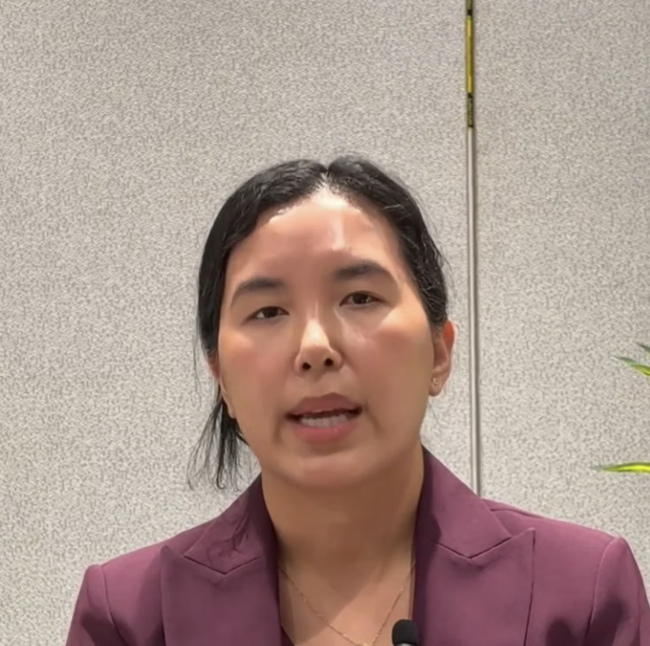
IBD specialist Dr Maia Kayal, from the Icahn School of Medicine in New York, and nurse practitioner Amy Stewart from Capital Digestive in Washington, DC, discuss controlling inflammation in IBD and the promising future of medical therapy following their presentation at the inaugural stand-alone live AIBD NP/PA Institute in New York City on October 17.
Clinical Practice Summary
IBD Treat-to-Target Goals and Emerging TL1A Therapies
- IBD treat-to-target care extends beyond symptom control to biomarker reduction over time, normalized endoscopy, absence of disability, and quality of life.
- TL1A agents afimkibart, tulisokibart, and duvakitug are in phase 3 studies and evidence promising efficacy and favorable safety profiles.
- A potential TL1A-associated biomarker may support treatment selection and track response over time. Biomarker status does not guarantee response or nonresponse and should serve as an additional data point rather than determine whether therapy is started.
Transcript
Hi, I'm Amy Stewart, a nurse practitioner in a large community practice in Washington, DC.
And I'm Maya Kayal, associate professor at the Icahn School of Medicine at Mount Sinai in New York City.
Amy Stewart:
And we are thrilled to be here together at the AIBD NPPA Institute live from New York. Our joint talk today was on is controlling inflammation enough and also looking at TL1As and the future pipeline. So kind of a recap of our talk, what we talked about, we really went through the treat-to-target recommendations in detail, right? What does this look like in actual practice? We know that controlling symptoms alone aren't enough. We also need to see a reduction in biomarkers over time, then getting into normalized endoscopy, and also thinking about absence of disability and quality of life for our patients. Precision medicine is kind of on the horizon, and I'd love to hear what you taught us about TL1As and the future with precision.
Dr Kayal:
Yes. Precision medicine is definitely on the horizon in IBD. It's something that we're particularly excited about. And in that line, we're excited about the novel TL1A monoclonal antibodies where we think we'll actually finally have the ability to make an impact in terms of precision medicine. There are a number of therapies that are currently in phase 3 studies. These include afimkibart, tulisokibart, and duvakitug. And these studies are showing promising results in terms of efficacy, but even more importantly, they're showing excellent safety profiles. The reason we're particularly excited about this class in terms of precision medicine is because there does seem to be a potential biomarker that we can use both to help us understand who is likely to respond, but also to track their response over time.
Amy Stewart:
So tell me more about that biomarker. If it's positive in someone, does it mean they're definitely going to respond? If it's negative, does it not? Where does that look like?
Dr Kayal:
I think it's just going to be another useful data point that we can use. It doesn't necessarily mean that patients are particularly more likely to respond or less likely to respond. There does seem to be in the trial data that we're seeing now an associated potential for response. So the biomarker that we have available will be an added data point. It's not going to be something that we're going to specifically hang our hat on in terms of starting a therapy versus not. It's just another data point that we'll use to support the use of the therapy. But where it could potentially have a really nice role is as a biomarker that tracks response over time to a TL1A. So thinking
Amy Stewart:
About another data point and other information that we can gather in our kind of state of the union disease assessment as we're thinking about positioning therapies and choosing the right one for our patient.
Dr Kayal:
Exactly. Because ultimately as we strive towards precision medicine in IBD, which right now very much seems as a Loch Ness monster that we haven't quite caught yet, our goal is to incorporate more of these disease specific and therapy specific biomarkers. So that's really where the TL1A class and its associated biomarker seems to be potential or potentially posed to make a splash.
Amy Stewart:
So I think the future is bright and more to come looking ahead in IBD.
Dr Kayal:
Yes. Thank you.
© 2026 HMP Global. All Rights Reserved.
Related Content




The NP/PA Institute is dedicated to educating and informing advanced practice providers on clinical topics and practical issues to support the profession and improve the quality of care for patients with inflammatory bowel disease (IBD).
The AIBD NP/PA Institute is designed for Advanced Practice Providers who specialize in Inflammatory Bowel Diseases, to further their education and increase their knowledge to achieve better patient outcomes. Explore cutting-edge research, innovative treatment options, and new therapeutic methods, while remaining focused on the fundamental principles and terminology associated with IBD.
October 17-18, 2026 | New York | Register Now
November 12-13, 2026 | Virtual | Register Now




