








Skin Failure: A New Paradigm
11/28/2017
Annals of Long-Term Care is pleased to bring readers expert commentaries and podcasts through a new alliance with GeriPal, an online community of interdisciplinary providers interested in geriatrics or palliative care, featuring content written and curated by and for leading geriatricians in the field.
by Jeffrey M. Levine MD, AGSF, CWSP
Skin failure is an emerging concept that deserves wider acceptance, particularly in the palliative care setting. Clinicians have long recognized that skin failure exists, but adoption of the name has been limited due to lack of a universally accepted definition. Terms such as Kennedy Terminal Ulcer (KTU), Skin Changes at Life’s End (SCALE), and the Trombley-Brennan Terminal Tissue Injury (TB-TTI) have been advocated to describe skin breakdown in patients who are dying. However this nomenclature does not fit into the clinical course of wounds that have similar characteristics in patients who recover from critical illness but have residual pressure injury. The term 'skin failure' assembles these phenomena into an easily understandable and more clinically accurate term.
Pressure ulcers are often associated with lapses in quality of care. However, there is growing recognition that pressure ulcers can occur in circumstances when risk is recognized and prevention measures are implemented. We now have improvements in life-support technologies in intensive care, hospital, and rehabilitation settings applied to an increasingly high-risk population that effectively prolongs life, negating terminology that implies imminent mortality. I propose clarification of nomenclature through recognition of skin failure as a clinical syndrome that shares similar mechanisms with other organs. This includes a conceptual framework that some pressure ulcers, whether or not associated with mortality, are unavoidable consequences of skin failure.
I propose the following definition: “Skin failure is the state in which tissue tolerance is so compromised that cells can no longer survive in zones of physiological impairment that include hypoxia, local mechanical stress, impaired delivery of nutrients, and buildup of toxic metabolic byproducts"(Levine, Adv Skin Wound Care 2017).
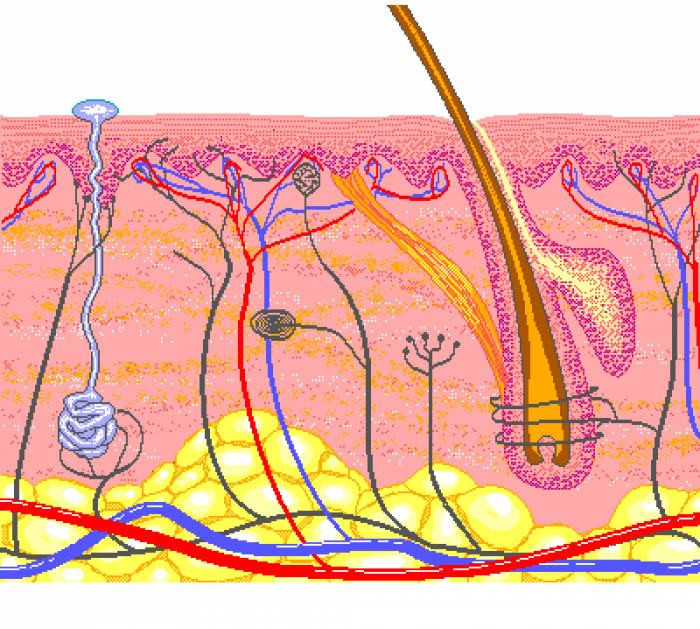
Skin, the largest organ of the body, performs a variety of complex functions. If skin no longer fulfills its role maintaining vasomotor tone, body temperature and water balance, and ceases protecting the body from infection and mechanical trauma, it is failing. In this model the KTU and SCALE are manifestations of skin failure. Skin failure can account for the high rate of breakdown in the setting of multi-organ system failure in the ICU, and wounds that occur at the end of life. By folding these observations into the spectrum of skin failure, quality deficit implications are removed and the terminology becomes more accurate.
Recognition of skin failure will lay the foundation for common nomenclature and open new directions for research. From a clinical perspective this terminology provides more accurate classification of an identified disease state that will facilitate data collection for research and improve quality measurement. In an era of data driven, outcomes oriented, value based care, it is time to create a unified approach to skin failure – a phenomenon that occurs in the course of acute and chronic illness as well the end of life when the body is shutting down. Identification of skin failure is especially important in the palliative care setting when the body is breaking down and cure is not the goal.
* * * * * * * * * * * * * * *





