Medtronic Prevail Paclitaxel-Coated Balloon Catheter Shows Positive Performance in Swedish Coronary Angiography and Angioplasty Registry (SCAAR)
Data from the largest study comparing drug-coated balloons presented as a late-breaking clinical trial at Cardiovascular Research Technologies 2025
Data from the largest study comparing drug-coated balloons presented as a late-breaking clinical trial at Cardiovascular Research Technologies 2025
Medtronic News
Medtronic announced results from the Swedish Coronary Angiography and Angioplasty Registry (SCAAR) on the Prevail™ paclitaxel-coated balloon catheter (also known as a coronary drug-coated balloon, or DCB). The results were presented as a late-breaking clinical trial at Cardiovascular Research Technologies (CRT) 2025 in Washington, D.C. by Dr. Sacharias von Koch, Department of Cardiology and Clinical Sciences at Lund University, Skåne University Hospital in Sweden. The real-world data show the Prevail DCB having comparable outcomes with other contemporary DCBs used in the study, suggesting the Prevail DCB as effective treatment for a variety of complex coronary lesions.*
SCAAR is a nationwide registry including data on all patients in Sweden undergoing coronary angiography. The real-world analysis is the largest study to date comparing different types of DCBs, and it is the largest dataset evaluating the Prevail DCB, with 1,797 patients. The SCAAR data compared the Prevail DCB to other DCBs in a complex patient population, including 61% patients with acute coronary syndrome, 31.8% with diabetes, 55.3% with complex lesions, 22.8% with bifurcation lesions, and 28% in-stent restenosis (ISR). Outcomes included all-cause mortality, myocardial infarction (MI), new revascularization with percutaneous coronary intervention (PCI), target lesion definite thrombosis, and target lesion revascularization. Prevail DCB demonstrated low mortality event rates at one year (4.7%) and two years (7.2%) post-procedure. Additionally, the outcomes showed a 98.7% procedure success rate with the Prevail DCB and very low rates of target lesion thrombosis (0.8% at two years compared to 1.3% with other DCBs). In hybrid PCIs (defined as DCB and stent in the same vessel), Prevail showed lower new MI rates versus other contemporary DCBs.
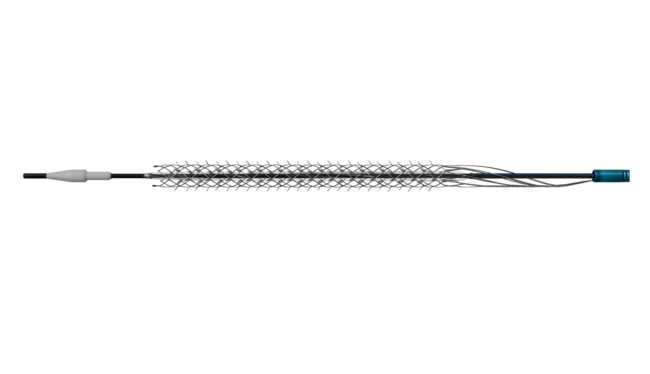
The Prevail DCB is intended for use during PCI procedures to treat narrowed or blocked coronary arteries in patients with coronary artery disease. During the catheter-based procedure, the balloon inflates within the artery, while the drug (paclitaxel) is delivered to the arterial tissue where it is absorbed and retained to provide a durable anti-restenotic effect. The Prevail DCB’s differentiated FreePac™ coating has an extensive body of evidence in both coronary and peripheral artery disease with over 10 trials and 1,600 patients studied.
“As physicians encounter and treat an increasing number of patients with complex lesions, it is crucial to continuously gather data on our Prevail DCB,” stated Jason Weidman, senior vice president and president of the Coronary and Renal Denervation business within the Medtronic Cardiovascular Portfolio. “With its differentiated design, Prevail has seen strong market adoptions since 2021, and we are eager to see how this new data will further advance the Prevail DCB in the market. These findings reaffirm Medtronic’s dedication to advancing complex PCI solutions, ultimately bringing this procedure to patients worldwide.”
The Prevail™ DCB is commercially available in more than 80 countries globally. Prevail received approval from the U.S. FDA in October 2024 for an investigational device exemption (IDE) to begin the Prevail Global study, which recently enrolled its first patient.
The Prevail DCB is not approved or sold in the U.S. or Japan, and the use of the DCB in the Prevail Global study is investigational.
* Always refer to the approved product labeling for the indications, safety, and warning information.
Find More:
Cardiovascular Ambulatory Surgery Centers (ASCs) Topic Center
The Latest Clinical & Industry News
Grand Rounds With Morton Kern, MD
Peripheral Artery Disease Topic Center