









Bispecific Antibodies in Multiple Myeloma: What APPs Need to Know
Key Takeaways
- Oncology APPs should understand each bispecific antibody’s target, step-up dosing requirements, and toxicity profile while assessing patient readiness and preparing caregivers for early treatment monitoring.
- Fever requires prompt evaluation for both cytokine release syndrome and infection, while subtle cognitive or handwriting changes should trigger assessment for neurotoxicity and timely escalation of care.
- Long-term care should include monitoring for cytopenias and hypogammaglobulinemia, individualized infection prevention, and assessment of treatment-related effects on nutrition, function, and quality of life.
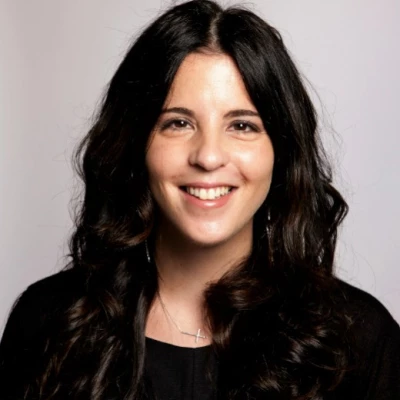
Danielle Roberts, PA-C, a physician assistant at Winship Cancer Institute of Emory University in Atlanta, Georgia, discusses what oncology advanced practice providers (APPs) need to know about bispecific antibodies for multiple myeloma. Using a patient case, she reviews treatment readiness, step-up dosing, recognition and management of cytokine release syndrome and neurologic toxicity, and ongoing management of cytopenias, hypogammaglobulinemia, and infection risk. She also addresses talquetamab-associated oral, skin, and nail toxicities, emphasizing how patient and caregiver education, proactive monitoring, and coordinated care can help APPs support safe treatment continuation and quality of life.
Transcript
Hello, everybody. My name is Danielle Roberts. I’m a physician assistant, and I work at the Winship Cancer Institute of Emory University in Atlanta, Georgia. Today we’re going to talk about bispecific antibodies and multiple myeloma, what every APP needs to know. But first, let me start with a patient.
I have a 67-year-old female who has relapsed/refractory multiple myeloma. She’s been through multiple lines of therapy, including a proteasome inhibitor, an immunomodulatory drug, and an anti-CD38 antibody. And unfortunately, her disease is progressing. Now we’re talking about starting a B-cell maturation antigen (BCMA)-directed bispecific antibody. She lives about an hour from the treatment center, and her husband is her primary caregiver. Before we even give her the first dose, there are already a lot of things for us to think about. And that’s really what I want us to focus on today.
Bispecific antibodies have changed what we can offer our patients with relapsed multiple myeloma, but they’ve also changed how we care for those patients. I want to walk you through this patient’s journey. We’re going to talk about how these drugs work, what we need to think about before the first dose, what happens when things don’t go exactly as planned, and what we need to do months later to keep our patients safely on therapy. Let’s first start with the drug.
At the most basic level, a bispecific antibody is a T-cell engager. One side of the antibody binds to CD3 on the patient’s T cell, and the other side binds to a target on the myeloma cell. We’re essentially bringing the patient’s T cells and the myeloma cell together and asking the patient’s own immune system to kill the myeloma cell. And that mechanism helps explain a lot of what we’re going to talk about today.
The approved bispecifics target different antigens. Teclistamab, elranatamab, and linvoseltamab target BCMA. Talquetamab targets GPRC5D. And that distinction matters because GPRC5D is also expressed in normal tissues, particularly keratinized tissues, which helps explain some of the unique toxicities that we see with talquetamab, including taste changes and the effects on the mouth, skin, and nails.
Most of us initially learned about these drugs in patients with heavily pretreated relapsed disease. But that landscape is changing quickly, and now we’re seeing these therapies move into earlier lines and into combinations. And most recently, teclistamab was approved for second-line therapy in combination with daratumumab.
One of the things that makes the bispecifics different from CAR T-cell therapy is that they’re essentially off-the-shelf therapy. We don’t have the same manufacturing wait, apheresis, or lymphodepleting process. But the trade-off is that these are generally ongoing therapies, so the immunosuppression and infection risk can continue over time. If there’s one thing I want you to remember, this is it. Know the target, know the step-up and dosing schedule, and know the toxicity profile of the specific drug your patient is receiving because these drugs are not interchangeable.
Let’s go back to our patient. We’ve decided that she’s going to start a BCMA-directed bispecific. The first thing that I want everyone to understand is that the first dose is not just another treatment day. These drugs use step-up dosing where we give a smaller dose, which I commonly refer to as a baby dose or toddler dose, before getting the full treatment dose. The goal is to reduce the risk and severity of cytokine release syndrome, or CRS. The exact step-up schedule and monitoring requirements vary by product, so this is where knowing your institutional pathway and prescribing information really matters.
Before the first dose, what I really want my patient to know is: Are they actually ready? We’re looking at the baseline labs, we’re assessing for active infection, we’re thinking about hepatitis B and other infection risks. We’re checking the immunoglobulins. We’re documenting a baseline neurologic assessment, including an immune effector cell-associated encephalopathy (ICE) score when appropriate. And we’re thinking about disease burden because that can influence the risk of CRS.
But then there are things that don’t show up on a CBC or CMP, like does she have a caregiver? Can her husband stay with her during that initial treatment period? How is she getting back and forth to the treatment center? Does she know who to call after hours? Does she have a thermometer? You’d be surprised how many people don’t. Does she understand what symptoms should make her call us? These are all part of the treatment readiness. And this is where I think APPs can really make a difference.
What I want my patient or her husband to understand is that if something doesn’t feel right, I would much rather them call us and it be nothing than to stay at home because they didn’t want to bother anybody. And I love the teach-back here. What I actually ask is, “Tell me what you’re going to do if you develop a fever tonight,” because hearing the education is not the same thing as understanding the education.
Now our patient has gotten her first step-up dose. Twenty-four hours later, her husband calls. She has a temperature of 102.1°F. She’s having chills, and she’s feeling weak. What are you thinking? This is where I want our APP brain to immediately go to two places. Could this be CRS? And could this be infection? And sometimes the answer is yes to both.
This is why the education before the treatment is so important. The patient needs to know that fever isn’t something to watch at home and see what happens. We need to know about it. We want to recognize it early.
Let’s say she comes into the clinic and her temperature is 102.1°F. Her blood pressure is 92/58 mm Hg, and her heart rate is 112 beats/min. Her oxygen saturation is 94%. Now we’re not just talking about a fever. We are now thinking about CRS. CRS is most common around step-up dosing in early treatment, and fever is often the first clue. We grade CRS using the American Society for Transplantation and Cellular Therapy (ASTCT) criteria, with the severity driven by fever initially and then by the hypotension and hypoxia.
For APPs, I don’t necessarily think you need to memorize every number, but what you need to know is, is the patient changing? What is my escalation pathway? And at the same time, we’re not forgetting infection. We’re getting blood cultures, and we’re evaluating for an infectious source. And if this patient is neutropenic or otherwise at significant infectious risk, we’re treating appropriately. We don’t get to say, “It’s probably CRS,” and ignore the infection.
For more significant CRS, management can include supportive care, fluids when appropriate, oxygen, tocilizumab, corticosteroids, depending on the severity and response, and then appropriate escalation of care if needed. The good news is that most CRS associated with bispecific therapy is low grade and resolves with appropriate management. But the key is recognizing it early. I would rather escalate early than explain later why we waited.
Now let’s say our patient’s fever resolved. She’s feeling better. But the next day, her husband says something that gets my attention. He says, “She’s just not herself today. She’s having trouble finding her words, and her handwriting looks different.” Now we’re checking her ICE score, and it’s changed. This is where we need to start thinking about neurologic toxicity, including immune effector cell-associated neurotoxicity syndrome (ICANS).
And I want to emphasize something here. Always listen to the caregiver. If the caregiver says she’s not acting like herself, that’s data. The early signs can be subtle. Word-finding difficulty, changes in handwriting, confusion, maybe a tremor, inattention, a patient who just seems a little bit off. And that’s why basic neurologic assessments are so important.
We’re going to follow our institutional protocol, repeat the neurologic assessments, and ICE scoring when indicated. Hold the therapy when appropriate and use corticosteroids for significant ICANS. And again, we’re escalating care if the patient is worsening. Don’t wait for the neurologic symptoms to become dramatic. The good news is that with bispecifics, ICANS is less common.
Now the other issue that we typically see is cytopenias. Our patient’s been receiving therapy, and now she has an absolute neutrophil count (ANC) of 700. Now we’re thinking about infection risk on top of everything else. We’re going to trend the CBC. We’re supporting the patient with growth factor or transfusion support when appropriate, making treatment decisions based on the patient’s counts, symptoms, and specific treatment protocol. This is another place where the APP is often catching the problem before it becomes a hospitalization.
Now let’s fast-forward to 3 months later. Our patient’s been responding beautifully. Her myeloma numbers have dropped significantly, and she’s thrilled because she finally feels like the treatment is working. The acute toxicity is behind her, but now her ANC continues to run low. Her IgG is 280. She’s had 2 respiratory infections, so now our job changes. The drama of the step-up is over, but the work isn’t.
Infection prevention becomes a huge part of our role. We’re thinking about antiviral prophylaxis, Pneumocystis jirovecii pneumonia (PJP) prophylaxis when indicated, and additional prophylaxis based on the patient’s individual risk and treatment. We also need to consider vaccinations. What does she have and what does she need? And we’re continuing to monitor the quantitative immunoglobulins. Because the hypogammaglobulinemia is something we can actually do something about.
We’re watching for recurrent infections and considering immunoglobulin replacement when clinically appropriate and according to our institutional criteria. And this is something I want APPs to be proactive about. Don’t wait until the patient’s had infection after infection before you start thinking about their IgGs. At our institution, every patient who starts on a bispecific automatically starts immunoglobulins at the onset of bispecific therapy. Also, with cycle 1, we start antiviral prophylaxis and PJP prophylaxis. And this is all in hopes of mitigating the risk of infection going forward for this patient population.
But we also don’t want to forget about the quality-of-life issues. Let’s say our patient is actually receiving talquetamab instead of a BCMA-directed bispecific. Now I’m asking different questions. How does the food taste? Is she eating? Does she have dry mouth? Any difficulty swallowing? And what’s happening with her skin and nails? Has she lost any weight?
Because these are things that can seem small when we’re looking at a medication list, but they have a huge impact on whether our patient’s eating, drinking, functioning, and wanting to continue therapy. And the important thing is, don’t wait for the patient to volunteer this information. Make sure you’re asking at every single visit.
Over time, our monitoring becomes a rhythm: CBCs and chemistries with treatment, immunoglobulins and disease markers on a regular schedule. We’re watching for infections. We’re watching the blood counts. We’re asking about neurologic symptoms. We’re asking about weight and function. And we’re asking, “How is this treatment affecting your life?” Because the goal isn’t simply to keep giving the drug. The goal is to keep the patient safely receiving the treatment that is helping them.
And for patients who are responding, some bispecific regimens allow the dosing interval to be extended. This can mean fewer treatment visits, less treatment burden, and this is an important part of the ongoing conversation with the patient.
And this brings me back to what I think is probably the most important part of this talk. The APP is often the person connecting all of these pieces. We’re educating the patient before the first dose. We’re managing the step-up process. We’re reviewing the labs. We’re answering the phone when the patient says, “I have a fever.” And we are recognizing when something isn’t right. We’re coordinating with the infusion, the inpatient team, neurology, infectious disease, critical care, and sometimes the patient’s community oncologist.
We’re looking at the patient over time. Maybe the IgG is slowly falling. Maybe the ANC isn’t recovering. Maybe they’ve lost 8 pounds. Maybe the caregiver says she’s just not herself. And these little pieces matter. If we catch them early, sometimes we can intervene with a dose hold, supportive care, or a change in the treatment plan instead of waiting until the patient ends up in the hospital. That’s really our role. We’re not just administering the bispecific. We’re helping the patient safely stay on therapy.
Let’s go back to our patient one last time. We’ve prepared her. We’ve educated her. She developed CRS. We recognized it, and we treated it. Then she developed neurologic symptoms, and we recognized those too. Months later, her disease is responding, but now we’re managing the cytopenias, the hypogammaglobulinemia, and the infection risk. And at almost every step of that journey, the APP is involved.
If I could leave every oncology APP with one thing to remember before caring for a patient receiving a bispecific antibody, it would be this. Know the drug, know the toxicity, and know your escalation pathway. Early on, fever may be CRS. Later on, fever may be infection. Both require us to pay attention. If we prepare our patients well, recognize the toxicity early, stay ahead of infection and hypogammaglobulinemia, and keep the communication open, we can help our patients receive these therapies safely and stay on treatment.
And ultimately, that’s what we’re here to do. I hope you’ve enjoyed my little talk about bispecifics. Thank you and have a wonderful rest of your day.
© 2026 HMP Global. All Rights Reserved.
Any views and opinions expressed are those of the author(s) and/or participants and do not necessarily reflect the views, policy, or position of LL&M, Oncology Learning Network or HMP Global, their employees, and affiliates.
Related Content

The APP Institute is a new offering from the Oncology Learning Network that provides microburst education to oncology advanced practitioners. The platform offers year-round digital non-accredited learning modules through animated short videos, multimedia interviews with key opinion leaders, interactive content to test your knowledge, and more!




