Closing the Gap Between CAR T-Cell Therapy Recognition and Referral
Summary
Transcript
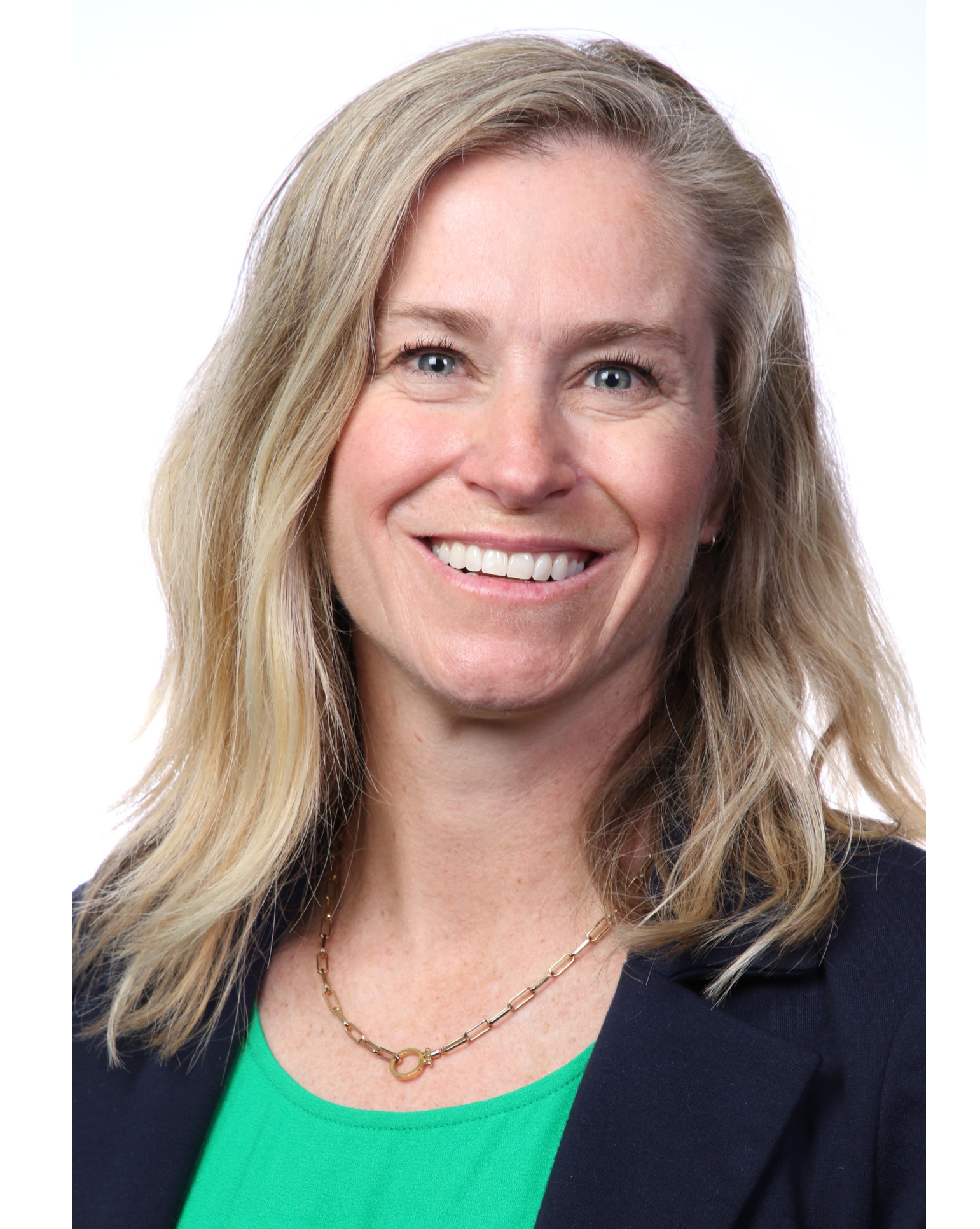
Samantha Shenoy: Hi, everyone. My name is Samantha Chenoy, and I'm a nurse practitioner at UCSF Medical Center in San Francisco. I've been working in the multiple myeloma space for about 17 years now. And a big part of what I do is take care of patients receiving immunotherapy, such as CAR T-cell therapy and bispecific antibody therapy. And as many of you know, the field has changed tremendously in the last several years, and expectations for what treatment should achieve have risen, which has real implications for when we start thinking about more intensive or novel approaches.
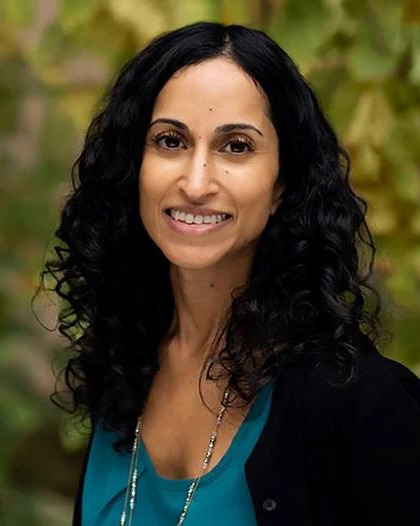
Caitlin Costello: Thanks, Sam. And my name's Caitlin Costello. I am a clinical professor of medicine at the University of California, San Diego, and the director of the myeloma program here. And I'm just delighted to be here with you today. I've also been doing this for quite some time now, and I'll tell you that a significant part of my practice, more recently, has been about how we are incorporating CAR T-cell therapy for so many of our patients. Historically, it used to be that we were waiting for patients to relapse. Now, instead of waiting for later lines of therapy, we can do it in earlier ones. So there's an art to CAR T-cell therapy. I hope this will help you understand how we can choose the right treatment for the right patient at the right time.
Samantha Shenoy: So, when thinking about multiple myeloma, one of the things we talk about is risk stratification. Risk stratification at diagnosis really matters, and it matters throughout the disease course. And there are frameworks like something called mSMART, and that basically helps to identify patients whose biology makes early relapse and drug resistance more likely. High-risk features, including deletion 17p or TP53 mutation, are associated with shorter remissions, more aggressive relapse patterns, and often less durable responses to conventional therapy. NCCN guidelines explicitly recognize cytogenetic risk factors as a factor in treatment planning and monitoring intensity. And underscoring that risk stratification has practical implications for how aggressively we follow these patients. At my practice, where the nurse practitioners and I often order bone marrow. At your practice, you may not be the one ordering bone marrow examinations or efficient cytogenetics, but it's still really important that you understand what the different cytogenetic abnormalities are and what their implications are. So, for example, if something's higher risk, just be aware of it and keep it in mind as you're caring for these patients. Also, a high-risk patient who's progressing at 12 to 18 months is not a patient to simply move to the next standard regimen without pausing to ask whether something different should be on the table.
Caitlin Costello: Really great point, Sam. I think you make the point that not all myeloma is the same. We know that this requires a highly personalized approach to treatment for each patient. And I think it's important to put that in a historical context to say that we used to use these therapies to treat all patients with the intent of achieving some degree of disease control. And what we've realized is that different therapies work differently for different patients. And so our goal has now been to get effective therapies to the right person at the right time, to get that disease under control. And what control used to mean was, for a short period of time, really now means deep and durable responses, where, for all intents and purposes, we're kind of kicking the can down the road as far as we can, until really the next newest and greatest comes up. So, when we're thinking about how to do that, CAR T-cells play an important role here. As mentioned, we used to use it at very late stages of disease, when patients had perhaps no other therapies available to them. But NCCN guidelines currently offer cellular therapy as an option for patients at the time of first relapse. There's more and more interest in trying to re-stratify, just as you mentioned, Sam, to say maybe not everybody needs CAR-T at the time of first relapse, but maybe there are some with high-risk disease that very much should have a CAR-T earlier. And maybe we think about the biology of the disease as much as about the patient's health. Thinking about it, can we have a prime opportunity to do CAR-T when the patient has healthier T–cells? Maybe has had fewer lines of therapy before; maybe they have a better functional status, where CAR-T could be not only more effective but also safer.
Samantha Shenoy: Yeah, I totally agree. And I'm glad you spoke about the NCCN guidelines, which now include relapse-refractory myeloma pathways that account for prior lines of therapy and disease characteristics. And this helps provide a framework within which cellular therapy options are increasingly positioned as treatment options for appropriate patients. These patients, as you mentioned, may not be responding to therapy the way we'd hoped. And so this pattern is where the conversation about evaluation for different treatment options, including cellular therapies, can and should start.
Caitlin Costello: I have some wonderful takeaways that I think you've offered up here today, which... Numbers one, two, and three are very much about how grateful and appreciative I am of my APPs, who are really just my right-hand people, for offering our patients the best care. You are often the person who notices when a clinical course isn't tracking as expected, and you can really help highlight the importance of a team approach to making sure we're taking care of these patients and offering the best personalized therapy for every patient.
Samantha Shenoy: Yeah. Thank you. And I totally agree. At our practice, the APPs are seeing patients more frequently and for longer than the attending physician. I know that, as an attending physician, you're running around doing a million things, and because of that, we are following them more closely and are often the first to notice when something's shifted. So it's really important as an APP to recognize the patterns. Is high-risk disease? Is this someone who's had a suboptimal response to therapy? Or are they an early progressor? And then flagging it, and then bringing it back to the team to start these conversations early. And as an APP, it's not necessarily our role to recommend that they start a specific therapy; really, all you need to do is ask: Is this a patient we should be discussing at our next tumor board? Is this someone who might benefit from evaluation at a CAR-T treatment center if you're not working at a CAR-T treatment center? And if you are, is this someone that we should consider for CAR-T? So I totally agree.
Caitlin Costello: And thank you. I hope this has been helpful.
Samantha Shenoy: Yeah. Thank you.
References
Beaupierre A, Lundberg R, Marrero L, Jain M, Wang T, Alencar MC. Management across settings: an ambulatory and community perspective for patients undergoing CAR T-cell therapy in multiple care settings. Clin J Oncol Nurs. 2019;23(2):27-34.
Berdeja JG, Madduri D, Usmani SZ, et al. Ciltacabtagene autoleucel, a B-cell maturation antigen-directed chimeric antigen receptor T-cell therapy in patients with relapsed or refractory multiple myeloma (CARTITUDE-1): a phase 1b/2 open-label study. Lancet. 2021;398(10297):314-324. doi:10.1016/S0140-6736(21)00933-8.
Kumar SK, Rajkumar V, Kyle RA, et al. Multiple myeloma. Nat Rev Dis Primers. 2017;3:17046. doi:10.1038/nrdp.2017.46.
Majhail NS, Mau LW, Chitphakdithai P, et al. National survey of hematopoietic cell transplantation center personnel, infrastructure, and models of care delivery. Biol Blood Marrow Transplant. 2012;18(8):1219-1227. doi:10.1016/j.bbmt.2012.01.008.
Martin T, Usmani SZ, Berdeja JG, et al. Ciltacabtagene autoleucel, an anti-B-cell maturation antigen chimeric antigen receptor T-cell therapy, for relapsed/refractory multiple myeloma: CARTITUDE-1 2-year follow-up. J Clin Oncol. 2023;41(6):1265-1274. doi:10.1200/JCO.22.00842.
Rajkumar SV. Multiple myeloma: 2020 update on diagnosis, risk-stratification and management. Am J Hematol. 2020;95(5):548-567. doi:10.1002/ajh.25791.
Turtle CJ, Hanafi LA, Berger C, et al. CD19 CAR-T cells of defined CD4+:CD8+ composition in adult B cell ALL patients. J Clin Invest. 2016;126(6):2123-2138. doi:10.1172/JCI85309.
© 2026 HMP Global. All Rights Reserved.
The views and opinions expressed by the presenter(s) do not necessarily reflect the views and opinions of Oncology Learning Network, HMP Global, or its employees and affiliates.