









New GI Cancer Standards Emerging From ASCO 2026: Part 1
Key Takeaways
- Based on data presented at ASCO 2026, daraxonrasib and other RAS-targeted therapies could substantially change pancreatic cancer treatment, making toxicity education, proactive rash management, and multidisciplinary supportive care increasingly important for oncology APPs.
- ctDNA-based minimal residual disease (MRD) assessment may add valuable information to conventional staging in colorectal and other GI cancers, but limited sensitivity at a single postoperative time point means negative results should be interpreted cautiously.
- As molecularly targeted therapies and MRD testing become more integrated into GI oncology, APPs will play an important role in toxicity management, patient education, longitudinal monitoring, and discussions about how biomarker results may influence treatment decisions.
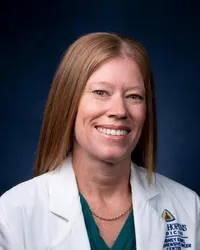
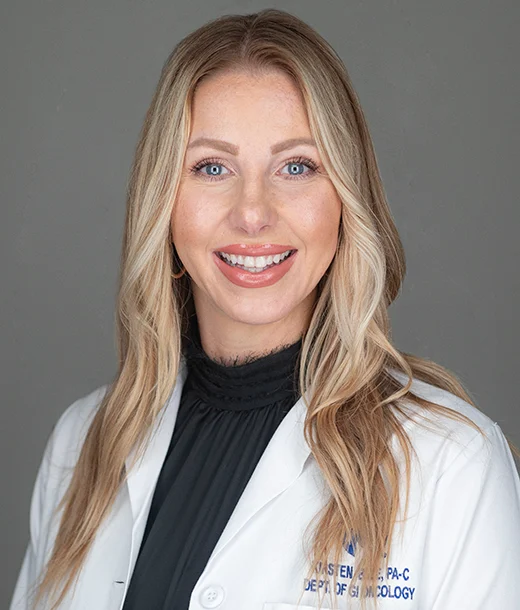
Tanios Bekaii-Saab, MD, chair of the Department of Hematology and Oncology at Mayo Clinic in Arizona, and Jonathan Catrona, PA-C, of New York Cancer & Blood Specialists, discuss emerging GI cancer research out of the ASCO 2026 Annual Meeting with implications for oncology APP practice, including RAS-targeted therapy in pancreatic cancer and ctDNA-based MRD assessment in colorectal and other GI cancers. They highlight the potential of daraxonrasib in previously treated metastatic pancreatic cancer, the expanding development of pan-RAS and allele-specific inhibitors, and practical approaches to managing treatment-related rash, mucositis, and diarrhea. They also discuss the evolving use of ctDNA/MRD testing after surgery, emphasizing its high specificity but more limited sensitivity at a single postoperative time point and the importance of interpreting results alongside disease stage and baseline recurrence risk.
For oncology APPs, these developments reinforce the growing importance of genomic literacy, proactive toxicity management, patient counseling, and careful interpretation of molecular testing as targeted treatments and biomarker-guided strategies become more prominent in GI oncology.
Transcript
Tanios Bekaii-Saab, MD: My name is Tanios Bekaii-Saab. I’m a GI medical oncologist and chair of the Department of Hematology and Oncology at Mayo Clinic in Arizona.
Jonathan Catrona, PA-C: My name is Jonathan Catrona. I am a physician assistant at New York Cancer & Blood Specialists, which is a large community oncology practice in the Long Island metro area.
Catrona: I think the big one is probably in the pancreatic space, especially with the RAS-targeted therapy, the new second-line daraxonrasib, which seems to be a potential game changer for us. I know it received a standing ovation at ASCO 2026. I think it has potential to be practice-changing. I mean, if you look at the trial, they looked at previously treated metastatic pancreatic cancer, and they used daraxonrasib versus investigator’s choice of chemotherapy.
The median OS was 13 months versus 6.6 months. And the event-free survival was about 7, 7.5 months over about 3.5 months. I think that could be game-changing, especially when you look at overall survival. The first-line setting usually is only between 8 to 11 months. This could be something, especially I’m looking forward to when they hopefully get the first-line data. I think it could be something big.
Bekaii-Saab: No, I totally agree. I think there have been a few studies that stood out, but nothing can stand out like this one, and 2 reasons for this. One, pancreas cancer is and has been probably, I would say, the most desperate cancer, with very little change over multiple decades, where we haven’t moved the needle much.
And absolutely right, a single targeted agent not only beats chemotherapy, but the numbers that we see with daraxonrasib outperform even what we see in first-line FOLFIRINOX or gemcitabine/nab-paclitaxel. That’s definitely a game changer.
And similar to your sentiments, I think moving this to the first line on clinical trials right now, and hopefully ultimately becoming part of our practice, may be an even bigger game changer. That changes the whole course of how we treat pancreas cancer and changes the whole narrative around pancreas cancer from one of the least druggable and targetable cancers to now one of the most druggable and targetable cancers, since RAS mutations are present in more than 90%, 93% arguably, of pancreas cancer. I think we’re definitely moving the needle now in a disease that hasn’t seen much change for 3 to 4 decades.
Catrona: I’m just looking forward to it being available in the community setting, especially in our practice. We have frequent conversations with our attendings: either FOLFIRINOX or nab-paclitaxel or gemcitabine/Abraxane. It’s either/or. As soon as you went through both options, you were done. And this gives us another light.
Like you said, this is huge. I do wonder what else we’re going to see, especially as more studies come out with daraxonrasib, what other GI cancers it’s going to be effective in. That’s one thing I’m wondering. What’s the next step?
Bekaii-Saab: Definitely. Other than moving it up the line and even to the adjuvant setting, I think where we’re going to see this continue to pan out is wherever RAS is relevant.
One of the challenges, say in colon cancer, where RAS mutations are present in close to 40% of the patients, is the RAS inhibitors have to be combined with EGFR inhibitors, and the overlapping toxicities may be problematic with daraxonrasib.
The good news is we have a number of allele-specific alterations that may be very applicable. One example is zoldonrasib, which is a very specific, active, and relatively tolerable G12D inhibitor that would be relatively easier to combine both with chemotherapy but also with EGFR inhibitors.
In colon cancer, we may be looking more at those allele-specific agents. But frankly, biliary cancer, in our world of GI cancers, is another potential cancer where this could be developed. And we see, in rare cases, alterations in other cancers as well. I think that will expand, for daraxonrasib at least, cautiously beyond just pancreas cancer. But the allele-specifics are probably going to be part of our armamentarium across multiple ways.
As a reminder, we already had a good proof of concept with the G12C inhibitors, right? We published data with the G12C inhibitors, which are less common. In colon cancer, about 2%. In pancreas, at best, maybe 0.5%. Rare, but we’ve shown, at least in pancreas, single-agent activity with adagrasib. Others have shown with sotorasib that once you target RAS, you actually improve outcomes.
And with colon cancer, it had been in combination with EGFR inhibitors, although we’ve heard some disappointing news recently with adagrasib and cetuximab that we can talk about a little bit more. But overall, I think the proof of concept is there. We have more allele-specific agents coming through, but the pan-RAS inhibitors certainly will change, I think forever, outcomes with pancreas cancer.
Catrona: It’s also good to see the adverse effects in the abstract. Only 1% with the new agent versus 11% with chemotherapy. I know we both can draw fear in our patients. It’s kind of brutal.
Bekaii-Saab: Yeah, no, I agree. I totally agree. The toxicities are there, and we have to be cognizant of them. Rash can be quite significant. Mucositis can be problematic. Diarrhea can also be a little bit problematic, but primarily the rash.
And there are a lot of mitigating elements that can help with the rash, primarily linked to elements of education. And we know that. You guys in private practice use quite a bit of these different inhibitors that are associated with significant rashes. Education, preemption—in my practice, everyone starts on minocycline. Doxycycline is reasonable as well, although minocycline more than doxycycline.
But those can essentially mitigate the rash, and early intervention. And I don’t know about your practices, but involving a dermatologist or a dermato-oncologist early in the game can certainly help mitigate some of these toxicities as well. There are ways for us to work around that.
Catrona: We do. We use a lot of minocycline. Some of us use doxycycline. I know usually in the community setting, it’s a little harder to get a dermatologist on board. In New York, thankfully, we have dermatologists on every corner, so usually you can get them in pretty easily. But like you said, getting the multidisciplinary approach, getting them on board, is pretty important, especially when they start breaking through minocycline, doxycycline, and then we have to move to more topical therapy, more advanced, where we need their input.
I was generally stunned that there was only 1%, though, because I was expecting it to be a lot more with the diarrhea. I know, like I’ve seen with all the RAS inhibitors in other cancers, diarrhea is probably one of the more common things that I’ve seen. I was surprised that it was only—I mean, we don’t know the exact breakdown—but it seemed to be lower than that.
Bekaii-Saab: It is surprising. I think this likely has to do with the fact that despite the RAS—and the diarrhea and perhaps the stomatitis, which appear to be reversible—and with those adjustments, kind of resolve or get minimized.
Overall, the patients are feeling much better. The quality of life of the patients improves. They’re feeling better. They’re eating better. They’re more active. They’re less fatigued. They can take some of these toxicities because they feel like human beings again. And we know from treating patients with pancreas cancer, their muscles waste, they’re fatigued, they’re in pain. The pain improves significantly. That essentially pretty much decimates their quality of life.
Catrona: Absolutely.
Bekaii-Saab: I think some of these toxicities—and they’re not pleasant, and they can be pretty significant for some patients—but it’s essentially a balancing act. And I think it favors significantly the safety of the drug versus some of the toxicities versus taking on just progressive pancreas cancer and the symptoms that ensue.
That is probably encouraging. That is the main reason, but it’s very encouraging that we’re not seeing these dropouts. And again, I think that if we are smart about implementing these guidelines early in the game, we actually help our patients at least mitigate some of these toxicities that certainly can affect their quality of life significantly.
Catrona: One question I have for you: In the academic setting, do you guys use a lot of ctDNA? Because I know in the community setting, we’ve just started. We’ve been seeing some promising data throughout colon cancer that ctDNA, if it’s negative, leads to improved survival.
I know one of the studies that came from ASCO was a CIRCULATE trial and talked about ctDNA positive, negative versus in resected stage II, III. Were you in your practice doing ctDNA already? Because we only started probably about a year ago.
Bekaii-Saab: Oh, yeah. We’ve been using MRD assessment selectively, I should say. It’s difficult to justify doing this universally yet, but we’ve been doing it selectively. But for some, I would tell you that it’s more common to do it now than previously, more likely than not.
It does still require discussion with the patient about what to do with this test. We primarily were doing it in colorectal cancer. We’ve expanded it to pancreas and hepatobiliary cancers and, to a lesser degree, with gastric and gastroesophageal cancers.
With colorectal cancer, we’ve also primarily done them stage II, stage III, but I find a lot of utility actually of doing this in the oligometastatic setting. And there’s a new and recent study in JAMA Oncology that certainly tells us about the value of some of these modalities in oligometastatic disease and helping decide who may or may not get adjuvant chemotherapy, or pseudo-adjuvant chemotherapy in this case.
But I also use it to follow up those patients very closely, as I see a lot of the recurrences that come back technically come back in the same organ, meaning if they’re liver only, the tumors come back in the liver only. If in the lung only, the same thing. And many of those can be addressable by locoregional procedures. I like that aspect of MRD assessment.
But what we’re seeing also is that they have large utility now in hepatobiliary, primarily pancreaticobiliary cancers, but also in some livers, in the sense that they help us detect a little bit sooner rather than later.
Now, in pancreas, where it gets interesting is because we have these RAS inhibitors, and because we have now a number of studies with the RAS inhibitors, you’re compelled to try to find a recurrent tumor sooner rather than later. Because in the days, right, we just switched to another chemotherapy. Today, you can justify moving to one of those RAS inhibitors and changing the biology of the disease.
Catrona: I did find it interesting with the CIRCULATE trial. At least in our practice, we used it selectively as well in colon cancer. We use it pretty much. We don’t use it for pancreatic because it’s the only thing we’ve seen so far, data-wise, in colon, but like you said, selectively.
But it is interesting that they’re talking about in this trial possibly escalating therapy if they’re ctDNA-positive. That’s where the big question is: Should you escalate therapy, or should you de-escalate therapy?
And I think that’s a big change for us, since we could always, in stage II, stage III, it’s: Are they high risk? Do you give them adjuvant chemotherapy? Or stage III, usually it’s adjuvant chemo. We just pick your poison. It’s either CAPOX or FOLFOX, and the length of time.
That could be game-changing, especially if they’re ctDNA-negative. And if the serial ctDNA testing shows equivalent overall survival, even progression-free survival compared to adjuvant chemotherapy in a stage II setting, that could be huge.
Especially oxaliplatin toxicity, patients wouldn’t get the neuropathy, wouldn’t get the cold sensitivity. And that might be bad for quality of life, but I am wondering how that’s going to pan out, though.
Bekaii-Saab: Yeah, with a caveat, right? And the main caveat is a lot of these have been observational studies. There were DYNAMIC studies, more prospective, and they failed to show the same benefit. And they have their caveats with them.
The main problem is that if you look at the specificity, it’s fantastic. I mean, it’s close to 100%. If it’s there, that’s cancer, 100%. You know that the cancer is likely to occur at some point. The sensitivity is where we have issues. Single-point sensitivity after surgery is typically around 50%. That makes it quite problematic, especially for the negatives, for the false negatives. Less so for the false positives, but more so for the false negatives.
And the reason for this is because it does affect your decision in a curative setting, and one has to use it cautiously. I think you almost have to think about your pretest probability.
If I have a stage II colon cancer that’s low risk, and typically I do not give that patient adjuvant chemotherapy, and I run MRD, my pretest probability is that MRD should be negative for most of those patients. MRD ends up being positive, that’s a patient I’m going to treat with chemo. If the MRD is negative, and I know that it’s more likely than not it’s going to be negative, that gives me even more comfort.
Now, on the other hand, if I go to the stage IIIC, I’m going to treat that patient regardless of MRD status. And this is where your pretest probability is so high that if I get an MRD-negative, I’m going to say, “Hmm, maybe the sensitivity to pick up that is less than the risk of recurrence or about the same.” And I’m going to treat that patient.
I feel that MRD today is more the fourth dimension. You’ve got T, N, M, and I’d say MRD or ctDNA, and use all these in a discussion with the patients to discuss whether you proceed or not.
I’ll tell you one area where it’s interesting: It’s stage IIIA. Stage IIIA is low risk technically. It’s actually lower risk than stage IIC. The question for us is, do we need to subject those patients to chemotherapy, lo and behold, oxaliplatin? And do we escalate, to your point? Do we give 6 months or 3 months?
And in this situation, when your pretest probability, again, is relatively a low risk of recurrence, there’s additional value. Unlike the IIIC, the IIIA, I would rely more on this test informing me further. It’s a bit more complex, but I think it has large utility, at least for that single point.
Now, when you look at the sensitivity across the 1 to 2 years longitudinally, if you maintain negative, you’re cured. Many times when I have my patients and we’ve done this for 2, 3 years and it’s negative, negative, negative, I actually give them the option of leaving the cancer clinic and going back to their primary care physician because I feel very comfortable that they’re cured from their cancer. That has helped. Longitudinal predictive value and sensitivity is fantastic. It’s that single point at 30 days from the surgery that still needs to be refined.
Catrona: One thing with the study that apparently, especially observational, like we know irinotecan in the adjuvant setting is kind of mixed. It works in the metastatic setting, but it doesn’t work in the adjuvant setting.
I was wondering, I know it’s one of the only medications we have kind of left in our arsenal. Could there—I mean, that’s where we need more research—is if we, because they’re comparing oxaliplatin/5-FU with 5-FU/oxaliplatin, then if they could turn ctDNA-positive, is irinotecan even going to make a difference, even though it shows no difference in the adjuvant setting by previous studies? It just seems like it may not work at all. It seems like a waste of time.
Bekaii-Saab: Yeah. Especially for the early recurrences. If you progress on one, you’re very likely not going to respond to the other one. And you’re absolutely right.
Today, I feel that the only way we’re going to be able to study the question is by looking at biologic modifiers. What I mean by that is that if it’s a BRAF V600E-mutated tumor, then you’re more likely to benefit from adding the biologic target. Same for RAS. Same for MSI-high. Say if the patient is MSI-high, and right now we know our standard includes immunotherapy, but say a patient did not receive immunotherapy, then I would switch to immunotherapy.
But switching from FOLFOX to FOLFIRI is not going to make much of a difference. The utility is primarily, at this point in time, to switch to a more targeted therapy. But if it goes from negative to positive, then I know oxaliplatin is not helping anymore. At least you stop that, and you spare the patient the need to go through more of this cytotoxic agent. It certainly has some utility, but also some limitations.
© 2026 HMP Global. All Rights Reserved.
Any views and opinions expressed are those of the author(s) and/or participants and do not necessarily reflect the views, policy, or position of LL&M, Oncology Learning Network or HMP Global, their employees, and affiliates.
Related Content


The APP Institute is a new offering from the Oncology Learning Network that provides microburst education to oncology advanced practitioners. The platform offers year-round digital non-accredited learning modules through animated short videos, multimedia interviews with key opinion leaders, interactive content to test your knowledge, and more!




