









New GI Cancer Standards Emerging From ASCO 2026: Part 3
Key Takeaways
- Advances in RAS-targeted therapies and other molecularly directed treatments are transforming GI oncology, reinforcing the importance of comprehensive next-generation sequencing (NGS) testing to identify actionable mutations and guide treatment decisions.
- Oncology APPs play a critical role in implementing precision oncology through coordination of molecular testing, timely review of results, patient education, and proactive management of treatment-related toxicities.
- As targeted therapies and bispecific antibodies expand into GI cancer treatment, APPs must prepare to recognize and manage adverse events, coordinate multidisciplinary supportive care, and help patients remain on therapy to maximize clinical benefit.
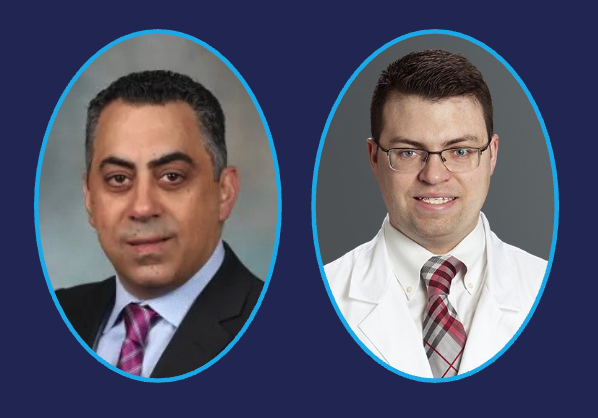
Tanios Bekaii-Saab, MD, chair of the Department of Hematology and Oncology at Mayo Clinic in Arizona, and Jonathan Catrona, PA-C, of New York Cancer & Blood Specialists, discuss key advances from the 2026 American Society of Clinical Oncology (ASCO) Annual Meeting and their implications for oncology advanced practice providers (APPs). In this third and final installment of their discussion, they emphasize the growing importance of next-generation sequencing (NGS) and molecular profiling as targeted therapies become increasingly central to gastrointestinal (GI) cancer treatment.
They highlight the potential of RAS inhibitors, particularly daraxonrasib, to transform pancreatic cancer care, as well as opportunities and challenges associated with introducing bispecific antibodies into community oncology practice. The discussion also addresses practical barriers to precision oncology, including molecular testing workflows, timely access to results, and the need for multidisciplinary toxicity management. For oncology APPs, these developments underscore the importance of genomic literacy, coordinated supportive care, and proactive management of adverse events to help patients safely access and continue emerging therapies.
Transcript
Tanios Bekaii-Saab, MD: My name is Tanios Bekaii-Saab. I’m a GI medical oncologist and chair of the Department of Hematology and Oncology at Mayo Clinic in Arizona.
Jonathan Catrona, PA-C: My name is Jonathan Catrona. I am a physician assistant at New York Cancer & Blood Specialists, which is a large community oncology practice in the Long Island metro area.
Bekaii-Saab: I think overall, we are across the board moving to the world of essentially genomically defined subsets of cancer that are targeted, whether we’re talking about GE cancers, colon cancer, pancreas cancer, believe it or not now, and then biliary tract cancers and others.
I think that continues to emphasize the importance of knowing your tumor and understanding the genetic drivers within the tumor. It’s going to help us refine further and bring some of these therapies, as we’re seeing again with a multitude of studies, to first line and ultimately perhaps even to earlier lines of therapy.
It’s important, very important, to consider universal testing when applicable. Hopefully, again, there are access issues, there are reimbursement issues, but hopefully with time, these resolve. That dimension, understanding the genetic drivers and molecular drivers of cancer, is becoming a must before initiating any form of therapy.
Catrona: I agree, especially because I think NGS testing is probably going to be universal soon across any stage of cancer, let alone in stage II, III, IV. Especially now looking at the results from ASCO, looking especially in II, III, IV, it’s becoming extremely paramount that we do testing, especially in the community setting.
One thing that is concerning about the bispecifics is, in the community setting, I know by me, we kind of lack the infrastructure to really implement it. Because a lot of us, unfortunately, we all got spooked by the bispecific T-cell engagers because they all cause CRS. Thankfully, with this one from ASCO, we don’t see it.
This is something that hopefully can start the trend of using more of these in the community setting. We saw the same thing with rituximab and daratumumab when they first came into the market. They were given in the hospital only, in the ICU. Now they’re given in the practice. I think it’s going to be the same thing with bispecifics, and this is going to be one of the drugs that helps us make that transition.
This is something I think APPs especially need to be mindful of. It’s something that’s a brand-new class, something we’re not familiar with, something I would read up on. But it’s something I think definitely could be practice-changing, like you said, going forward.
One other big thing is daraxonrasib. That’s going to be important going forward, especially in the metastatic, previously treated setting. I’m hopeful that it will become first line in the next couple of years once they get new trials, especially because the data are so mind-blowing right now.
I have colleagues in the community setting who want to use it right now because we have patients with metastatic pancreatic cancer who have gone through multiple lines of therapy. Usually it’s FOLFOX, gemcitabine/Abraxane, and then you would rotate, especially when you have no markers. But now we have something we can actually aim at.
One of the markers, like people say, is PD-L1, but you don’t get many pancreatic cancers that are PD-L1-positive. You just don’t. But you will get, like you said, 90% of folks who are RAS-positive. It is something to look forward to.
Bekaii-Saab: Yeah, I think when we think about all this, what is needed? What are the challenges to make all these things happen?
There are multiple things. For next-generation sequencing testing, you really need to have that support at the level of the practice.
Two things that are needed: On the front end, who does the ordering? Who helps with the ordering? On the back end, how do you get the results back in a timely fashion, and also have them come to your attention in a very busy practice?
There are a lot of these platforms that now essentially communicate with the EMR, EHR, and they dump the data directly into the EHR, which helps a lot. In other practices where you may not have that, you have to ensure that there is proper follow-up and communication. Otherwise, it gets lost in translation.
There are also challenges with some of these new agents. We brought up a lot of the toxicities, the rash with daraxonrasib, the mucositis. Dermatology has to become your best friend for this one and a lot of others coming. Cardiology, when we’re dealing with zanidatamab, and of course, supportive care around the clinic. You guys, PAs, APPs, NPs, you do a lot of that legwork, supporting the patients as they go through these toxicities. That’s an important aspect.
And the key piece with that is, like with any biologics, the key is predictable exposure to treatment. Oftentimes, those toxicities happen early in the game, and you see those patients dropping off and losing the benefit early. This is where supportive care becomes very important to ensure that those patients are adequately treated through the continuum.
I think, just on a large scale, the key message is we’re moving to an era of targeted therapies. We’ve been doing it a lot outside GI cancers, and GI cancer has been slow, but now we’re seeing this in GI cancers becoming more and more the standard rather than the exception.
And if anything stands out to us today, it’s that in pancreas, it’s now the decade of RAS. I’m not going to call it the year of RAS. I’m going to call it the decade of RAS. It started about 2 years ago with the G12Cs. It is now on a high pedestal with daraxonrasib, the pan-RAS inhibitor, in the second line with a significant improvement in outcomes. And that’s coming soon to clinic.
And then what follows is, how do we move this and other agents that are more allele-specific in combination, replacing chemotherapy perhaps, moving it to the first line, moving it to the adjuvant setting? All these studies are being done.
Be on the lookout for essentially changing the way we treat pancreas cancer step by step, but we’re moving in the right direction.
And now we have a fantastic proof of principle for all RAS mutations with daraxonrasib. That’s the one practice-changing, at least the most significant practice-changing element today. There are many others as well, but this one stands out.
Catrona: I would say be aggressive with your next-generation sequencing testing, especially for patients who present with stage III and stage IV GI cancers.
We were doing this pretty routinely in the lung space for a while, especially in stage II, stage III, stage IV, because we had PD-L1, adjuvant, especially ROS1, ALK.
We’re now seeing that in GI cancers. The starting example right now is the RAS inhibitors in GI cancer. That could be something that’s game-changing going forward.
One big thing to keep in mind as well is a lot of the side effects that we’re used to treating are not going away. They’re just being reinforced with these new agents.
The diarrhea, the mucositis, something that we’re very familiar with, that we know how to treat. Something that we need to continue to remind ourselves is that these things are going to continue to present themselves, but they may present a little differently, especially with these new agents.
They might be more aggressive, might be less aggressive, but it’s something we need to keep mindful of going forward.
© 2026 HMP Global. All Rights Reserved.
Any views and opinions expressed are those of the author(s) and/or participants and do not necessarily reflect the views, policy, or position of LL&M, Oncology Learning Network or HMP Global, their employees, and affiliates.
Related Content


The APP Institute is a new offering from the Oncology Learning Network that provides microburst education to oncology advanced practitioners. The platform offers year-round digital non-accredited learning modules through animated short videos, multimedia interviews with key opinion leaders, interactive content to test your knowledge, and more!




