









Relapsed/Refractory Multiple Myeloma: When CAR-T Isn’t the Next Step
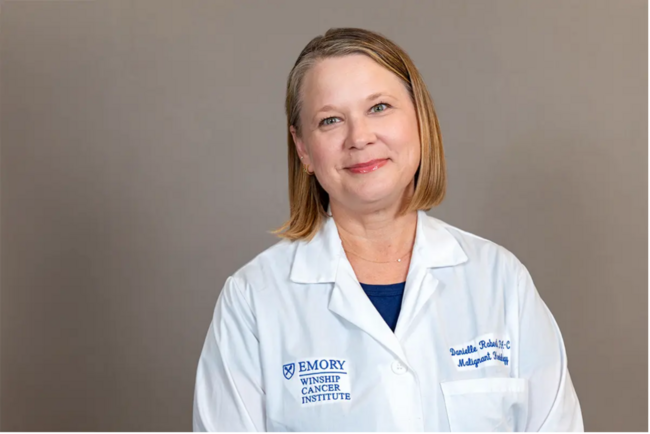
Danielle Roberts, PA-C, a physician assistant and multiple myeloma specialist at the Winship Cancer Institute of Emory University in Atlanta, Georgia, presents a case study discussing the treatment course of a 65-year-old man with multiple myeloma who achieved a deep response following induction therapy and autologous stem cell transplantation but experienced clinically significant relapse approximately 18 months later. Although CAR T-cell therapy was considered, the patient's professional responsibilities, concurrent prostate cancer diagnosis, and concerns about treatment burden complicated the timing of cellular therapy.
Roberts describes how treatment with carfilzomib, daratumumab, and dexamethasone initially achieved a strong biochemical response, followed by a transition to daratumumab and pomalidomide that provided sustained disease control while preserving CAR T-cell therapy as a future option. She emphasizes the importance of evaluating clinical progression beyond serum markers, accounting for concurrent malignancies, and distinguishing treatment eligibility from patient readiness. For oncology advanced practice providers, this case illustrates the value of shared decision-making and individualized treatment sequencing that balances disease control, quality of life, and patient preferences.
See the full case presentation here.
Transcript
Danielle Roberts, PA-C: Hi, everybody. My name is Danielle Roberts. I'm a physician assistant, and I work at the Winship Cancer Institute of Emory University in Atlanta, Georgia. I am a myeloma specialist, and today we are going to talk about relapsed/refractory multiple myeloma, and we're going to have a case study today.
I titled this "When CAR-T Isn't the Next Step," and we're going to talk about individualizing treatment in the relapsed/refractory setting. I want to talk you through a patient case with, more importantly, the treatment decisions that came along with his disease course.
This is a 65-year-old man who initially had very high disease burden, underwent induction and transplant, and achieved a very deep response, and then relapsed relatively early after transplant. CAR-T became part of the treatment discussion, but ultimately the patient wasn't ready to proceed because of the impact the treatment would have on his ability to work.
What I want to focus on today is that last piece. We often talk about what therapies patients are eligible for, but eligibility and readiness are 2 different things.
Let's start at the beginning.
He was 65 years old when he was initially referred to us. His past medical history wasn't particularly complicated from a myeloma standpoint. He had hypertension, hyperlipidemia, and autoimmune thyroiditis, but otherwise had been in very good health. This is a gentleman who worked out every single day. He went to the gym. He's fit. He has a great job where he is still working full time at the top of his scope. He's married. He has a full family. They live a great life.
His myeloma was actually discovered somewhat incidentally. He was being evaluated for a mildly elevated creatinine, and he had a serum protein electrophoresis (SPEP) that showed a significant IgA kappa monoclonal protein.
At the same time, he was anemic with a hemoglobin of 7.6 g/dL, and he had developed right shoulder pain that he initially attributed to working out. His orthopedist obtained plain films, and when the lytic lesions showed up, that's what really changed his clinical picture.
You can see that this was not a small monoclonal gammopathy. His M-spike was 5.88 g/dL. His IgA was 5.2 g/dL, and his total protein was 11.2 g/dL.
Interestingly enough, his creatinine and calcium were relatively preserved. Although he had a high disease burden, he didn't have the classic severe renal dysfunction or hypercalcemia that we sometimes see.
The teaching point here is that the absence of hypercalcemia or significant renal dysfunction does not mean the disease isn't extensive.
When we did his bone marrow biopsy, this really confirmed what we were seeing in the blood. He had approximately 90% plasma cell infiltration. His PET scan showed innumerable osteolytic lesions, many of which were FDG-avid.
From a risk standpoint, his FISH showed a deletion of 13q and trisomies 3, 7, 9, and 17, consistent with hyperdiploidy. Importantly, we did not identify any high-risk translocations or deletions. He was classified as an International Staging System (ISS) stage II and a Revised International Staging System (R-ISS) stage II.
This is an interesting patient from a risk perspective. He had a tremendous amount of disease, but his cytogenetics did not demonstrate the high-risk features that we might expect in some patients with aggressive disease. Given his age, clinical status, and transplant eligibility, we moved forward with standard-of-care intensive therapy.
He started induction therapy with daratumumab, lenalidomide, bortezomib, and dexamethasone (Dara-RVd) on March 1, 2022. He then proceeded to an autologous stem cell transplant on June 24, conditioned with MEL200. Following transplant, he would transition to lenalidomide maintenance.
At this point, the goal was straightforward: achieve the deepest possible response, consolidate that response with transplant, and maintain disease control.
Initially, he did extremely well. At day 100, we saw exactly the kind of response we were hoping for. His M-spike was undetectable. His IgA was normal. His free kappa dropped dramatically, and his light chain ratio improved. His PET scan was also reassuring. The lytic lesions were still there, but they were no longer metabolically active.
This is an important distinction. The bone lesions don't necessarily disappear just because the myeloma is controlled. But what we want to see is that there's nothing new and they are not metabolically active, which is what we saw in his PET scan. His bone marrow showed less than 5% plasma cells, with no increase in plasma cells identified.
How would you characterize this response? He's had a very deep response, but we want to be careful about using the term complete remission unless we have all the appropriate response criteria documented.
Unfortunately, the story did not end here. In December 2023, approximately 18 months after transplant, something happened that changed the trajectory of his disease. He was lifting his grandchild and felt a snap in his left arm. He went to the emergency department and was found to have a humeral fracture. Given his history, this immediately raised concern for a pathologic fracture.
He underwent surgical fixation on January 15. Then we did restaging in February, which confirmed what we were worried about.
The PET scan demonstrated new and enlarging FDG-avid lytic lesions, and the marrow again had become involved. The core biopsy showed sheets of atypical plasma cells occupying approximately 40% of the marrow space. This wasn't just a laboratory response. This was a clinically meaningful progression.
The laboratory data did tell the same story. His IgA went from 23 after transplant to over 3200. His free kappa increased from 5.2 to 175, and the kappa-lambda ratio went from 2 to more than 30. By February 26, his free kappa was 239, and his ratio was 61.
At this point, we had a patient who had relapsed after transplant and lenalidomide maintenance with significant biochemical progression, recurrent marrow involvement, new PET-avid bone lesions, and a pathologic fracture.
What would you choose for treatment at his relapse? Importantly, what are we trying to accomplish with this next line? Are we simply trying to get the numbers down, or are we trying to get him to a cellular therapy?
We started him on carfilzomib, daratumumab, and dexamethasone in February 2024. The plan was not necessarily for this to be a final treatment. The goal was disease control while moving forward toward CAR-T.
Initially, he responded beautifully. His IgA dropped from over 3000 to 117. His free kappa went from almost 240 down to 5.2, and his paraprotein became undetectable.
But this is where the case gets interesting. Despite the systemic biochemical response, we remained concerned about disease involving the arm. Carfilzomib was not adequately preventing the progression at that site. We had a patient who was responding systemically, but we weren't completely satisfied with the disease control.
Then unfortunately for us, another cancer entered the picture. In 2024, while we were managing his relapsed myeloma, he was diagnosed with prostate cancer. His prostate cancer was clinical stage IIC, with a PSA of 16.9 and Gleason 4 + 3 disease, grade group 3. He was evaluated for definitive therapy and ultimately received androgen deprivation therapy with degarelix and radiation, which he completed in March 2025.
This complicated the treatment landscape. We were no longer making myeloma decisions in isolation. We had another potentially curable malignancy that also required treatment.
Interestingly, in February 2025, his bone marrow showed less than 5% plasma cells and no monotypic plasma cell population on flow, although the specimen was hemodilute and suboptimal. We again had to look at the whole patient and not just one laboratory value.
At this point, CAR-T remained the goal. We had discussed the potential for prolonged remission with CAR-T, but there was a very practical issue. This patient works, and the anticipated treatment, of course, would require approximately 2 to 3 months away from work. He wasn't saying no to CAR-T forever. He was saying, "I'm not ready to do this right now."
I think that's an important distinction. As clinicians, we can know what therapy we think is the best option medically, but the patient has to be able to live with a treatment plan. Rather than simply pushing forward with CAR-T when he wasn't ready, we needed another treatment strategy to control the disease and preserve CAR-T as an option. This is where pomalidomide came in.
Now remember, this is back in 2025. We started Dara-Pom on March 17, 2025. His paraprotein was 0.88 g/dL, essentially at the time of starting therapy. By May, it was completely undetectable. Importantly, that response has been durable. As of September 2026, the paraprotein remains undetectable, his IgA is 104, the free kappa is 12.8, free lambda is 9.9, and his kappa-lambda ratio is 1.29. The treatment strategy that was initially intended as an interim approach has provided sustained disease control.
CAR-T hasn't disappeared from the conversation. We've essentially preserved it as an option if he demonstrates progression or if his goals change.
There are several things that I think this case highlights.
First, a deep response after transplant doesn't mean the patient won't relapse. This patient had an excellent early response and still developed clinically significant disease approximately 18 months later. When we think about high-risk features, while he did not have any high-risk cytogenetics, he now technically is functionally high-risk because he did relapse within 2 years of his autologous stem cell transplant.
Second, we have to look at more than just the serum markers. His biochemical response to Car-Dara-Dex was impressive, but the arm remained concerning.
Third, the treatment landscape doesn't exist in a vacuum. His prostate cancer significantly affected the timing and sequencing of therapy.
Fourth, and probably the biggest lesson for me, is that CAR-T eligibility isn't the same thing as CAR-T readiness. His work, his quality of life, and his willingness to accept treatment burden all mattered. Dara-Pom gave us a way to maintain disease control while keeping CAR-T available for the future.
As I stated before, this all happened in 2025. Now that we're in 2026, we now have daratumumab plus teclistamab that has been approved in the second-line setting. Now, do I think I would do anything differently? No, I think I would still do this the same because CAR-T products are all BCMA-related targets.
Dara-Pom is not a BCMA-related target. In order for us to continue to preserve CAR-T for the future, Dara-Pom is where we needed to be.
Luckily for us, he is doing amazingly well and continues to have a response to treatment. He still is not quite ready to move on with CAR-T, even though he's retired. He is traveling and living his best life. At this point, he says, "I'm doing great. I'm tolerating treatment well. I want to keep doing this."
And the minute we're concerned, then he says he'll be ready for CAR-T.
I'll leave you with this question: If you have a patient who is eligible for CAR-T, but that patient isn't ready to proceed, how do we balance the desire for the deepest and most durable remission with the patient's goals, quality of life, and ability to actually undergo the treatment? I think this is where the art of treating myeloma really comes into play.
Thank you so much for your time. I hope you've enjoyed this case, and have a great day.
© 2026 HMP Global. All Rights Reserved.
Any views and opinions expressed are those of the author(s) and/or participants and do not necessarily reflect the views, policy, or position of LL&M, Oncology Learning Network or HMP Global, their employees, and affiliates.
Related Content


The APP Institute is a new offering from the Oncology Learning Network that provides microburst education to oncology advanced practitioners. The platform offers year-round digital non-accredited learning modules through animated short videos, multimedia interviews with key opinion leaders, interactive content to test your knowledge, and more!




