IBD Drive Time: Corey Siegel, MD, on Challenges to IBD Care Delivery
Dr Corey Siegel joins podcast host Raymond Cross, MD, to discuss the challenges of providing access to quality care for inflammatory bowel disease.
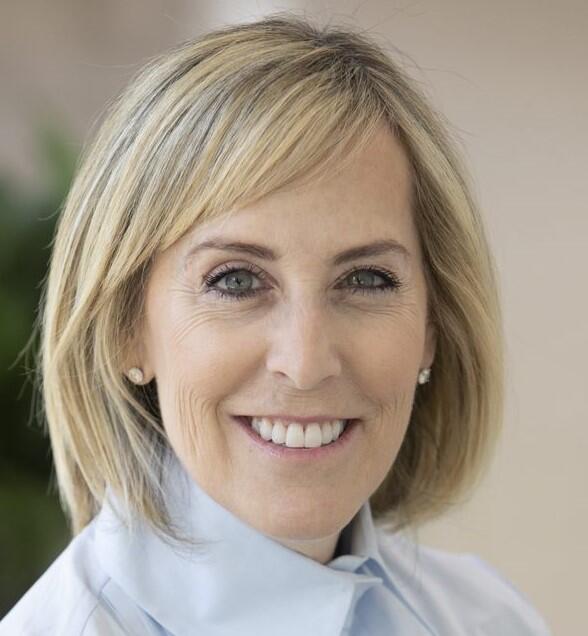
Raymond Cross, MD, is Medical Director, The Center for Inflammatory Bowel and Colorectal Diseases, The Melissa L. Posner Institute for Digestive Health and Liver Disease at Mercy Medical Center, in Baltimore, Maryland. Corey A. Siegel, MD, MS is the Constantine and Joyce Hampers Professor of Medicine at the Geisel School of Medicine at Dartmouth and director, Center for Digestive Health at Dartmouth-Hitchcock Medical Center in Lebanon, New Hampshire.
Clinical Practice Summary
RADIUS Expands Multidisciplinary IBD Care Through APP Mentoring
- In the United States, multidisciplinary IBD care is available in an estimated 10% or fewer practices, while IBD prevalence in North America is projected to reach about 1 in 100 people by 2035, according to Drs Cross and Siegel.
- RADIUS (Rural APPs Delivering IBD Care in the United States) provides a virtual, one-time, 2-hour consultation with an IBD specialty team, followed by a concise care summary for the referring APP and ongoing mentoring.
- Dartmouth’s model includes gastroenterology, behavioral health, nutrition, pharmacy, and nursing; APPs review shared patients with the team every 2 months. Hub sites include Oregon Clinic, University of Colorado, Vanderbilt, University of North Carolina, and UT Southwestern.
Transcript
Welcome everyone to IBD Drive Time. I'm Raymond Cross from Mercy Medical Center in Baltimore, and I'm delighted to have my friend Corey Siegel from Dartmouth, who's a return guest, and we're going to talk about access to IBD care and other challenges in IBD care delivery, a very difficult topic. Corey, welcome back to IBD Drive Time.
Dr Siegel:
Thank you, Ray. I appreciate the invitation to come back. I really enjoyed talking with you last time, so it's a thrill to be back. Thank you.
Dr Cross:
So Corey, I want to jump right in with the question about multi-D care. So whenever you're at an IBD meeting, whether it's a regional meeting or a national meeting—and by the way, it's a good time to mention that the AIBD national meeting, this is the 25th anniversary, it'll be December 7th to 9th—and of course you're one of the cochairs from the AIBD meeting. But we talk a lot about multi-D care in medical homes. So everyone I think can see the value of that, but if you had to estimate, what percent of practices in the US do you think have an integrated multi-D model?
Dr Siegel:
Yeah, thanks, Ray. This comes up all the time when we're actually planning these conferences, too, when we have a panel discussion about multidisciplinary care with psychologists and dieticians, and we often try to remind our speakers to recognize that most people in the audience don't have access to people like them, so we have to make sure we have a plan of how to deal with that. To answer your question, I don't know the right number. I bet it's 10% or less, but it's probably more of a spectrum than a dichotomous yes or no, meaning all practices, I think all practices have nurses who work with them, and some GI nurses are unbelievable, particularly IBD nurses—v and very, very sophisticated, and some practices even have biologics coordinators who are nurses and are really excellent. But I think what you're referring to really are psychologists, dieticians, pharmacists, and to do that, you really need an IBD center, and most IBD centers are in academic practices, not all, there's some amazing IBD centers and community practice, but currently in the US, it's 80% community-based practice and 20% academic practice.
So if you start thinking these mostly happen at big academic practices who have big IBD centers, I bet you it's like 10% or so.
Dr Cross:
Yeah, I was thinking the same number, and I think you're right. I think there's another 5 or 10% that have components that don't have everything, and then there's probably another 10% that have formed a community home where they have resources around them, where they have been able to figure out, okay, I have a psychologist here and there's a dietician here, or I'm using Nourish for my dietician support and things like that. So that brings me to the second question—what do you recommend for the lower-resource center? So places in complete community practices or maybe even in rural practices where they couldn't even cobble together those resources, what should they be doing?
Dr Siegel:
Yeah, I mean, the first thing is to recognize that even if you don't have these resources, it's important to your patients and care. And I've often referred to this as a Pandora's box, that if you don't have a psychologist, the last thing you want to do in a busy clinic when you're running behind and you're getting paged by endo because you're supposed to be over there is to delve into depression and anxiety related to their IBD. Not that it's not important, but if you don't have the skillset or the resources to help them, you probably don't ask the questions.
A case in point on this is we have an unbelievable behavioral health team here at Dartmouth, and Jesse Salwen-Dermerer, who leads our group, has taught me how important sleep is to patients and how intertwined that is with IBD. I had no idea until I started asking patients about it. And then once I did, really only because I knew that I had Jesse to help support with cognitive behavioral therapy if they did have insomnia, I don't want to ask the question as I didn't know what to do with it. So you need the resources to help your patients if you're going to ask the question.
So the first advice is don't not ask the question because it's probably important to your patients, and so many patients are impacted by behavioral health. I've got to imagine every patient with IBD has questions about diet, and we know that every patient with IBD has concern about cost of healthcare, which is where our pharmacists can really come in. So one is, ask the question.
Then two, if you don't have local resources, I mean, you can think about getting them, but that's a whole nother conversation of how to do that. You might have them in the community, you might have people who you can partner with who aren't in your practice that you can go to and say, "Hey, would you be interested in learning more about IBD and seeing these patients?" But there are now a whole number of online sources and apps that are actually pretty good. And as I mentioned, Dr. Salwen-Dermerer’s name, she has a whole list of apps and other approaches with coaching that are out there, and the same thing are available for dieticians. We have a couple of different online sources for dieticians. One's called Nourish, another one's called No Diet Dietician, and these are virtual appointments that you can do for support. So the answer is don't not do it. It's try to find other ways to do it that might be lower overhead cost and still allow your patients to get access.
Dr Cross:
So recognizing the scope of the problems, don't be afraid to ask the question and try to figure out what virtual and local resources that you have. This comes up a lot with intimacy-related questions, right? I don't know what to do with the answer. Well, the primary care doctor can address erectile dysfunction or they can make a referral to urology, and most women have a gynecologist if they're having pelvic floor problems and dyspareunia, so you can ask the question. We should never ask the question with our hand on a doorknob as we're trying to walk out of the visit, right? That's a bad idea.
Dr Siegel:
Yeah, yeah, exactly. And this is why a program that I'm part of called IBD Qorus, the question that everybody gets as a previsit questionnaire, the first question is what's your number one concern or worry that you want to talk to your provider about today? And then we have in parentheses, it doesn't have to be about your GI symptoms. It could be anything related to IBD, including cost, travel, I'm not sure we say anxiety or depression, but to prompt people to think through these other things that they might want to bring up. So it could be the focus of the conversation, not the doorknob question that none of us like.
Dr Cross:
When I was at University of Maryland, they made us take this patient interviewing primer or refresher course, and I remember many of us were super irritated. We were associate professor level, professor level, and thankfully I went into it with an open mind, but that's exactly one thing that I took from that—asking the patient, if it's a new patient, what's your goal of the visit today? And for a follow-up, what concerns do you have or what's your primary concern today? And it gives them a pathway to... Some would say, "Well, what if they have 4 or 5 things?" Well, that's probably a positive screen for depression and anxiety. Most people aren't going to give you 5 things. They're going to give you no more than 3 items that are super important, and I think it's maybe a better provider that I asked the question at the start of the visit.
Dr Siegel:
Yeah, I think you're right, and you don't need to be part of IBD course or anything to do it. Like you said, you can just ask. I'll often say to patients, if I don't have their questionnaire for some reason, I'll say something like, "Well, you were driving here this morning. What was the one thing on your mind that you wanted to make sure you brought up to me or asked me about?" And that's a kind of nonconfrontational way to say, "What did you think I wasn't going to ask you that you wanted to bring up?" Yeah, I think patients really appreciate that. We teach all of our fellows and our trainees in courses that you and I have done together, that for you, that might be one of 20 visits in the day and maybe one of 80 that week. But for that patient, it might be one of the most important things they've done all year is coming to see their doctor for their chronic disease management, and they've been storing up worries about nutrition, behavioral health cost until the visit. And if you rush in there and ask about abdominal pain, bowel movements, and blood in their stools, that's not why they came. They want to talk about other things too.
Dr Cross:
So you and I are about the same age, and when we started practicing, patients actually could die from their Crohn's and ulcerative colitis, and they still can, but generally, patients these days don't die because of their Crohn's and ulcerative colitis, and they're living longer and longer with their IBD. And although incidence is stable, that means, though, that we have more and more patients with IBD, particularly even older patients with comorbid conditions and frailty and other things we have to manage. So that's another problem, right?
Dr Siegel:
Yeah, it's an interesting problem. It's an interesting epidemiological problem that actually our friend and colleague named Gil Kaplan, who's in Calgary, talks about this issue of compounding prevalence and a compounding interest in your bank account, your principle keeps growing, and then you get more and more interest on top of that. And because of what you said, Ray, thankfully, people aren't dying of their IBD except in very unusual circumstances. So we have generations now of people getting older with new people consistently getting diagnoses, and the numbers of patients with IBD, at least in North America, are going to continue to grow. In fact, their estimate is that about 1 in 100 people by 2035 in North America will have IBD. I mean, that's a lot of people. That's a lot of people that we're going to have to take care of, which are all going to have these needs around not just specialty IBD care, but multidisciplinary care, as you were asking about.
Dr Cross:
Wow. I feel like we're getting a little depressed here with some of this stuff, but along with the compounding prevalence and the complexities of our patients, we have really intense financial pressures as physicians and gastroenterologists. And as a result, particularly in the community, more and more gastroenterologists are doing procedures to pay the bills and hiring APPs to manage patients in the office. That's a challenge, right? I mean, APPs aren't all the same, right? Some of them are right out of training with little to no GI, particularly IBD exposure. Others, like the PA I hired, had about 5 years of practice experience. That's a completely different level, but she didn't also have 20 years of IBD practice experience. So what are we going to do about that?
Dr Siegel:
Yeah, I think for all the reasons you said, APPs are critical to our success in caring for patients with IBD for the future. I say that because as noted, there are going to be a lot of patients for us to take care of. GI, just like all parts of medicine, is getting more complicated. It's really hard to be a good general anything these days. There's so much out there. I mean, I like to think I'm good at taking care of patients with IBD. I know I'm not great about taking care of patients with liver disease, certainly certain endoscopic procedures, pancreas disease, GI motility disorders, that even within specialties, they're subspecialties, and to think that everyone's going to be able to keep up with everything is really tough.
And that concerns me just from an access standpoint, because we could say, "Oh, well, every person with IBD should see an IBD specialist," and that's nice, but our colleagues around the country, whether they're great IBD specialists in private practice or in academic practices, are booking out months to get in. So we need help.
I think the future is about training APPs to become subspecialists within GI, that an APP also shouldn't be expected to be an expert in liver disease, pancreas disease, motility, colorectal cancer screening in IBD. I wonder if we really should be doubling down on helping train our APPs, just like we train our fellows and really to think this is what we need and use them as our partners in clinic, not just as our helpers to see patients, but really our partners to primarily care for this patient population. I'm sure you'll say the same.
I work with some amazing APPs, both in this building here at Dartmouth and in the community, who are such good providers and they really like IBD and want to be better at IBD and are kind of craving training so that they can do it. And you mentioned AIBD, our 25th anniversary coming up. We have a whole track now for advanced practice providers because the number of APPs who come to AIBD grows every year. There are now dedicated AIBD programs just for APPs outside of the national meeting. There are other national organizations like GHAPP who are holding programs; our friends who run Milestone, and we've both been involved with that, are training APPs, and this is just what needs to happen. I mean, we just have to find different ways and more creative ways to make APPs our partner in caring for these patients.
Dr Cross:
Yeah, I'm doing one of the AIBD premeeting workshops, and one of my topics is how to integrate an APP into practice. I have to say that I really failed at it initially. I was much better with fellows than I was with APPs, and then it's all about finding the right person and having the right training set up, and it really requires an open door policy and mentoring. It requires some shadowing. It requires lengthier visits initially, and then over time reducing the length of the visit. And as I said, open door policy where they have access to you and other faculty, really, it's not going to be financially viable early on. I mean, at least that's been my experience.
I wonder, like an IBD fellowship, and I'm sure there's some places that are doing this already, where APPs out of training can spend a year doing IBD, or if they're shifting focus in their career, they can spend a year with some kind of funding where they can get IBD expertise. I don't think pragmatically 3 years would work for many of them, but I could see a year being something like an IBD certification, and we're doing tons of things. AIBD is doing it, GHAPP's doing it. There's lots of focus on education, but I think you and I are focused particularly on helping APPs in our region, because I think one of our responsibilities is not just making sure the care at Dartmouth or at Mercy is great, but we want the care around us to be great as well, right?
Dr Siegel:
Yeah, completely. And there are different ways to work with APPs, and one are great didactic lectures and teaching. But we all know, at least as gastroenterologists, and when we're fellows, we did not learn to be good gastroenterologists, good GI fellows, and good IBD specialists by going to lectures. We did it by mentoring and really working directly with patients. So the approach that we've taken for APPs in the community are actually more of a mentoring approach as opposed to only didactic lectures. I think you need both, just like in medical school, you need both. But I think this idea of direct mentoring with real patients is the way that we all learned. I mean, that's the way we all learned. We saw a patient in clinic, we presented it to our attending, and then we got feedback, and we changed the way we did it the next time based on how things went.
But many APPs, once you get in the job, it's just busy. I mean, they're really, really busy being in clinic all day. I often think, I mean, ask a gastroenterologist if they mind being in clinic 5 days a week. Forget the financial part of it, just seeing patients in clinic and writing notes all day long. That's what our APPs are doing, and we need to help them with complex patients more than just sign off on notes or answer one question. It's really about training. So again, all this didactic lecture part are good. Yeah, some of our friends around the country are starting APP IBD fellowships, which I think is amazing, and that should continue to grow, but I think we all have the ability to mentor APPs that we work with in some way or the other.
Dr Cross:
So Corey, tell me about what you're doing. So we want to support the community around us. I'm going to ask you a two-part question, which is always terrible, but how do you do that but remain competitive financially, right? It's not like you're giving away trade secrets, but you're helping to manage patients, which potentially decreases referrals. And then what particularly are you doing from a research perspective with RADIUS to help your community?
Dr Siegel:
Oh yeah, great. No, I think if I remember the two parts, I can get them. I mean, as mentioned, there are a lot of IBD patients out there, and if even the estimates are partially right. Somewhere near a one in a hundred people walking around having IBD is a busy practice no matter where you go. So we're never running out of patients. And the referrals I think don't need to be for every patient. I think the referrals come, in my mind, two important times in a patient's journey with IBD. One is actually right up front. And I would love every patient in the country, in the world, when they're diagnosed, to see an IBD specialty team, a multidisciplinary team, so that the patients have the opportunity to understand the breadth of how IBD can affect them, as we talked about, behavioral health, nutrition, cost upfront, as opposed to figuring that out along the way or not getting addressed.
And when patients get more complex and you really need help. So I would be fine if my practice was more focused on that, new diagnoses and then really tricky ones. And there are just plenty of patients to go around. So as far as stealing patients or financially competing, I don't think that's where it's going to be. My approach with referrals is to try to keep all of the other revenue in those referring practices. Meaning just because you have IBD, you don't need to come to Dartmouth to have a colonoscopy. You can have that done locally and keep that there. There are times where we want patients to come here. Maybe it's a complex chromoendoscopy with dysplasia, patients with liver disease, with PSC who need our help, operations by surgeons who are true IBD surgeons as opposed to somebody who doesn't do a lot of this.
But in general, I think focusing on send us the patients where we could be most helpful, I don't think there's going to be too much competition to care for patients. And I think these practices who are really busy clinically, and let's keep in mind, even our colleagues who are in endoscopy all week, they're working really hard and they have a list of hundreds and hundreds of patients on a backlog to get in. So it's all important. It's just a matter of who does the work where.
And I'll tell you about RADIUS. My vision is that every patient has the opportunity to interact with an IBD specialty team, not long-term all the time, but just even once, to make sure that they're on the right track. So that was the first part. I'll get to the second part, but go ahead.
Dr Cross:
Right. Corey and I were talking about this before we started recording, but we both want to make it very clear. We don't want to appear like we're speaking from the ivory tower. We get it what is happening and the competitive pressures and the challenges of training and hiring an APP. We get it. We're just trying in general to help the communities around us and in general to deliver better IBD care, but we're not saying that we know exactly how to do it. We're just making some suggestions of what we found helpful. So tell us about RADIUS.
Dr Siegel:
Yeah, I totally agree with that. And RADIUS was built off that principle that we have great colleagues in the community. All of our colleagues trained at academic centers by definition. We have great colleagues. It's just a matter of how you spend your time and the people around you. And if you have a team to help you, particularly with complicated patients, it's really better for the patients when things get complicated and you have dedicated IBD nurses, dedicated psychologists, dieticians, pharmacists. It's not about revenue. I mean there it's purely about what can we offer patients? And I mean, there are some unbelievable community-based practices that have very sophisticated, better IBD centers than many academic practices. So it's not about community versus academic. It's about do you want your practice focused on caring for IBD patients or not? And if the answer is yes, we just want to make sure patients have access to all they need.
So that's actually what birthed this idea of RADIUS. So RADIUS is an acronym that stands for Rural APPs Delivering IBD Care in the United States. And I'll tell you how it was born out of an idea in rural healthcare. And where I live is very rural. If any of you listeners have been up to Northern New England, it's not like Maryland. I mean, it's a very different place and it's not easy for patients to get places and to get resources.
But I will tell you as the program has evolved, we're learning that actually it's not just a rural program, that there is an urban center now trying this out to see how it works. So the concept is let's do a consultative visit. Let's change the model that when you see a new doctor or a team in consultation, that doesn't mean you've been transferred to that team. And with the prevalence that we talked about slowly getting higher over time or quickly getting higher over time, that's just not feasible. And waits are going to get out to, they're already 6 and 12 months, they're going to be at 2 and 3 years to get in. So if we can create this more rapid access program that patients get into an IBD specialty team and then go back to the community and work with their APPs or gastroenterologists, that would be great. So that's the idea of RADIUS.
And it has evolved over time. We did not get it right at first. We actually changed it with feedback from patients and from referring providers of how to make it better. So this is how it currently exists. We partner with community-based practices all over Northern New England. And typically these practices are small GI practices, 1 or 2 gastroenterologists, maybe one's a locums gastroenterologist, and they typically have 4 or 5 or maybe even more APPs.
And I went to visit all these practices to really learn about them and how we do it. So we asked them to refer us patients. At first, it was just the patient you would typically see in a referral, Ray, in your practice, like third, fourth opinion, everything's been done, they need an operation usually. But we really encourage them to please send us patients recently diagnosed so that we can help get in early and get that trajectory going on the right direction, not just for their IBD meds, but all their multidisciplinary care and send them to us.
And the way we do this is all virtually. And you, Ray, taught me about telemedicine before anyone was doing it. And then I picked up soon after you actually back in 2014 doing telemedicine. We realized anywhere, but particularly in rural areas, telemedicine's wonderful. So we set up a one-time, 2-hour visit for the patients. It's on one link for the patients, so it's all simple for them. And then I see them for about 40 minutes and then I hand them off a warm handoff to one of our psychologists, typically Dr. Salwen-Dermerer, or Jessie, who I mentioned. And when I say warm handoff, meaning she comes on the video with us, I give a quick little summary of, "Hey, this is what we just talked about. Here's my plan." And then when Jessie's done, she hands them over to our dietician, Kat, same kind of thing, warm handoff. And then Kat hands them off to our pharmacist, Gina. And then when Gina's done, our nurse coordinator, an amazing woman named Nikki Felicetti, gets on and wraps it all up and puts the whole kind of summary together. And the way she's able to do that is during the visit, we're all typing in what our plan is into Epic or Secure Chat or wherever so that everybody knows what we're doing with this patient.
And it's not like you're starting over every time. And then within usually a few hours and definitely within 24 hours, we send that note back to the APP. And you and I know that when 5 different people are seeing a patient, you can get 32 pages of gobbledgook cut-and-paste stuff in Epic. So we actually create a 2-page summary of just what the impression and recommendations are back to that APP. So they have it right there. We then call the patient a few weeks later to check in and make sure they didn't think of other questions and have everything clear in their minds of what the plan is. And then where I think the secret sauce is going back to the APPs. I individually meet with my nurse coordinator, Nikki, one-on-one with all the APPs every 2 months. And we have this run the list model like we did as residents and trainees where you would say, "Who's sick? Who's not sick? Where do you need help? What didn't work? Where did we make recommendations that totally failed?" Which happens, and then help them guide them.
And then we of course also make ourselves available in between for more urgent questions, but the APPs we work with are so good. They go through their whole patient list, we give them a list of all the shared patients so it's easier for them. And they really come forward with, "Hey Corey, thanks a lot. That recommendation was terrible. It didn't work." Or, "Hey, we did everything you said and they're doing great, or I think something's evolved and we need to change." And that way we're able to help care for the patients without putting them back on our schedule, which is hard. We're able to support the APPs in this mentoring that I mentioned, this kind of one-on-one in your patient, this is what we would do together.
And I will tell you, the APPs I've been working with are now IBD specialists. They're really, really good and they're really learning. And the questions got more and more sophisticated over time. And it's really satisfying to see that we're essentially helping train a group and not just around IBD of medication utilization and direct clinical care, but behavioral health, pharmacy, nutrition, everybody's learning together. And then we actually have webinars quarterly with the whole group. So we share different things.
And then I'll stop after one more step, which is really where RADIUS has started to shine, is as you're picturing this, it really is a hub and spoke model. So we're the hub for Northern New England. And then these referring practices are the spoke sites referring patients into us. So to make it scalable, we now have extended hub sites across the country so that they have their own spokes.
So we have the Oregon Clinic in Portland, by the way, private practice, amazing program that they have, multidisciplinary program with their own spokes. University of Colorado, Vanderbilt, University of North Carolina, and just hot off the press, UT Southwestern to get Texas, all of which are their own hubs with spokes coming in. So then we can really scale this model and do essentially what I described we're doing at Dartmouth, but with their own teams of multidisciplinary care. And I'll have to tell you, Ray, it's really great. It's going really well.
Dr Cross:
Yeah, I think it's really cool. And I know that I communicated this to you because I'm not trying to steal something, but I wanted to do something similar in Maryland, but at a lower level, less labor intensive. And if the funding comes through, what we're going to try to do is come up with a mentoring network of 4 APPs, north, south, east, west in the geographically challenged areas in Maryland as far as accessing us and spend an hour a week with them running a list, going over difficult patients concepts. Again, becoming that hub for them if needed and trying to help manage them and having a one-year program where maybe the next year we would have four more APPs that we would do it. So I call it RADIUS Light. It's not nearly what you're doing, but it's just another way of trying to help and support APPs in the community.
So maybe next year we'll do a follow-up and see how that's working.
Dr Siegel:
Yeah, I love that idea. And you're doing what I called out earlier, which is there's a difference between teaching and mentoring. And there are now thankfully more and more opportunities to get training in IBD, didactic lectures, case scenarios that are hypothetical cases. But this idea of mentoring is what we need to do. And I love that you're doing that. I hope more people do it. I mean, RADIUS isn't the only way to do it, but we're collectively, as a community, we're going to have to be creative in coming up with different ideas because we really need to be prepared for the patients we already have and the patients that are coming as it's only going to grow. And IBD is only going to get more complicated. We're getting more and more drugs with fancy new mechanisms that even if you do this all the time, it's hard to keep track of.
And we don't expect that all of our colleagues in practice are good at everything. Again, I'm not at all. So if we're going to have IBD patients seen by IBD specialists, we're going to have to collectively help train people to be IBD specialists, and that includes gastroenterologists and APPs.
Dr Cross:
Corey, this has been great. Before I sign off, I just want to remind the listeners that IBD Drive Time is the official podcast of the AIB Network, and you can find this on Apple Podcasts and Spotify. Corey, this has been great. I will see you in Orlando in less than a month.
Dr Siegel:
Thank you for having me, Ray. I'm looking forward to it.
© 2026 HMP Global. All Rights Reserved.
Related Content


About Us
The Advances in Inflammatory Bowel Disease Network provides gastroenterology professionals with a central source for the wealth of content on IBD—articles, abstracts, videos, podcasts, and commentary—generated at our regional and annual meetings.
Learn more about our event and register here: