

Hydrosurgery: Differentiation From Pulse Lavage
- Hydrosurgery and pulse lavage are distinct techniques in wound care and are not interchangeable, despite some similarities.
- Pulse lavage involves irrigating a wound using an intermittent flow of pressurized fluid with a hydraulic force of between 4 and 15 pounds per square inch (psi).1–4 It is often used in conjunction with conventional surgical/sharp debridement, as a means of irrigating a wound and removing cellular debris.5–7
- Hydrosurgery involves the emission of a high-pressure jet of sterile saline across an aperture at between 12,800 and 15,000 psi.4,8 The jet creates a localized vacuum to cut tissue, irrigate a wound, and remove debris simultaneously with a single, standalone tool.7,9–11
- Hydrosurgery’s differing mode of action gives it several key advantages over pulse lavage: the ability to cut tissue, more efficient irrigation, more effective removal of bacteria, and a wider range of clinical applications.5,6,8,10,12,13
Introduction
Hydrosurgery and pulse lavage are similar but distinct techniques in wound care, with key differences in terms of efficacy and efficiency due to their differing mechanisms of action, as described below.
Pulse lavage
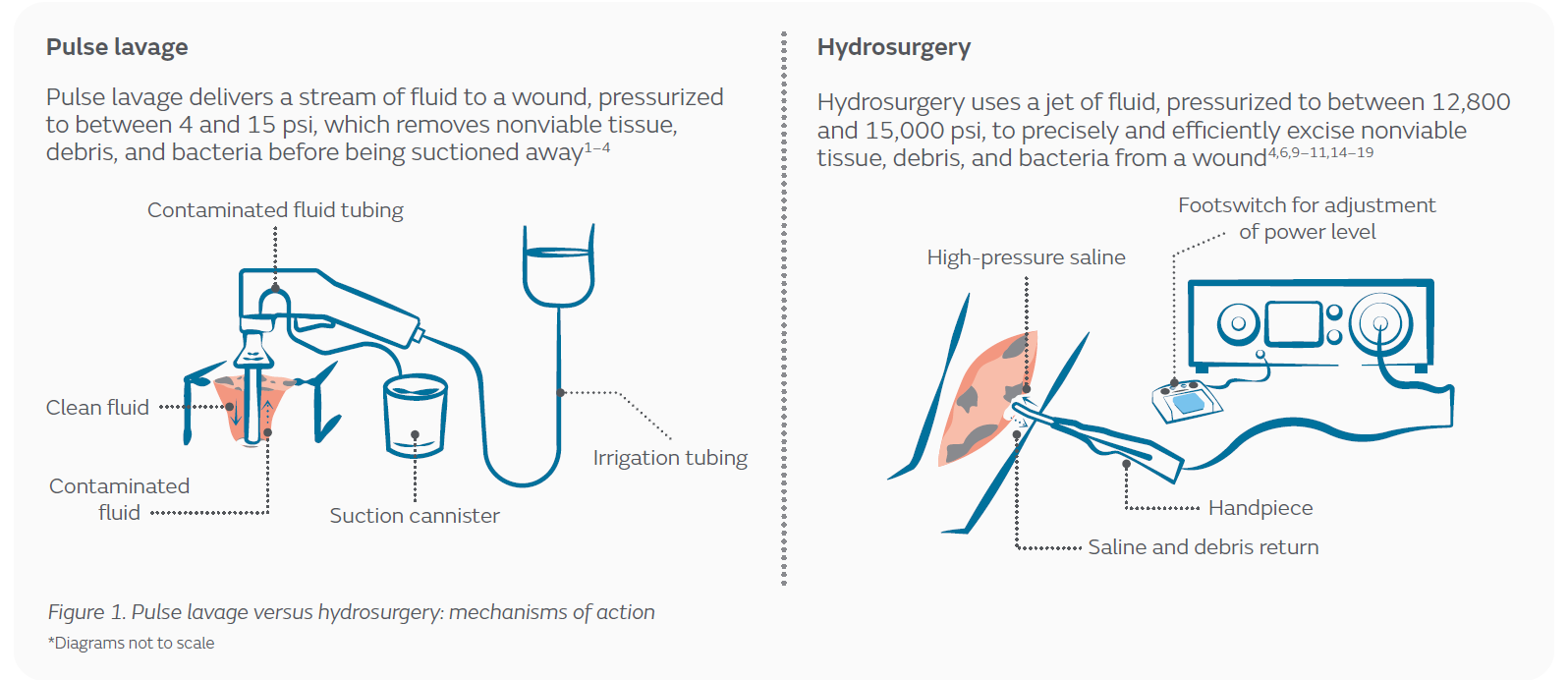
Pulse lavage (also called pulsed lavage, pulsatile lavage, or pulse irrigation) involves irrigating a wound using an intermittent flow of pressurized fluid, usually produced by an electrically-powered device.2,4 The hydraulic force of the fluid is typically between 4 and 15 psi and is sufficient to dislodge devitalized tissue, debris, and bacteria (Figure 1).1,3,4 Suction is typically delivered at the same time as the irrigation, removing the irrigating solution from the target area.2
While pulse lavage is sometimes described as a method of wound debridement, it is often defined more strictly as a method of wound cleansing.2–4 The latter definition rests on a distinction between cleansing and debridement that views cleansing as the use of fluid to remove loosely attached contaminants and devitalized material from a wound surface.2,3 Debridement, in contrast, is seen as the comparatively aggressive removal of all devitalized tissue, including adherent material.2,3
Pulse lavage (with suction) can be used as a standalone method in wound care.2,4 However, it is often used in conjunction with conventional surgical/sharp wound debridement, as a means of irrigating a wound and removing cellular debris.5–7
Hydrosurgery
Hydrosurgery involves the emission of a high-pressure jet of sterile saline across an aperture that causes a localized vacuum to cut tissue, irrigate a wound, and remove debris simultaneously with a single, standalone tool.7,9–11 In hydrosurgery, fluid is delivered at a pressure several orders of magnitude higher than pulse lavage, between 12,800 and 15,000 psi (Figure 1).4,8 Moreover, fluid is directed parallel to the wound, rather than towards it, as in pulse lavage.6,8,10
Hydrosurgery has several key advantages over pulse lavage owing to its different modes of action, including the highly-pressurized saline stream and parallel path of the fluid. These advantages include the ability to cut tissue, reduced saline use, greater reduction in bacterial load in acute wounds, and a wider range of clinical applications.5,6,8,10–15,18–21
Advantages of Hydrosurgery Over Pulse Lavage
Ability to cut tissue
A key advantage of hydrosurgery over pulse lavage is the unique ability of the hydrosurgical fluid jet to cut through tissue.10
In hydrosurgery, a jet of saline travels across the operating aperture of the handheld piece and then into a suction collector. The saline jet travels parallel to the wound so that the cutting mechanism is a highly controlled form of tangential excision.8,10 Due to the orientation of the saline jet, hydrosurgery results in the evacuation of debris and bacteria from the wound, unlike pulse lavage, which may drive bacteria deeper into the wound bed.*,14,15,18
In pulse lavage, irrigant is directed towards the wound, rather than parallel to it.22 Pressures of >15 psi may therefore cause trauma to the wound, while also embedding bacteria and particulate matter into deeper tissue, making it more susceptible to infection.1 It is for this reason that the US Department of Health and Human Services has previously recommended irrigation pressure for pulse lavage of no greater than 15 psi.1,6
Since pulse lavage does not cut through tissue, for some wounds, pulse lavage alone is incapable of achieving sufficient debridement and conventional surgical/sharp debridement must also be used.5–7 The use of conventional surgical/sharp debridement alongside pulse lavage incurs cost and time considerations, including the requirement for a large equipment tray.5
More efficient irrigation and more effective removal of bacteria
Another key advantage of hydrosurgery over pulse lavage is that the hydrosurgical device does not require a separate component for the removal of irrigant, tissue, and debris.6,7,9–11
In pulse lavage, the removal of irrigant, as well as dislodged surface pathogens, foreign material, blood clots, and necrotic debris, is typically accomplished by the provision of an external suction force.6
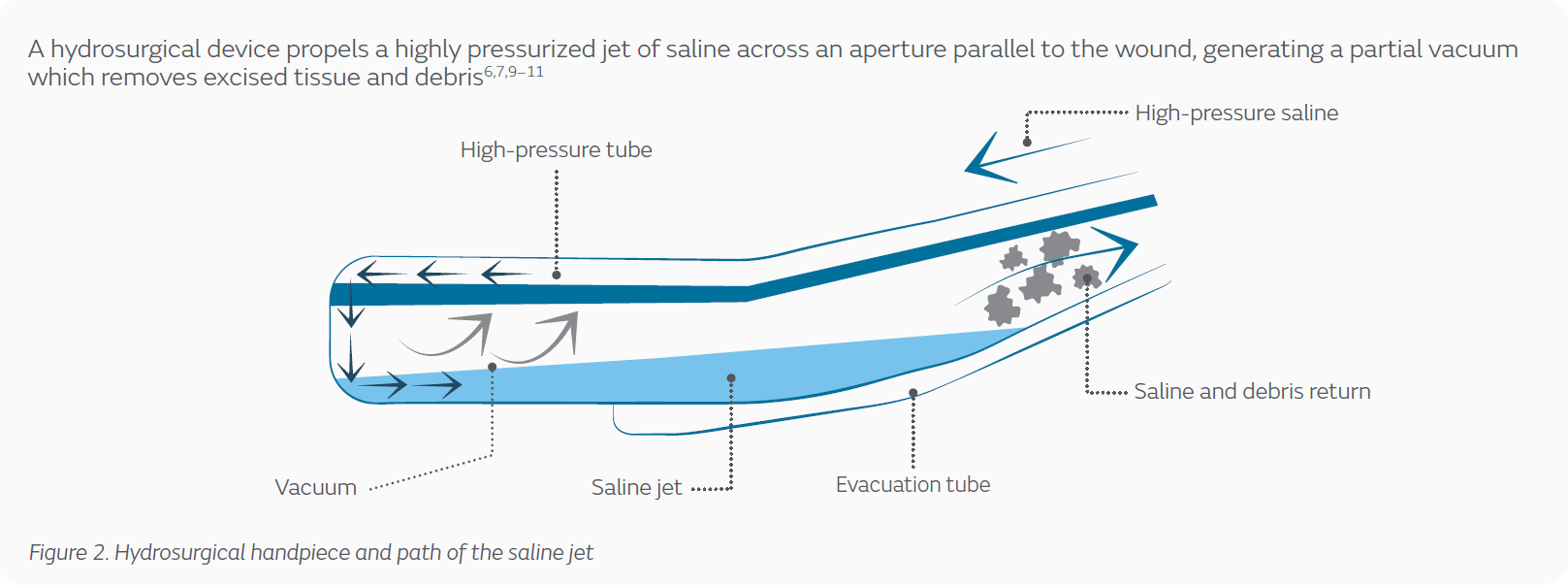
By contrast, the ability of the hydrosurgical device to remove material from the wound bed is intrinsic to the mode of fluid provision. The flow of fluid through the hydrosurgical aperture generates a localized vacuum, which acts to remove excised tissue and loose debris (Figure 2).6,7,9–11 Hydrosurgery may use considerably less saline than pulse lavage, thus representing a more efficient means of irrigation.5 It has also demonstrated a greater reduction in bacterial load in acute wounds compared to pulse lavage.†,6
* As demonstrated in vivo.
† n=23.
Wider range of clinical applications
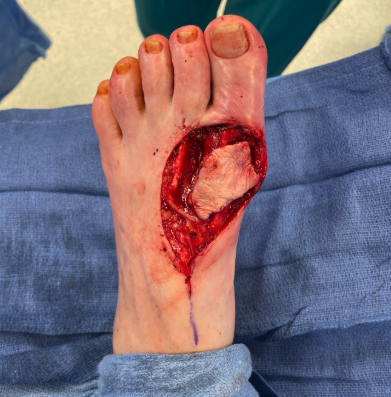
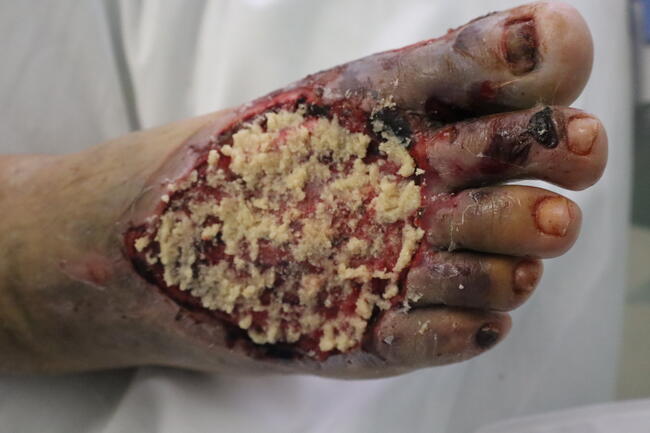
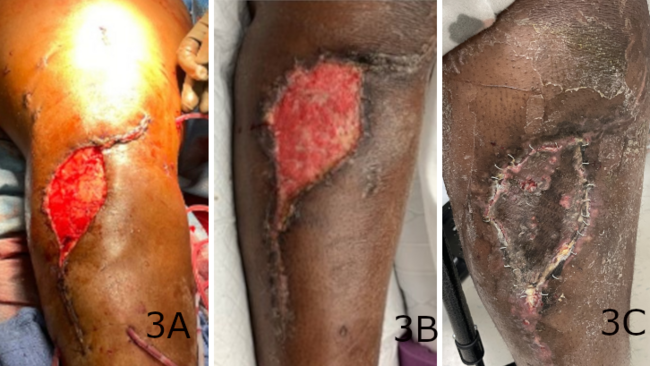
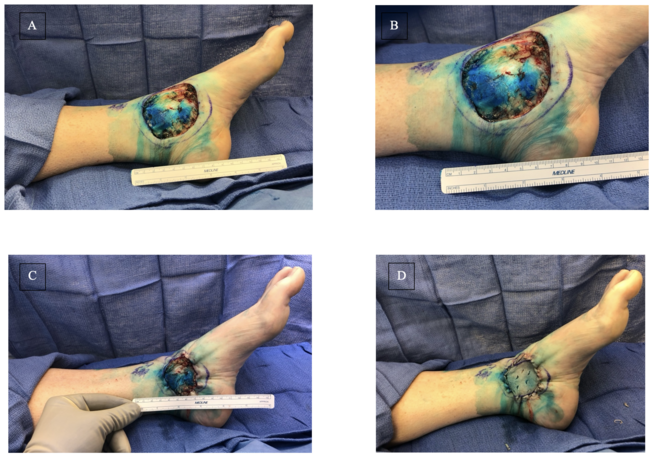
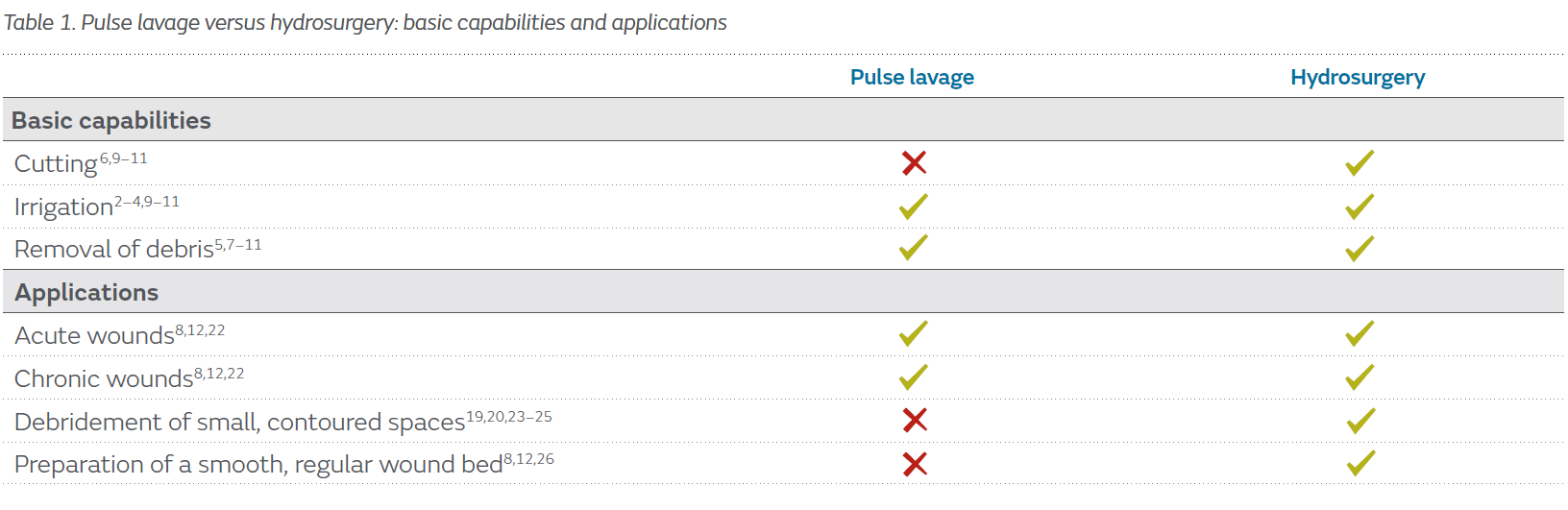
In general, both pulse lavage and hydrosurgery are appropriate for use in acute and chronic wounds, including trauma wounds, surgical wounds, and burns.8,12,22 However, the unique mechanism of action of the hydrosurgical tool renders it effective in a variety of specialized applications for which pulse lavage is not well suited (Table 1). These include:
- Debriding small spaces, such as the finger web space, as well as contoured areas and facial structures.19,20,23–25
- Smoothing down tissue to a common level in general plastic surgery, such as when smoothing out granulation tissue.8,12,26
Moreover, hydrosurgery, unlike pulse lavage, is suitable for the debridement of extensive wounds,‡ in which severe damage has occurred to the soft tissues of the skin.9,21
Sign up for our webinar on hydrosurgical debridement to learn more!
For information about the VERSAJET system, click here to read the white paper!
Conclusions
Viewing hydrosurgery as a form of pulse lavage is a misconception; its mechanism of action is distinct from that of pulse lavage, leading to unique applications.8,12,19,20,23–26 In hydrosurgery, the jet of saline is propelled at a much higher pressure than in pulse lavage, and tangential to the wound: this enables a single device to perform cutting, irrigation, and removal of debris in an integrated fashion.4,6–11 Compared with pulse lavage, the unique features of hydrosurgery result in a wider range of clinical applications.8,12,19,20,23–26
‡ It has been reported that hydrosurgery does not allow hemostasis, limiting its use for large and hemorrhagic wounds.9
References:
1. Bergstrom N, Allman RM, Alvarez OM, et al. Treatment of Pressure Ulcers: Clinical Practice Guideline No. 15. 1994. AHCPR Publication No. 95-0652.
2. Luedtke-Hoffmann KA, Schafer DS. Pulsed lavage in wound cleansing. Phys Ther. 2000;80:292–300.
3. Rodeheaver GT, Ratliff CR. Wound Cleansing, Wound Irrigation, Wound Disinfection. In: Krasner DL, van Rijswijk L, eds. Chronic Wound Care: The Essentials e-Book. Malvern, PA: HMP; 2018:47–62. Available at: https://s3.amazonaws.com/whywoundcare/Files/Chapter+5.pdf. Accessed August 16, 2022.
4. Smith F, Dryburgh N, Donaldson J, Mitchell M. Debridement for surgical wounds. Cochrane Database Syst Rev. 2013:CD006214.
5. Caputo WJ, Beggs DJ, DeFede JL, Simm L, Dharma H. A prospective randomised controlled clinical trial comparing hydrosurgery debridement with conventional surgical debridement in lower extremity ulcers. Int Wound J. 2008;5:288–294.
6. Granick MS, Tenenhaus M, Knox KR, Ulm JP. Comparison of wound irrigation and tangential hydrodissection in bacterial clearance of contaminated wounds: results of a randomized, controlled clinical study. Ostomy Wound Manage. 2007;53:64–72.
7. James CV, Patel M, Ilonzo N, et al. Hydrosurgical debridement use associated with decreased surgical site-related readmissions: a retrospective analysis. Wounds. 2021;33:139–142.
8. Granick MS, Posnett J, Jacoby M, Noruthun S, Ganchi PA, Datiashvili RO. Efficacy and cost-effectiveness of a high-powered parallel waterjet for wound debridement. Wound Repair Regen. 2006;14:394–397.
9. Bekara F, Vitse J, Fluieraru S, et al. New techniques for wound management: a systematic review of their role in the management of chronic wounds. Arch Plast Surg. 2018;45:102–110.
10. Gurunluoglu R. Experiences with waterjet hydrosurgery system in wound debridement. World J Emerg Surg. 2007;2:10.
11. Legemate CM, Kwa KAA, Goei H, et al. Hydrosurgical and conventional debridement of burns: randomized clinical trial. Br J Surg. 2022;109:332–339.
12. National Institute for Health and Care Excellence (NICE). The VERSAJET II hydrosurgery system for surgical debridement of acute and chronic wounds and burn (Medtech innovation briefing [MIB1]). Available at: https://www.nice.org.uk/advice/mib1. Accessed August 16, 2022.
13. Shimada K, Ojima Y, Ida Y, Matsumura H. Efficacy of VERSAJET hydrosurgery system in chronic wounds: a systematic review. Int Wound J. 2021;18:269–278.
14. Allan N, Olson M, Nagel D, Martin R. The impact of hydrosurgical debridement on wounds containing bacterial biofilms. Poster presented at: European Tissue Repair Society (ECTS) Annual Meeting; September 15–17, 2010; Ghent, Belgium.
15. Hassinger SM, Harding G, Wongworawat MD. High-pressure pulsatile lavage propagates bacteria into soft tissue. Clin Orthop Relat Res. 2005;439:27–31.
16. Hyland EJ, D’Cruz R, Menon S, et al. Prospective, randomised controlled trial comparing VERSAJET™ hydrosurgery and conventional debridement of partial thickness paediatric burns. Burns. 2015;41:700–707.
17. Matsumura H, Nozaki M, Watanabe K, et al. The estimation of tissue loss during tangential hydrosurgical debridement. Ann Plast Surg. 2012;69:521–525.
18. Mosti G, Mattaliano V. The debridement of chronic leg ulcers by means of a new, fluidjet-based device. Wounds. 2006;18:227–237.
19. Rennekampff HO, Schaller HE, Wisser D, Tenenhaus M. Debridement of burn wounds with a water jet surgical tool. Burns. 2006;32:64–69.
20. Sivrioğlu N, Irkören S. VERSAJET hydrosurgery system in the debridement of skin necrosis after Ca gluconate extravasation: report of 9 infantile cases. Acta Orthop Traumatol Turc. 2014;48:6–9.
21. Vachhrajani V, Khakhkhar P. Science of Wound Healing and Dressing Materials. Singapore: Springer; 2020.
22. Shetty R, Barreto E, Paul KM. Suction assisted pulse lavage: randomised controlled studies comparing its efficacy with conventional dressings in healing of chronic wounds. Int Wound J. 2014;11:55–63.
23. Chammas MF, Jr., Gurunluoglu R, Carlsen SN, Molina W, Jr., Moore EE, Kim F. Surgical debridement of mineral pitch and nonviable penile tissue using water-jet power: a preliminary report. BJU Int. 2009;103:974–976.
24. Klein MB, Hunter S, Heimbach DM, et al. The VERSAJET water dissector: a new tool for tangential excision. J Burn Care Rehabil. 2005;26:483–487.
25. Siemers F, Mauss KL, Liodaki E, Ottomann C, Bergmann PA, Mailänder P. Accidental inclusions following blast injury in esthetical zones: ablation by a hydrosurgery system. Eplasty. 2012;12:e33.
26. Vanwijck R, Kaba L, Boland S, Gonzales y Azero M, Delange A, Tourbach S. Immediate skin grafting of sub-acute and chronic wounds debrided by hydrosurgery. J Plast Reconstr Aesthet Surg. 2010;63:544–549.