Building a Comprehensive Hypertension Program: A Multidisciplinary Approach to Renal Denervation
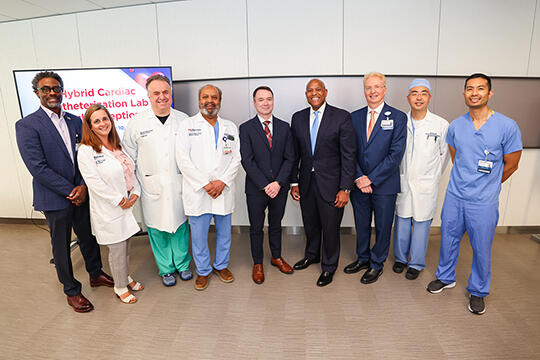
A conversation with Dr. Hurtado and Dr. Delgado from the University of Miami on patient selection, collaboration, and integrating ultrasound renal denervation into hypertension care.
A conversation with Dr. Hurtado and Dr. Delgado from the University of Miami on patient selection, collaboration, and integrating ultrasound renal denervation into hypertension care.
© 2026 HMP Global. All Rights Reserved.
Any views and opinions expressed are those of the author(s) and/or participants and do not necessarily reflect the views, policy, or position of Cath Lab Digest or HMP Global, their employees, and affiliates.
Dr. Maria Carolina Delgado-Lelievre is founder and director of the American Heart Association–Certified Comprehensive Hypertension Center at the University of Miami, where she leads a multidisciplinary program dedicated to personalized hypertension care.
Dr. Iliana Hurtado-Rendón is an interventional cardiologist, peripheral endovascular specialist, and director of the renal denervation program at the University of Miami, where she performs renal denervation as part of the Comprehensive Hypertension Program.
Why Build a Hypertension Center?
Hypertension affects millions of patients, yet control rates remain disappointingly low. What unmet need led you to establish a dedicated hypertension center?
 Dr. Delgado: The reason I am so passionate about this is that hypertension is the most common cardiovascular disease in the world. For years, we have talked about it primarily as a cardiovascular risk factor, but I actually think that has minimized its importance. In probably 70% of patients with cardiovascular disease, hypertension is part of the underlying cause. It isn’t just a risk factor; it is a disease that drives many of the conditions we treat every day.
Historically, hypertension clinics have come and gone over the years. Many of them started with the vision of one physician, but eventually became more of a production model. Patients would come in, someone would review their medications, assess compliance, adjust therapy, and move on. That is not because those providers weren’t excellent, they absolutely were, but everyone was essentially being treated the same way. To me, that is one of the reasons we still have more than 50% of patients worldwide with uncontrolled hypertension. This isn’t just a U.S. problem. It is a global problem.
My vision was different. I wanted to remain the treating physician. My background is in translational and clinical research through programs like the Family Blood Pressure Program, where we spent years trying to understand the genetics and biology of hypertension. When I started this clinic, I kept asking myself, How do I bring translational medicine into everyday clinical practice? That’s when we began looking at patients from a phenotypic standpoint. Instead of viewing hypertension as one disease, we started characterizing patients based on their specific hypertension phenotype and treating them accordingly.
How have your vision and program evolved since launching the center?
Dr. Delgado: Like everything else, nothing goes from A to Z overnight. When I joined the University of Miami, my goal was to build a hypertension center. I remember during those first few months I was literally running half a clinic for free just to see whether there was real interest from the community. Very quickly, it grew into additional clinic sessions. Then we approached the American Heart Association about becoming a certified hypertension center. I basically knocked on the door and said, “Tell me what I need to do.”
As the clinic grew, people started noticing that patients were coming, referrals were increasing, and blood pressure control was improving. Becoming an American Heart Association-Certified Hypertension Center was a natural progression. Today, I’m involved with the American Heart Association in helping evaluate other centers seeking certification, which has been incredibly rewarding.
What started as a half-day clinic has grown into a program that now sees well over 100 patients each week, with a tremendous number of both internal referrals and self-referrals.
The other thing we have learned is that hypertension changes over a person’s lifetime. Biology changes, hormones change, and salt sensitivity changes. The same person at age 20 is very different biologically from that same person at age 50 or 70. Those biological differences help determine which treatments are most likely to work. That philosophy extends beyond the individual patient. We often see entire families. Parents bring their children because they want to understand their future risk. Siblings come together. Hypertension is genetic, but it is also familial, environmental, and social. All of those factors influence how hypertension develops and behaves. That’s really the foundation of what we do and how we assess our patients. This is our bread and butter, and is how we practice every day.
How has the multidisciplinary model contributed to the success of your program?
 Dr. Hurtado: Building a multidisciplinary program has been key to our success. I don’t think any single specialty can manage hypertension alone. In our program, the partnership between a hypertension specialist and an interventionalist is fundamental, but it is equally important to involve nephrology, endocrinology, primary care physicians, and other specialists when appropriate. Bringing all of those disciplines together around the patient is what ultimately leads to better long-term outcomes, and I think it is also what makes a comprehensive hypertension program successful.
Patient Journey
Can you walk us through the patient journey, from referral through evaluation and long-term follow-up?
Dr. Hurtado: Patients come into our hypertension program through referrals from primary care physicians or other specialists. They first see Dr. Delgado, who performs a comprehensive evaluation, including a biochemical and hormonal assessment. If she believes the patient is not only a good candidate but is also likely to benefit from renal denervation, we review the case together.
Every week, Dr. Delgado and I meet to discuss these patients. Whenever possible, we also invite the referring physician to participate. Together, we review the patient’s comorbidities, hypertension profile, medication adherence, age, and any challenges that could affect treatment or long-term success.
After that, we move into what I consider my part of the evaluation, which is the anatomical assessment. I evaluate whether the patient’s vascular anatomy is appropriate for the procedure. My workup always includes imaging, whether that is a renal artery ultrasound or a computed tomography (CT) angiogram. At the University of Miami, we have developed a dedicated CT protocol specifically for renal denervation that evaluates vascular access, iliac artery size, renal artery anatomy, and any calcification or stenosis that could make the procedure difficult or inappropriate. Based on both the clinical and anatomical assessments, Dr. Delgado and I decide together whether the patient is an appropriate candidate and equally important, whether that patient is truly likely to benefit from renal denervation.
Once we have made that decision, we move forward with insurance authorization and scheduling. I then meet with the patient and their family before the procedure to discuss the risks, benefits, and expectations. I perform the renal denervation procedure in the cath lab.
Afterward, I review the procedure with the patient, and about one week later we see the patient together in a joint follow-up visit. I show the patient their imaging, explain what we treated, review the renal arteries that were denervated, discuss any additional findings, and make sure the access site, typically the right common femoral artery, is healing appropriately.
During that same visit, the patient then sees Dr. Delgado, who takes over the long-term management of their hypertension. The post-procedure management is just as important as the procedure itself. Dr. Delgado adjusts and titrates medications based on each patient’s response and continues the individualized management plan.
That is how our program works. It starts with a comprehensive medical evaluation, moves through a careful anatomical assessment, and then continues with coordinated follow-up after the procedure. I think that is one of the strengths of our program.
Many physicians still associate renal denervation only with resistant hypertension. How do you determine which patients may benefit from renal denervation today?
Dr. Delgado: Let’s start at the beginning, because even when a patient is referred specifically for renal denervation, we explain that the first step is understanding who they are. We don’t simply decide whether someone should have a procedure. Every patient undergoes a comprehensive biochemical evaluation, including measurements such as aldosterone and renin, because we are trying to understand different hypertension phenotypes like salt sensitivity and aldosterone sensitivity. Every patient also undergoes ambulatory blood pressure monitoring.
The ambulatory monitor is essential because it tells us much more than whether blood pressure is elevated. It helps us understand physiology, sympathetic activation, circadian rhythm, and chronobiology. Sometimes a patient’s blood pressure is uncontrolled simply because they are taking the right medication at the wrong time of day. We fix those things first, and many patients become well controlled without needing anything further.
That initial workup usually takes about a month. During that time, we adjust medications based on the patient’s biochemical profile, especially when we identify aldosterone sensitivity or other treatable phenotypes. At the follow-up visit, the patient undergoes a second ambulatory blood pressure monitor so we can objectively evaluate the response.
The other group of patients is actually much simpler. These are patients we have been following for a long time. They have already completed the workup, and one day they’ll say, “Are there other options?” For those patients, everything has already been done. Once they decide they want to pursue renal denervation, Dr. Hurtado can usually see them within a week.
Collaboration
How do the two of you work together before, during, and after renal denervation?
Dr. Delgado: If I strongly believe the patient is going to be an excellent renal denervation candidate, I don’t wait until the entire evaluation is finished before involving Dr. Hurtado. I’ll tell her, “I’m still working this patient up, but I think they’re an excellent candidate. Can you start your evaluation as well?” So those pathways often run in parallel.
One thing that’s very unique about our program is the relationship between the hypertension specialist and the interventionalist. We really work together. We try to schedule our follow-up visits on the same day whenever possible. If a patient is coming from three or four hours away, which many of them do, we coordinate everything so they can see both of us during the same visit. Some patients are so far away that much of their care is done through telemedicine, so we try to make the process as convenient as possible.
I think that’s different from many programs today, where the hypertension specialist is on one side and the interventionalist is on the other, with very little communication between them. Here, we’re constantly talking to each other throughout the patient’s evaluation.
Have clear referral pathways changed physician confidence in referring appropriate patients?
Dr. Hurtado: Yes, absolutely. Having a clear referral pathway has been a key part of strengthening our Comprehensive Hypertension Program.
We also try to involve referring physicians in our weekly case discussions whenever possible, and I think that is very important. But just as important is what they experience after they refer a patient. They see that patients are evaluated promptly, that the renal denervation procedure has a strong safety profile, and most importantly, that we continue managing the patient’s hypertension after the procedure through medication optimization and follow-up. That reinforces their confidence in the program. They know their patients are being cared for from the initial clinical evaluation through the procedure and then during the ongoing management of their hypertension.
Ultimately, the patient returns to the referring physician, so maintaining that relationship is extremely important. I think consistent communication between our hypertension team — Dr. Delgado and myself — and the physicians who refer patients is one of the biggest reasons the program has been successful.
Why Renal Denervation?
What convinced you that renal denervation should become part of your hypertension treatment strategy?
Dr. Hurtado: What attracted me to renal denervation is hypertension itself. Despite decades of treating hypertension with medications, we still have a large number of patients whose blood pressure remains suboptimally controlled. Renal denervation felt like a good fit for me because it combines cardiovascular medicine with the procedural aspects of peripheral intervention.
Where does renal denervation fit within your overall hypertension treatment strategy?
Dr. Delgado: Every patient receives a science-based evaluation to determine whether they need lifestyle therapy, medications, device therapy, or eventually, renal denervation. When we get to that decision, it isn’t simply choosing between treatment A, B, C, or D. It is understanding who that patient is first, then deciding which therapy makes the most sense. That is really the foundation of what we do.
Let’s say I have a 28- or 30-year-old patient with salt-sensitive hypertension who has truly optimized lifestyle changes but remains hypertensive. If I had the option today, I would seriously consider offering renal denervation before committing that patient to decades of medication.* That is already happening in parts of Europe. We are not quite there yet in the United States, but that is how I envision the future.
Again, you have to select the right patient — that is absolutely critical — but I can envision a future where we say, “Based on your physiology, this is the right treatment for you,” rather than automatically starting with medication.
Procedural Experience
From an operator’s perspective, what has your experience been performing ultrasound renal denervation?
Dr. Hurtado: I have been performing renal denervation for about a year now. One thing I would add is that the learning curve, particularly with the ultrasound renal denervation system, is very straightforward. The procedure isn’t overly complex, and from an operational standpoint it integrates very well into the cath lab. It doesn’t significantly increase procedure time, contrast use, or radiation exposure, so it fits very naturally into the cath lab workflow.
The cath lab team is extremely important for any operator. When you are introducing a new procedure, having clear, step-by-step protocols makes all the difference. Just as important is having a team that understands the procedure and knows what to expect. The protocols shouldn’t only cover the pre-procedure workup, but should also guide what happens in the lab. Patient preparation is critical. We focus on making sure patients are comfortable throughout the procedure with appropriate sedation. My nursing team already knows my preferred sedation regimen, when patients may experience some discomfort, and they’re prepared with the medications we typically use to manage that. That level of familiarity makes the procedure run very smoothly.
Patient Outcomes
What patient outcomes have been most meaningful to you?
Dr. Hurtado: To be honest, one of the most satisfying parts is seeing the patients afterward. Just this week, we saw several young patients with longstanding hypertension that had been very difficult to control. Some were already developing kidney disease because of years of uncontrolled blood pressure. They come through our hypertension program. Dr. Delgado does her comprehensive evaluation, I do the procedural evaluation and treatment with renal denervation, and then we see them together in follow-up.
Seeing their blood pressure under much better control is incredibly rewarding. At the same visit, Dr. Delgado is often able to start reducing one or even two medications from regimens where patients may have been taking four or five drugs.† And we’re not talking about 80-year-old patients. We’re talking about people in their 30s and 40s who hopefully have many decades ahead of them.
Seeing how happy they are when their blood pressure is finally controlled is one thing. But we are also taking away the anxiety that comes with seeing elevated blood pressure every day. We’re improving their quality of life while reducing their medication burden.
Dr. Delgado: There are really different types of burden. One is the medication burden itself, and psychologically, patients are very opposed to taking medications. But honestly, what matters most to us is the physiological burden. Take one of the patients Dr. Hurtado was just describing, who underwent renal denervation. He’s young, he’s African American, and he is at extraordinarily high risk of ending up on dialysis over the next decade if his blood pressure isn’t controlled. He recently told me, “Doc, I took my blood pressure medication this morning, and my blood pressure was still good at 2:30 in the afternoon.” That tells me we’re getting to the point where we can start reducing his medication burden, but we are also reducing his physiological burden. Patients already feel better. When you reduce nocturnal hypertension and morning surge, you’re protecting the patient’s circadian rhythm, and their quality of life can change almost overnight. What’s fascinating is showing patients their ambulatory blood pressure monitor results and explaining what changed. It empowers them because they begin to understand their own physiology and how renal denervation has affected it.
Why Ultrasound RDN?
What factors influenced your decision to adopt ultrasound renal denervation as part of your program?
Dr. Hurtado: We have a protocol that guides our decision-making. I think one of the most important things is selecting the right technology for the right patient, and that starts long before you enter the cath lab. We have both renal denervation platforms available at our institution. We evaluate every patient the same way, and the choice of technology is based on the patient’s anatomy and clinical profile, not operator preference. For example, if a patient has an accessory renal artery, that vessel needs to be treated just like the main renal artery. In that situation, I think ultrasound renal denervation is often a better option.
Renal function also plays an important role. We don’t only treat patients with normal kidney function. We also treat patients with reduced GFRs, sometimes down to 40 mL/min/1.73 m². In those patients, I am very conscious of minimizing contrast use. If I know I can effectively perform the procedure with ultrasound while limiting contrast and treating the main renal artery, that is often the direction I will go.
We consider the patient’s anatomical profile, the size of the renal arteries, the number of branches, whether accessory renal arteries are present, and the patient’s renal function. The decision is always individualized.
Building for Success
If you could leave interventional cardiologists attending TCT with one message about building a successful hypertension program, what would it be?
Dr. Delgado: When it comes to procedures, and hypertension in particular, we have a tendency to fall in love with one treatment and say, “This is the answer.” But with hypertension, there isn’t one answer for everybody.
Hypertension is about individuals. It is an extraordinarily complex condition. It involves genetics, family history, environment, and biology, and all of those things influence how a patient responds to treatment because people are different.
If I could leave one message, especially for interventional cardiologists entering the renal denervation space, it would be this: Learn hypertension. Understand the disease. I would say love it, but if you can’t love it, at least know it.
I think the key is understanding the human being in front of you and treating that person, not simply treating a protocol. Protocols are very convenient for corporations. But we’re not protocols. We’re human beings. When you come to see me, you don’t want treatment based only on a protocol. You want treatment that is right for you.
If you understand hypertension first, then you’ll understand why renal denervation fits where it does. You’ll eventually fall in love with the procedure because you’ll appreciate the patients who benefit from it, not the other way around. So my advice is: Learn hypertension first. Understand the disease first. Then the procedure makes sense.
Dr. Hurtado: The procedure itself is very standardized. The real work happens before the patient ever enters the cath lab. The comprehensive evaluation, selecting the right patient, and making sure they will truly benefit from renal denervation are what ultimately determine the success of both the procedure and the program.
This article is sponsored by Recor Medical.
Dr. Delgado and Dr. Hurtado are paid consultants of Recor Medical, Inc., and have been compensated for their time and expertise in participating in this content. The views expressed in the article are their own and based on their own personal experience with the Paradise System. Results may vary.
*The Paradise® Ultrasound Renal Denervation System is FDA-approved as adjunctive therapy only.
†This treatment is not intended to replace or reduce antihypertensive medication. Changes in medication therapy are determined by treating physician clinical judgement.
Important Safety Information
Rx Only. Brief Summary - Prior to use, please reference the Instructions for Use
Indications for Use
The Paradise® Ultrasound Renal Denervation System (Paradise® System) is indicated to reduce blood pressure as an adjunctive treatment in hypertension patients in whom lifestyle modifications and antihypertensive medications do not adequately control blood pressure.
Contraindications
The Paradise Catheter is contraindicated in any of the following:
• Renal arteries diameter <3 mm and >8mm
• Renal artery Fibromuscular disease (FMD)
• Stented renal artery
• Renal artery aneurysm
• Renal artery diameter stenosis >30%
• Pregnancy
• Presence of abnormal kidney (or secreting adrenal) tumors
• Iliac/femoral artery stenosis precluding insertion of the catheter
Warnings
• Failure to use the recommended balloon size may result in renal artery stenosis, dissection, perforation, aneurysm, significant vasospasm requiring intervention, ablation of unintended tissues or structures, and/or no ablation of target tissue achieved.
• Energy emission in an unintended location may result in unintended tissue damage.
• Do not move the Paradise Catheter during sonication.
• Do not sonicate in renal artery at locations with visible plaque.
• Do not deliver sonications in an overlapping arterial target zone.
Precautions
• Patients with known allergy to contrast medium may be at increased risk of hypersensitivity reactions.
• Only use specified coolant (Sterile water) for fluid supply. DO NOT USE SALINE.
• Avoid multiple balloon inflations to achieve apposition of the balloon to the renal artery wall; multiple balloon inflations may result in increased vessel trauma.
• The Paradise Catheter is for single use only. Do not resterilize or reuse. Reuse, reprocessing, or resterilization will compromise device integrity which may result in patient injury, illness, or death.
• Do not touch the Paradise Catheter balloon during sonication, as it may result in serious injury.
• The Paradise System may interfere with or adversely affect the operation of cardiac pacemakers or other active implants, unless proper precautions have been taken or managed per the manufacturer’s instructions. When in doubt regarding possible hazards, seek qualified advice and/or consult with the manufacturer(s) prior to initiating a procedure. The Paradise Catheter is a Type CF, defibrillation-proof Applied Part.
Potential risks of renal denervation procedure/response to treatment
Ablation or thermal injury to vessel, adjacent tissue or other structures, Acute kidney injury, Angina, Anxiety, Arrhythmia, Atrial tachycardia, Bradycardia, Gastrointestinal complications (diarrhea, nausea, vomiting), Hypotension/ Dizziness and/or Headaches, Hypertension, Hyperhidrosis, Pain (transient abdominal, lower back), Renal failure or renal insufficiency, Renal artery aneurysm or pseudoaneurysm, Renal infarction, Renal artery dissection, or perforation, Renal artery stenosis, Vasospasm, Vasovagal response, Stroke or transient ischemic event
Potential risks of arterial catheterization procedure
Allergic reaction to contrast, Arterio-enteric fistula, Arterio-venous fistula, Bleeding, Cardiopulmonary arrest, Complications related to pain and anti-anxiety medications, Death, Deep vein thrombosis, Edema, Embolism (pulmonary, renal, peripheral vasculature, plaque), Hematuria, Infection, Myocardial infarction, Pain, Vascular access site complications (pseudoaneurysm, pain, swelling, hematoma)
*This is a subset of the full list of precautions outlined in the Instructions for Use.
Individual results may vary.
The Paradise® System is FDA approved for sale in the United States and is CE marked and approved for sale in markets where the CE mark is accepted per approved indications for use. The Paradise System has received regulatory approval in Japan.
© 2026 Recor Medical, Inc. All rights reserved. RECOR MEDICAL, RECOR, PARADISE, HYDROCOOLING, SONOWAVE 360, and the Swirl logo are registered trademarks of Recor Medical, Inc in the United States. RADIANCE and the GLOBAL PARADISE SYSTEM STUDY US logo are also trademarks of Recor Medical, Inc.