Making the Move Into the ASC Setting: Baptist Health’s Story
Kevin Nicholas, MSN, RN, CV-BC, Director, MCVI Clinical Operations, Miami Cardiac & Vascular Institute, discusses the move that Baptist Health and — in particular, the Miami Cardiac & Vascular Institute — took in starting to open cardiovascular ASCs. He shares his hospital's considerations and future plans for ASC care sites.
This discussion is sponsored by
Philips Cardiovascular ASC and OBL Solutions.
A transcript is available below the video.
Transcript:
We're talking with Kevin Nicholas, MSN, RN, CVBC, Director, MCVI Clinical Operations, Miami Cardiac and Vascular Institute, Baptist Health South Florida. We will discuss the moves that Baptist Health South Florida, and in particular, the Miami Cardiac and Vascular Institute, took in starting to open cardiovascular ambulatory surgical centers or ASCs, as well as considerations and future plans for ASC care sites. This video is supported by Philips Cardiovascular ASC and OBL Solutions.
Thank you for joining us. Kevin, can you introduce yourself and share some of your role?
Kevin Nicholas, MSN, RN, CV-BC:
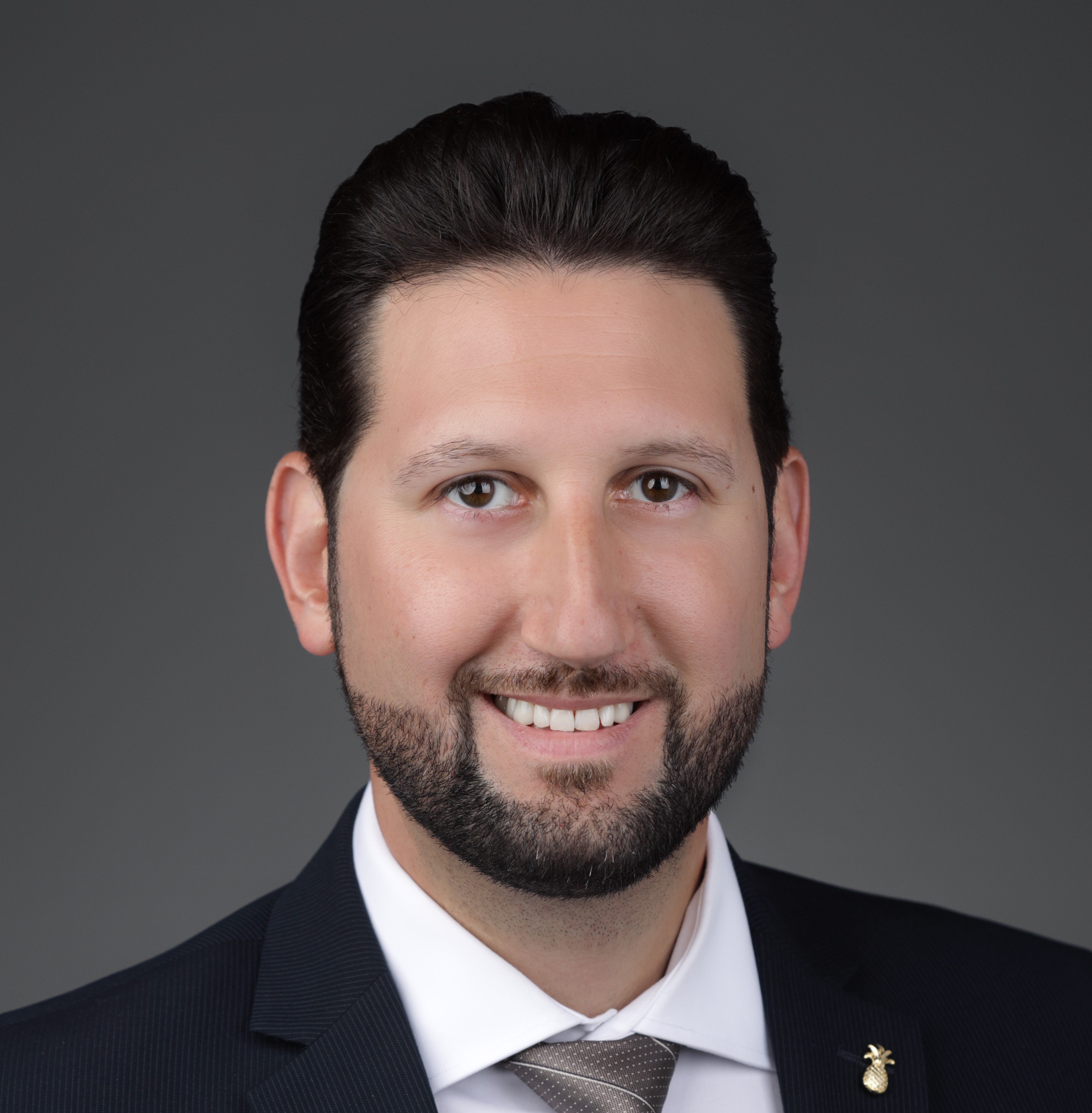 Absolutely. Thank you for having me. So my name's Kevin Nicholas. I'm a registered nurse by trade, been in the field for about 15 years. I'm the corporate director of invasive clinical operations for MCVI Baptist Health South Florida. And in that role, I oversee all minimally invasive service lines throughout the enterprise, and that includes cardiac cath, BP, IVR, and interventional neuro and interventional vascular.
Can you share a bit more about Baptist Health South Florida?
Baptist Health South Florida is a nonprofit faith-based healthcare organization spanning from the Florida Keys all the way up to Palm Beach. We have 11 hospitals and growing and numerous outpatient centers, physicians’ offices, urgent care centers. We're one of the largest employers in the area with over 24,000 employees, and we have about 4,000 physicians working in virtually all specialties.
What about the Miami Cardiac and Vascular Institute (MCVI)?
MCVI is a center of excellence for Baptist Health, and we provide our patients with the latest and greatest high quality cardiac and vascular care, both diagnostic and interventional. So the institute itself spreads across multiple hospitals and other entities throughout South Florida. So to give you an idea of the size and scope of our hospitals and invasive labs, our main campus, we have 15 interventional suites. Of those, we have three dedicated cath labs and two hybrid advanced endovascular suites. This facility performs over 10,000 procedures annually, all encompassing, and about 3,000 of those are cardiac in nature. We also have a smaller sister hospital in the institute with six interventional suites. They have two cath labs and they perform about 6,000 procedures annually and 2,300 of those are cardiac in nature.
How is it different than the services offered at Baptist Health?
So being a center of excellence, MCVI is provided with a massive support structure for ensuring that high quality care. And one of the biggest differences that we have from the other service lines in the health system is that we have a management company set up to continuously engage and incentivize physicians and the teams to meet ever-increasing quality metrics.
Can you talk more about some of your bread and butter procedures and the overall size and how those reinforce each other?
Well, the bread and butter procedures, like I said, we have interventional cardiology. We do do structural heart. We have interventional radiology, interventional neurology. So it's very unique in that we have all those service lines together under one umbrella. So it's very beneficial to our patients and physicians to have that support and all that complexity around each other to work together harmoniously.
Can you talk more about how you work together and how you complement each other in serving the community?
Yeah. So the setup is unique, like I mentioned at MCVI that we have all those service lines together in one space. Oftentimes you'll see in health hospitals, you'll see these services in silos separated from each other, cardiac in one area. You may see vascular and imaging, but the vision of Dr. Barry Katzen and our COO, Carol Melvin, was to bring these services together under one space. And so the needs of our patients are complex and the services often overlap. And so under this structure, we have a stronger ability to provide for the needs of those patients.
How do you determine where patients are seen and treated?
So every decision for a patient obviously is determined by their physician, but with the complexity of our service line, we often see a collaborative approach to the care that involves other physicians, leadership, staff, administration. And for example, we have weekly heart team meetings where we discuss complex cardiac cases and part of that discussion may be a determination of where the most appropriate care setting would be. For example, our most complex cases may go to our main campus to be performed in the advanced endovascular suite where we have more support.
Baptist Health and in particular MCVI seem to move faster than other health systems in the cardiovascular ambulatory surgery center space. What initially caused the health system to think about moving cardiac procedures into the ASC setting?
We recognized very early on that the movement of cath into the ASC space was inevitable. So our outpatient services team, as well as the MCVI administrators that oversee all that ASC operation, we always kept that in mind. And from a quality and cost aspect, it makes sense. And of course when CMS opens things up, you know it's coming. And so we wanted to ensure that we were at the forefront of that evolution.
Can you talk more about why they decided to move forward? You mentioned that it seemed inevitable — share more about the approach to opening your first ASC.
A few years ago, the health system was presented with an opportunity to partner with a local cardiology group that was operating primarily at that smaller MCVI facility that I mentioned previously. And they wanted to open up a cath lab in the ASC that was actually located right across the street from that hospital in the medical arts building. That ASC had five ORs and what they were going to do is turn one of those ORs into the first cath lab to perform diagnostic interventional cath, as well as EP cases. So they're going to do pacemakers, ICDs and procedures such as that. During the construction phase of the cath lab, they began performing those EP procedures in the general ORs. So when this was actually being planned, I was the manager for the invasive lab across the street in the hospital. So every day I could walk to my office, look out the window, look across the street and see that ASC that was going to have a cath lab in it and it wasn't my cath lab.
And I could tell you it was the same doctors that I worked with every day and I had some emotions about that. It was a bit of an internal struggle, but I understood where that wave of the future was coming. And what ended up happening was I became a subject matter expert to the ASC team. We decided to develop a collaborative model where we involved all the resources that we had available in MCVI, supply chain, billing, coding, data abstraction for registries and our tech and digital teams, because this is a highly technical service line and it requires strong, smart, highly skilled techs, nurses, support structure. So that collaborative model, we were able to leverage all of that from the hospital and cross cover the ASC across the street. So essentially what we did is we actually added FTEs to the hospital. We trained up all those new nurses and techs, added them to the pool of staff, and the physicians are able to have the same team they have in the hospital right across the street in that ASC.
And we treated it like an extra room for the hospital lab. One of the unique things is we're actually able to visualize that lab across the street. We used the Philips Performance Bridge application, that's our electronic whiteboard that we initiated recently. So we can actually see the flow of that room and we treat it just like a seventh room for the hospital.
Can you talk more about your partners and who helped you get that ASC site up and running?
So we've had a very successful relationship with Philips over the years and they were a very important partner for this project. The technology that they have in the Philips Esurion platform and the intersite is second to none. We wanted to make sure that our physicians had the best of the best. And with that, Philips came right along to it. And like I mentioned, they were there right beside us the entire time, taking into account all the subtle nuances it is of having this lab separated from the hospital. It was very comforting to have those individuals involved in the process and to have the technology that they provided us. It's just been a great experience.
It's interesting because of course Philips provided the technology, but then also they were able to help you with strategy and collaboration. Are there specific examples you may have of that or some more you can share?
I think the most important thing that they had provided us was the ability to make sure that the operational workflow worked out very well for us and that's where that performance bridge application came into play. We're able to operate that lab knowing exactly what's going on over there. We're able to collaborate with the teams across the street very easily. So from an operational standpoint, it was very, very helpful to have that.
Can you talk more about the experience, how it's been for the various roles like the administration, physicians and staff, and also patients?
For physicians, it's been great. We've provided them with the latest and greatest technology. The Philips Azurion and IntraSight platform that we have in that lab is brand new and something that they actually don't have in the hospital just yet. And we're working on getting them that technology in the hospital very soon because we often hear from physicians and the staff that they'd rather be across the street now working in that ASC because of that great technology we have over there and we look forward to expanding that in the hospital. For patients, when it comes to the ASC, that model is convenience and efficiency. And for us, we wanted to make sure that that convenience and efficiency was matched with high quality, the same level of quality care that you would get in the hospital setting. I think we've been able to meet and exceed those needs with this lab.
For staff, is it helping with retention?
It is helping with retention, honestly. This is a unique model because what we're doing is we are cross-covering the lab with the hospital staff. So what we've done is we've increased the volume of staff at the hospital to be able to provide the extra team to go across the street to perform procedures. So with that, we have more staff in the mix for covering on call purposes and with call outs and staff shortages everywhere, it's been a challenge, but so far it's been very successful in keeping the team satisfied and staffed.
For patients, what have you seen differently in terms of satisfaction and their interest in having procedures done in the ASC?
The ASC is built around efficiency and convenience for patients coming into the hospital. Nowadays, some patients don't even want to set foot in a hospital, especially with COVID and everything going on. But when it comes to having a procedure in the hospital, you have to go downstairs, go to registration, you may have to walk three flights of stairs or however many steps it takes up an elevator to two different floors to get to a pre and post area into the invasive lab. You have the hustle and bustle of inpatients all around you also having procedures. When it comes to the ASC, it's concierge. You are that sole individual coming in to have that procedure. You don't have all of that around you. You get dropped off in the morning, you walk right in, you register, you're in the same spot, very convenient, and same day you're going home.
It's almost like you're having an office visit. Of course you're having an invasive cardiac procedure, but we've seen the safety and efficacy of having it done in this environment and it's just extremely satisfying to have it so convenient.
You mentioned earlier that you were able to reframe this as sort of having another lab, just another lab at the hospital despite its differences. Can you talk about how you envision it going forward and what does that reframing, does that still apply today?
It applies depending on the geographic location of the lab. So for us in South Miami where this lab is built, we have the hospital, we have the ASC right across the street. If you have an opportunity, of course, if you're the same health system, to provide all those resources from the hospital and have a collaboration that way, it ensures mutual success. You never have to worry about not having staff, not having competent individuals to help operate that lab. The ASC folks, this was the first time they ever had anything in a cardiovascular space in their area and they were quite intimidated by it. It's very complex. So they were comforted by having that support from the hospital to be able to pull it off. Now I understand geographically that may not work for everybody and we are planning on opening more of these in the future and many of them are going to be freestanding and they're not going to be anywhere near a hospital.
So we have to take that into consideration. It's going to be a challenge in finding individuals to make sure it operates just like it does in the hospital, but it's a challenge we look forward to.
How do you expect that your various partners will be able to help you as you choose to open more of these around the area?
Well, they're obviously going to help us by providing us with the best technology out there. With this lab that we're looking at opening up in West Palm Beach, Philips is going to be deeply ingrained in this project. We want to make sure that the physicians have all the tools that are needed for patient outcomes. Physicians need to be comfortable with what they're working with. And for our physicians, they want the best and the best has been Philips. And with that tool in their hand, we have no concerns whatsoever about their ability to operate and provide our patients with the care they need. And then of course with the staff, this is what they're used to working with. So we want to provide them with that familiarity in these settings. So it's been a great collaboration with our vendor partners.
Is there anything else you can share about your plans to open more ASCs and how are you evaluating how to go forward and has your experience with your current site informed that decision?
We are definitely looking to expand. We already have plans in the very near future of opening a freestanding cardiovascular ASC up in West Palm, each area that will not be anywhere near a hospital. So we're looking at ways to ensure that we have the support structure built, even from a corporate standpoint up in that area so that they're successful. The biggest issue up there obviously is staffing supplies, having all that available. So from a corporate level, we're looking at ways to make sure that we can support them as best we can. I think the experience of having this collaborative effort down at the first ASC has taught us a lot. Everything wasn't as smooth as you would imagine. We had our challenges, but those became opportunities to improve where we can also make sure that we can improve in the future when we build out these new labs.
Is there anything that we haven't covered that you'd like to share?
Just that we're very excited about the evolution in cardiovascular care. This is the wave of the future, so you need to ride that wave or you will get barreled over by it. Don't be intimidated by it. We are experts in the field and we know what needs to be done. We know that it's safe. We know the care can be provided in this area. SCAI has come out with a paper with a guiding statement for us to follow to be able to ensure the high-quality care in this environment. And we really appreciate the partnership we've had with Philips to ensure our program exceeds and meets the needs and expectations of our patients.
Find More:
Philips Cardiovascular ASC and OBL Solutions
Cardiovascular Ambulatory Surgery Centers (ASCs) Topic Center