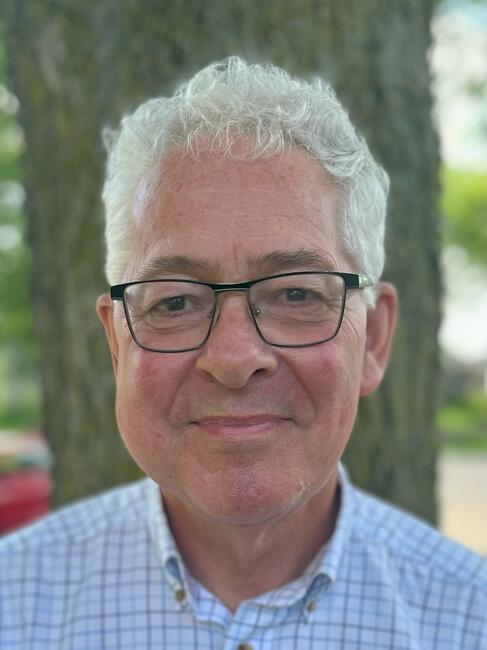
America’s Poison Centers Present Opportunity for EMTs, Paramedics
Each year, regional poison centers in the America’s Poison Centers network manage an average of 2.4 million cases. While the overall number of calls to the poison centers is about the same, their complexity is on the rise, noted CEO Richard Fogelson.
“There are social media posts where people challenge others to try this, do that,” he said. “Human beings’ capacity to creatively experiment with potentially harmful substances can be almost infinite with the advent of social media. In addition, we are seeing a fair amount of stuff that is resurfacing from when I was a kid, like whippets/nitrous oxide.”
Falsified products are another concern. These fake pills are made to look like prescription opioids such as oxycodone or fentanyl.
“We started a campaign with the FDA around falsified products where we can train poison center experts responding to calls to ask certain questions to see if we have a product hitting an area of the country that is not what it appears to be,” Fogelson said.
The U.S. Drug Enforcement Agency’s website ‘One Pill Can Kill,’ https://www.dea.gov/onepill notes that in 2024, the DEA seized more than 60 million fentanyl-laced fake pills and nearly 8,000 pounds of fentanyl powder. The 2024 seizures are equivalent to more than 377 million lethal doses of fentanyl.
A portion of calls to centers involve suicide attempts. During COVID-19, America’s Poison Centers saw rates increasing for suicide attempts before anyone else did, Fogelson said. The organization notified the Substance Abuse and Mental Health Services Administration. Fogelson said while suicide calls to poison centers have leveled off a bit since COVID, “we obviously still have a significant mental health issue in the country.”
Whatever the nature of the call to the Poison Help line, Fogelson and the regional poison centers stand ready to help. The 53 centers are regularly accredited and part of a national public health organization for the treatment, prevention, and education of toxic exposures.
Fogelson holds a vast body of experience, leading complex health litigation in federal and state courts before transitioning to leading consulting practices in the commercial and federal health sectors. But he got his start in EMS.
When he was in high school, “I thought it'd be kind of cool to ride in the ambulance,” Fogelson said. “I get to put a light on the top of my car and drive fast. It was a teenage boy kind of thing. But then I discovered I really enjoyed the medicine and being there to help people.”
He attended Colgate University, located in a rural part of New York state where the ambulance service went out of business during his freshman year. Fogelson and a friend were contacted regarding the need for paramedics.
“They said ‘We want to quickly get you through a paramedic course, get you a defibrillator and a drug box. We need coverage for a really large county, and we have no one,” he said. “They put us through a basic medic course and said, ‘Go take care of the county.’ It was a wonderful opportunity to learn and help others. It was such a different college experience to be able to serve the county as a student. They gave us a ton of flexibility, because they were appreciative that we're willing to volunteer 24/7, so that lit the flame.”

Fogelson’s emergency medicine experiences and a course he took at Syracuse University College of Law inspired him to work in the medical malpractice field when he came out of school. He served as senior trial attorney for Klores and Associates in Washington D.C. from September 1992 to October 2003, where he litigated large value healthcare and professional liability cases.
From 1996 to 2002, Fogelson served as an adjunct professor at George Washington University where he created and taught “Emergency Medicine and the Law.” He also served as adjunct faculty at George Washington University for the Hirsh Health Law and Policy Program from 2005 to 2010.
Fogelson was the practice manager/national partnership director from 2003 to 2009 for The Advisory Board Company, a national consultancy providing business intelligence services to more than 2,500 hospitals and health systems worldwide.
From July 2009 through March 2020, Fogelson served as a principal/officer-in-charge for Booz Allen Hamilton in the Washington D.C. area for a portfolio of federal healthcare contracts. While there, Fogelson was tapped to work for America’s Poison Centers. He was reticent, given that he was not a toxicologist, emergency room physician, or pharmacist like those staffing the centers.
“The staff at our centers all get certified and each center is regularly accredited. What dawned on me when the organization approached me is these highly trained experts are really the ‘paramedics for poisonings,’” Fogelson said. “They have to know what to do in the moment—there’s limited time to look things up. People are calling and they're sometimes frantic. So, this mission felt very compelling because it matched with the EMS field in so many ways.”
The recruiter pointed out to him that as someone who worked in emergency medicine, it’s likely he called poison control from the back of an ambulance and that he understood the centers’ mission. She also was tapping into his legal expertise and its intersection with healthcare—that he had the ability to assess risk.
Fogelson joined a small team of less than 10 in the association’s central office, whose work is augmented by volunteer support from the larger national membership, he said. Although America’s Poison Centers is headquartered in Arlington, Virginia, its centers are independently operated across the United States.
“Some are affiliated with major health institutions like a hospital system. Others are a 501(c)(3) operating on their own,” he said. “At the national level, we pull all of that together. We have some poison centers that work very closely with EMS. A lot of them become part of EMS education so EMTs are taught about poison control centers in their training. You also have EMS personnel in more rural areas where poison centers become part of the critical infrastructure for EMS providers not located close to a hospital.”
America’s Poison Centers also offers real-time data through the National Poison Data System. “The National Poison Data System can show you on a map who's being poisoned by what, by region, down to state, down to county, down to city, down to zip code, every six to eight minutes,” Fogelson said. “It’s really powerful because you can spot trends before anybody else sees it.”
The organization has partnerships with many organizations, including the U.S. Food and Drug Administration (FDA) and the U.S. Centers for Disease Control and Prevention (CDC).
One trend that emerged late last year was reports of severe acute illnesses and other adverse effects following the consumption of Diamond Shruumz chocolate bars, cones, and gummies reported to multiple U.S. poison control centers. The Poison Centers reported the early data to the CDC and FDA; the product was then recalled.
According to the CDC, as of October 31, 2024, 180 total illnesses, including 73 hospitalizations, were reported in 34 U.S. states. There were three potentially associated deaths.
Fogelson has served on the McLean Volunteer Fire Department Board of Directors since 2007. He also volunteers his time with the Fairfax County Fire and Rescue Department in addition to being an adjunct instructor for the Fire and Rescue Academy. After more than four decades in EMS, he still works two to three 12-hour shifts each month as a volunteer EMT.
Fogelson noted working for America’s Poison Centers can be an opportunity for EMTs and paramedics. In addition to answering phones at the poison centers, jobs can also encompass community education on basic prevention or emerging community trends based on the National Poison Data System.
Paramedics are already halfway there in terms of training to be a specialist, noted Fogelson, adding “while they would have to do some further schooling and take the exam to be a ‘specialist in poison information, (SPI),’ the underlying skill set of being able to react calmly and triage through a problem is one of the things that's hardest to teach. EMS folks just have it.”
That may include dealing with a frantic mother whose child swallowed cat litter or physicians who call from hospitals that don’t have a toxicologist and seek input for treating a patient who swallowed several different pills.
Another role is Poison Information Providers who manage low-acuity and information calls under the direct supervision of a Certified Specialist in Poison Information such as trained nurses, pharmacists, or physicians.
Fogelson and his staff work with public health agencies to help coordinate prevention education, sharing trends with health agencies and lawmakers and coordinating public outreach.
America’s Poison Centers also produces an Annual Report, which includes selected fatality abstracts that often include detailed laboratory testing results and autopsy findings.
Although America’s Poison Centers is for humans, sometimes, calls come in regarding a concern about a pet—sometimes from a veterinarian.
“There are animal poison control organizations,” Fogelson said. “We’re not animal or vet specialists. That said, when our centers get calls, their staff have a heart and the experts do their absolute best to help in emergencies. They also refer people to the experts that do animal toxicology.”
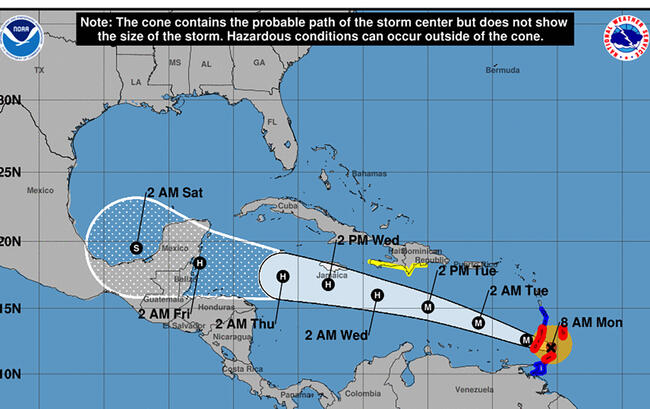
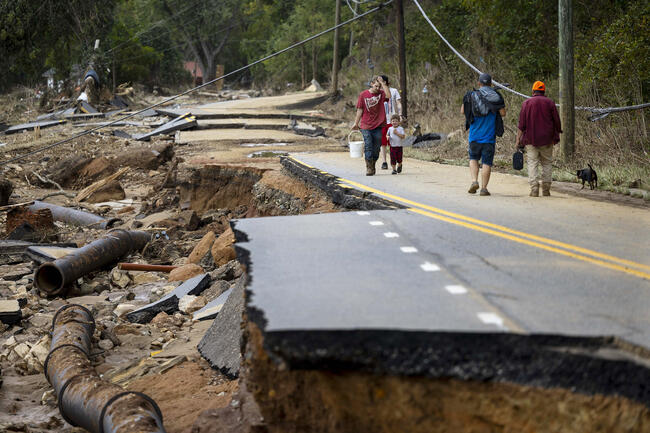
The impact of natural and human-initiated disasters also can result in poison-related incidents. Case in point: carbon monoxide poisoning from generators running after a hurricane hits, contaminated water, or wildfires. Fogelson noted that when other systems go down, poison centers often stay up. Some centers even have what they call a ‘Poison Center in a Box’ so even if a center gets badly damaged, that ‘box’ has everything needed such as satellite phones and computers workers need to set up anywhere.
America’s Poison Centers is always striving to innovate and provide multi-modal access to services with the support of its federal partners.
“People expect multiple ways to access services. For many years, it was just an 800 number,” Fogelson said. “We’re working on a bunch of innovations there.”
For example, live geolocation is being piloted so when someone calls, they can be sent a link and via their cellphone can show a video of what's going on live in the moment. The association launched a pilot program to offer chat and online options for contacting local centers.
“We also think a three-digit number is the right long-term answer over an 800 number”, Fogelson said. The Centers’ social media presence has also expanded through online advertising to provide poison safety education and raise awareness of poison center services.”
Addressing why someone would call a poison center instead of 9-1-1, Fogelson noted, “First, staff at centers are highly trained and know precisely when to integrate 9-1-1. Poison centers are specialists, superb at triage, and understand life-threatening scenarios that require 9-1-1.
“We find people will sometimes call a poison center when they are for some reason reluctant to have lights and sirens and people in blue uniforms at their home. People are looking for 24/7, highly trained, free, and confidential exposure expertise for sensitive topics such as mental health and drug exposures as well as other factors. Other times, people just need reassurance and good guidance on an exposure.”
Specialists at the Poison Centers gather critical information for follow-up with those who have called into the center, said Fogelson.
“They often see where patients are at in two hours, four hours and close the case after follow-up,” he said. “If the person goes to the hospital, they call the hospital and get the follow-up.”
The Poison Help line is 1-800-222-1222 or people can visit poisonhelp.org for online resources and support.