A New Approach to Active Violence Response Training
Active violence, whether caused by an active shooter, knife, car, or bomb, is dynamic and requires a dynamic response. A conventional response to these types of incidents will only increase mortality and decrease the overall success of the operation. That is why I prefer the unconventional mindset.
Having a solid concept of the operation is the driving goal during such incidents. As these incidents are so dynamic, no standard operating procedure or protocol can possibly cover every scenario. The focus must be on the “what” more than the “how.” The “what” is to get as many viable victims out of the environment as possible and do so quickly. The “how” is up to the response team doing the work. Only they have a good picture of what is going on.
Eight years ago, I developed a few techniques to expedite the response and created team positions to help add some semblance of order in an otherwise chaotic environment. Lake County, Ohio has incorporated these ideas into county-wide response for mass casualty active violence incidents. This is not a be-all-end-all response model; it’s designed to be modular and act as a starting point for a department looking to create their own policies. Though my agency hasn’t needed to use this model, we’ve run hundreds of scenarios, tweaking the techniques as we go. What I present to you is a culmination of hundreds of hours brainstorming and exhaustive training.
Team Positions
The positions we created are: operations, staging, casualty collection point (CCP), assessment team, and extraction team. The operations officer is the glue that holds things together—they are your initial command. The staging officer handles pairing EMS teams with law enforcement, creating the assessment and extraction teams. The CCP officer oversees the casualties, making sure they thoroughly triaged and handed off to hospitals by ambulance or helicopter. I will explain these positions in more detail along with three response models.
Operations
Operations is the initial command person. Upon arrival to the scene, they’ll determine who the staging and CCP officers are. An assistant to the operations officer is also a good idea. They will gather floor plans and help out as needed. Operations will also monitor the police and stay in contact with dispatch to learn the correct entry point. Once an entry point is determined, a CCP is established, and staging can start creating teams. Operations will stay in that entry way and control access to the scene. Once the operations officer has a good picture of the situation, they will call in an assessment team to start their triage and call in locations so extraction teams could get the victims out and to the CCP. Once the last identified victim has been removed, victim counts of extracted versus triaged will be reconciled and the scene will be turned over to the incident commander. One assessment team and one extraction team will be on standby should another victim be found later.
Staging
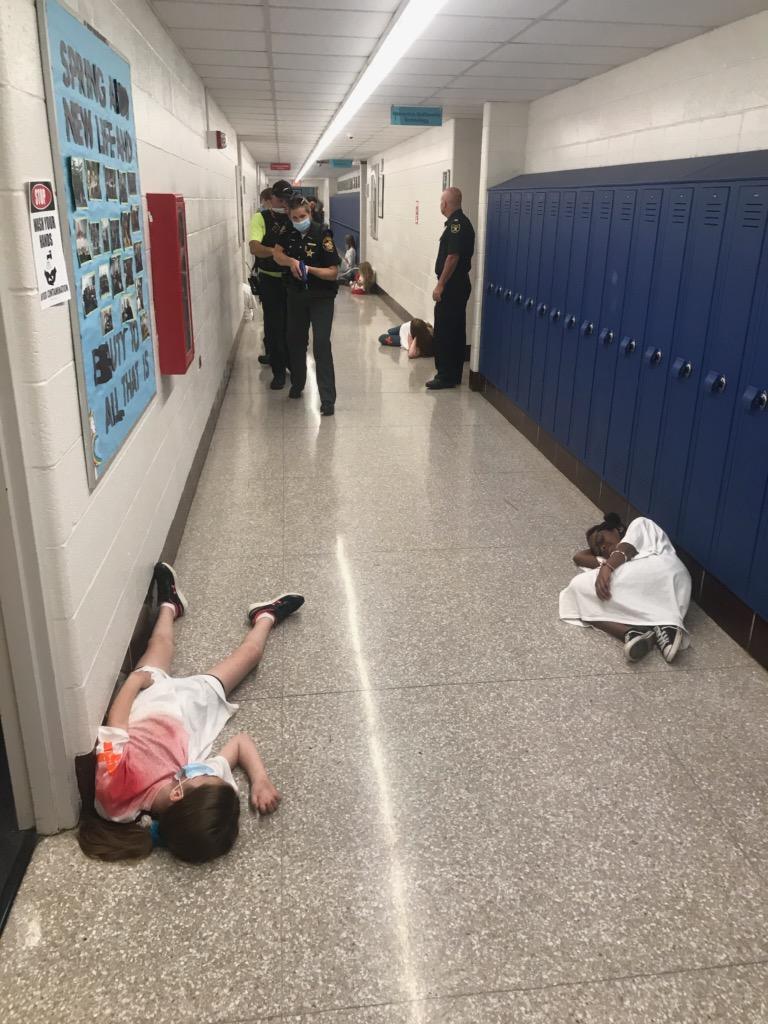
Staging in this scenario is different than the staging at a fire. This staging is done near the entry of the scene. Once the assessment and extraction teams are appointed, the staging officer will determine multiple potential staging locations, as they won’t know where the actual entry point will be. Considerations would be cover and concealment from inside observation and defensibility by law enforcement should that need arise. Once the entry point is established, staging will go forward at the determined location.
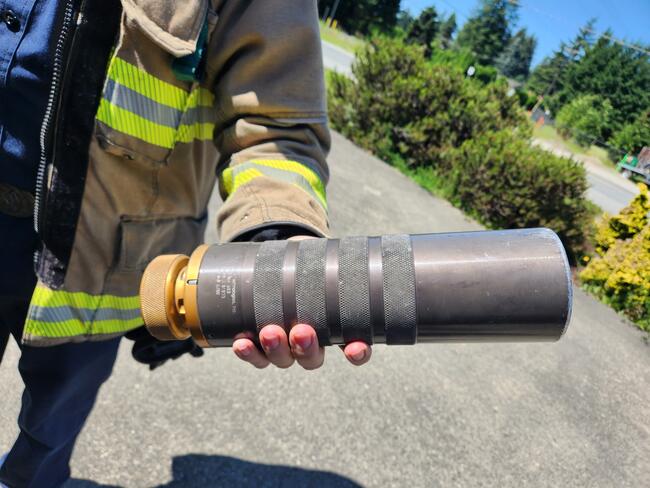
An assessment/extraction team consists of two law enforcement officers and two EMS. Law enforcement will be in front and rear of the team, for security, and EMS will be in the middle. I like to create three assessment teams and four or more extraction teams. The assessment teams will have the most EMS supplies as they will be doing some treatment of victims and triaging them. An extraction team will have some EMS supplies, but their main equipment will consist of a device that can be easily carried, deployed, and used to extract a victim.
When operations calls for an assessment team, the staging officer will ensure the team has a radio on the right channel, the team has plenty of supplies, and knows where the entry point is. Staging will continue to provide operations with teams as requested, but will notify operations when the available teams drop below three.
Assessment Team
The assessment team will go forward and report to the operations officer. Operations will brief them on the situation and direct them to where law enforcement has identified the location of most of the victims. The assistant to operations will show the assessment team where they are and where most of the known victims are on a map. At this point, the assessment team determines how they are going to get to the known victims. As law enforcement clears an area, they leave officers in place, which creates corridors. Assessment teams are advised to stay within these corridors as they have been “locked down” whereas other areas haven’t been cleared and dangers could lurk there.
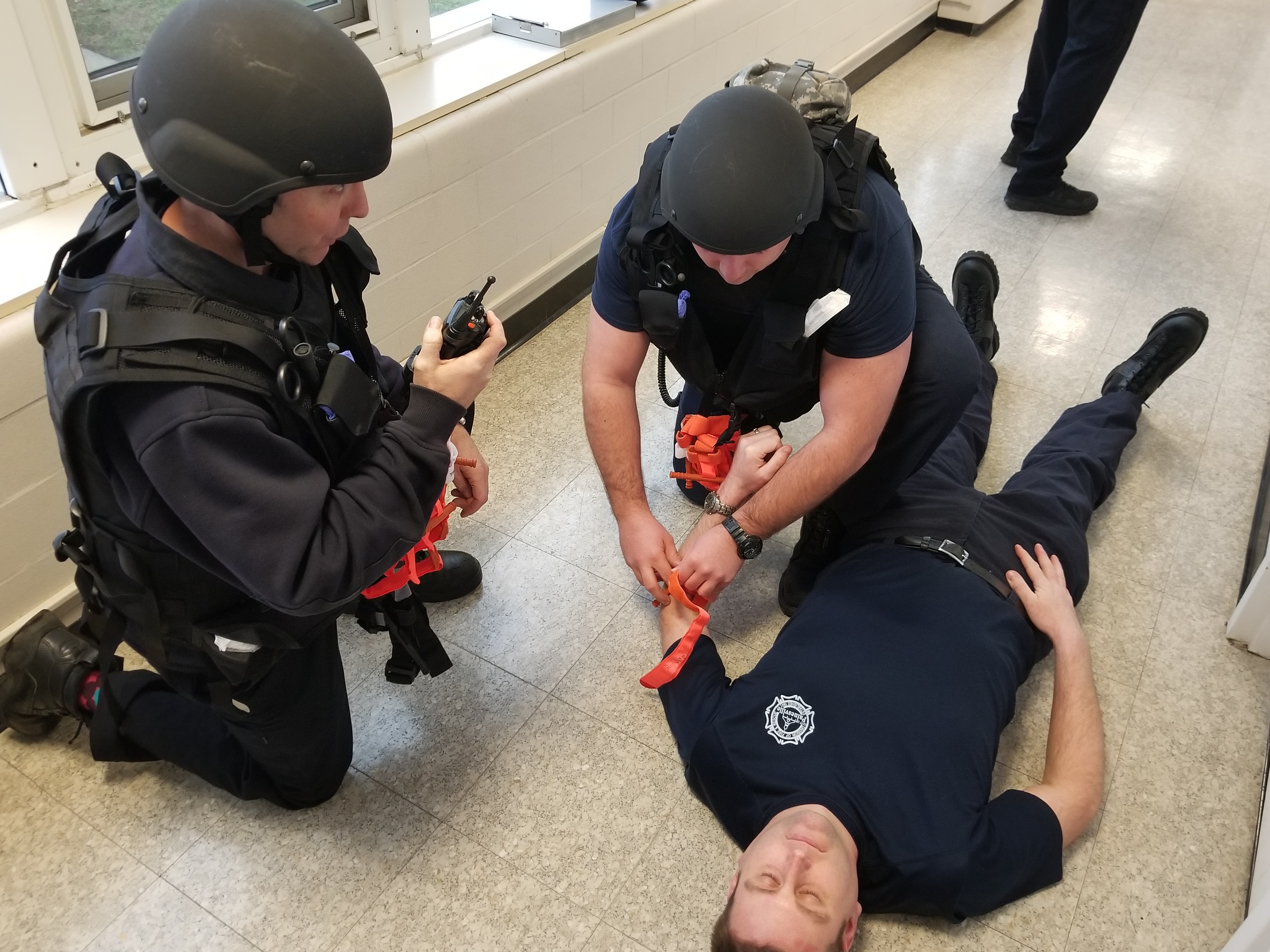
Once a victim has been located, the front EMS officer will conduct a very rapid (15-20 second) assessment. The only wounds addressed at this time are major arterial bleeds, sucking chest wounds, and major abdominal wounds. If breathing problems could be fixed by repositioning, then do so, but major respiratory interventions are greatly discouraged. Remember, the more time you spend on one victim, the less time you may be able to spend on another. Additional treatment will be performed at the CCP. The second EMS team will radio the team’s exact location to operations so an extraction team can be sent. Once treatment is completed, the team will move on to the next victim.
If a victim is found deceased, they won’t be extracted. An “X” will be placed on their forehead, their location will be radioed to operations, and the team will move on. EMS guides the formation; law enforcement is only there for security. The only time law enforcement has a say in destination is if there is a danger EMS isn’t aware of. If the assessment team runs low on supplies, they alert operations so a new team can be sent. The last victim the assessment team triages should be extracted by that team. When that team is complete, they report to operations and confirm all known victims have been triaged. After that, the team will either go to the CCP to help or become an extraction team.
Extraction Team
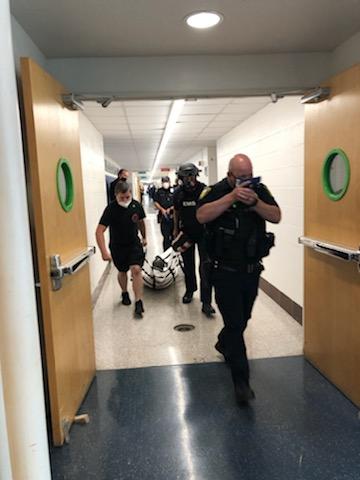
Extraction teams will be called forward when operations requests. They could be called as individual teams or multiple teams at once. Operations will show the team the location of the victim. Each team should only extract one assigned victim. I can’t emphasize that enough: The last thing anyone wants is for a victim to get left behind because the extraction team took someone else instead. The only exception is if the victim dies after the initial assessment. If an extraction team comes across an untriaged victim, a triage should be done, operations notified, and the team proceeds to the designated victim for extraction.
As stated before, the scene is dynamic, so injury severity doesn’t matter. The first viable victim found is the first to be extracted. This is done for a few reasons. First, it prevents victims from being left behind. Second, if the area becomes locked down, there is a greater chance more victims will be left in that area than if they were extracted in order of discovery. After each extraction, the team will report to operations to notify them of the successful extraction. When all assigned victims have been extracted, operations will notify incident command that all viable victims have been extracted. All teams will then report to the CCP to help.
Casualty Collection Point
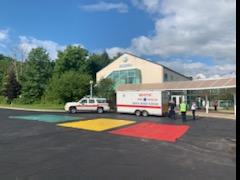
The casualty collection point is the location all viable victims are taken. A detailed triage will be completed, a severity level will be established, and all wounds will be addressed. A transportation officer will then arrange transport to a hospital either by ambulance or helicopter. Once all viable victims are transported, incident command will be notified.
Changes in Scenario
The above is an example of a single floor location. A multiple floor location is similar, but far more labor intensive as teams are stationed in stairwells to relay extraction victims. A good rule of thumb is a single assessment team per floor. We tried multiple teams on a single floor, but found many victims were left behind because of location confusion.
Outside venues can pose a daunting task. There are many considerations such as buildings and their different heights, water obstacles, roads versus paths, weather, and the list goes on. A best practice is to have law enforcement push through the scene and create a bubble around the victims, securing the entire perimeter. With the perimeter secured, teams can be just EMS personnel. Victims will still be assessed and extracted the same way. There has to be a bit of creativity when responding to such a venue, but if you keep in mind the concept of the operation, all will work out.
This article is brief, as I can go into greater detail. I also have multiple forms and detailed written descriptions of each position. Email me at rhendershot@painesville.com for more information. This may be a lot to wrap your head around, as this is a rather unconventional response, but a conventional response to an unconventional scene will only end in disaster.
About the Author
Robert Hendershot has been a firefighter and paramedic for more than 31 years. He was a tactical medic for the Lake County, Ohio SWAT team for nine years and a medic for the Painesville, Ohio warrant entry team for four years. Hendershot has been the lead instructor for Lake County’s active shooter response for the past eight years. He has extensive counterterrorism training and three combat deployments with the Army Military Police.