8 Questions with Kelly Ramsey: Author of 'Wildfire Days: A Woman, a Hotshot Crew, and the Burning American West'
Kelly Ramsey isn’t a California native, having been born and raised in Frankfurt, Kentucky. But upon moving to Northern California, she fell in love with the state and its many natural wonders. She’s worked for the U.S. Forest Service as a trail maintenance worker and wilderness ranger. In 2020, she took on a new role as a wildland firefighter, and became the first woman on the Rowdy River hotshot crew. She would also work the 2021 fire season.

Her new memoir, Wildfire Days: A Woman, a Hotshot Crew, and the Burning American West, from Simon & Schuster, details her two seasons fighting some of the most intense wildfires in recent years. Ramsey sat down with EMS World to share her writing inspiration and discuss how EMS professionals can assist in wildfire emergencies.
EMS WORLD: What was your inspiration for writing the book? Why writing instead of say, a podcast or a video?
RAMSEY: I was inspired to write the book because I had such an extraordinary experience on a hotshot crew—because the work was so intense, the culture so unique; I'd never experienced anything like it, and I felt compelled to write it down. I chose writing because I'm a writer, originally. I went to school years and years earlier to study first poetry writing, then fiction writing. But I did a million other jobs to support myself, always writing on the side. So when I went through the maelstrom of the 2020 and 2021 fire seasons, it was natural for me to start writing just to process the intensity of that experience. At first, I thought it might be an essay, then a novel. Eventually, as I couldn't stop writing, I admitted to myself that it was a memoir.
EMS WORLD: What kind of training did you and your colleagues go through for wildland firefighting? How much EMS training did you and your team have?
RAMSEY: After training independently for six months in the off-season, when we all came together as a crew in spring, we went through the traditional "Critical 80"—two weeks of intensive physical, medical, and classroom training—plus another two weeks, so a month of training total. Physically we hiked steep ridges carrying 45-70 pounds, ran hills and distance and sprints, did strength circuits, lifted weights, and more. In the classroom we studied fire behavior, firing techniques, and first aid/CPR. In the field we did practice fire line construction, medical drills, and practice medical extractions in the event of an injury on the line. Every crew was required to have at least two certified EMTs; we had between three and five EMTs in my seasons. But beyond the EMTs, every crew member had to know first aid and how to hold C-spine stabilization, provide oxygen, and bandage wounds. If something goes wrong out in the woods, a qualified EMT may not be close by immediately, so every single firefighter is responsible for knowing how to handle a medical emergency.
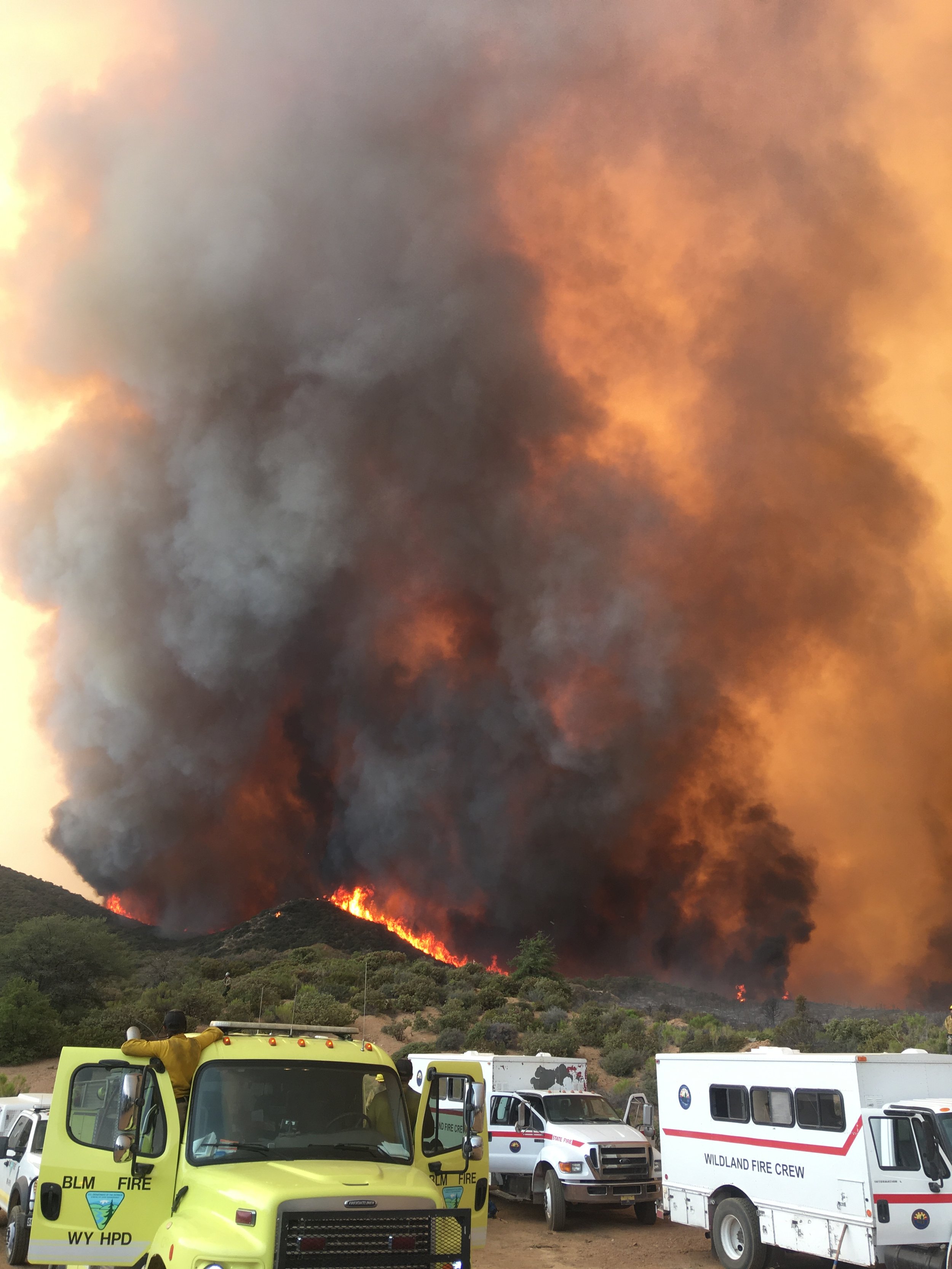 EMS WORLD: In the book, you share some harrowing experiences of injuries experienced by colleagues, including trees falling on crew members, burns, and orthopedic injuries. What should EMS providers be prepared for if they are supporting wildland firefighters and what suggestions do you have to help them give care more effectively?
RAMSEY: If EMS providers are supporting wildland firefighters, they should be prepared for traumatic injuries in hard-to-access locations. In many of the cases where wildland firefighters have lost their lives due to fire line injuries, the problem is as much the difficulty of extracting the patient as it is the injury itself. We study well-known "lessons learned" in the profession, such as the death of Andy Palmer, who died from a femur fracture that may have been treatable if he was extracted faster. So, EMS providers should be stationed as close to the fire line as possible and prepared to think creatively about how to move a patient from, say, a remote forested ridge to the nearest road to the hospital. They should also be prepared to aggressively treat the patient.
EMS WORLD: You shared a great deal of vulnerability by chronicling your experiences, good and bad decisions, and even relationship experiences. What do you hope that other first responders gain from seeing your choices?
RAMSEY: I hope other first responders, whether they can identify with my exact experiences or not, might recognize some of the challenges and trauma responses that are common among people in our fields. I hope that they feel seen or see themselves reflected in some way in my story, that they know their struggles are normal and shared by many others. It's not an easy thing, to confront crisis and handle emergencies; it has a steep cost for most people. These jobs are absolutely amazing, and the people who tackle them deserve acknowledgement, understanding, and support.
EMS WORLD: The New York Times published an article on Aug. 17, 2025 about how more and more wildland firefighters are developing cancers. While on the structural side, firefighters can wear SCBA and do relatively quick decon after a fire, wildland folks don't have either luxury. What do you think this means for wildland folks in terms of better protecting themselves on scenes, acute medical and follow-up care, and additional ways EMS can support wildland firefighters?
RAMSEY: Will one investigative piece—however thorough—really force action? We'll see. I suspect that one way operations could change is that wildland firefighting agencies could mandate that firefighters "rotate" out of heavy smoke and cease the practice of sleeping in heavy smoke when spiked out on fires. In terms of acute and follow-up care, it would be great if EMS were able to provide monitoring of wildland firefighters' vitals before, during, and after smoke exposure to determine their baseline and any potential impacts. Again, I'm not sure how logistically possible this will be in the near future, but it would be amazing to begin tracking exposure to fine particulates and their resulting symptoms, if any. Speaking from personal experience, most of us developed headaches, coughs, and even breathing problems following smoke exposure—the impact wasn't subtle.
EMS WORLD: Many people in the U.S. don't think about wildland fires (and the people who fight them) until either their homes or neighborhoods are threatened or their air quality is affected by fires from Canada or the Midwest. Certainly, the fires near Los Angeles in January 2025 brought this reality crashing in for a lot of people both in California and nationally. You shared that part of the mission of your book is to educate people about the dangers of wildfires and management advocacy. What would you suggest readers should do about it before tragedy strikes?
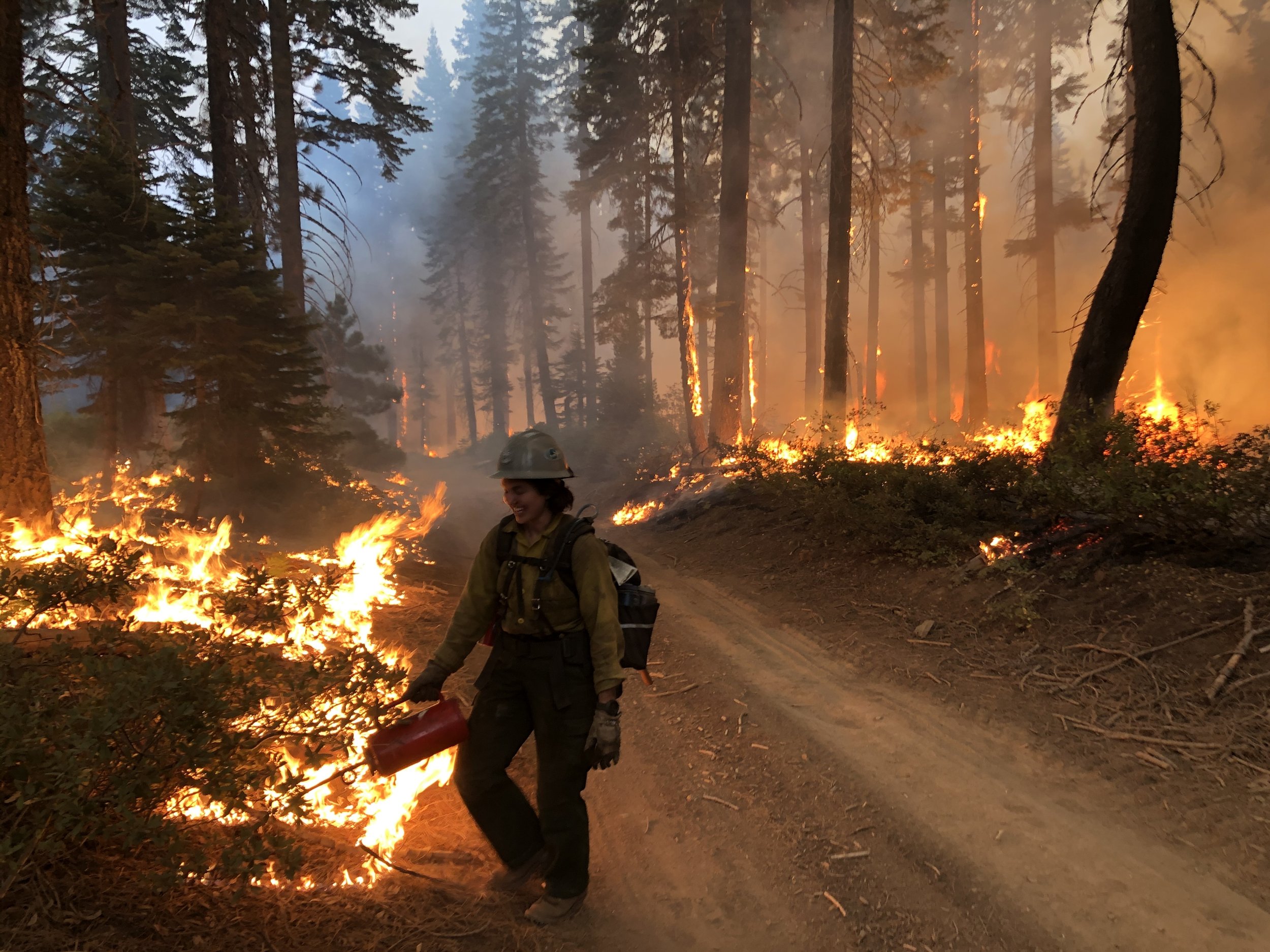 RAMSEY: Yes, sadly, the LA fires really woke people up to the reality of wildfire in this country. I would suggest that readers educate themselves about what needs to be done to prevent catastrophic wildfires (fuels reduction work, prescribed burning, indigenous cultural burning, house hardening, and defensible space). Then, they can participate and advocate at a local and national level for this critical preventative work to be funded, staffed, and conducted on a much larger scale. Many communities have local "fire safe" councils that create fuel breaks and partner with firefighting agencies to do prescribed burns; this can be a great way to get involved.
EMS WORLD: While the numbers are better, women are still very underrepresented in firefighting and wildland firefighting. What advice would you give to women who are thinking of wildland firefighting as a career?
RAMSEY: I wouldn't recommend that every person go and become a hotshot or a smokejumper, but I think there could be a role within wildland firefighting for anyone; it's just that the most arduous work won't appeal to, or work for, every personality type. I would advise women to do their research, figure out what kind of module might work for them, and apply! Then educate yourself and physically train. Train harder than you ever have in your life and don't quit. Try to find a mentor, whether within their agency or just another former firefighter who's a woman. Having someone to talk to and counsel you through the struggles can really help. I won't promise it's going to be easy, but I do promise that if you can fight your way through all of it, you'll find a new version of yourself on the other side.
EMS WORLD: Tell us about the book and where folks can purchase it?
RAMSEY: The book is called Wildfire Days: A Woman, a Hotshot Crew, and the Burning American West. It's available in hardcover, e-reader, and audiobook, and you can purchase it anywhere books are sold! Your local indie bookstore is especially great.
Barry Bachenheimer, EdD, NREMT/FF is a frequent contributor to EMS World and an active EMS Provider in New Jersey.