EMS World Live Keynote: 57 Seconds to Scene: The ATCEMS Response to Austin’s 6th Street Shooter
In the early morning hours of March 1, 2026, a routine Saturday night in Austin’s West 6th Street entertainment area escalated into a mass-casualty incident. During EMS World Live May 29, 2026, first responders from Austin-Travis County EMS (ATCEMS) and Austin Police Department (APD) gave a high-level overview of the coordinated EMS and law enforcement response to the incident that left three people dead and 15 injured.
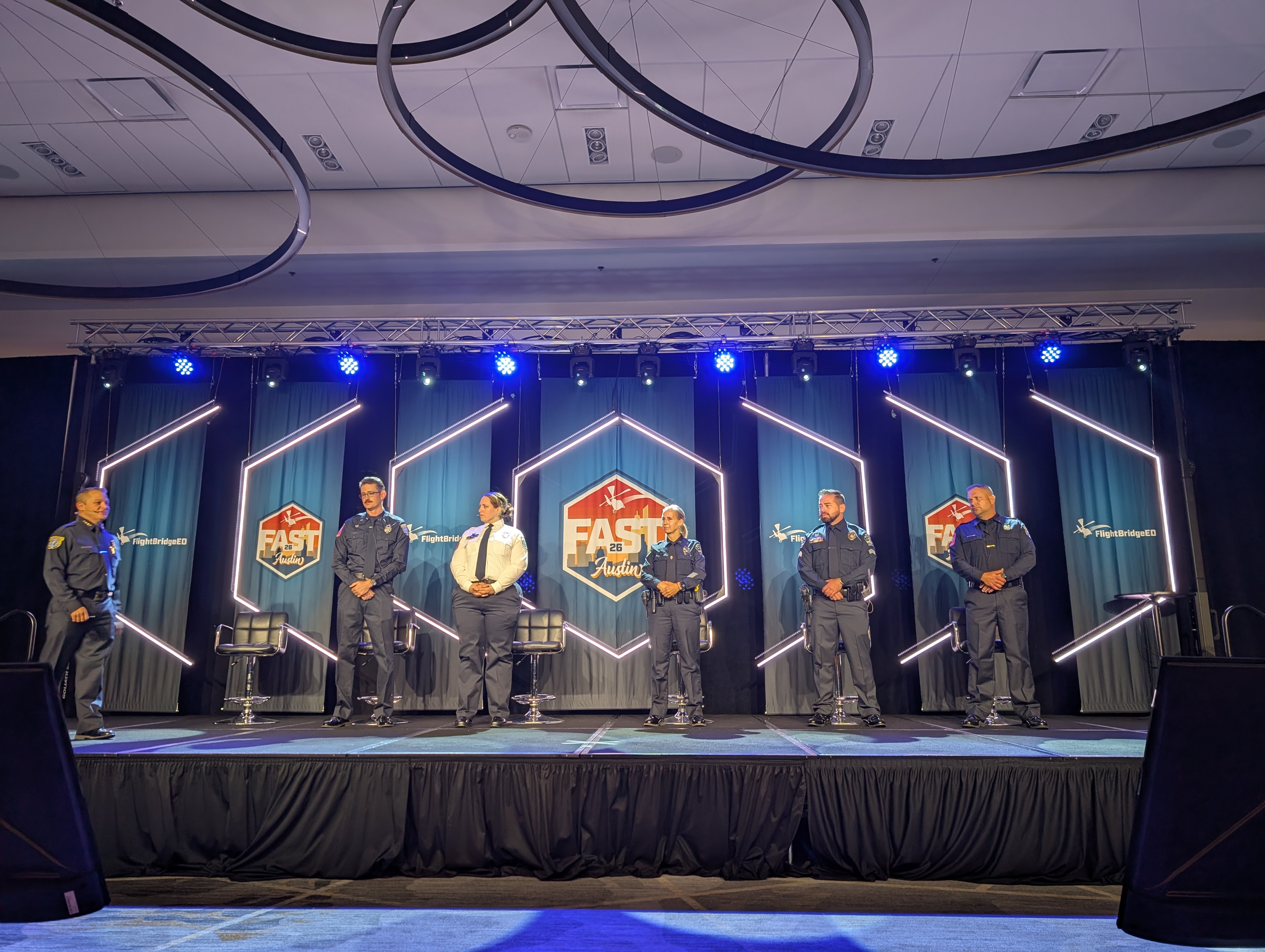
At EMS World Live: Austin with FlightBridgeED’s FAST conference, ATCEMS Chief Robert Luckritz addressed the gathered crowd to share how the night played out. He said that Austin is considered “The Bachelorette Party Capital of the World,” and the famous 6th Street corridor is often crowded with people having a good time, and sometimes, too good of a time.
“Thousands of people come to Austin, particularly during special events, and crowd 6th Street, looking for a good time,” Luckritz said. “You can imagine the challenges that places on emergency services and on public safety to be able to make sure that everyone in that crowd stays safe.”
ATCEMS and the APD created integrated Counter Assault Strike Teams (CAST) to manage the myriad problems large crowds bring, from fights, to overconsumption, to what happened the night of March 1. Luckritz explained these teams consist of one paramedic and one APD officer stationed around the entertainment district in Polaris Rangers, which can navigate crowded streets easier than large ambulances and still provide patient transport services. This system is also called a Rescue Task Force.
57 Seconds: The Night of March 1
The shooting occurred at Buford’s Bar on west 6th Street, a mile and a half from the city’s Level I trauma center. Four ambulances were stationed around the city, with the furthest away having a 20-minute possible response time.
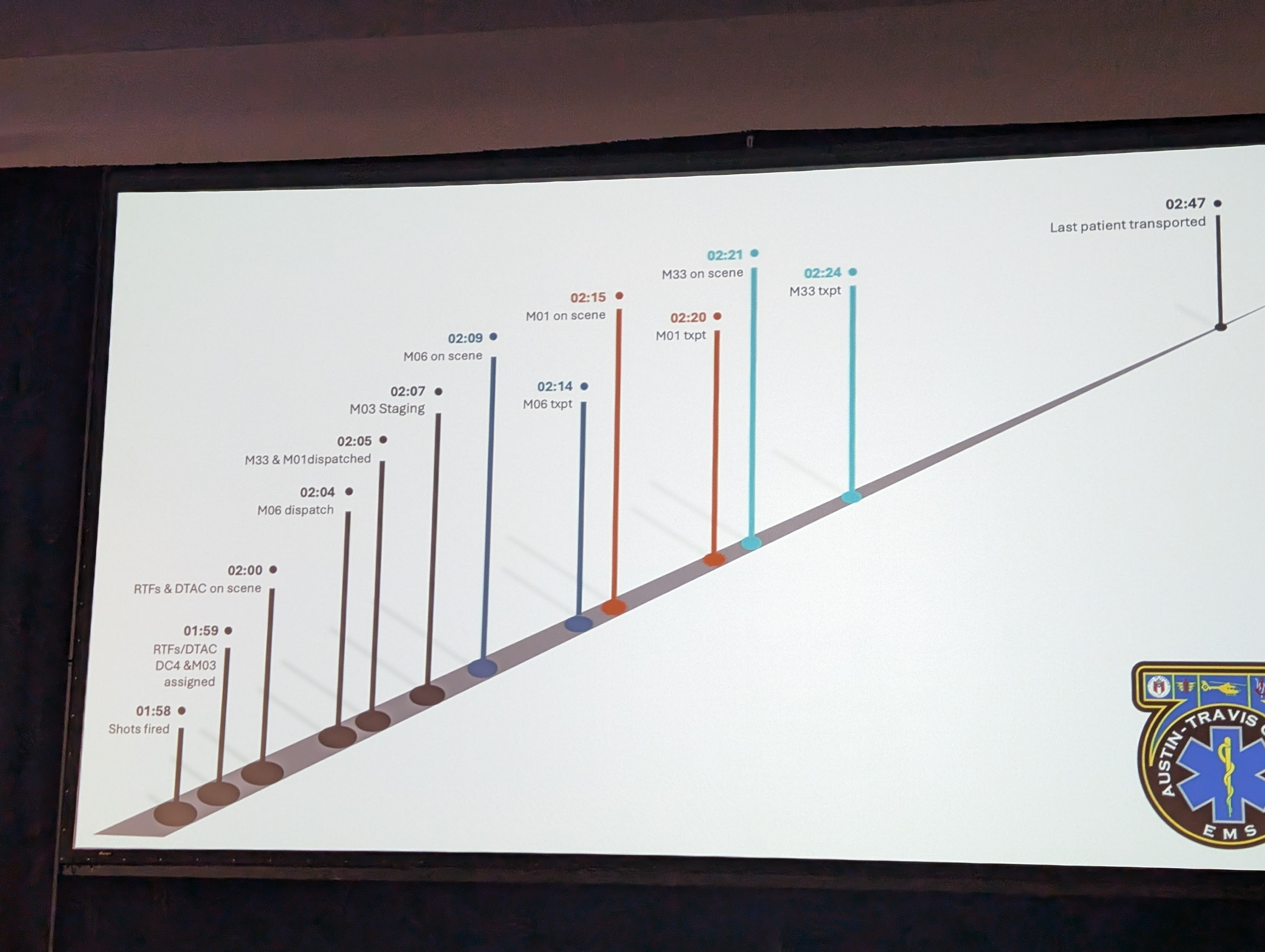
Within 37 seconds of the first shots at 1:58 a.m., a CAST unit was dispatched from their location on Congress Avenue. This unit arrived in 57 seconds and began initiating patient care. Additional law enforcement and EMS were dispatched. Law enforcement subdued the shooter, fatally wounding him, at 2:03 a.m. Medic 6 arrived on scene at 2:09 a.m. and made the first patient transport at 2:14 a.m.
Luckritz explained that most patients were loaded and transported within five minutes. The last patient was transported at 2:47 a.m., 22 minutes after the first shots were fired.
West 6th Street Surprise and After-Action Response
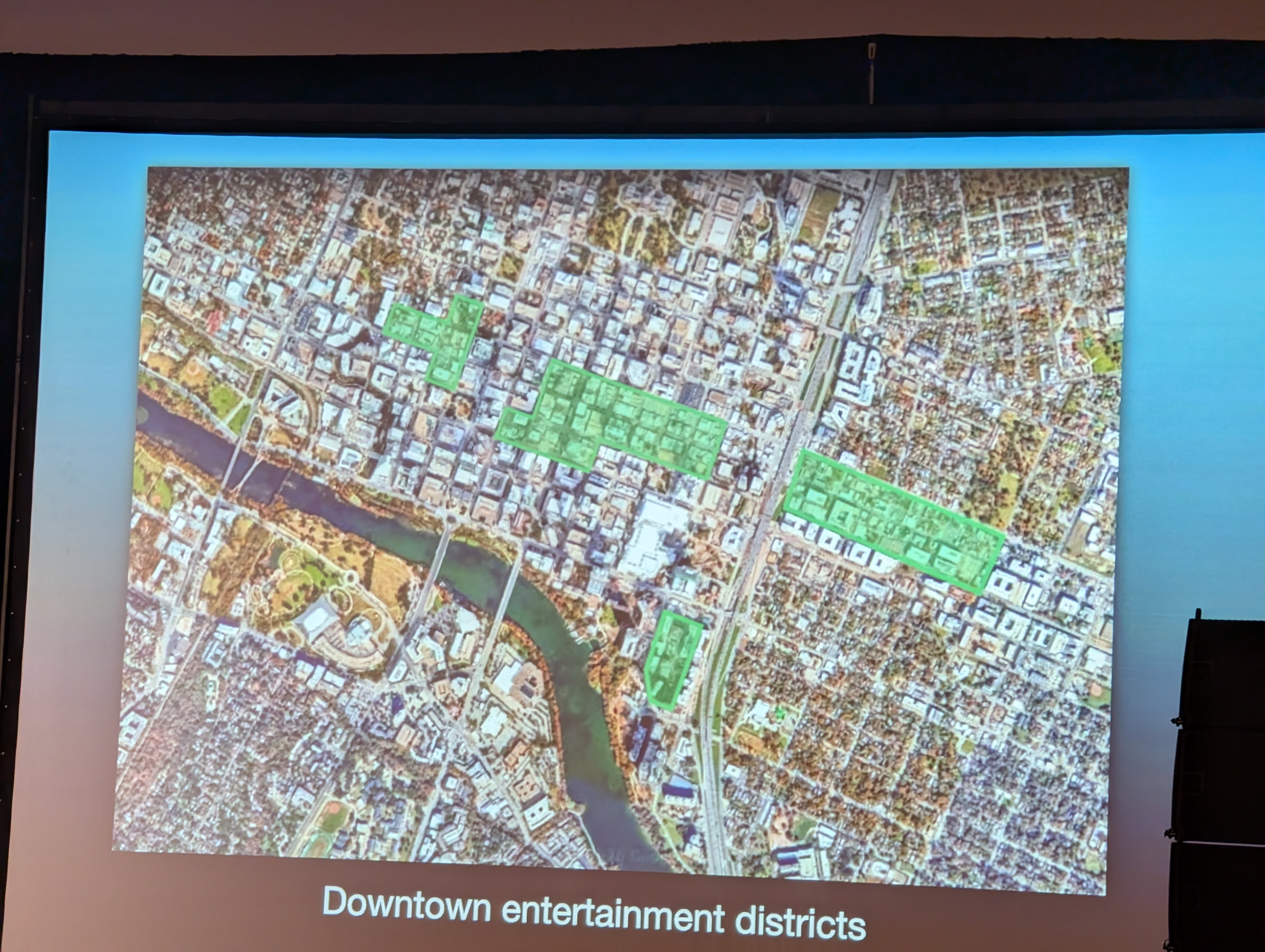
“I will tell you, for those of you that are not familiar with Austin, I think that anybody up here in this stage here would say we were perhaps a little surprised,” Luckritz said. “We've done a lot of preparations around the core in historic 6th Street, which is where all the tourists and all you usually go. The East and the West 6th districts are generally seen as a little bit safer with more locals.”
Carey Chaudoir, Commander for the Downtown District of the APD, explained during a Q&A with the audience that while the incident had been surprising, APD was already implementing plans around East and West 6th Street to improve deployment.
“What we’ve done, now, is establish a safety zone right outside Buford’s,” she said, explaining that the bar is at the center of West 6th Street. “We barricade off a section of the street where we have our police, EMS, and fire partners congregate in the event of something happening.”
Chaudoir said the new measures were deployed the very next weekend after the shooting.
APD Buy In
EMS works with police in many ways during MCIs and regular shifts. ATCEMS and APD pioneered the CAST model to improve that work, especially during mass casualty events. Luckritz said APD is an amazing partner that wanted to step up to the challenge of creating and implementing the model.
“It didn’t happen overnight,” explained Sgt. Luke Serrato, CAST Cadre Supervisor. “We recognized we were gatekeepers. We would see someone needing medical attention and we’d call for you guys and pat ourselves on the back. … Over time, we figured out we have a duty to provide medical care. We got with EMS and they started teaching on-scene medical. It was a multi-benefit system because we had better medical occurring prior to EMS involvement.”
Serrato added that EMS sometimes arrives on scene to find the patient packaged and ready for transport from the scene, which has led to humorous comments of, “There’s nothing fun for me to do, now,” from medics.
“But we realized you guys need access to patients as early as possible, and we took on the responsibility of providing that,” he said. “The condition and care we could provide prior to your arrival was instrumental to the ultimate outcome of that patient.”