A Real Emergency: A Conversation With Author and Former Paramedic Joanna Sokol
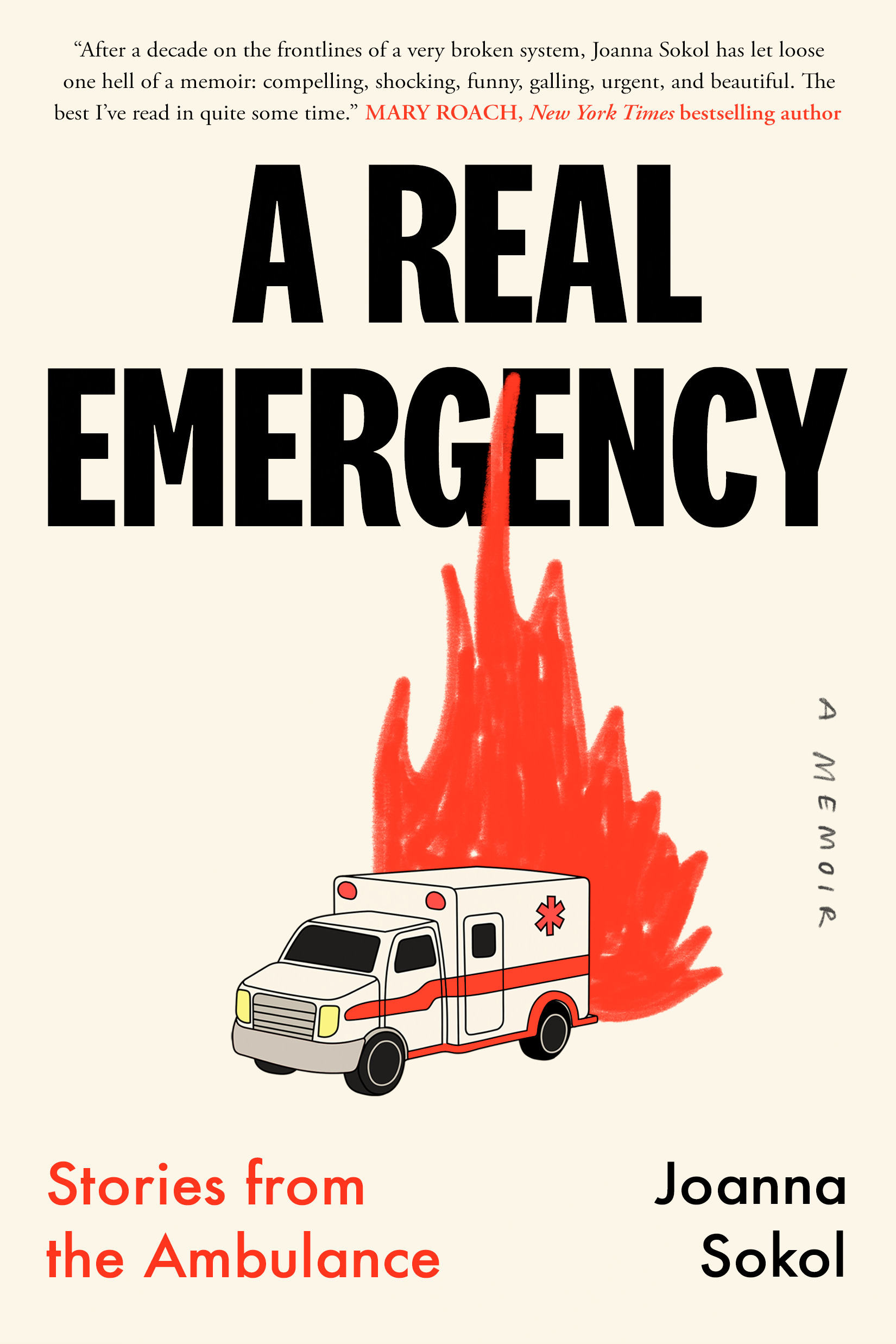
As an EMS provider, do you often feel unseen? Do you feel that the work you do is unappreciated, that you are underpaid, overworked, and there is a lack of resources? Do you get frustrated by the misuse and abuse of the 9-1-1 system? Do you wonder how EMS evolved into what it is now? Do you at the same time see the magic in the lower acuity calls and, that despite the challenges, you do like the work? California paramedic and writer Joanna Sokol took her 14 years of observations and thoughts in a small notebook and turned it into A Real Emergency (Penguin Random House, 2025), a collection of stories, vignettes, interviews, and EMS history with the goal of making EMS providers feel seen.
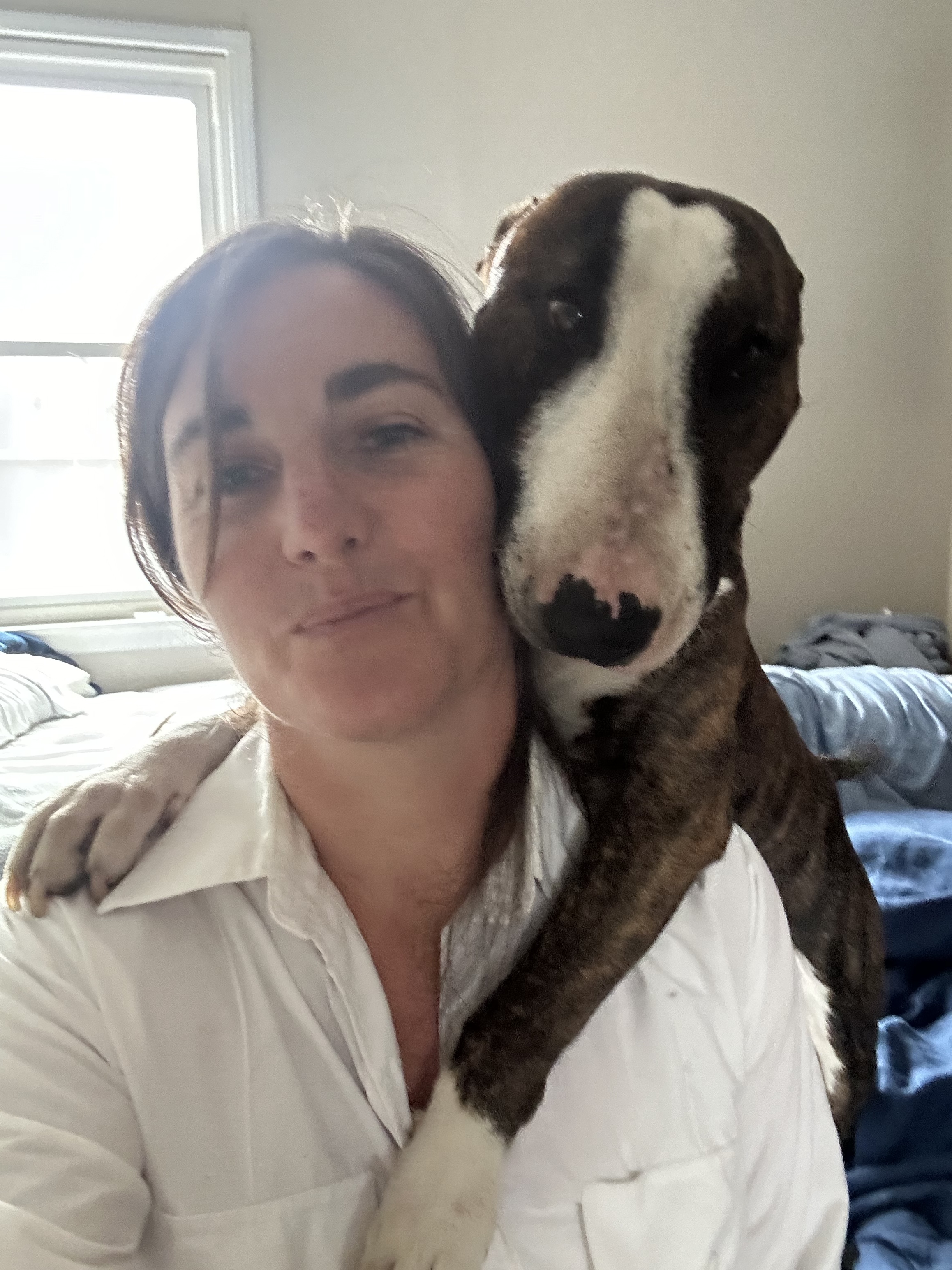
 Sokol shared that journaling was a way to process her emotions, especially on the job as an EMT and a paramedic.
“My backpack of stories was getting heavier,” Sokol shared. “Writing the book was selfish. I wanted to put the stories and emotions out into the world.”
Growing up in the Oakland, California area, Sokol started as an EMT at music festivals and raves and later worked BLS for four years and ALS for 10 years in Reno, Nevada, San Jose, California, and for several years in San Francisco as a paramedic with the San Francisco Fire Department. She is the everywoman medic sharing her and others’ stories, like she and her partner grabbing a snow cone between runs on a brutally hot Reno day or the Spotify playlist that she and her San Francisco partner made during the early days of the COVID pandemic (excerpted below).
This book has a different approach than many other EMS books. In many memoirs, the author is the “hero” of the book, whereas Sokol’s approach is more of a reporter or commentator. The book also has a great deal of research into EMS history, including Belfast, Northern Ireland’s Flying Squad, New York City’s first female ambulance surgeon, Pittsburgh’s Freedom House Ambulance, and Los Angeles County’s “Emergency!”
Sokol shared that she tried to gather both stories and history in a way that felt responsible. “My personal story is pretty boring. I wanted to zoom out and look at the bigger picture, but I was nervous, as I'm not a historian.”
She conducted extensive research and read many books and online accounts in libraries, websites, the New York Times, and more. “I kept trying to put all the pieces together, and the further I got, the more interesting it got.”
Sokol dives deep into the misconception that 9-1-1 abuse is a modern issue. “I found stories from the 1920’s about ambulances being called for sore throats.”
She also wanted others’ voices in her book with their perspectives. Many other EMS providers’ stories are featured in the book, such as Santa Cruz EMS legend Dan Quinto.
“I wanted readers to know that EMS responds to the critical emergencies, but also know that critical jobs are only 4% of what we roll to,” Sokol said.
Sokol talks a lot about the unhoused patients she and her colleagues saw frequently. The book effectively mixes in sociology, social commentary, and hard facts to show the calls urban EMS agencies deal with regularly. Ironically, Sokol also discusses how many of her EMS colleagues slept in their cars between shifts or struggled with finances.
“I was fortunate that the San Francisco Fire Department paid fairly well,” she said. “That said, EMS as a whole is incredibly overworked and underpaid for the work that we do. There are so many overlapping issues between the underserved populations we respond to and the multifaceted issues affecting EMS. There is no federal EMS system, and the infrastructure and politics of EMS and economics intersect poorly in states and regions. There can be a lack of oversight, and the fact that, as a whole, the system is predicated on insurance reimbursement sets us all up for struggle.”
Sokol shared many stories in the book about surfing and her love for the ocean. She writes that EMS providers need a release or a non-EMS hobby. “You need something outside of EMS, a higher thing. You need someplace to put the stuff; the book Bringing Out the Dead calls it a ‘grief mop.’ For me, between my journals and the ocean, I leave it all in the salt water,” she said.
Sokol had to stop working as an EMS provider after 14 years due to injuries suffered as a result of the job. She said that in system status management or street posting for EMS, most providers are crammed into a cab for hours and then quickly use their bodies to lift heavy people and equipment in non-ergonomic positions.
“You need to stretch, eat, hydrate, and take breaks,” she said. “As a profession, we need to push back against some of these harmful labor practices.”
Sokol is considering her next move and said nursing school may be an option. At the moment, though, she is teaching the next generation of EMS workers at a local community college.
“I do miss the field and talking to patients,” she said. “For now, I hope people enjoy reading a book that is seen as accurate, responsible, and positive for the EMS community.”
The below is excerpted from “A Real Emergency” by Joanna Sokol, copyright ©2025 by Joanna Sokol. Used with permission by Joanna Sokol. Available for purchase at Penguin Random House and Amazon.
A good introduction to my perspective on EMS
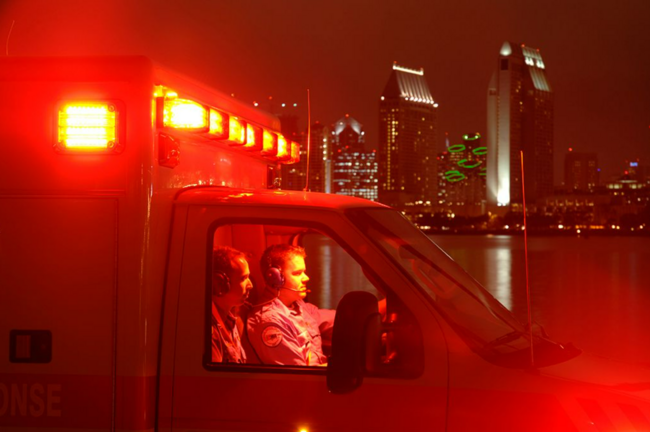
In the United States, we have this thing. We have this phone number you can call when you need help. The idea seems mundane until you stop to think about it. It turns out that it doesn’t actually matter what kind of help you need— there’s a guy with a gun; my dad’s having a stroke; I’m stuck behind the washing machine; there is a sea monster coming after me with a flamethrower— no matter who you are, where you are, or what your problem is, you dial a three-digit phone number and a group of trained professionals will show up at your current location, right now, and do their very best to help you with whatever is going on. When you take the time to stop for a moment and consider what that means, it is astonishing. For most of human history, the world did not have anything like it.
To me the most incredible thing about this phone number is that anyone can call. Absolutely anyone, any time of day or night, whether from a penthouse or from the inside of a dumpster; you call and we will show up just the same. You don’t have to present money or justification or reasonable cause. You just call the number, say you need help, and there we are.
This means that a massive amount of our call volume isn’t made up of the four or five sexy medical emergencies they like to show on TV. Because you don’t actually require a true “emergency” to dial the phone. All you need, really, is a situation that you can’t handle by yourself. Sometimes this is due to the nature of the problem, but more often it’s about the patient and their way of life. Most of the calls we run are the everyday difficulties of people who are simply too old, too poor, too sick, or too mean to have anyone else willing to help them out. A huge portion of our workload is incredibly repetitive and frustrating; we become exhausted by the redundancy of it all.
But here’s the thing: these people are calling us with their “BS” because they literally have no one else to call. When you are too old, too lost, too alone, when you have burned every other bridge in your life and no one will help you with your empty prescription or your toe pain, you call us. And we come. Every time, no matter what, we come. And what an astounding, unspeakable honor that is. What indescribable virtue it is to be the guy who shows up when no one else will. That’s what I tell myself, anyway.
Covid Music Day
The EMS members at SFFD have a group Facebook page that we use to vent or locate lost stethoscopes and jackets. I rarely post, but one day Maggie and I are arguing about music and I break my social media silence and write a message to all of the ambulances:
“Hey morale is in the sh*tter so I’m spending the day force-feeding my immigrant new partner Bay Area music history lessons to remind both of us why we work in this foggy drug-filled cartoon of a city in the first place. She is British so she’s way too polite to say no. Today is early 90s hip hop day and I’m looking for suggestions. So far we’ve just been binging on Hieroglyphics/Souls of Mischief and some other Oakland shit. Tomorrow is punk rock day. Anybody wanna get in on this?”
The post explodes. I don’t usually use Facebook— in fact, I only really keep the account to check our page for work announcements— but suddenly we are glued to our phones. As luck would have it we are in one of the few ambulances today with a working aux cable and I hook up my phone to the rig radio. The song suggestions Don’t. Stop. Coming. Everyone sends us track after track, texting and posting and stopping us in hospitals to high-five or play a beat. The musical soul of the Bay bursts through all of the bullshit and we dance in our rig all day. Underground hip hop, hyphy, punk, ska, East Bay Hardcore: the mid-nineties music scene that Bay Area kids grew up with was dirty and rebellious and conscious and lyrical and stoned and for twelve hours it dumps through our crappy ambulance speakers. After “Now You Do” by A-1 and Flosstradamus, Maggie bursts into giggles. She says, “‘He’s got a big mouth like a pelican bird!’ That’s a great line! That’s really pleasing!”
I teach her about hyphy and East Coast/West Coast rivalries. One medic recommends a particular Spotify playlist and I have to explain the word slapper to Maggie. One guy starts giving us jazz songs written in North Beach in the 1970s. Another posts a song recorded by one of our own medics at the department. We miss tons of radio traffic and almost blow out the sound in the rig. It’s an amazing day.