Former Indiana Athlete Rocks on the Road With `Jambulance`
July 16--Dan Burton was in a hurry to get to the ambulance at the end of his driveway on Saturday. It wasn't because he was hurt or trying to get someone to the emergency room. In fact, it had been months since that ambulance took anyone to the hospital or saved a life. It has saved a few parties recently, though.
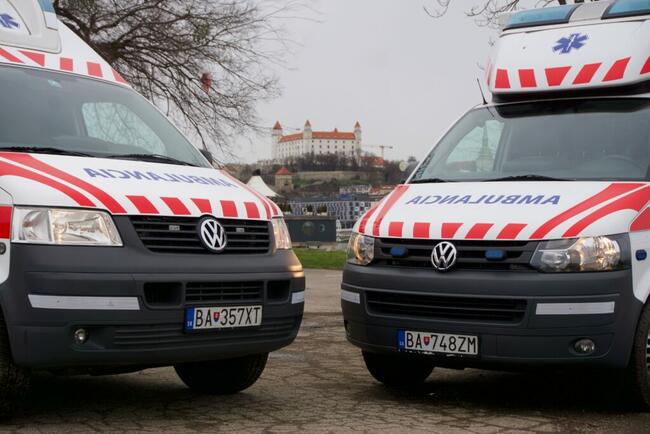
In January, Burton made something he'd been talking about for nearly three decades a reality. That's when he bought a 1997 ambulance, drove it back to Indiana from Virginia, and turned it into a "jambulance."
Burton had a black and green vinyl wrap complete with the name of his DJ company, P.V. Productions, and pictures of giant speakers put on the outside of the ambulance. Inside, he's installed a refrigerator that can hold 148 cans of soda, poles under the bench seat that can be used to set up a king-size bed, a slide-in microwave and of course, a new sound system. However, the speakers he installed aren't as good as the ones he uses for his gigs.
"If we're doing something outside, we'll set the speakers up on the roof," he said. "I put a good sound system in it because it's a jambulance, so it jams, but for a real show, you need those speakers."
The speakers he's referring to were part of the reason he was in such a hurry to get into the jambulance and down to the Hilton Garden Inn. Two new 1,600-watt speakers and a 1,000-watt subwoofer had just been delivered earlier in the week, and he was excited to test them out at the Bloomington High School North class of 1980 reunion that night. It's somewhat fitting that he would get new speakers for the event, because at least a few of the people from that class were friends with Burton when he first started dreaming of the jambulance, although they didn't know it at the time.
Burton was a pole vaulter on Indiana University's track and field team in the late 1980s. NCAA rules wouldn't allow him to get a job, but coming from what he described as a financially challenged family, he needed money. So he started DJ-ing under the table. Ever the schemer, he realized a repurposed ambulance, with all its storage space and electrical capabilities, would be the perfect vehicle for a mobile DJ. Not to mention the natural play on the vehicle's name.
Burton continued to DJ after college. He formed P.V. Productions, which stands for pole vault, with a fellow pole vaulter. It would eventually grow to 15 full-time DJs and three contract DJs, but it never included a jambulance. Burton felt like the jambulance was more of a personal dream than something that would really grow the company, so he invested his money elsewhere.
After several years in the DJ business, he started to fee like he needed a different career path.
"Who wants a 50-year-old DJ?" he said recalling how he felt at the time.
He got into hotel sales and marketing, but never forgot how much fun he had as a DJ. Now, about a year and a half away from his 50th birthday, P.V. Productions is back, with a jambulance. It's no longer his main source of income -- he said it just helps pay for family vacations -- but it's something he really enjoys.
"It's going to be a fun night," Burton said before climbing into the driver's seat of the jambulance.
* * *
While competing in the pole vault led to DJ-ing and the dream of a jambulance, a different kind of competition led Burton to pole vaulting. As an eighth-grader at Batchelor Middle School, Burton and his friends were trying to see who could get the most pictures in the yearbook. As the year drew to a close, track and field was their last chance to get in another team picture, so they all joined.
Burton said he told the track coach he wanted to pole vault. There were already three pole vaulters on the team, so the coach told him to pick something else.
"I was a stubborn kid," he said. "As soon as he told me no, from that point on, I was going to be a pole vaulter one way or another."
For the first part of track season, Burton's official events were high jump, long jump and hurdles, but after practice was over, he would drag the mats back out and pole vault by himself. When he started jumping 8 feet, he again asked the coach if he could pole vault. This time, the coach agreed.
By the end of the season, he was jumping 9 1/2 feet, but he would have to get a lot better to impress the track coaches at Bloomington High School South. They had just spent four years coaching Dave Volz, who would go on to place fifth at the 1992 Olympics in Barcelona, Spain.
"In Bloomington, everything you did was in terms of Dave Volz," Burton said.
Burton rose to the challenge and became good friends with Volz in the process. He beat Volz's freshman record with a jump of 13 1/2 feet. He broke Volz's school record of 16 feet 7 inches by an inch before graduating, but Volz is quick to remind him that he hit 17 feet at a meet right after graduation.
Despite the competition, Volz became a mentor to Burton.
"He would come out and help," Burton said. "He was sponsored by Nike, so he would bring me track spikes because my mom couldn't afford to buy them."
When Volz went to his first Olympic trials in 1984 in Los Angeles, Burton went to L.A. for the USA Track and Field Junior National Championships. They spent their evenings trying to beat each other in Konami's Track & Field arcade game.
When Burton got to IU and wanted to start DJ-ing, Volz's wife, Marci, gave him his first job, hiring him for a New Year's Eve party. She also helped him book his first event with the jambulance.
When the Bloomington High School North class of 1980 started planning their 35-year reunion, they put out a call for donations. Marci Volz knew Burton missed DJ-ing, so she contacted him to see if he was interested. It just so happened he was planning to start up P.V. Productions again, this time with a jambulance. Marci Volz said she offered to pay for the DJ, but then there was talk of hiring someone else. She was asked if she would still be willing to pay.
"I said no. I was still willing to donate, but I wasn't going to pay for all of it unless we hired Dan," she said. "Low and behold, they hired Dan for the job."
Marci Volz knew Burton could handle the gig, especially if it went a little longer than expected. He was the DJ for her classmate Larry Williams' wedding reception, which lasted 10 hours.
"That's the record," Burton said. "It was a great party. They danced and partied the whole time."
Williams was hired as the track and field coach at South when Burton was a sophomore. Williams is still the coach, and he's had a few good pole vaulters come through during that tenure, including Dave and Marci Volz's son Deakin, who has already surpassed his father and Burton's marks with a state record 17 1/2 feet. When Williams started, though, he didn't know much about the event. Having an athlete like Burton motivated him to learn more.
"He really got into pole vault," Burton said.
The two traveled to meets together in the summer time and became friends. Looking back, Williams didn't necessarily expect Burton to one day own a jambulance, but it doesn't surprise him, either.
"As a pole vaulter, he was a showman. He wanted to be in front of people," Williams said. "It's not an ego thing, he just likes being there and being in it."
That's why it was so difficult for Burton to watch the opening ceremony of the 1996 Olympic games in Atlanta from a hospital bed.
In the 1992 Olympics in Barcelona, Spain, Burton was 2 inches shy of qualifying for the finals. He was discouraged, but was confident he would be at the 1996 games.
Then, one day in 1995, while walking back to his job in IU's chemistry department at Jordan Hall, he felt a pain in his chest. He hadn't gotten a physical since he was a student athlete, and with the Olympics coming up, he thought it would be a good idea to get himself checked out. It was a good thing he did.
Most people are born with a tricuspid aortic heart valve, meaning it has three flaps, but Burton happened to be born with a biscupid valve. Doctors believe an abscessed tooth Burton had pulled when he was growing up exacerbated the condition. With the tooth gone, the infection from the abscess attacked the weakest part of his body, he said.
Burton said he was told he would need surgery eventually, but not until he was about 50 years old, so he continued to prepare for the Olympics. However, his condition worsened. He started blacking out when he went to take a jump.
When he went back to the doctor, he was told he would need surgery in two months.
Burton ended up having what's known as a Ross Procedure. His defective valve was replaced with a healthy one from his own heart and that valve was then replaced with one from a heart donor. The surgery was supposed to last four hours but took twice that long.
It was tough to watch the games from a hospital bed, but 20 years later, driving home from the reunion in his jambulance, Burton wasn't complaining about what could have been.
"My faith says that's the cross God gave me to bear. When it happens, it happens," he said. "You just treat people right and try to make them happy. And I think a lot of people left tonight happy."
Copyright 2015 - Herald-Times, Bloomington, Ind.