Learning From Temple Grandin
Strategies to Inspire Success in Young People With Autism
NEW ORLEANS—Using lessons gleaned from her own story of success, famed author and speaker Temple Grandin, PhD, offered hundreds of Psych Congress 2017 attendees an array of practical advice on how to help young people with autism excel.
Dr. Grandin, who was diagnosed with autism as a child and didn’t speak until age 4, said society today is better at meeting the needs of young children with the diagnosis but is falling short when it comes to older children who are on the spectrum.
She feels many of today’s young people with autism define themselves by their diagnosis and become limited by their perception of themselves.
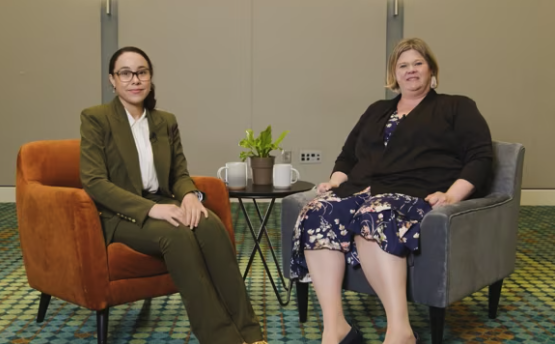
Lessons From a Life Lived With Autism: A Q&A With Temple Grandin, PhD
“I’m seeing too many kids where the autism totally becomes what they are,” said Dr. Grandin, who is a professor of animal science at Colorado State University, Fort Collins, and a consultant on both autism and animal behavior. “I’m seeing too many kids get a label and they become their label.”
“Autism’s an important part of who I am but being a college professor is my first identity,” she said in opening her Featured Session presentation, “My Path Through Life With Autism.”
Many young people are not learning life skills or being prepared for employment, she said. In the past year, she has seen fully verbal teens, with overly protective parents, who have never gone into a store and made a purchase by themselves.
Dr. Grandin, 70, recommended giving children tasks and responsibilities from a young age, especially outside of the home, and helping them set future and career goals. Tasks could include walking neighbors’ dogs, maintaining computers, working at a farmers’ market, or volunteering at a church, community center, animal shelter, or pet store.
“If a kid has never learned to work, what do you do when you graduate from high school?” she asked. “If you’re already working before you graduate from high school, it’s as if you’ve already made your transition. That’s what we need to be doing.”
[pagebreak]
Working at a young age helps people with autism learn how to deal with others and leads to better outcomes overall, she said. Between turning 13 years old and going to college, she had jobs sewing, cleaning horse stalls, working on her aunt’s ranch, roofing, and painting and selling signs.
“Get the entrepreneur stuff going,” she said. “Let’s get 2 real jobs in the summer under that belt [before college].”
One important step, Dr. Grandin said, is limiting the time young people spend playing video games and using cell phones and other devices with screens. She said she has seen 2 paths for children with autism once they are fully verbal: 1) those who learn how to work and have good outcomes and 2) those who become addicted to video games and end up collecting Social Security benefits instead. She suggests limiting screen time to 1 hour on weekdays and 2 hours on weekends.
“We have got to get that under control, period,” she said to applause from hundreds of attendees. “I don’t recommend banning this stuff but it’s got to be limited, got to be.”
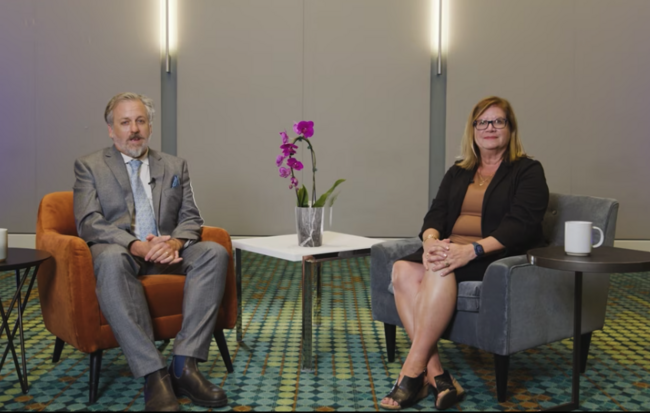
VIDEO: Temple Grandin Discusses How to Help Children With Autism Succeed
As a child, Dr. Grandin said, she was allowed time in her room to calm down, but one line drawn in the sand was that she was not allowed to become a recluse in her room.
Children with autism need to be “stretched” outside of their comfort zone, she said—but not too far. “Don’t throw them in the deep end of the pool,” she said. “I want these kids out there working. But you don’t take an 18-year-old girl who’s really anxious and shove her in a clothing store during Christmas rush, and that’s her first job.”
Also important, Dr. Grandin said, is encouraging and developing children’s strengths.
“Take the thing the kid’s good at and build on it. These kids are going to have uneven skills,” she said. “If you have a kid that’s good at math, then give him math to do so he can be the next NASA space scientist.”
[pagebreak]
As a child, Dr. Grandin was good at art, but not at sports or playing musical instruments. She was encouraged to develop and broaden her artistic skills, and art became the basis of her professional design and animal behavior work.
“If I hadn’t had art class as a kid I would have gone nowhere. That’s the only thing that made school fun for me,” she said.
Dr. Grandin recalled that she was a “horrible” student in high school, because she didn’t see any point in studying. That changed when her science teacher got her interested in science.
“Studying then became a path to a goal. That’s a really important concept,” she explained. “You don’t study for studying. It’s a path to somewhere else.”
She outlined different types of brains in people with autism that may lead to talents in one area and deficiencies in another: photo realistic visual thinkers, who may be poor in algebra; pattern thinkers who are strong in music and math but may have trouble with reading; verbal thinkers who like facts but are poor at drawing; and auditory thinkers who may have fragmented visual perception.

her Featured Session presentation. Credit: Terri Airov.
To develop different types of thinkers, she encouraged trying to use a variety of teaching methods, such as phonics and whole word approaches for teaching reading, and using real-life online images or cooking to teach math.
She also recommended helping young people develop friendships with others who have shared interests. In high school, she “had a terrible time being bullied” but found refuge from being teased in groups such as model rocket club.
[pagebreak]
Children also need to have hands-on experiences to learn practical problem-solving skills, Dr. Grandin said. Many children today don’t know how to hold a hammer or use a screwdriver, she noted, and she knows of teenagers who don’t know how to connect a garden hose.
She credits her upbringing in the 1950s with teaching her many important social and job skills. Those lessons were based on a set of concepts: taking turns (taught to her with board games), being on time, doing family activities she disliked, playing party hostess at family parties, and saying “please” and “thank you.”
Dr. Grandin explained that when dealing with behavioral problems it’s important to consider possible biological underpinnings. She recalled that as a child she would throw fits because she could not communicate.
She highlighted several painful medical problems that can cause severe behavioral problems in people who are nonverbal: acid reflux, constipation, urinary tract infections, yeast infections, ear infections, tooth problems, and stomach bugs and ulcers.
Other steps Dr. Grandin recommended include:
-
Give young children instructions on what to do, instead of just saying “no,” and explain why;
-
Always provide opportunities to use language, such as encouraging children to use words to ask for what they want;
-
Provide children with limited choices of things to do, to give them some control;
-
Arrange for activities that require interaction with other people;
-
Be aware of and make accommodations for sensory issues, such as sound sensitivity and visual processing difficulties;
-
Do not rule out skilled trades as a career path.
—Terri Airov
Reference
“My Path Through Life With Autism.” Psych Congress 2017; September 17, 2017; New Orleans, LA.