HHS Integrative Psychiatry and Deprescribing Initiative Draws Mixed Reactions From Mental Health Experts
Key Clinical Summary
- The US Department of Health and Human Services (HHS) announced an action plan to promote appropriate psychiatric prescribing and deprescribing, including a prescribing trends report, Substance Abuse and Mental Health Services Administration (SAMHSA) webinars, and Health Resources and Services Administration (HRSA) collaboration on nonpharmacologic care.
- HHS guidance and Centers for Medicare & Medicaid (CMS) actions emphasize shared decision-making, informed consent, and use of integrative psychiatry practices like psychotherapy, nutrition, physical activity, and family support, alongside newly released CMS deprescribing guidance.
- Mental health organizations and experts express support for clinical practice quality improvement but caution against “overmedicalization” framing and highlight the need for individualized assessment due to risks of abrupt deprescribing.

On Monday, May 4th, the US Department of Health and Human Services (HHS) announced an action plan to “promote appropriate psychiatric prescribing and drive deprescribing when clinically indicated.” HHS Secretary Robert F. Kennedy, Jr. outlined the initiative, which has drawn conflicted responses from mental health experts, at a MAHA Institute health summit focused on mental health and overmedicalization.
Planned Outreach and Education Efforts
The plan’s outreach efforts will be anchored by a forthcoming report on prescribing trends meant to inform efforts to reduce “inappropriate prescribing.” Webinars hosted by the Substance Abuse and Mental Health Services Administration (SAMHSA) in June and July of 2026 will discuss the side effects of psychiatric medications and highlight approaches for deprescribing. SAMHSA will also partner with the Health Resources and Services Administration (HRSA) to host a joint webinar outlining holistic treatment approaches, emphasizing the use of nonmedication mental health intervention.
Along with the announcement, HHS published a Dear Colleague Letter, highlighting the importance of shared decision-making and informed consent when discussing psychiatric medications with patients, and encouraging clinicians to leverage integrative psychiatry approaches, including psychotherapy, nutrition, physical activity, and familial support, when clinically appropriate.
Additional deprescribing guidelines were published from the Centers for Medicare & Medicaid Services (CMS) as part of the initiative.
Mixed Reactions From Mental Health Organizations
The HHS action plan has been met with mixed responses from national mental health organizations, including the American Psychiatric Association (APA) and the American Foundation for Suicide Prevention (AFSP).
“…While APA supports efforts to improve the quality, safety, and evidence base of mental health treatment, we strongly object to framing the nation’s mental health crisis as primarily a problem of ‘overmedicalization’ or ‘overprescribing,’” the organization said in a statement. “That characterization oversimplifies a complex crisis and ignores the larger reality: too many patients cannot access timely, comprehensive care, while care remains unevenly distributed across our health system."
In a statement released Tuesday morning, AFSP Chief Medical Officer Christine Yu Moutier, MD, noted that discontinuing medication may play an appropriate role in evidence-based care, but “abrupt discontinuation or inappropriate ‘deprescribing,’ particularly outside a collaborative patient-provider process, can increase risk, including the potential for symptom relapse and elevated suicide risk for some individuals.” She emphasized the need for individualized clinical assessment to “avoid unintended harm.”
Psych Congress Faculty Experts Respond
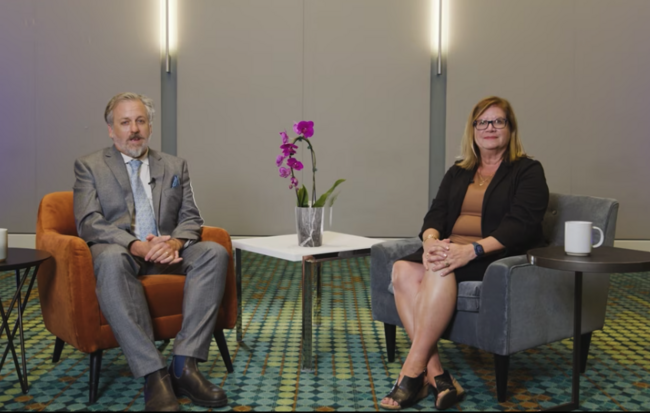
Although immediate implications for clinical practice remain unclear, Psych Congress Steering Committee member Rakesh Jain, MD, says that the “time is right” to bring the conversation of appropriate prescribing and deprescribing to the national level.
“There is widespread use of antidepressants in America and in most people, I have found them to be quite appropriately used,” said Dr Jain. “But there are a large number of patients who simply no longer need antidepressants but are continuing on it because neither they nor their prescribers have had a conversation about how to deprescribe, how to add perhaps even other assets, such as psychotherapy or wellness techniques, to bridge the gap.”
Psych Congress Steering Committee Partner Jill Harkavy-Friedman, PhD, SVP of Research, AFSP, worries that while reduction in unnecessary polypharmacy can yield important patient benefits, individuals with severe mental illness or a history of suicidal thoughts may be particularly vulnerable to unintended consequences of HHS’ broad push for deprescribing.
“For many people, especially those with moderate to severe depression, combining medication with psychotherapy can be life saving,” Dr Harkavy-Friedman told Psych Congress Network. “As clinicians and researchers, our goal should not be to promote ‘more’ or ‘less’ medication but to ensure the right treatment, at the right time, for each person.”
“I certainly agree with the administration's stance on the value of nutrition, exercise, and good sleep," added Charles Raison, MD, Steering Committee, Psych Congress. “...But on the other hand, I want us to be very careful as a field and stand a little bit tall around the fact that, although not perfect, many of the medicines that have been approved for use for mental illnesses have been extremely valuable—not for all patients, but for enough patients that we really want to make sure that we don’t indiscriminately start making it more difficult for these people to get the medications that they need.”
References
AFSP statement on the importance of antidepressants and evidence-based treatment for suicide prevention. News release. American Foundation for Suicide Prevention; May 5, 2026. Accessed May 5, 2026.
APA welcomes national focus on mental health, urges evidence-based approach and continued focus on access to care. News release. American Psychiatric Association; May 4, 2026. Accessed May 5, 2026.
HHS launches MAHA action plan to curb psychiatric overprescribing. News release. US Department of Health and Human Services; May 4, 2026. Accessed May 5, 2026.