The Effect of Changes in Access to Care During COVID-19 (2020-2021) on Health Care Spending, Utilization, and Outcomes Among Patients With Chronic Wounds
© 2026 HMP Global. All Rights Reserved.
Any views and opinions expressed are those of the author(s) and/or participants and do not necessarily reflect the views, policy, or position of Wounds or HMP Global, their employees, and affiliates.
Abstract
Background. The COVID-19 pandemic (2020-2021) triggered additional challenges in accessing critical routine health care services for patients with chronic wounds. Objective. To assess the effect of changes in access to health care services during the COVID-19 pandemic on health care spending, utilization, and mortality among fee-for-service Medicare beneficiaries with chronic wounds. Methods. Using Medicare Research Identifiable Files for 2018 to 2023 and applying propensity score models along with difference-in-differences regressions, the authors estimated the effect of pandemic-related changes in health care service access on spending, utilization, and mortality for various cohorts of beneficiaries with chronic wounds. Results. A substantial increase of $3 465 in total per-member per-year spending (representing a 26% increase relative to the mean) due to COVID-19–related disruption in access to care among all patients with chronic wounds was estimated. Patients with chronic wounds and a COVID-19 diagnosis also experienced a significant increase in inpatient admissions (a 2.3-percentage-point increase, representing a 6% increase relative to the mean), emergency department (ED) visits (an increase of 80 ED visits per 1 000, representing a 3% increase relative to the mean), and mortality (an increase of 2.8 percentage points, or 22% relative to the mean) due to this pandemic-related disruption. Conclusion. Lack of access to routine care during COVID-19 led to a significant increase in spending, ED visits, inpatient admission, and mortality among fee-for-service Medicare beneficiaries with chronic wounds. Specifically, patients with diabetic foot ulcers were disproportionately affected by the pandemic-related challenges in accessing health care. These results will help health policy makers prioritize the efficient distribution of health care resources for this vulnerable patient population during future public health emergencies.
In early 2020, the spread of COVID-19 rapidly progressed to become a public health emergency (PHE) in the United States (US), causing major disruption in the delivery of health care services, including the care of patients with chronic nonhealing wounds. Chronic wounds are most often observed in the elderly population.1 The US Census Bureau estimates that by 2034 there will be more than 77 million people aged 65 years and older in the United States,2 which suggests that chronic wounds will be a persistent problem. Using Medicare data for 2022 and 2023, the authors of the current study estimated that more than 7.1 million Medicare fee-for-service (FFS) beneficiaries were affected by chronic wounds, and total expenditures were approximately $62.3 billion.
Patients with chronic wounds such as pressure ulcers and diabetic foot ulcers (DFUs) were disproportionately affected by the COVID-19 PHE. The primary reason was that these wounds require routine care and close monitoring to promote healing. Furthermore, most patients who require wound care have multiple comorbidities such as diabetes, hypertension, and kidney disease, and they were at increased health risk during the COVID-19 pandemic. In addition to the deleterious impacts of wound infections, there was a concern that lack of timely access to care (eg, limited visits to hospitals) could delay wound healing in affected patients due to the lockdowns imposed by the US government. In the United States, aggregated data from approximately 300 wound care centers revealed a disruption in hospital outpatient services starting in April 2020 when the first lockdowns were implemented.3 The lockdowns resulted in an up to 20% decrease in wound care center visits compared with visit volume during the pre-COVID-19 period.3 Therefore, to minimize infections for both health care providers and patients, the major goal of wound care during the pandemic was to provide patients with enough care to avoid wound deterioration, thus limiting hospitalizations, surgeries, and in-person visits.
Under the PHE, federal, state, and local governments recommended that hospitals and providers reduce utilization of nonessential services. This created an obstacle to implementing best practices in wound care in the usual settings. The Centers for Medicare & Medicaid Services promoted the concept of “hospitals without walls,” giving flexibility to temporarily expand sites of care outside of the hospital4 and to encourage Medicare telehealth visits to evaluate patients with wounds.
Given this background, it is important to evaluate the effects of COVID-19 pandemic–related disruption on regular care for chronic wounds among Medicare beneficiaries. The current study specifically examined the effect of COVID-19 pandemic–related disruption in health care service delivery on Medicare spending, health care utilization, and mortality among patients with chronic wounds. The primary outcome was per-member per-year (PMPY) spending (average annual spending), and the secondary outcomes were emergency department (ED) visits, inpatient admissions, and mortality among beneficiaries with at least 1 of 15 chronic wounds (venous ulcers, pressure ulcers, DFUs, diabetic infections, arterial ulcers, skin disorders, skin disease, surgical wounds, surgical infections, traumatic wounds, venous infections, radiation late effects, burn, chronic ulcers, and other) from 2018 to 2023. The authors also conducted separate analyses of patients with DFUs, those with pressure ulcers, and those with surgical wounds and infections, because the former 2 groups were in the top resource-intensive categories and the latter had the highest prevalence rate.
The current study aims to contribute to the existing literature by (1) quantifying the effect of COVID-19 on health care spending and utilization for Medicare patients with chronic wounds owing to a decrease in access to regular care during the pandemic, (2) assessing the impact of the pandemic-induced decrease in access to care on mortality among wound patients, and (3) identifying the variation in the estimated effects on the key subgroups of wound patients that faced heterogeneous health risks. It is hoped that these findings will help health policy makers prioritize the distribution of health care resources for the most vulnerable cohorts of patients with wounds who may need better and regular access to health care resources during any future disruptions to health care delivery.
Methods
Data
The authors of the current study used Medicare Part A and Part B Research Identifiable Files (RIF) claims data for 100% FFS beneficiaries with relevant diagnoses5 from all 7 care setting files: inpatient, outpatient, skilled nursing facilities, home health agencies, hospice, physician, and durable medical equipment. International Classification of Diseases, Tenth Revision, Clinical Modification (ICD-10-CM) diagnosis codes (provided in Supplemental Table 14) for all 15 chronic wounds were used to identify patients diagnosed with 1 or more of the wound types under study.
Ethical and Independent Review Services, now called Salus IRB, reviewed the study protocol for the CMS Data Use Agreement (DUA) under which this analysis was conducted and determined that no formal IRB review was required. They further determined that a waiver from the requirement to obtain HIPAA Authorization was justified. The database was constructed using the Medicare datafiles under DUA 54757.
The database (beneficiary-year level) consisted of 2 years of pre-period information (2018-2019) and 2 years of post–COVID-19-period information (2022-2023). The COVID-19 period (2020-2021) was considered as a transition period. The authors used “pre-COVID-19 period,” “COVID-19 period” or “COVID-19 pandemic,” and “post-COVID-19 period” to indicate the time periods “2018-2019,” “2020-2021,” and “2022-2023,” respectively. First, using ICD-10-CM codes, the authors of the current study identified patients diagnosed with COVID-19 out of 7 404 505 patients with chronic wounds in 2020 to 2021. The data were restricted to 7 131 342 continuously enrolled beneficiaries who were enrolled throughout the entire study period (2018-2023), except for those who died in 2022 or 2023.
Second, the authors performed 1:1 optimal propensity score matching with replacement using 2020-2021 data to identify 289 068 wound patients who were diagnosed with COVID-19 and matched them to 281 986 wound patients without COVID-19 based on similar patient characteristics. This method is well recognized and is recommended in the literature6,7 to provide a robust assessment of the comparison of key outcomes due to COVID-19–related disruptions in access to health care services.
Third, a difference-in-differences regression design was used to assess the effect of COVID-19–related disruptions to access to care on the key outcomes of interest among 571 054 patients with chronic wounds (289 068 with COVID-19 and 281 986 without COVID-19). Beneficiary demographic and geographic location factors were collected from Master Beneficiary Summary Files (2018-2023). Hierarchical condition category (HCC) scores were constructed using 1-year lookback-period diagnoses.
Among 15 chronic wound types, surgical wounds were the most prevalent type (27.9%), followed by diabetic infection (25.8%) and surgical infection (25.1%) (Supplemental Table 1). Based on average Medicare spending, the top 3 wound categories in 2020-2021 were arterial ulcers, DFUs, and pressure ulcers, with prevalence rates of 4.8%, 5%, and 16.8%, respectively. An estimated 10.9% of patients with chronic wounds had COVID-19 infection during 2020-2021. Pressure ulcers had the highest prevalence rate among patients with COVID-19 (22.5%), followed by arterial ulcers (17.1%) and DFUs (16.8%). The variation in COVID-19 prevalence across varoius subgroups of patients with chronic wounds may have resulted in differential challenges in accessing regular care and may have affected key health outcomes, such as health care spending, utilization, and mortality. The various types of wounds and spending distribution are shown in the Supplemental Table 1.
Statistical methodology
Difference-in-differences8,9 regression models were used to estimate the effect of COVID-19 on Medicare spending and utilization for chronic wound beneficiaries. The authors used 1:1 optimal propensity score matching with replacement to construct the treatment group (with COVID-19) and comparison group (without COVID-19) beneficiaries. The main motive behind this approach is to compare treatment and comparison group patients with wounds and with similar likelihoods of COVID-19 health risks and similar characteristics, with the aim of determining the unbiased effect of reduced access to regular routine care among patients with wounds and COVID-19 infection. In the current study, the propensity score refers to the probability of having COVID-19.
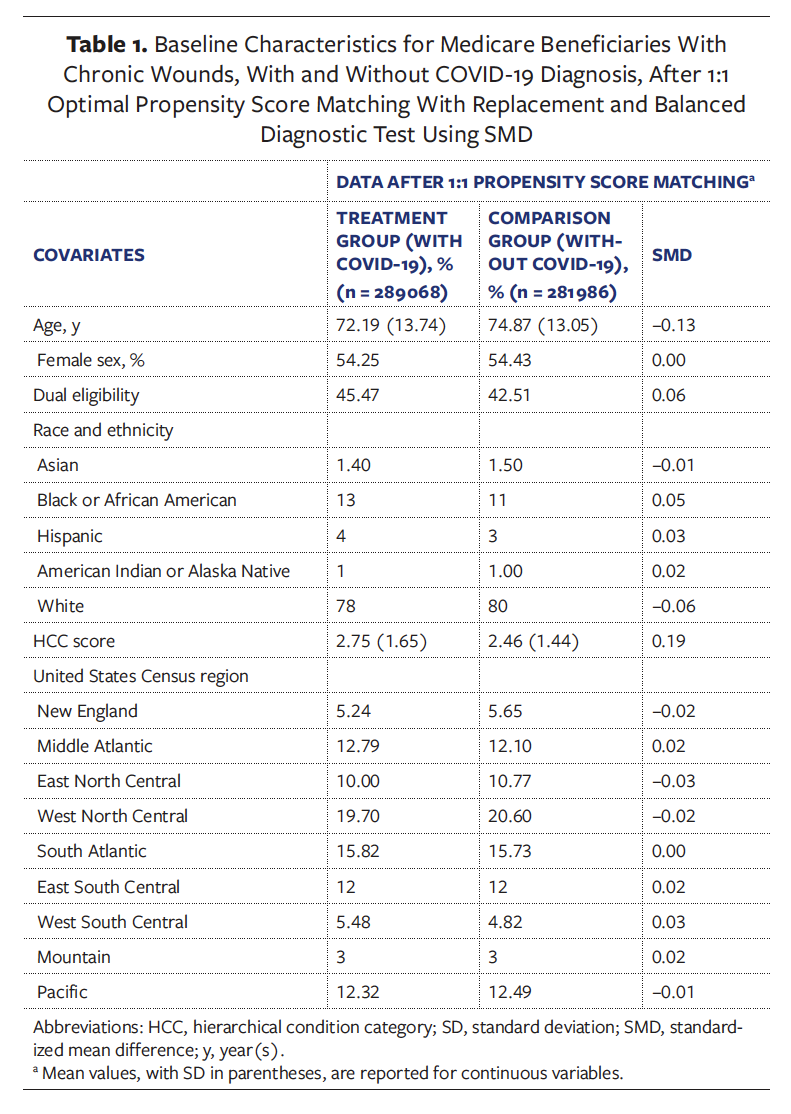
A logistic regression model was used to estimate the propensity scores. The model included patient demographic characteristics (age, sex, race and ethnicity, dual eligibility), patient comorbidities (HCC scores), and geographic location factor (US census regions). Race and ethnicity were self-reported. Various socioeconomic factors, cultural practices, and certain hereditary risk profiles among race and ethnicity groups can influence clinical outcomes, health care expenditures, and utilization. Therefore, race and ethnicity were incorporated in the regression model. A balanced diagnostic test10 was used to compare whether the covariates were similar between treatment and comparison groups. Each of the covariates in the study satisfied the balanced diagnostic test as shown by standardized mean difference11 (Table 1).
Disruptions to routine services, such as delays in much-needed diagnostic, therapeutic, and surgical care, during COVID-19 may have had an indirect effect on continuity of care for chronic wound patients without COVID-19. A post period time dummy variable (to indicate pre vs post-COVID-19 period) was included in the difference-in-differences model (defined in the Supplemental File) to capture the health care systemwide changes in access to care that may have affected both treatment and comparison groups in general over time. The authors also included a binary indicator variable for the treatment group along with an interaction term between the treatment group and the post period. The estimated coefficient of this interaction term (time and treatment dummies) in the difference-in-differences model identifies the differential effect of the COVID-19–related disruption to regular routine care on the treatment group.
A generalized linear model with log-link function and gamma distribution was used for spending outcomes. For ED visits, 2-part models were used and for inpatient admissions, a logistic regression model was used. Finally, for mortality, the authors estimated a logistic regression model in the post period. All the outcome models contained the same covariates used in the propensity score model. These regression estimates are doubly robust and promote less biased estimates, as described by Funk et al.12 Detailed description of the econometric model is provided in the Supplemental File.
The database was constructed using SAS Enterprise, version 7.1 (SAS Institute, Inc), and the econometric analyses were performed using STATA, version 18.0 (StataCorp, LLC).
Results
Patient characteristics
The overall chronic wound study (of the 15 chronic wounds listed in the “Background” section and the Supplemental File) includes 289 068 treatment and 281 986 comparison group beneficiaries after propensity score matching (Table 1). In the treatment group, the mean age was 72 years, and the mean HCC score was 2.75. The treatment group comprised 54% female and 46% male patients, and 45% of all patients in the treatment group were dually eligible for Medicare and Medicaid benefits. The racial and ethnic composition of the treatment group was as follows: 78% White, 13% Black or African American, 4% Hispanic, 1.4% Asian, and 1% American Indian/Alaska Native. Among all the US Census regions, the West North Central region had the highest proportion of beneficiaries (20%) and the Mountain region had the lowest proportion of beneficiaries (3%). Similar patient characteristics for the comparison group are presented in Table 1. Patient characteristics for DFUs, pressure ulcers, and surgical wounds and infections are shown in the Supplemental Table 2.
Expenditure outcomes
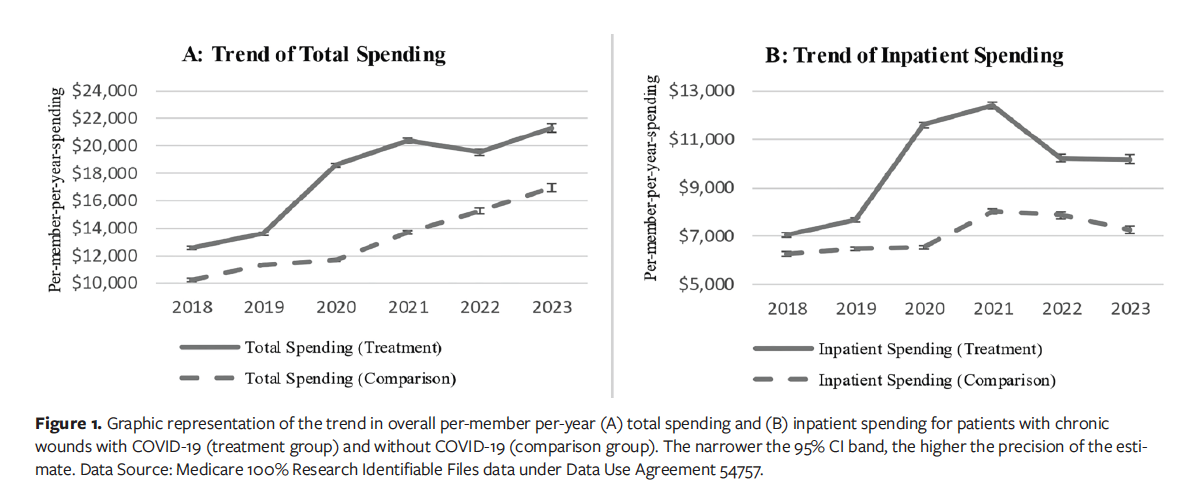
During the period from 2018 to 2023, treatment group expenditures (both total spending and inpatient spending) were higher than comparison group expenditures (Figure 1). During the COVID-19 pandemic (2020-2021), both total and inpatient PMPY spending increased substantially for the treatment group and then declined after the pandemic (2022-2023). It is noticeable that the difference in unadjusted spending between the treatment group and the comparison group was much higher in the post-COVID-19 period compared with the pre-COVID-19 period. This suggests that the health condition of patients in the treatment group was more adversely affected by the disruptions in routine care during the pandemic period (2020-2021), resulting in an additional increase in spending in the post-COVID-19 period.
Physician spending PMPY decreased from 2018 to 2020 and then increased substantially in the post-COVID-19 period (Figure 2). It is notable that the difference in unadjusted physician spending between the treatment group and the comparison group was negligible during the COVID-19 pandemic (2020-2021). However, the average spending difference between these 2 groups increased significantly in the post-COVID-19 period (2022-2023) compared with the pre-COVID-19 period (2018-2019), suggesting that patients in the treatment group were more adversely affected owing to disruption in access to regular physician office visits.
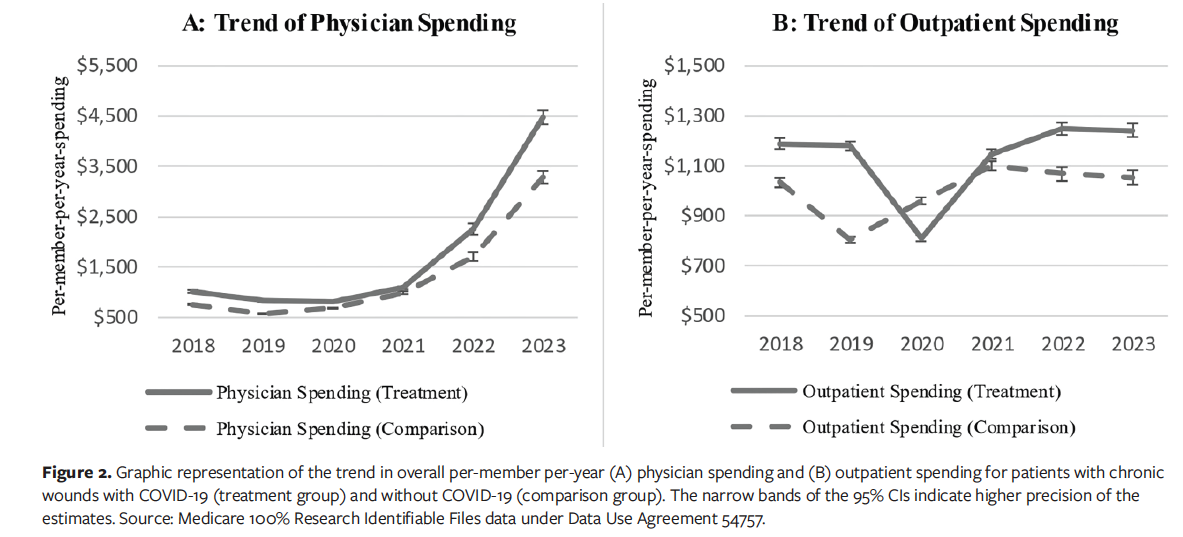
Unadjusted outpatient spending PMPY for patients in the treatment group dropped substantially from 2019 to 2020 (Figure 2). Although in the post-COVID-19 period the treatment group experienced an increase in outpatient spending, the average difference in outpatient spending between the treatment group and the comparison group was much lower in the post-COVID-19 period compared with the pre-COVID-19 period.
The change in total spending PMPY was largely driven by changes in inpatient spending. A similar trend existed in spending by type of services for the 3 chronic wound categories (DFUs, pressure ulcers, surgical wounds and infections). Among these 3 chronic wound types, DFUs exhibited the highest change in unadjusted total spending from the pre- to post-period (Supplemental Table 4).
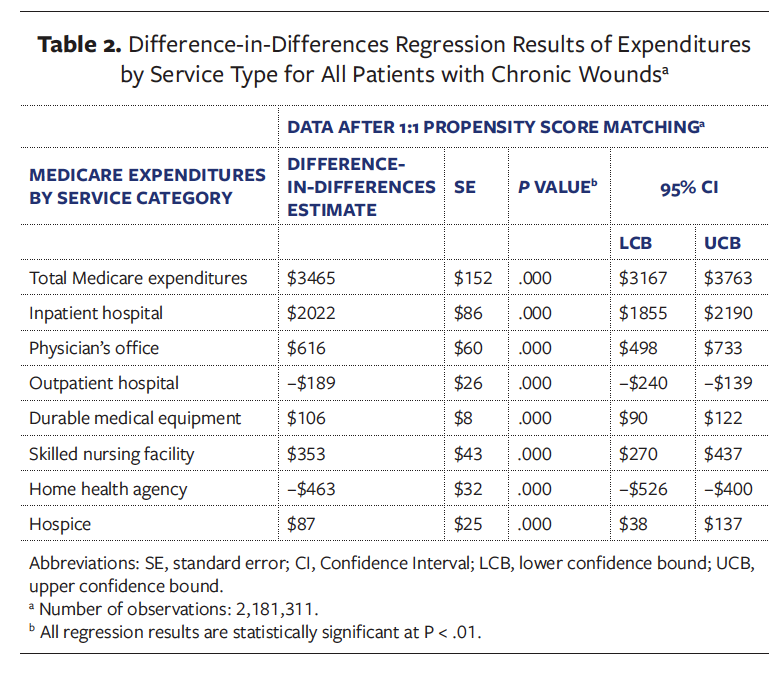
All the regression-adjusted spending estimates are consistent with unadjusted estimates and are statistically significant at the 1% level. Table 2 presents difference-in-differences estimates of various spending outcomes for all patients with chronic wounds. These estimates suggest that patients with wounds and COVID-19 infection experienced an additional $3 465 in PMPY total Medicare spending in the post period compared to patients with wounds without COVID-19. This additional increase in spending is likely to have resulted from worsening health conditions due to disruption of regular routine wound care services during the COVID-19 pandemic period. The difference-in-differences effect is largest for spending related to inpatient hospital care ($2 022). The estimated effects in other care settings are smaller.
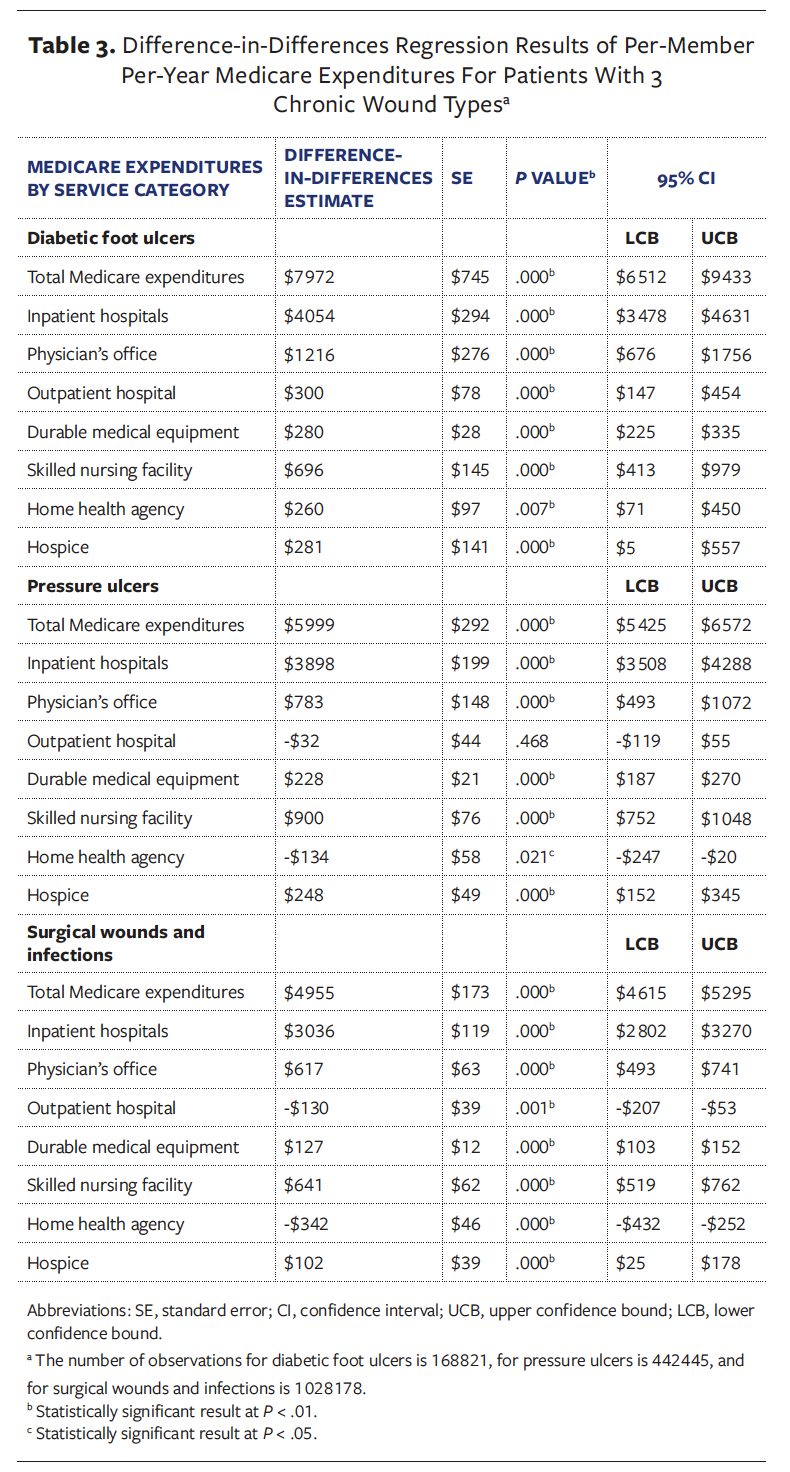
The difference-in-differences estimates for PMPY spending for DFUs, pressure ulcers, and surgical wounds and infections are presented in Table 3. Among these 3 chronic wound types, the pandemic-related disruption in routine care had the greatest impact in increasing total spending for DFUs ($7 972), followed by pressure ulcers ($5 999), and surgical wounds and infections ($4 955).
Utilization and clinical outcomes
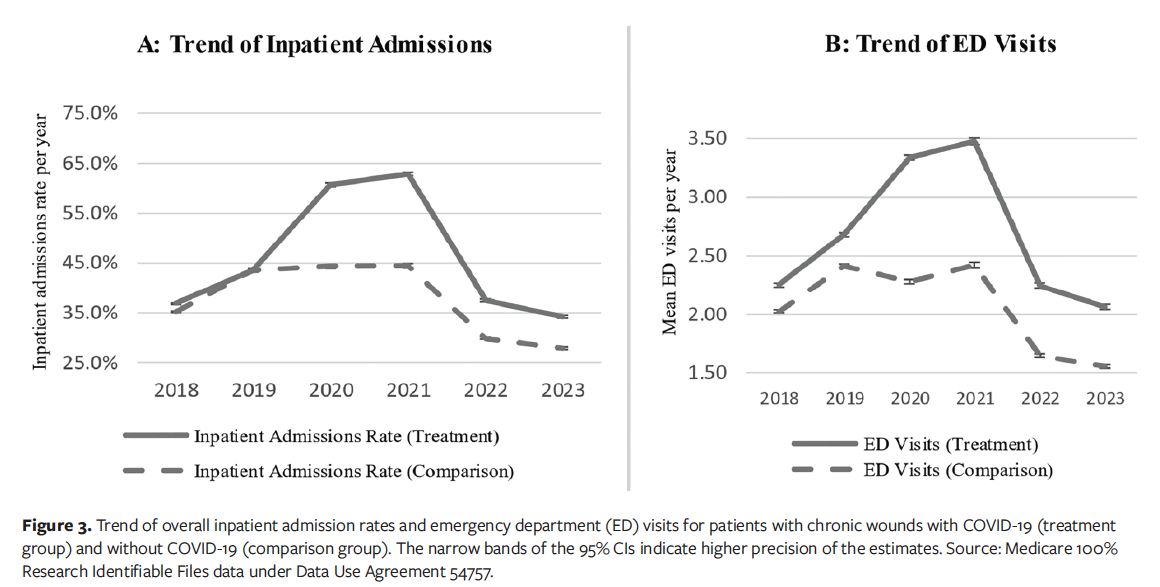
Unadjusted inpatient admissions and ED visits increased substantially for the treatment group compared with the comparison group from 2019 to 2020 and then decreased quickly from 2021 to 2022 for both the treatment and comparison groups (Figure 3). Noticeably, the increases in the utilization of these services were much larger among patients in the treatment group. However, patients in the treatment group experienced a relatively smaller decline during the post-COVID period (2022-2023), suggesting that their health was more adversely affected by the disruptions in routine care during the COVID-19 pandemic (2020-2021).
The unadjusted mortality rate was higher for the treatment group than for the comparison group (3.7 percentage points) for all patients with chronic wounds. Unadjusted utilization and mortality values for all patients with chronic wounds and for the 3 chronic wound types (DFUs, pressure ulcers, surgical wounds and infections) are shown in Supplemental Table 3 and Supplemental Table 5.
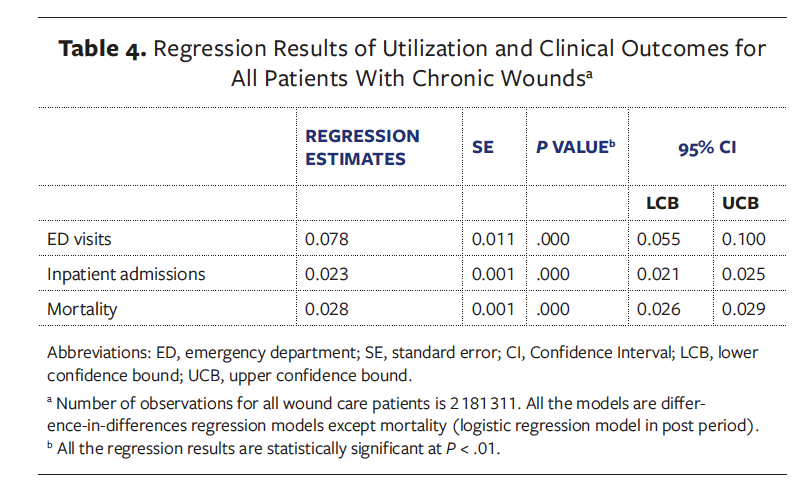
All the regression-adjusted utilization estimates are consistent with unadjusted results and are statistically significant at a 1% level (Table 4). The difference-in-differences estimated impact of 0.08 on ED visits shows that the treatment group experienced an additional 80 ED visits per 1 000 patients in the post-COVID-19 period (2022-2023) compared with the comparison group. Due to COVID-19, the inpatient admissions rate was 2.3 percentage points higher for the treatment group compared with the comparison group. In the post-COVID-19 period, the likelihood of mortality was 2.8 percentage points higher for patients in the treatment group compared with those in the comparison group.
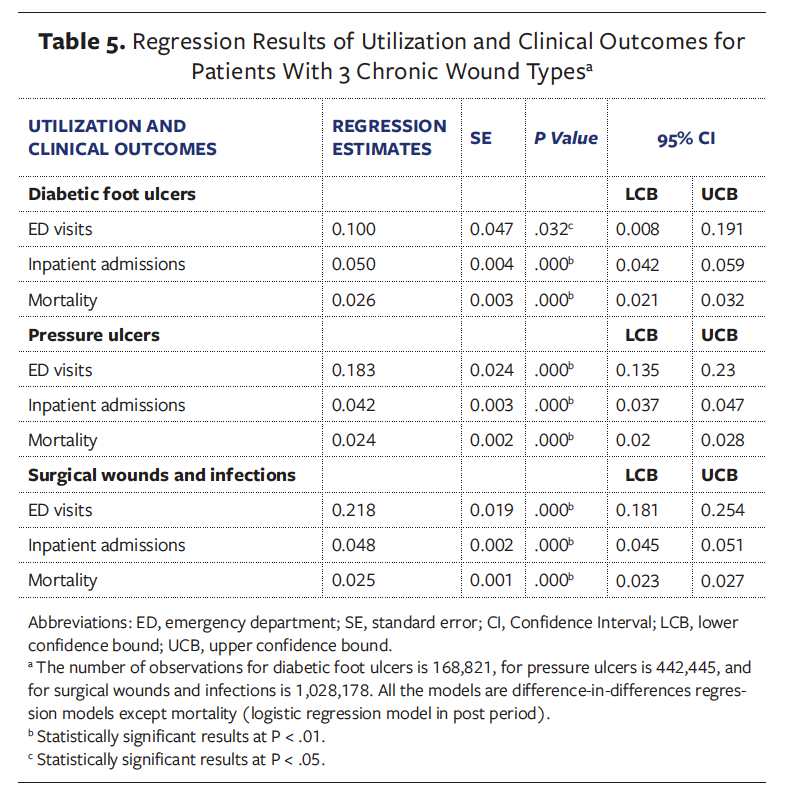
Among patients with the 3 chronic wound types, those with surgical wounds and infections had the greatest increase in ED visits (0.22), whereas those with DFUs had the greatest increase in inpatient admission rates (5.0 percentage points) associated with COVID-19. The patients with DFUs also had the highest increase in likelihood of mortality (2.6 percentage points). Detailed regression results are shown in Table 5.
Two sensitivity analyses were also conducted (Supplemental File), using a shorter time period (2019-2021). In the sensitivity analyses, an inverse probability of treatment weighting propensity score13-15 model was used to construct the comparison group beneficiaries to optimize the sample size. The first sensitivity estimates showed that due to COVID-19, the treatment group experienced $4 172 higher PMPY spending in 2020-2021 compared with the comparison group. There was also a significant increase in ED visits (19%), inpatient admissions (28%), and mortality (24%) for patients in the treatment group. A second sensitivity analysis of data from the shorter time period (2019-2021) was conducted after incorporating prior wound-related hospitalizations as an additional covariate in both the propensity score and outcome models to address any clinical heterogeneity. The results are similar to the results of the first sensitivity analysis.
In the shorter time period, the greater effects on spending, utilization, and mortality outcomes of the patients with chronic wounds were mainly owing to both COVID-19 infection and the pandemic-related disruption to routine wound care services. In the longer term, during the post-COVID-19 period (2022-2023), after the alleviation of their COVID-19 infection, these patients still experienced higher total spending and utilization of acute services. This increase in spending and utilization reflects the additional impact of the disruption of routine wound care. The authors of the current study quantified these effects across multiple vulnerable subgroups of patients with wounds. The analysis shows that, although both treatment and comparison groups were affected by the pandemic-related disruption to health care services, patients in the treatment group were more adversely affected by such disruption.
Discussion
To the best of the authors’ knowledge, this is the first comprehensive study to evaluate the effect of changes in access to health care services during COVID-19 (2020-2021) on Medicare expenditures, utilization, and mortality among patients with chronic wounds. These patients require regular monitoring, routine care, and timely clinical treatment. Disruption in care triggers pathophysiologic cascades that stall wounds in a nonhealing state, which leads to worse health outcomes. For example, delayed debridement leads to biofilm persistence, chronic infection, and cellulitis or osteomyelitis. This in turn may lead to hospitalization, amputation, and other adverse outcomes, including death.
Using Medicare 100% RIF data from 2018 to 2023 and difference-in-differences models, the authors of the current study estimated that patients with chronic wounds and with a COVID-19 diagnosis experienced an additional $3 465 in PMPY total Medicare spending in the post-COVID-19 period (2022-2023) compared with patients with chronic wounds but without COVID-19. This estimate suggests a 26% increase in PMPY spending compared with pre-COVID-19 period (2018-2019) mean spending ($13 086) in the treatment group. Among the 3 chronic wounds (DFUs, pressure ulcers, and surgical wounds and infections), DFUs showed the highest increase (37%) in total PMPY spending relative to the pre-period mean of $21 500. Patients with DFUs require frequent off-loading assessment, timely debridement, vascular imaging, and infection surveillance. Such care requires in-person visits, which were disrupted during the COVID-19 pandemic (2020-2021) and subsequently led to increased total health care expenditure.
Kapinos et al16 reported that the adjusted mean cost for inpatient treatment of COVID-19 increased 26% from March 2020 to March 2022. The difference-in-differences estimate in the current study suggests that the treatment group experienced $2 022 higher PMPY inpatient spending in the post-COVID-19 period compared with the comparison group, representing a 27% increase in inpatient spending relative to the pre-COVID-19 period mean ($7 362). Among patients with the 3 chronic wounds (DFUs, pressure ulcers, and surgical wounds and infections), pressure ulcers showed the highest increase (38%) in PMPY inpatient spending relative to the pre-period mean ($10 205). In the pandemic-related disruption, patients with wounds and with COVID-19 diagnosis were more adversely affected than patients without COVID-19, and thus, those with COVID-19 experienced additional expenditures.
According to Bureau of Economic Analysis estimates, spending for physician services declined 40% between January 2020 and April 2020.17 In the current study, sensitivity analyses of data from 2019 to 2021 showed that the treatment group experienced $124 lower PMPY physician spending in 2020-2021 compared with the comparison group, suggesting a 15% decrease in PMPY physician spending relative to the pre-period (2019) mean ($833). Decreases in primary care visits18 during the COVID-19 period along with patient fear of infection and pandemic-related office closures triggered this decline in physician spending. However, the main analysis (2018-2023) showed that the treatment group experienced $616 higher PMPY physician spending in the post-COVID-19 period (2022-2023) compared with the comparison group, suggesting a 67% increase in physician spending relative to the pre-COVID-19 period (2018-2019) mean of $922. Disruption in routine care services in physician care settings during the pandemic affected the health condition of patients in the treatment group more adversely compared with patients in the comparison group; thus, the treatment group experienced additional higher spending. Of the 3 chronic wound types (DFUs, pressure ulcers, and surgical wounds and infections), DFUs exhibited the highest increase (77%) in PMPY physician spending relative to the pre-period mean ($1 578).
According to a June 2022 KFF report, in 2020 outpatient hospital spending fell $5.1 billion (24.1%).19 In the sensitivity analyses of data from 2019 to 2021 in the current study, it was estimated that patients in the treatment group experienced $360 lower PMPY outpatient spending in 2020-2021 compared with the comparison group, suggesting a 31% decline in outpatient spending relative to the pre-period (2019) mean ($1145). Cancellation of elective procedures, patient fear of viral exposure, and widespread adoption of telehealth during the COVID-19 pandemic triggered such declines in outpatient spending. The main analysis in the current study suggested that patients in the treatment group experienced $189 lower PMPY outpatient spending in the post-COVID-19 period compared with those in the comparison group, representing a 16% decline in outpatient spending relative to the pre-COVID-19 period mean ($1 184). The result suggested that in 2022-2023, there was a significant shift to physician’s office spending from hospital-based outpatient department spending. Among the 3 chronic wound types (DFUs, pressure ulcers, and surgical wounds and infections), surgical wounds and infections showed the greatest decrease (9%) in PMPY outpatient spending relative to the pre-COVID-19 period (2018-2019) mean ($1 526).
Melnick et al20 reported that ED visits declined sharply after 2019, with an 18% decline in 2020 and a 10% decline in 2021. In the current study, the unadjusted mean estimates showed that from the pre-COVID-19 period (2018-2019) to the post-COVID-19 period (2022-2023) average ED visits declined 11% for treatment groups (2.44 to 2.16) and 18% for comparison groups (1.97 to 1.61). As noted in the “Utilization and clinical outcomes” section, the difference-in-differences estimate of 0.08 suggests that the treatment group experienced an additional 80 ED visits per 1 000 patients in the post-COVID-19 period compared with the comparison group. This indicates a 3% increase in ED visits compared with the pre-COVID-19 period average of 2.44 ED visits in the treatment group.
Meille et al21 estimated that during weeks with high COVID-19 admissions (≥15 per 100 beds), inpatient occupancy increased by 8%. The authors of the current study estimated that the likelihood of inpatient admissions in the post-COVID-19 period was 2.3 percentage points higher for the treatment group than for the comparison group, suggesting a 6% increase in the inpatient admissions rate relative to the pre-COVID-19 period mean (37.5%).
The results of the current study suggest that disruption in routine care, such as delays in preventive and emergent wound care services,22 during the COVID-19 period (2020-2021) triggered an additional increase in ED visits and inpatient admissions for the treatment group. Among patients with the 3 chronic wound types, patients with surgical wounds and infections showed the highest increase in ED visits (8%) and inpatient admissions rate (12%) relative to their respective pre-COVID-19 period (2018-2019) mean ED visits (2.88) and inpatient admissions rate (41%).
Although telehealth played an important role in wound care during the COVID-19 pandemic, evidence shows inconsistent and insignificant effectiveness of telehealth as a standalone solution23 owing to its significant physical and diagnostic limitation. Thus, the results of the current study are not driven by telehealth utilization.
Roberts et al24 estimated that Medicare beneficiaries with COVID-19 experienced substantially higher 30-day mortality compared with those without COVID-19 (34% and 5%, respectively). The estimates in the current study show that patients with wounds and COVID-19 had a 2.8-percentage-point higher likelihood of mortality compared with patients with wounds but without COVID-19 (15.24% and 12.45%, respectively). This represents a 22% higher mortality relative to the mean of the comparison group (12.45%).
No wound-specific clinical outcomes were estimated in the current study. However, Medicare expenditures and utilization are proxy measures of clinical outcomes. Specifically, the estimation of higher inpatient utilization and spending reflects that wound complications led to increased hospitalization. Although long COVID symptoms may have impaired wound healing for some patients in the treatment group in the post-COVID-19 period, the sharp decline in total and inpatient spending from 2021 to 2022 suggests that this issue was not driving the results of the current study. The utilization and spending results mainly reflect care disruption.
The current study is important for both technical and policy purposes. First, a major strength of this research is the application of the propensity score method to construct a more refined comparison group so that overall study bias is reduced and the results approximate those of randomized controlled trials.25 Second, the study establishes that decreases in access to regular care through physician offices and outpatient settings during the COVID-19 pandemic (2020-2021) led to an increase in acute and post-acute care costs and utilization in the post-COVID-19 period (2022-2023). This indicates how important it is for patients with chronic wounds to maintain continuous regular care through physician office and outpatient visits to help avoid “down the road” future cost-adverse medical events. Third, the current study establishes that there was a significant shift to physician’s office spending from hospital-based outpatient department spending in 2022-2023. Finally, the study aids in identifying which vulnerable stakeholders are affected disproportionately due to COVID-19. Because chronic wounds can adversely affect spending and patients’ lifestyle, special care is required for efficient allocation of health care resources.
Limitations
The current study has limitations. First, the analysis is based on the Medicare FFS population and does not cover Medicare Advantage, commercial insurance, or Medicaid populations. Second, the study is based on administrative claims data and may lack important clinical data (eg, patient recovery time, wound severity, access to care services, COVID-19 severity). The propensity score method is used to account for biases due to the observed and measured variables. The biases owing to the unmeasured clinical factors remain uncontrolled. However, the large sample size of Medicare claims data provides adequate statistical power. Third, although the grouping of chronic wound types is consistent with the literature,26 it does not reflect the different pathophysiology and treatment requirements of these wound types.
Conclusion
This retrospective cohort study indicated that lack of access to relevant health care services during the COVID-19 pandemic (2020-2021) led to a significant increase in total Medicare spending, inpatient admissions, ED visits, and mortality among patients with chronic wounds and with COVID-19 compared with patients with chronic wounds but without COVID-19 in the post-COVID-19 period (2022-2023). Patients with DFUs were more disproportionately affected by the pandemic-related wound care service disruption. From a policy perspective, the current study provides rational and rigorous analyses for policy makers and payers to prioritize wound care as an essential service for maintaining wound center access and developing contingency care delivery models during future PHEs.
Author and Public Information
Authors: Sarmistha Pal, PhD; Allen Dobson, PhD; Randall Haught, BS; Sung Kim, BS
Affiliation: Dobson, DaVanzo & Associates LLC, Vienna, VA, USA
Acknowledgments: The authors would like to acknowledge the late Joan E. DaVanzo, PhD, MSW, former CEO of Dobson, DaVanzo & Associates LLC, for encouraging the authors to publish this research article.
Author Contributions: S.P.: conceptualization, methodology, study and database design, statistical and econometric model building, analyzing and interpreting data, drafting the original manuscript, validation. A.D.: conceptualization, study design, supervision, review and editing draft, secured funds for study, management and coordination, validation. R.H.: management of database design, review and editing draft, validation. S.K.: database construction for econometric analyses, reviewing draft, validation.
Funding: Dobson, DaVanzo & Associates LLC self-funded this research.
Disclosure: The authors disclose no financial or other conflicts of interest.
Ethics Statement: Ethical and Independent Review Services, now called Salus IRB, reviewed the study protocol for the CMS Data Use Agreement (DUA) under which this analysis was conducted and determined that no formal IRB review was required. They further determined that a waiver from the requirement to obtain HIPAA Authorization was justified. The database was constructed using the Medicare datafiles under DUA 54757.
Correspondence: Sarmistha Pal, PhD; Dobson, DaVanzo & Associates LLC, 450 Maple Avenue E, Suite 303, Vienna, VA 22180, USA; sam.pal@dobsondavanzo.com
Manuscript Accepted: September 17, 2026
References
1. Gould L, Abadir P, Brem H, et al. Chronic wound repair and healing in older adults: current status and future research. J Am Geriatr Soc. 2015;63(3):427-438. doi:10.1111/jgs.13332
2. US Census Bureau. Older people projected to outnumber children for first time in US history. Published March 13, 2018. Updated October 8, 2019. Accessed October 20, 2026. https://www.census.gov/newsroom/press-releases/2018/cb18-41-population-projections.html
3. Balikji J, Kiani P, Hendriksen PA, et al. Impaired wound healing is associated with poorer mood and reduced perceived immune fitness during the COVID-19 pandemic: A retrospective survey. Health Sci. Rep. 2022;5:e764. doi:10.1002/hsr2.764
4. Rogers LC, Armstrong DG, Capotorto J, et al. Wound center without walls: the new model of providing care during the COVID-19 pandemic. Wounds. 2020;32(7):178-185.
5. Nussbaum SR, Carter MJ, Fife CE, et al. An economic evaluation of the impact, cost, and Medicare policy implications of chronic nonhealing wounds. Value Health. 2018;21(1):27-32. doi:10.1016/j.jval.2017.07.007
6. Hebert PL, Kumbier KE, Smith VA, et al. Changes in outpatient health care use after COVID-19 infection among veterans. JAMA Netw Open. 2024;7(2):e2355387. doi:10.1001/jamanetworkopen.2023.55387
7. Austin PC. An introduction to propensity score methods for reducing the effects of confounding in observational studies. Multivariate Behav Res. 2011;46(3):399-424. doi:10.1080/00273171.2011.568786
8. Cameron AC, Trivedi PK. Microeconometrics: Methods and Applications. Cambridge University Press; 2005. doi:10.1017/CBO9780511811241
9. Ahmed G, Akman O. Impact of COVID-19 on disaggregate consumption and online retail sales: evidence from the USA. Spora: A Journal of Biomathematics. 2024;10:50-64. doi:10.61403/2473-5493.1087
10. Austin PC. Balance diagnostics for comparing the distribution of baseline covariates between treatment groups in propensity-score matched samples. Stat Med. 2009;28(25):3083-3107. doi:10.1002/sim.3697
11. Stuart EA, Lee BK, Leacy FP. Prognostic score-based balance measures can be a useful diagnostic for propensity score methods in comparative effectiveness research. J Clin Epidemiol. 2013;66(8 suppl):S84-S90.e1. doi:10.1016/j.jclinepi.2013.01.013
12. Funk MJ, Westreich D, Wiesen C, Stürmer T, Brookhart MA, Davidian M. Doubly robust estimation of causal effects. Am J Epidemiol. 2011;173(7):761-767. doi:10.1093/aje/kwq439
13. Joffe MM, Ten Have TR, Feldman HI, Kimmel SE. Model selection, confounder control, and marginal structural models: review and new applications. The American Statistician. 2004;58(4):272-279. doi:10.1198/000313004X5824
14. Raad H, Cornelius V, Chan S, Williamson E, Cro S. An evaluation of inverse probability weighting using the propensity score for baseline covariate adjustment in smaller population randomised controlled trials with a continuous outcome. BMC Med Res Methodol. 2020;20(1):70. doi:10.1186/s12874-020-00947-7
15. Brookhart MA, Schneeweiss S. Preference-based instrumental variable methods for the estimation of treatment effects: assessing validity and interpreting results. Int J Biostat. 2007;3(1):article 14. doi:10.2202/1557-4679.1072
16. Kapinos KA, Peters RM Jr, Murphy RE, Hohmann SF, Podichetty A, Greenberg RS. Inpatient costs of treating patients with COVID-19. JAMA Netw Open. 2024;7(1):e2350145. doi:10.1001/jamanetworkopen.2023.50145
17. Gillis K. Changes in Medicare Physician Spending During the COVID-19 Pandemic. American Medical Association; 2021. Accessed November 12, 2026. https://www.ama-assn.org/system/files/2021-03/prp-covid-19-medicare-physician-spending.pdf
18. Alexander GC, Tajanlangit M, Heyward J, Mansour O, Qato DM, Stafford RS. Use and content of primary care office-based vs telemedicine care visits during the COVID-19 pandemic in the US. JAMA Netw Open. 2020;3(10):e2021476. doi:10.1001/jamanetworkopen.2020.21476
19. Biniek JF, Cubanski J, Neuman T. Traditional Medicare spending fell almost 6% in 2020 as service use declined early in the COVID-19 pandemic. KFF. Published June 1, 2022. Accessed October 20, 2026. https://www.kff.org/medicare/traditional-medicare-spending-fell-almost-6-in-2020-as-service-use-declined-early-in-the-covid-19-pandemic/
20. Melnick G, O’Leary JF, Zaniello BA, Abrishamian L. COVID-19 driven decline in emergency visits: has it continued, is it permanent, and what does it mean for emergency physicians? Am J Emerg Med. 2022;61:64-67. doi:10.1016/j.ajem.2022.08.031
21. Meille G, Decker SL, Owens PL, Selden TM. COVID-19 admission rates and changes in US hospital inpatient and intensive care unit occupancy. JAMA Health Forum. 2023;4(12):e234206. doi:10.1001/jamahealthforum.2023.4206
22. Shin L, Bowling FL, Armstrong DG, Boulton AJM. Saving the diabetic foot during the COVID-19 pandemic: a tale of two cities. Diabetes Care. 2020;43(8):1704-1709. doi:10.2337/dc20-1176
23. Babaei N, Zamanzadeh V, Valizadeh L, et al. Barriers to the implementation of virtual care programmes for patients with chronic wounds: qualitative empirical research. Nurs Open. 2023;10(11):7301-7313. doi:10.1002/nop2.1983
24. Roberts AI, Santostefano CM, Chen Z, et al. Trends in hospital discharge outcomes among high-risk Medicare beneficiaries before and during the COVID-19 pandemic. Health Aff Sch. 2025;3(4):qxaf056. doi:10.1093/haschl/qxaf056
25. Rubin DB. Using propensity scores to help design observational studies: application to the tobacco litigation. Health Services and Outcomes Research Methodology. 2001;2:169-188. doi:10.1023/A:1020363010465
26. Carter MJ, DaVanzo J, Haught R, Nusgart M, Cartwright D, Fife CE. Chronic wound prevalence and the associated cost of treatment in Medicare beneficiaries: changes between 2014 and 2019. J Med Econ. 2023;26(1):894-901. doi:10.1080/13696998.2023.2232256