









Post-Acute Care Perspectives: The Future of Wound Care, Part 1
In this episode of Wound Care Wednesday, Dr Johnson joins guest speaker Amanda Linderman to discuss the future of the wound care industry, focusing on supporting mobile health care and utilizing AI within the field of wound care. Ms Linderman began her career as a wound care nurse and now uses her skills and understanding of wound care to guide strategic support as the VP of wound care sales at Net Health.
Sponsored by:

In this episode of Wound Care Wednesday, Dr Johnson joins guest speaker Amanda Linderman to discuss the future of the wound care industry, focusing on supporting mobile health care and utilizing AI within the field of wound care. Ms Linderman began her career as a wound care nurse and now uses her skills and understanding of wound care to guide strategic support as the VP of wound care sales at Net Health.
Sponsored by:
This podcast is for educational purposes only.
Dr Jonathan Johnson: So welcome to another Wound Care Wednesday, your go-to podcast for all things wound care, healing, and innovation. Now, whether you're a health care professional, a caregiver, or just passionate about the advancement of wound management, you're in the right place. I'm Dr Jonathan Johnson, better known as Dr Wounds, bringing you expert insights, real-world case studies, and the latest advancements in wound care, technology, research, and clinical wound medicine.
Now, every Wednesday, we try to cut through the confusion and get straight to what really matters: helping patients heal, helping patients understand how to effectively treat their wounds, working with providers. So expect interviews from top specialists, practical tips for clinicians, and groundbreaking treatments that are changing the game of wound care. So whether you are tuning in from a clinic, a hospital, a wound care site, grab your coffee, your wine, or your water, and let's dive right into this week's Wound Care Wednesday podcast.
We are super excited to have our sponsor today, Net Health. This organization is a health care technology company focusing on electronic medical records, electronic health records, and predictive analytic solutions for niche health care markets. They focus on clinical documentation, compliance, and overall patient outcomes. Some of the key services and solutions include wound care, employee health, hospice and home health, billing and revenue cycle management, rehab, as well as focusing on cloud-based AI and integrative measures into all EMR systems.
And we are just honored to have Amanda Linderman who at Net Health is the vice president of sales. Amanda has been so gracious to come on Wound Care Wednesday. She is a superstar in the field, a nurse by training with multiple years of clinical experience that has transitioned into the sales side because she believes we need to continue to make wound care one of the productive specialties in health care. So I'll let Amanda tell us a little bit more about herself, and we are super excited to welcome her to Wound Care Wednesday. Amanda, happy to have you on board.
Amanda Linderman, LPN: Oh, thank you so much for the invitation. I'm so excited to be here. I am honored to be a part of this. I have been– Wound care has been my passion for greater than 20 years. I spent about 4 years in the field working in a skilled nursing facility managing their wound care program, and I quickly saw some big-time gaps in the wound care that was being provided locally at the facility level and saw my ability to make a bigger impact really was in moving to the electronic medical EHR space, where I'm actually able to help providers to take credit for the care that they're providing and really to help improve patient outcomes by giving them back the data that they need in order to make better clinical decisions.
Dr Jonathan Johnson: Amazing, amazing. And it's always great to have a clinical provider that understands how first-line wound care treatment is important, and then they can implement that and integrate that into the tech side, into patient service side, into management side, and essentially into the background and even the business side of health care in general. We need that from a foundation standpoint. So, Amanda, tell us a little bit about your journey becoming a nurse. What got you into the field of health care and, specifically, into wound care? Tell us a little bit about that.
Amanda Linderman, LPN: Well, it's interesting, I think when you're young, you don't always know why you do the things that you do. So I landed in nursing because I just thought, “What a great idea.” But I quickly found that wound care was an instant-gratification specialty, per se, where you have the ability to directly impact somebody's quality of life. Wounds can be just, not only are– Wounds are just, they can be a very complicated, a complicated thing, but they can really impact the quality of life for the patients that suffer with them. And I can get directly involved and help them understand what they needed to do to partner with myself and the provider to get that wound healed.
And man, talk about gratification. You're able to change somebody's life. I remember one of the first people that I took care of; his name was Doug. He was in his 40s at the time, had spina bifida, on dialysis, suffered from I think a right-side ischial wound largely relative to his inability to shift his weight being wheelchair bound, and just super, just a lot of different diagnoses going on with him. And when he first came to me, he was, he had, gosh, I think he'd been suffering with this wound for 6 years or something like that. And we were able to get him the care that he required, and we were able to take that wound to closure in, I don't know, just a few weeks. And I mean, the man wept with joy. And there's pretty much nothing sweeter than that.
Dr Jonathan Johnson: 100%. And I think that's why all of us from a clinical standpoint really love wound care, because if you are focusing on the correct treatments and the management, you want to see that wound progressively get better. And being able to interact directly with your patient most of the time, you can really see their joy as you continue to make sure that that wound progresses and heals.
So, you started off from a nursing side and really found passion in the health care industry in general, transitioned into the wound care side. So you were in the wound care field for a while, and then you thought, “Listen, I think I can be awesome and effective on the health care tech side”? So how'd you transition into Net Health?
Amanda Linderman, LPN: No, I have to tell you this story because you're going to think this is so bananas.
Dr Jonathan Johnson: I love stories.
Amanda Linderman, LPN: So, as a nurse managing a wound care program in a skilled nursing facility, there was another gentleman that I took care of—young, very young, he was on our acute unit. He had a vent. He was vent-dependent. He actually hit– he dove into a swimming pool and had a cervical fracture, which rendered him a quadriplegic. As a result, related to his hospital stay, he developed significant, a significant sacral wound, bilateral ischial wounds that, I mean, significant.
At that time, I struggled as a nurse—and I was young. I struggled as a nurse to try to get him the support that he needed, and I remember trying at that time, this was– I've been at Net Health for 18 years, so this probably would have been 20 years ago.
Dr Jonathan Johnson: Okay.
Amanda Linderman, LPN: At that time, I was a baby nurse. I'm calling to try to get this man some help, and no one would come to the facility to see him. No one. So, imagine this: quadriplegic man, he's on a Clinitron bed, on a ventilator. We have to call an ambulance to transfer him. We have to have a respiratory therapist, an aide, myself, plus an ambulance driver. There were a total of 5 of us to transfer this poor man. They were bagging him in the ambulance just to get the poor guy to see a plastic surgeon to try to get him some help for this wound, for the wounds. And I remember sitting in the back of the ambulance with him, and I don't ride in the back of ambulances very often, but I'll tell you what, it's stinking bumpy. Not comfortable at all. And the poor man, the whole thing is bumping, and I just felt, my heart just was so sick about it. And I thought, “Doggone it, there has got to be a better way.”
And so when I joined Net Health, my job was to understand the private practice in the mobile provider market. There really wasn't one at that time, and over the course of my tenure at Net Health, now leading our sales organization for this, one of the fastest growing areas of business that we see are for mobile providers that go into skilled nursing facilities and provide care.
Dr Jonathan Johnson: You're talking to one.
Amanda Linderman, LPN: I know!
Dr Jonathan Johnson: Mm-hmm.
Amanda Linderman, LPN: And it gets my heart in all of the fields, because this poor guy was crying. We had medicated him, and, let's be honest. You're an able-bodied man. Why wouldn't you get in your car and go to that facility to take care of– Why are we trying to transfer these poor patients? And so it becomes a really, it's like a love story about how we take care of patients in a better way. And my passion is: How do we pair the technology with your ability to do what you need to do to take credit for the care that you're providing, to have a sustainable business, to have the insights that you need as a provider to provide that amazing care but then also to be able to do it at the bedside?
Dr Jonathan Johnson: I love that. I love that. And that's one of the major issues that we really need to continue to focus on—making sure that the wound care documentation and how we can adequately take care of the patient is merged with the proper technology, right? To make patient encounters seamless, to make errors less, and to really focus on what's important so we can move from patient to patient fluidly.
So, that's an awesome segue into my next specific question here, Amanda. Tell me how the Net Health platform EMR tech side merges with wound care. So, how is it help providers become more efficient in their day-to-day patient interactions?
Amanda Linderman, LPN: So, I think there are a number of different things when you think about a health care or a wound care specialist. So, you need wound care-specific documentation, you need the ability to report on those outcomes. And so when I think about what it looks like for a provider, I think about your ability to go in and capture an image, because wound care requires imaging. So you capture an image, that image will start your wound care documentation. You may do a debridement and take a second image. That image should go into your procedure documentation, right?
Dr Jonathan Johnson: Correct.
Amanda Linderman, LPN: So we need to make sending those images to the proper place. Then, what happens is you think about doing that wound care documentation and having that documentation then flow into your super bill. And that documentation is essentially, really it is capturing the clinical work that you're doing so that you're able to then bill appropriately for that as well.
And then I like– To me, what else is important is the automation. It's your ability to take a picture and then have it, look at how much did you debride? Have the system tell you that, right? Why did you debride it this much? So it's this code. Oh, you debrided this much, so it's this add-on code as well. So it's giving you that help that you need to support your efforts, because I find most doctors, sorry, aren't billing experts. They're just not. And so to the extent that the technology can help you in the areas where you're maybe not as experienced or not as fluent, that's what my goal is.
And then of course on the reporting side, I want to be able to line up every stinking image of this wound sequentially on a timeline, and I want to be able to objectively look to see how we're progressing. I think that wound care can be an emotional specialty because sometimes it just feels like, “Oh my goodness, I'm looking at this hole in this person again and again.” And being able to take your emotions out of it and just look at those wounds in sequential order to see how they're progressing. You need tools like that.
Dr Jonathan Johnson: I love that. I love that point. I love that point. Now, you said a couple things that I really want to touch on for our listeners. Number one, you said digital imaging. I think that the field of wound care, we are very visual from a clinical standpoint, and we can use images to really tailor what our clinical recommendations are. And there's not a lot of fields that can actually do that, right? So that gives us a big advantage.
Tell us a little bit more about the new-age documentation systems from a digital imaging side. What providers really need to look for if they're using a digital imaging resource when they're seeing their patients? And, obviously, there's a lot of controversy about measuring the depth and looking at surface area and looking at volume, which is required when we're doing a lot of our documentation, specifically when you're looking at debridements, which you said as well. So tell us a little bit about how the digital side of wound imaging capturing has changed the wound care field.
Amanda Linderman, LPN: Well, I think it's interesting because there are a lot of– Going back to feelings, right? There are a lot of feelings about this. Specifically, if you've been a nurse for a long time, there are some people that really trust AI, some people that really don't. I think what we've found is we've done a lot of studies. We found that largely, people—and I'm sure you, as a wound care provider, you'll agree with me—no one measures the same.
Dr Jonathan Johnson: Correct.
Amanda Linderman, LPN: And so when you have a tool that uses a consistent algorithm to help you have consistency from week to week or visit to visit, we actually found a 95% improvement from measuring manually, which is really interesting. It's of course, technology is not perfect, but it does provide a level of consistency that we don't see even, there even tends to be a level of inconsistency among the same clinicians, let alone having clinicians that are not the same or, for heaven's sakes, you get into a hospital situation where you might have per diem nurses, you might have agency nurses. We just have different people often that are measuring. And so having a tool that helps you with that consistency helps you to make better clinical decisions around what the trajectory of that wound is, because you're getting better data. That's a big one, I think.
Dr Jonathan Johnson: I love that. And again, data is key because collecting this data, whether it's imaging, whether it's how to clinically treat a wound specifically effectively the first time, all of that data runs and specifically goes into the category of a buzzword that you just said, which is hot right now in general, right? It's hot in the world. It's hot in health care. What is that? Artificial intelligence. So We all know AI is coming, right Amanda? I think we can all agree on that. It's actually not coming; it's probably here. But specifically in health care, it's being integrated into a lot of different systems from pathology to radiology and obviously wound care now. Tell me a little bit about your thoughts about how AI can be effective in wound care and some of your experiences utilizing AI and wound care.
Amanda Linderman, LPN: So, I think that we are at the beginning of seeing what AI can do. And I think that it's like trust but verify, right? So we're looking at it and we're interested in it and we're excited about it and we're sure that that's what the industry's doing. I think what, for me, what the most interesting thing is is that when I think about a large data repository—so for instance, our system, we've been capturing wound assessments for like 30 years. We have millions and millions and millions of wound assessments in our system. And we're able to gather all of that together. And I don't know whatever they do—not me. I don't do that. But the people that digest that data, we're able to look at what that data is telling us and then we're able to make some predictions based on what we think might happen.
And to me, that's really, really exciting. Because if it allows us to even pause for just a second to say, “Ooh, what that's telling me is—that might do this.” If it even gives us a moment to think through a potential different strategy for a patient that could potentially impact their care trajectory, I'm a fan. Because anything we can do to improve our outcomes, I think it's wonderful.
Dr Jonathan Johnson: 100%. And you know, I cannot agree more with you. And one of the major issues that we do see is obviously the cost of wound care to the overall health system, right? So if we can put together data that gives us a predictive model of how to specifically treat a wound or just gives you a baseline recommendation for first-line treatment, because we all understand that the first calcium alginate you may put on a wound may not be effective in that patient. There's comorbidities, there's immobility issues, the patient and the body may not respond specifically to what the predictive model is suggesting, but at least you have a baseline treatment, and it also helps us effectively with communication and continuity of care and education.
As we know, and as you and I understand and many of our listeners and our colleagues out there, wound care is a specialty. It's not an afterthought. It's not something that, oh, you know, “I'm doing general medicine,” or “I'm doing general surgery, and then I'll figure out wound care later,” right? So having the AI and the data and the predictive model helps to also treat providers that may not be well-versed in our field, that are in rural areas, that are in urban settings, that are international, that may not have the same type of day-to-day patient interaction and repetitive clinical experience. And that's something we really need to focus on.
So tell me a little bit about how you guys are working with that from a Net Health standpoint and how you feel that will be integrated into the future of health care.
Amanda Linderman, LPN: How AI will be integrated into the future of health care? So I think that the AI plus the combination of a specialty EHR, so I think there's going to be an element of both, right? You have the ability to have a system that is designed specifically for the business that you're doing, right? The business of wound care. Wound care is its own very niche, specific area, and so it's understanding what is important to the provider and the clinician relative to wound care. And that might be things that aren't necessarily as important in primary care or in all those other more general specialties. For example, we're thinking about a dietary assessment. We're thinking about therapy, getting therapy involved. We're thinking about reduction of pressure and shear and friction. All of those different components, it's folding all of those in.
And then it's the combination of looking at how can we use the data that we have to potentially inform us about what a wound might do? And so our system right now will give you a prediction, and it will say, “Based on other wounds like this with the similar comorbidities, it looks like this wound might heal in 12 weeks.” That's really helpful in education, because we know that we're providing a ton of education to these patients.
We also have another area of predictive analytics—again, that's the AI—where we're able to say, “You're at a high risk of amputation.” We say that all the time to people because we're saying, “Hey, you're diabetic, your blood sugars are unmanaged, you’re obese, you're not following our recommendations. You're not…” all of the things. We say that, but imagine if you're able to say that and then you pull your computer around and you say, “See this? Look at this graph. If we don't have a conversation about this, they're going to be serious implications.” So it’s that.
We also have some AI indicators that will let us know if, for a practice like a brick-and-mortar type of wound clinic, if it looks like a patient's going to miss their visit. And that's important because we know that sometimes wound care patients aren't that compliant. You know what I mean? They're not taking care of themselves.
Dr Jonathan Johnson: Mm-hmm. Adherence, yep.
Amanda Linderman, LPN: They're walking with a rock in their shoe for 3 weeks and they have no idea. So how can we come alongside them and help support them and help them to get the care that they need and help them to feel that that's really important?
Dr Jonathan Johnson: Agreed. Agreed. So, what we're hearing and what we're discussing really is utilizing new-age technology—AI, data, etc—to focus on continuity of care, to focus on keeping in contact with our patients, to make sure they're adherent to the treatment plan and the treatment course, and making sure that we can predict how that wound is going to progress. And from there, we can focus on implementing the right treatment to make sure it doesn't decline, or it doesn't become that long, stalled-in-the-inflammatory-phase chronic wound. So that's super important.
And I think as we've discussed during this episode, it's the wave of the future. And I think wound care in general, because we are such a visual and digital image-based practice, are poised to be able to utilize those resources to establish great patient care and really predict how a wound is going to progress. And then we can mitigate issues with cost and patient adherence and reaching out to patients in different demographics. So, we just can't wait to see all the innovation that AI is going to bring. And we're really, really excited about its progression and helping us in the field.
So, Amanda, as we wrap this up—believe me, I would love to chat with you extensively, but you know our audience is like “Hey Doc, you know this is my second glass of wine, and it's time for me to wrap it up here”—so tell me a little bit about why you are passionate about wound care. We like to ask our guests as we transition to our next episode why they're passionate about wound care, what brought them to the wound care field. So tell us a little bit about that, Amanda.
Amanda Linderman, LPN: I'm passionate about wound care because I think wound care is an overlooked specialty. And technically, wound care's not even considered a specialty, which is bananas. Like when you look at all of the specialties– We did a study, and it was some, and I'm going to totally butcher this, but it was something like 80% of nurses don't consider wound care their job.
Dr Jonathan Johnson: Mmm, that’s terrible.
Amanda Linderman, LPN: And we also find that wounds that are treated in an acute care facility, a huge up to 90% of those patients that are discharged with wounds are not even picked up to be seen in an outpatient wound center. Because they’re forgotten, because people don't understand, because wounds are a secondary diagnosis and people miss them. But yet, they're so impactful to the patient. And we always want to think about the patient and how we can help them in their journey. And that's why I feel like I'm rooting for the underdog.
Dr Jonathan Johnson: 100%. No, and I love your story earlier where you were discussing one of your patient interactions, Doug, and also the younger patient that unfortunately dove into the swimming pool; those type of stories really are impactful for us as clinicians, but also our listeners. And we need to continue to educate and talk about the efficacy of wound care and where we need to be and how important it is as a specialty. So I'm glad that you are continuing to do your part.
We would like to thank our sponsor today, Net Health, and Amanda for being part of the Wound Care Wednesday podcast. And Amanda, one more point before we head out. I know you told me a cool story and a cool patient interaction. Tell me about some of the future concepts at Net Health and an example of some cool things you guys are doing into the future as we transition out the podcast.
Amanda Linderman, LPN: So I think really we're looking at circumferential wound imaging. The ability which, we're already able to do a panoramic image, knit that image together, and lay that flat for really accurate assessment of a circumferential wound. That's really exciting because, again, those wounds are super, super challenging.
I think ambient documentation is also something that I'm very excited about. And that's just because, again, that's going back to uniting the provider with their true love, which is being at the bedside and giving really great patient care. And so, ambient documentation and the ability to potentially dictate and have the software just do its thing. That gets me really excited because no one really likes to document, but we also understand that documentation is really, really critical. So how can we marry those two things?
Dr Jonathan Johnson: Awesome. And again, we love that interaction. We love the data side. We love AI and we love how progressive this new technology is going to be implemented into wound care.
So with that, I would love to thank everyone for tuning in to another Wound Care Wednesday. We'd like to thank our sponsor, Net Health, and the superstar awesome Amanda Linderman, who is the vice president of sales. This is our very first of 2025. So we would want to wish everyone a strong, prosperous 2025 from a clinician standpoint, from a business standpoint, from a research standpoint. So, we hope to see everyone soon. Thank you again for tuning in. I'm Dr Johnson, also known as Dr Wounds. We will see you on the next Wound Care Wednesday.
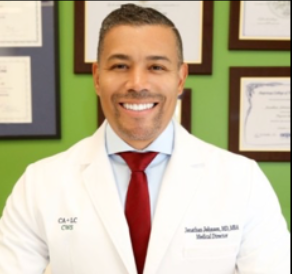
Dr Johnson is the founder and surgical director of Comprehensive Wound Care Services based in Washington, DC. Also known as “Dr Wounds,” he is board certified by the American Board of Wound Management and is a fellow of the American Professional Wound Care Association. Dr Johnson trained in general surgery with a fellowship as the Sylvester J. Carter Hand and Plastic Surgery fellow at Lincoln Medical and Mental Health Hospital Center of Cornell University. He holds a Master of Business Administration with a concentration in Healthcare Finance from The Carey Business School at Johns Hopkins University. He is a member of the American College of Healthcare Executives and a physician board member of the Association for the Advancement of Wound Care (AAWC) and the American Professional Wound Care Association (APWCA). Dr Johnson has numerous publications and research projects focused on wound care and decreasing health disparities in underserved populations. Dr Johnson is a board member of Capital Youth Empowerment Program (CYEP), a non-profit focused on fatherhood development and education, and he is a founding member of the Johnson-Jones Family Foundation. He is the founder and principal at Comprehensive Medical Investments focused on investments in minority healthcare funds servicing marginalized healthcare populations. A native of Denver Colorado, Dr Johnson enjoys outdoor activities, sporting events, art history, and spending time with his wife and three daughters. Dr Johnson resides in the suburban Washington, DC area.




