Addressing the Burden of Complex Surgical Wounds with MirraSurg
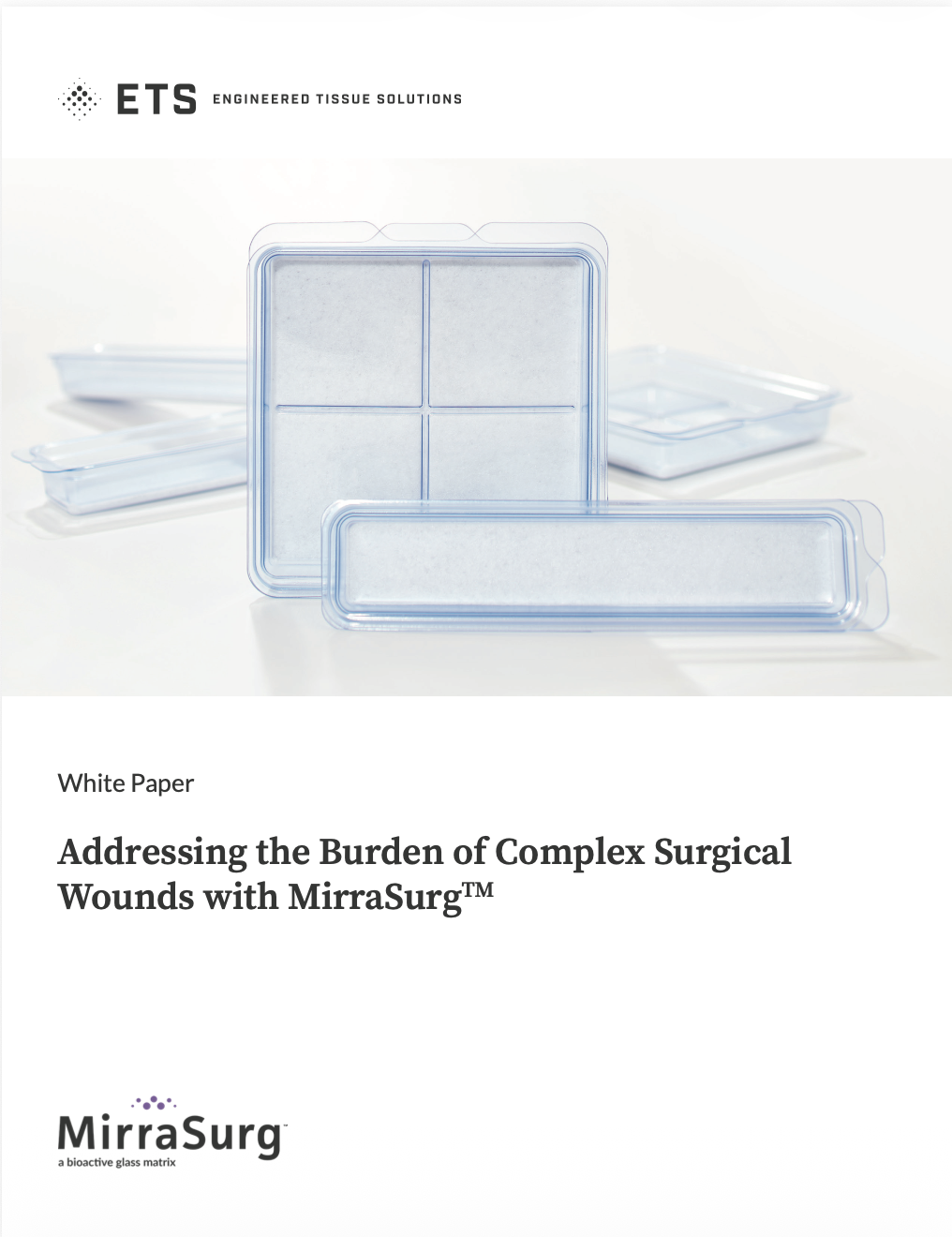 Surgical wounds complicated by infection, dehiscence, or deep tissue loss create outsized clinical and system-level burdens like longer stays, higher readmission and reoperation rates, and increased risk of limb loss. This white paper reviews the clinical problem across surgical specialties and presents MirraSurg, a fully synthetic borate-based bioactive glass fiber matrix, as a practical option to facilitate quality granulation tissue, minimize the risk of infection, and improve readiness for definitive closure.
What you’ll learn
- Why complex surgical wounds drive readmissions, reoperations, and higher costs.
- Mechanisms by which MirraSurg supports quality tissue formation, fluid handling, and wound-bed preparation.
- Key clinical evidence and case examples showing improved wound bed quality and low rate of infection-related complications.
- Practical considerations for incorporating MirraSurg into reconstructive, limb-salvage, and inpatient surgical pathways.
Who should read this
Surgeons (plastic reconstructive, vascular, orthopedic, trauma), wound care program directors, inpatient wound teams, and clinical leaders seeking evidence-based options to reduce complications and optimize surgical closure outcomes.