








Thinking Beyond the Next Procedure: HeartMate 3 LVAD Therapy as Part of a Lifetime Advanced Heart Failure Strategy
© 2026 HMP Global. All Rights Reserved.
Any views and opinions expressed are those of the author(s) and/or participants and do not necessarily reflect the views, policy, or position of Cath Lab Digest or HMP Global, their employees, and affiliates.
Igor Gosev, MD, PhD
Chief, Heart Transplant and Mechanical Circulatory Support (MCS), Newark Beth Israel Medical Center, RWJBarnabas Health, Newark, New Jersey
This interview is sponsored by Abbott.
This content is the reflection of a single center experience. The applicability of this experience needs to be considered with your individual center's / patient's needs.
The views and experience expressed during this presentation are those of the speaker(s) and do not necessarily reflect the views of Abbott.
Based on published data from multicenter experience and separate studies, which may involve different patient populations and other variables. Not a head-to-head comparison. Data presented for informational purposes only.
When should general and interventional cardiologists consider referral to an advanced heart failure team?
 My main advice is to refer earlier. Advanced heart failure referral does not commit a patient to LVAD or transplantation. It creates time to understand the trajectory, optimize the patient, align treatment with the patient’s goals, and preserve choices.
General cardiologists should think about referral when they see recurrent heart failure admissions, escalating diuretic requirements, intolerance of guideline-directed therapy, worsening renal or hepatic function, low-output symptoms, progressive functional decline, inotrope dependence, or the need for temporary mechanical support. The best time to meet the advanced heart failure team is before shock, frailty, or irreversible organ dysfunction has narrowed the pathway.1
For interventional cardiologists, I would add two questions. First, before another coronary or structural procedure, ask whether it is likely to change the patient's long-term trajectory — or whether it may postpone definitive therapy while reserve continues to decline. Second, whenever temporary support is initiated, define the exit pathway: recovery, bridge to decision, durable support, transplantation, or palliation. Reassess that pathway every day and involve advanced heart failure cardiology and surgery early.
Sometimes that referral goes both ways. In a carefully selected patient with persistent symptomatic severe mitral or tricuspid regurgitation despite optimized therapy, the advanced heart failure team may ask the structural heart team to evaluate a transcatheter valve option. We should define whether the goal is symptom relief, a time-limited bridge, or a durable change in trajectory, and set a date to reassess hemodynamics, end-organ function, functional status, and candidacy. If those targets are not met, the procedure should not delay LVAD, transplantation, or another goal-concordant strategy.
A bridge without a destination is not a strategy. The interventional procedure may be the first step in a successful pathway, but only if the pathway has an endpoint and the whole team is engaged early.
When might LVAD and transplantation be considered sequential rather than competing therapies?
Most of my clinical and academic work sits where cardiogenic shock, temporary mechanical support, durable LVAD therapy, enhanced recovery, and heart transplantation meet. At Newark Beth Israel, I have the privilege of seeing patients at each of those stages. That experience has changed the way I think about the relationship between LVAD and transplantation.
We often present LVAD and transplant as competing choices. For selected patients, particularly some younger patients, they may be sequential tools within one lifetime strategy. Mechanical circulatory support is a sequence, not a device. The implant is not the endpoint. At the first advanced heart failure evaluation, we should already be considering several possible futures: myocardial recovery, long-term LVAD support, LVAD followed by transplantation, direct transplantation, or, when appropriate, symptom-focused care.1 The best intervention gets the patient through today while preserving the greatest number of good options for tomorrow.
One pathway that deserves more attention is myocardial recovery. We need to understand the disease phenotype and ask deliberately whether the native heart may improve with unloading and optimized medical therapy. In a prospective Utah cohort of 154 patients with chronic advanced heart failure, after at least six months of continuous-flow LVAD support, 21% of patients with nonischemic cardiomyopathy and 5% with ischemic cardiomyopathy achieved a left ventricular ejection fraction of at least 40%.2 That is not the same as being ready for explantation, but it shows why serial assessment matters. In the later, highly selected, nonrandomized RESTAGE-HF study, 16 of 40 enrollees met the primary endpoint of LVAD explantation within 18 months with sustained remission at 12 months.3 Recovery is therefore a real pathway for selected patients, not a promise, and it should be pursued deliberately with optimized medical therapy and standardized testing rather than discovered by accident.4
Can you introduce the concept of net prolongation of life from LVAD support followed by transplantation, particularly for younger patients who may need more than one advanced therapy over their lifetime?
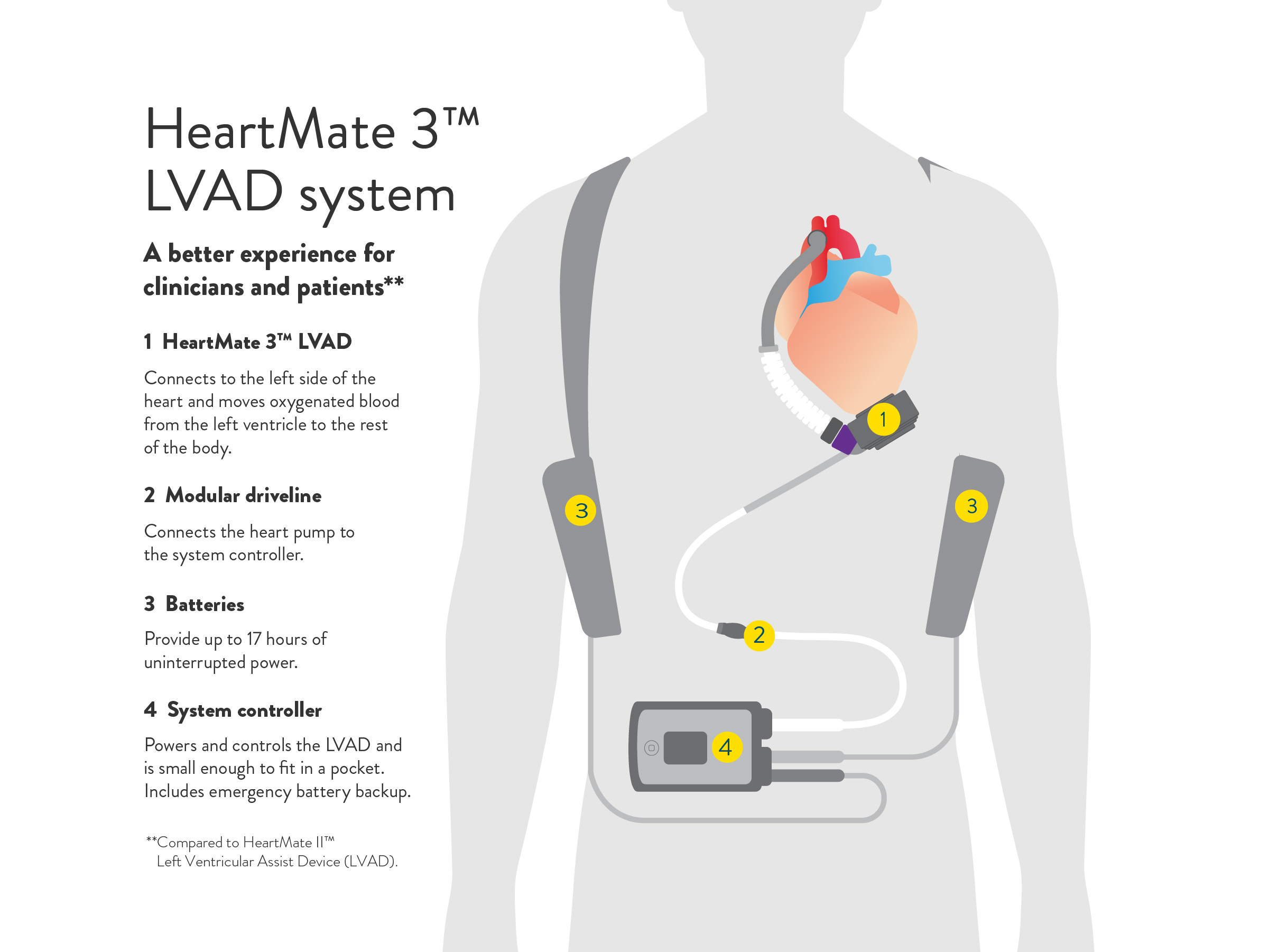
I use net prolongation of life as a lifetime-management framework, not as a score, a formula, or a promise. The question is not simply, “Which therapy can I offer today?” It is, “Which sequence of therapies is most likely to give this patient the greatest number of meaningful years, with the best possible function and quality of life?”
We recently described this concept in a Journal of Heart and Lung Transplantation state-of-the-art review that I coauthored.5 Heart transplantation remains an excellent therapy for appropriate patients, but graft longevity is finite; reported median post-transplant survival is approximately 10 to 13 years, and repeat transplantation is uncommon. At the same time, median survival after contemporary LVAD implantation in younger patients now exceeds seven years. That changes the strategic conversation for a patient in their thirties or forties who may need more than one advanced therapy during a lifetime.
In a carefully selected patient, LVAD support may restore perfusion, mobility, end-organ function, and time with family while preserving transplantation as a later option. We are trying to preserve what I call therapeutic capital: the sternum, right-ventricular function, end-organ reserve, mobility, immunologic candidacy, and the patient's ability to remain eligible for the next therapy.
The supporting evidence is increasingly informative but not definitive. The 2024 STS-INTERMACS report estimated five-year survival of 72.6% in patients younger than 50.6 A 2026 propensity-matched analysis of patients aged 18 to 49 reported similar two-year survival after HeartMate 3 implantation and heart transplantation — 88.7% versus 90.2%.7 When the comparison began at LVAD implantation versus transplant listing, freedom from death or delisting for clinical deterioration favored the LVAD group. But this was a cross-dataset observational analysis, not a randomized trial, and disabling stroke was more frequent in the LVAD group. Comparable early survival does not erase device-specific morbidity.
LVAD-first is therefore not automatically better. Stroke, infection, right-heart failure, bleeding, sensitization, support duration, donor access, allocation policy, and patient and caregiver burden all matter. A patient with favorable donor access and a short expected wait may be best served by direct transplantation. A patient with predominantly left-sided failure, acceptable right-ventricular reserve, a long anticipated wait, and the capacity to live well with an LVAD may benefit from an LVAD-first strategy.
Most importantly, we cannot simply add an LVAD survival estimate to a transplant survival estimate. The transplant outcome is conditional on surviving LVAD support, remaining eligible, and receiving an organ. Net prolongation of life is a framework for thoughtful sequencing and repeated reassessment. It is not a guarantee.
How do you approach patient selection, and what long-term outcomes do you consider? What has your program experience taught you, and what clinical data can you share?
Patient selection begins with the patient's lifetime trajectory, not with the incision I prefer or the technology I can offer. I think there are two decisions. First, what advanced heart failure strategy best serves this patient? Second, if LVAD is chosen, what is the safest operative and recovery strategy for that individual?
For the first decision, we assess urgency and trajectory, the probability of myocardial recovery, age and biologic reserve, frailty, right-ventricular function, pulmonary vascular disease, renal and hepatic function, infection and neurologic risk, sensitization, body size and likely donor access, prior operations, caregiver support, and — most importantly — the patient’s goals. I do not select a patient on ejection fraction alone. I select on trajectory, physiology, reversibility, future options, and goals.
Direct transplantation may be favored when donor access is expected to be prompt and LVAD physiology or anatomy is unfavorable — for example, a very small or restrictive ventricle, severe biventricular failure, or a high likelihood that durable support will not be tolerated. An LVAD-first pathway may be reasonable in a patient with predominantly left-sided failure, acceptable right-ventricular reserve, a potentially prolonged donor wait, or a reversible barrier to transplantation that time and rehabilitation may improve. Neither choice should be made by age alone.
For the operative decision, we examine the apex and ascending aorta, ventricular size, prior chest surgery, hemodynamic stability, intracardiac thrombus, valvular disease, and the need for concomitant procedures. Off-pump implantation is a separate layer of selection. It should be used when it serves the patient, never as a technical performance target.
Severe obesity is one subgroup in which sternum preservation may be especially valuable. A median sternotomy creates a midline sternal wound and adds activity precautions during healing to patients who may already face substantial mobility challenges. In our retrospective HeartMate 3 study of 107 patients with obesity, 81 underwent less-invasive implantation and 26 underwent full sternotomy. Less-invasive implantation was associated with less bleeding and transfusion, less severe right-heart failure (11.1% vs 30.8%), and more discharge home (82.4% vs 60.0%).8 Survival to discharge did not differ significantly (91.4% vs 76.9%; P=.079).8 These findings are encouraging, but the study was nonrandomized and defined obesity as a body mass index of at least 30 kg/m2, so it does not prove superiority specifically in patients with a body mass index above 40 or 50. Anatomy, exposure, and safety still determine the approach.
We also define outcome broadly. Survival is essential, but it is not sufficient. I care about stroke, infection, bleeding, right-heart failure, renal recovery, mobility, independence, time outside the hospital, return to family or work, quality of life, caregiver burden, and whether today's treatment preserves candidacy for tomorrow's therapy.
The latest STS-INTERMACS report is an important reality check. With contemporary fully magnetically levitated LVAD support, estimated survival was 85.9% at one year, 60.2% at five years, and 51.8% at seven years.9 In the preceding report, patients younger than 50 had estimated survival of 91.6% at one year and 72.6% at five years.6 Those registry estimates do not predict an individual patient's future, but they tell us that contemporary LVAD is a multiyear therapy, not simply a short bridge.
Our program experience has taught us that sternum-preserving implantation can become a routine capability rather than an occasional special operation. Our earlier published 105-patient HeartMate 3 experience was also encouraging: 41 patients underwent a sternum-sparing implant and 64 underwent sternotomy. In the selected sternum-sparing group, severe right-heart failure, transfusion exposure, and hospital stay were lower, and six-month survival was 93%.10 But that study was retrospective, and the sternum-sparing patients were younger. It generated the question; SWIFT later established multicenter noninferiority.11
What is sternum-preserving LVAD implantation, and why does it matter?
Once LVAD therapy is selected, the operative approach becomes part of the longer-term strategy. With a sternum-preserving bilateral-thoracotomy approach, we implant the pump through a limited left thoracotomy and connect the outflow graft to the ascending aorta through a small right-sided incision. We avoid dividing the sternum and leave the midline unentered.
The value is not cosmetic. Preserving the sternum can maintain chest stability, avoid a sternal wound and its healing burden, and preserve a conventional midline entry route if transplantation or another cardiac operation becomes necessary.10 Blood conservation is also strategically important because transfusion exposure may contribute to human leukocyte antigen (HLA) sensitization and make donor matching more difficult. But sternum preservation by itself does not guarantee less transfusion, an easier transplant, or better survival.
In our prior experience at the University of Rochester, we learned to consider the next procedure when planning the current one: when safe and appropriate, preserving the sternum may preserve a conventional route for later transplantation and keep future options open. It cannot guarantee an easier transplant or a better outcome.
Less-invasive LVAD implantation predates HeartMate 3, but the newer pump changed how broadly we could apply the approach. In the five-year follow-up of MOMENTUM 3, compared with the HeartMate II axial-flow pump, HeartMate 3 was associated with higher Kaplan-Meier survival at five years (58.4% versus 43.7%) and lower serious adverse-event rates for device thrombosis (0.010 versus 0.108 events per patient-year) and stroke (0.050 versus 0.136 events per patient-year).12 Those results strengthened our confidence in offering durable LVAD therapy through less-invasive approaches to broader groups, including younger patients, while following their outcomes over time. The five-year extension was observational, however, and nonfatal-event data beyond two years were incomplete.
The strongest multicenter evidence is HM3 SWIFT, which I helped lead. The study showed that a thoracotomy-based HeartMate 3 implant was noninferior to full sternotomy for its prespecified six-month composite endpoint.11 That supports an additional standard approach; it does not establish universal superiority. A full sternotomy remains an excellent — and sometimes clearly safer — operation when anatomy, instability, concomitant procedures, thrombus concern, or exposure requirements demand it.
Finally, surgical access and bypass strategy are separate decisions. Thoracotomy does not automatically mean off-pump. When we select an off-pump approach, we use rigorous imaging, exclude concern for left-ventricular thrombus, agree on conversion criteria, and maintain immediate cardiopulmonary-bypass capability. Less-invasive should never mean less prepared. Always know the bailout.
Why is ERAS central to your approach?
Enhanced Recovery After Surgery (ERAS) is central because the operation may last several hours, but the recovery system influences every hour that follows. A smaller incision without a recovery system is simply a smaller incision.
ERAS aligns the entire team — surgery, anesthesia, advanced heart failure cardiology, perfusion, ICU, nursing, respiratory therapy, rehabilitation, pharmacy, nutrition, patients, and caregivers — around the same goals. It begins before the incision with education, expectation-setting, and optimization. It continues with multimodal opioid-sparing analgesia, blood conservation, standardized anesthesia, right-ventricular protection, early extubation, structured respiratory care, repeated mobility, nutrition, rhythm optimization, and clear daily goals. In our current pathway, cryoanalgesia is incorporated when appropriate. Our blood-conservation protocol also extends to diagnostic phlebotomy. Where appropriate, we use small-volume pediatric tubes and order blood tests to answer specific clinical questions rather than by default on a fixed schedule.13
The published data must be described honestly. In our before-and-after LVAD ERAS study, the formal comparison included 38 pre-ERAS patients and 46 ERAS patients. ERAS implementation was associated with lower chest-tube output, lower plasma and platelet use, a fivefold reduction in opioid prescriptions at discharge, and a marked reduction in discharge to rehabilitation.14 Hospital length of stay and survival were similar. Because this was an observational implementation study rather than a randomized trial, I say associated with — not caused.
To me, ERAS is also a quality system. We measure what patients experience, review the results, and revise the protocol. Standardization creates a safe default; individualized judgment tells us when and why to deviate. The incision opens the opportunity for recovery. The system determines whether we deliver it consistently.
What do you see as the future role of the advanced heart failure surgeon?
The advanced heart failure surgeon of the future will be less a technician called at the end and more a strategist involved from the beginning.
The field is expanding rapidly, with new temporary and durable support platforms, more sophisticated imaging, evolving organ-preservation technologies, donation after circulatory death, robotic and sternum-preserving approaches, and increasingly powerful AI models. More technology creates more options, but it also creates more decision points. Someone must help connect the immediate intervention to the patient's full lifetime pathway.
I see the surgeon as a longitudinal co-leader with the advanced heart failure cardiologist — never the sole coordinator. The surgeon should contribute to shock activation, temporary-support selection, candidacy assessment, procedural sequencing, durable-LVAD strategy, transplantation, myocardial recovery and explantation, rescue, rehabilitation, and quality review. The role should also include high-risk cardiac surgery: low ejection fraction coronary artery bypass graft (CABG) and valve surgery, with or without planned temporary support when appropriate, and hybrid procedures such as ventricular-tachycardia ablation under extracorporeal membrane oxygenation (ECMO) support.
The transplant surgeon will need fluency not only in donation after brain death and donation after circulatory death, but also in evolving procurement, ex vivo perfusion, and advanced heart-preservation devices and processes. The LVAD surgeon will need to understand smaller pumps, less-invasive and robotic approaches, recovery protocols, and the tradeoffs of each pathway. The academic surgeon must also help design trials, develop purpose-built tools, train teams, and create transparent data-feedback systems.
Technical innovation must be matched by standardization: defined training, imaging protocols, patient-selection criteria, procedural steps, immediate rescue capability, prospective data, and transparent quality review. Innovation without standardization remains an anecdote; standardization and feedback turn it into a program.
AI may improve imaging interpretation, risk assessment, donor-recipient matching, and pathway monitoring, but it should augment — not replace — multidisciplinary judgment, accountability, and the conversation with a patient about acceptable tradeoffs. The future surgeon's most important skill may be integration: understanding the devices, the operation, the recovery system, the transplant pathway, and the person whose life connects all of them.
Please share any final thoughts or takeaways.
I would leave readers with three messages.
First, think beyond the next procedure. LVAD, transplantation, temporary support, and recovery should be considered within one lifetime strategy.
Second, preserve options whenever it is safe to do so. Anatomy, right ventricular function, end-organ reserve, mobility, and candidacy are all future assets. Every incision is also a decision about the next operation.
Third, remember that outcomes come from systems, not devices alone. Technique matters, but so do patient selection, ERAS, standardization, rescue readiness, and multidisciplinary follow-up.
For the general or interventional cardiologist, the most practical takeaway is simple: call us early. Early evaluation does not obligate the patient to a procedure. It gives the team — and the patient — the one resource we can never recover once it is lost: time.
Evidence at a Glance
| Source | Finding | Interpretation |
|---|---|---|
|
STS-INTERMACS 20259 |
Fully MagLev LVAD survival: 85.9% at 1 year, 60.2% at 5 years, 51.8% at 7 years. |
Registry estimate; transplant/support cessation censored. |
|
STS-INTERMACS 2024, age <506 |
Estimated survival: 91.6% at 1 year and 72.6% at 5 years. |
Younger selected cohort; only 134 at risk at year 5. |
|
HM3 SWIFT11 |
Six-month composite success: 85.0% thoracotomy versus 86.2% matched sternotomy controls; noninferior. |
Additional standard, not superior; not randomized. |
|
Published LVAD ERAS14 |
Chest-tube output 1006 to 647.5 mL; FFP 31.6% to 6.7%; platelets 42.1% to 8.7%; rehab discharge 20.0% to 2.4%. |
Before-and-after association; LOS and survival similar. |
|
Gosev et al. 202010 |
Sternum-sparing versus sternotomy: severe RV failure 7% versus 28%; transfusion 41% versus 86%; stay 15.5 versus 21 days. |
Retrospective selected cohort; not causal. |
|
Young HM3 versus transplant, 20267 |
Matched 2-year survival: 88.7% versus 90.2% (P=.53); debilitating stroke 3.4% versus 0.3%. |
Cross-dataset analysis; supports consideration, not proof. |
|
Utah recovery cohort2 |
154 patients with chronic advanced heart failure; after at least 6 months of support, LVEF reached at least 40% in 21% with nonischemic and 5% with ischemic cardiomyopathy. |
Evidence of native-function recovery; not equivalent to explant eligibility. |
|
MOMENTUM 3 five-year follow-up12 |
Five-year survival: 58.4% with HeartMate 3 vs 43.7% with HeartMate II; device thrombosis: 0.010 vs 0.108 and stroke: 0.050 vs 0.136 events per patient-year. |
Observational extension of randomized cohort; nonfatal-event data incomplete beyond 2 years. |
|
Obesity-specific HeartMate 3 study8 |
107 patients with BMI at least 30 kg/m2: 81 less-invasive implants and 26 sternotomies; severe right-heart failure 11.1% versus 30.8%; home discharge 82.4% versus 60.0%. |
Retrospective selected cohort; not proof of superiority at BMI 40 or 50. |
STS=Society of Thoracic Surgeons; INTERMACS=Interagency Registry for Mechanically Assisted Circulatory Support; MagLev= magnetically levitated; LVAD=left ventricular assist device; HM3=HeartMate 3 (Abbott); ERAS=enhanced recovery after surgery; FFP=fresh frozen plasma; LOS=length of stay; RV=right ventricular; BMI=body mass index
References
1. Heidenreich PA, Bozkurt B, Aguilar D, et al. 2022 AHA/ACC/HFSA guideline for the management of heart failure. Circulation. 2022;145:e895-e1032. doi:10.1161/CIR.0000000000001063
2. Wever-Pinzon J, Selzman CH, Stoddard G, et al. Impact of ischemic heart failure etiology on cardiac recovery during mechanical unloading. J Am Coll Cardiol. 2016;68(16):1741-1752. doi:10.1016/j.jacc.2016.07.756
3. Birks EJ, Drakos SG, Patel SR, et al. Prospective multicenter study of myocardial recovery using left ventricular assist devices (RESTAGE-HF [Remission from Stage D Heart Failure]): medium-term and primary end point results. Circulation. 2020;142(21):2016-2028. doi:10.1161/CIRCULATIONAHA.120.046415
4. Kyriakopoulos CP, Kapelios CJ, Stauder EL, et al. LVAD as a bridge to remission from advanced heart failure: current data and opportunities for improvement. J Clin Med. 2022;11(12):3542. doi:10.3390/jcm11123542
5. Bernhardt AM, Kanwar MK, Kittleson M, Cowger JA, Pagani FD, Gallone G, Gosev I, et al. Net prolongation of life in advanced heart failure: an intentional strategy of durable LVAD therapy followed by heart transplantation. J Heart Lung Transplant. 2026 Mar 13:S1053-2498(26)01770-5. doi:10.1016/j.healun.2026.03.006
6. Meyer DM, Nayak A, Wood KL, et al. The Society of Thoracic Surgeons Intermacs 2024 Annual Report: Focus on Outcomes in Younger Patients. Ann Thorac Surg. 2025;119:34-58. doi:10.1016/j.athoracsur.2024.10.003
7. Uriel N, Sayer GT, Elad B, et al. Heart replacement therapy in young patients: a comparative analysis of HeartMate 3 LVAD and heart transplant using MOMENTUM 3 and UNOS Registry. JACC Heart Fail. 2026;14:102948. doi:10.1016/j.jchf.2026.102948
8. Bjelic M, Ayers B, Paic F, Bernstein W, Barrus B, Chase K, Gu Y, Alexis JD, Vidula H, Cheyne C, Prasad S, Gosev I. Study results suggest less invasive HeartMate 3 implantation is a safe and effective approach for obese patients. J Heart Lung Transplant. 2021;40(9):990-997. doi:10.1016/j.healun.2021.06.001
9. Nayak A, Cascino TM, DeFilippis EM, et al. The Society of Thoracic Surgeons Intermacs 2025 Annual Report: Focus on Outcomes in Older Adults. Ann Thorac Surg. 2026;121:15-38. doi:10.1016/j.athoracsur.2025.10.005
10. Gosev I, Wood K, Ayers B, et al. Implantation of a fully magnetically levitated left ventricular assist device using a sternal-sparing surgical technique. J Heart Lung Transplant. 2020;39:37-44. doi:10.1016/j.healun.2019.09.012
11. Gosev I, Pham DT, Um JY, et al. Ventricular assist device using a thoracotomy-based implant technique: HM3 SWIFT. J Thorac Cardiovasc Surg. 2024;168:1474-1484.e12. doi:10.1016/j.jtcvs.2024.02.013
12. Mehra MR, Goldstein DJ, Cleveland JC, et al. Five-year outcomes in patients with fully magnetically levitated vs axial-flow left ventricular assist devices in the MOMENTUM 3 randomized trial. JAMA. 2022;328(12):1233-1242. doi:10.1001/jama.2022.16197
13. Tibi P, McClure RS, Huang J, et al. STS/SCA/AmSECT/SABM update to the clinical practice guidelines on patient blood management. Ann Thorac Surg. 2021;112(3):981-1004. doi:10.1016/j.athoracsur.2021.03.033
14. Lindenmuth DM, Chase K, Cheyne C, Wyrobek J, Bjelic M, Ayers B, Barrus B, Vanvoorhis T, Mckinley E, Falvey J, Barney B, Fingerut L, Sitler B, Kumar N, Akwaa F, Paic F, Vidula H, Alexis JD, Gosev I. Enhanced recovery after surgery in patients implanted with left ventricular assist device. J Card Fail. 2021;27:1195-1202. doi:10.1016/j.cardfail.2021.05.006
Support provided by Abbott. The Physician(s) worked on Abbott's behalf.
The information is consistent with applicable FDA guidelines.
Cardiovascular.Abbott/HeartMate3
Rx Only
Brief Summary: Prior to using these devices, please review the Instructions for Use for a complete listing of indications, contraindications, warnings, precautions, potential adverse events and directions for use.
HeartMate 3™ LVAS Indications: The HeartMate 3™ Left Ventricular Assist System is indicated for providing short- and long-term mechanical circulatory support (e.g., as bridge to transplant or myocardial recovery, or destination therapy) in adult and pediatric patients with advanced refractory left ventricular heart failure and with an appropriate body surface area.
HeartMate 3™ LVAS Contraindications: The HeartMate 3 Left Ventricular Assist System is contraindicated for patients who cannot tolerate, or who are allergic to, anticoagulation therapy.
HeartMate 3™ LVAS Adverse Events: Adverse events that may be associated with the use of the HeartMate 3 Left Ventricular Assist System are: death, bleeding, cardiac arrhythmia, localized infection, right heart failure, respiratory failure, device malfunctions, driveline infection, renal dysfunction, sepsis, stroke, other neurological event (not stroke-related), hepatic dysfunction, psychiatric episode, venous thromboembolism, hypertension, arterial non-central nervous system (CNS) thromboembolism, pericardial fluid collection, pump pocket or pseudo pocket infection, myocardial infarction, wound dehiscence, hemolysis (not associated with suspected device thrombosis) or pump thrombosis.
Abbott
6101 Stoneridge Dr.,
Pleasanton, CA 94588
USA, Tel: 1 925 847 8600
™ Indicates a trademark of the Abbott group of companies.
‡ Indicates a third party trademark, which is property of its respective owner.
© 2026 Abbott. All Rights Reserved.
MAT-2680448 v1.0 | Item approved for U.S. use only.
Find More
PRAISE-HM3 Real-World Data Show Decline in Aspirin Use After HeartMate 3 Implantation
With Matthew Gonzalez, MD, Advanced Heart Failure and Transplant Cardiologist at Corewell Health and Clinical Assistant Professor of Medicine at Michigan State University in Grand Rapids, Michigan.
With Ryan K. Kaple, MD, FACC, FSCAI, Program Director of the Structural and Congenital Heart Program at Hackensack University Medical Center in Hackensack, New Jersey.




