FastWave Medical Reports 96.4% Procedural Success in First-in-Human Study of Sola Coronary Laser IVL System
30-patient feasibility study demonstrated calcium fracture in every treated lesion and 49% acute lumen gain prior to stenting.
30-patient feasibility study demonstrated calcium fracture in every treated lesion and 49% acute lumen gain prior to stenting.
MINNEAPOLIS -- FastWave Medical, which is developing next-generation intravascular lithotripsy (IVL) technology, announced positive interim results from the first-in-human (FIH) feasibility study of its Sola™ laser IVL (L-IVL) system for treating calcified coronary artery disease.
Thirty patients were treated at two clinical sites. Among 28 patients in whom stent delivery was attempted, SolaTM achieved 96.4% procedural success, with no serious adverse events related to the study device reported through 30 days.
Procedural success was defined as successful stent delivery with a final residual stenosis below 50% and freedom from in-hospital major adverse cardiovascular events. Mean diameter stenosis was 79.1% at baseline and 12.1% following completion of the procedure.
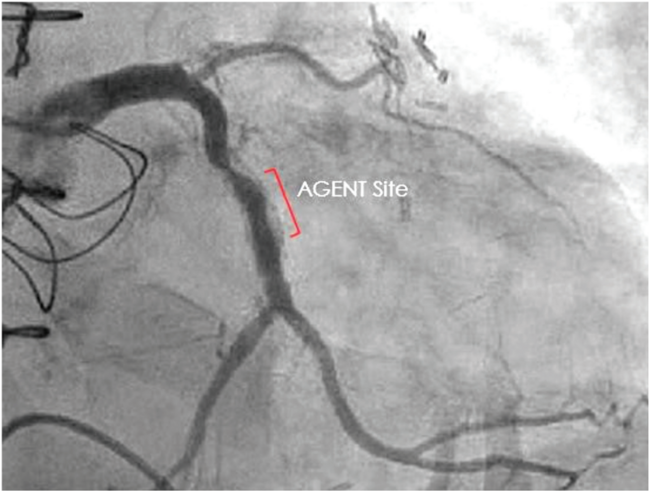
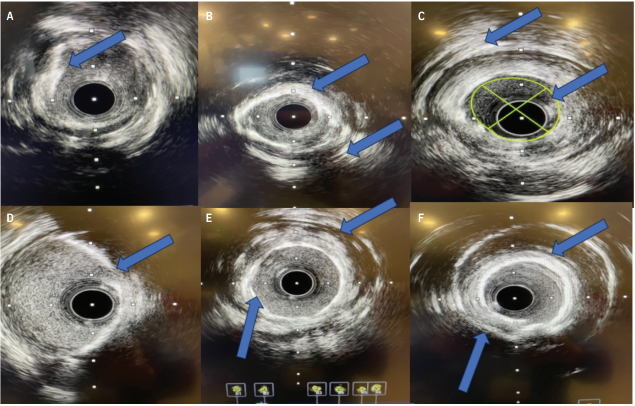
Site-reported intravascular imaging showed calcium fracture in all 30 treated lesions. Mean minimum lumen area increased 49% following IVL treatment and before stent implantation, providing evidence of calcium modification prior to stenting.
Sola™ is designed to treat complex calcified coronary disease. Key features include:
- Low-profile catheter architecture with a single actuating optical emitter
- Physician-controlled translating emitter designed to deliver energy along the length of the target lesion
- Energy pulsed up to five times faster than conventional IVL
- Circumferential acoustic pressure generation with every pulse
"These interim results are encouraging, particularly the consistency of calcium fracture and luminal gain we observed before stent implantation," said Scott Nelson, CEO of FastWave Medical. "Combined with the procedural outcomes from this first-in-human experience, the findings give us confidence as we continue advancing SolaTM toward a future coronary IDE trial."
"What stood out to me with the SolaTM L-IVL system was its deliverability, along with the combination of control and speed," said Arthur Lee, MD, FACC, FSCAI, Director of Vascular Services at The Cardiac & Vascular Institute (TCAVI), who performed cases in the study. "The ability to translate the optical emitter provides a differentiated way to direct lithotripsy along the lesion, while the 5-Hz pulse rate enables rapid energy delivery. Seeing calcium fracture in every treated lesion and meaningful luminal gain before stenting is very encouraging."
"Between our recent peripheral IDE approval and these interim coronary results, both of FastWave's IVL platforms have achieved important clinical and regulatory milestones," said Tristan Tieso, COO of FastWave Medical. "We're focused on building on that momentum as we advance our peripheral pivotal program and prepare SolaTM for its next stage of clinical development."
The single-arm feasibility study followed patients for 30 days. Treated lesions were complex, averaging 32.6 mm in length. Results are based on investigator-reported data and remain subject to final analysis, including independent core laboratory assessment of angiographic and intravascular imaging data.
The Sola™ system is an investigational device and is not available for sale.
FastWave recently received FDA IDE approval to begin the U.S. pivotal trial of its Artero™ electric IVL (E-IVL) system for peripheral artery disease. The company was also named one of Fierce Medtech's "Fierce 15" companies and MD+DI's 2025 Medtech Company of the Year.
About FastWave Medical
FastWave Medical pioneers next-generation intravascular lithotripsy (IVL) technology to transform the treatment of calcific artery disease in peripheral and coronary applications. Founded in 2021 by industry veterans with deep startup and multinational medical device experience, FastWave has secured over $50 million in venture funding to advance its dual-platform IVL systems.
The company's technologies address key limitations in current calcium-modification devices by improving deliverability, energy output, and usability, eliminating extra procedural steps while maintaining the simplicity and safety that have driven IVL's rapid clinical adoption.
Find More:
Renal Denervation Topic Center
Cardiovascular Ambulatory Surgery Centers (ASCs) Topic Center
Grand Rounds With Morton Kern, MD
Peripheral Artery Disease Topic Center