Command and Care in Crisis: EMS Leadership During Civil Disturbance and Federal Troop Deployments
The late Jud Fuller, former director of EMS in Newark, New Jersey, and later regional emergency manager of the National Disaster Medical System, said that luck favors the prepared. He also said that organization was one of the keys to success.
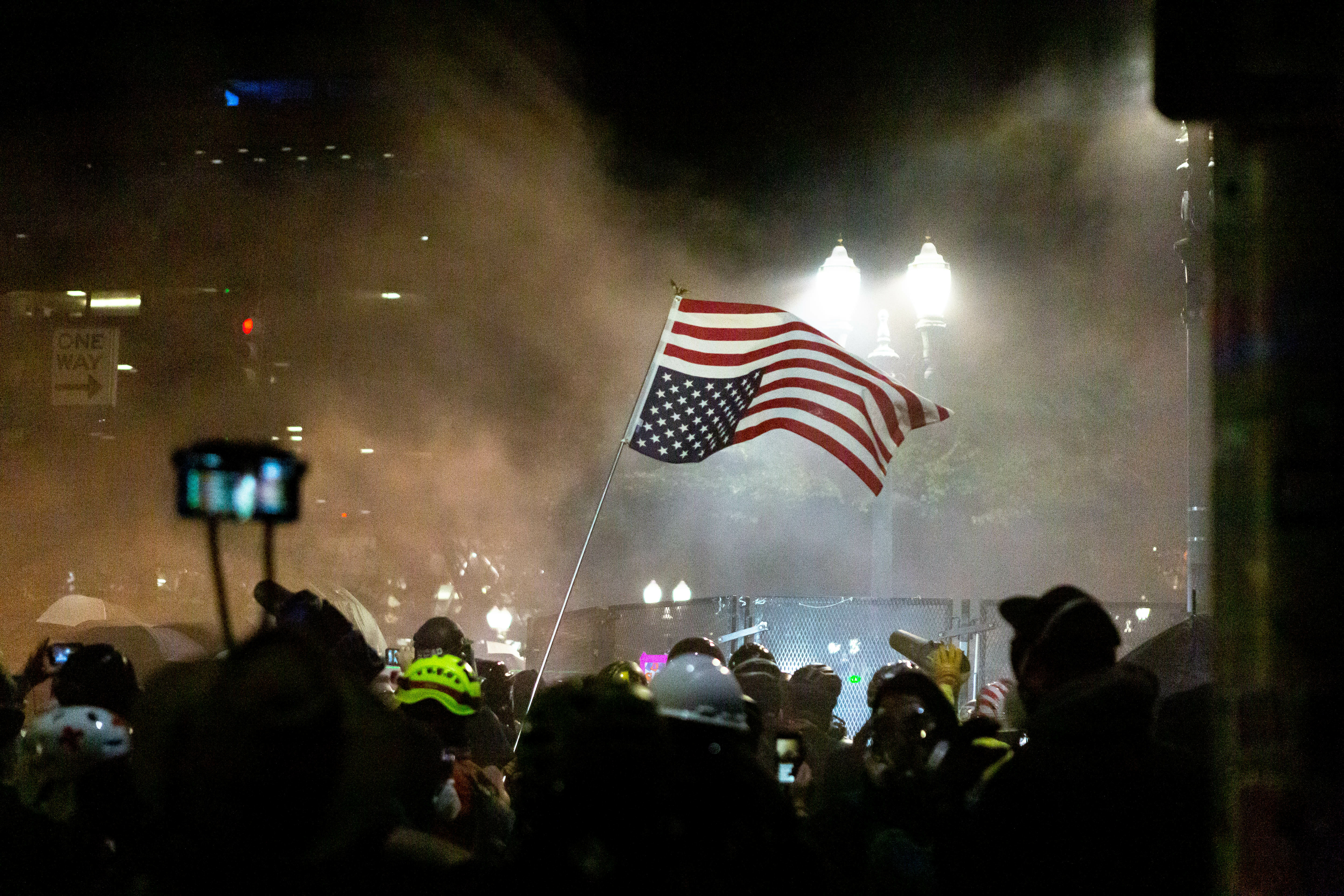
As civil unrest becomes a more frequent reality in urban centers across the United States, EMS systems are finding themselves thrust into complex operational environments traditionally reserved for law enforcement and emergency management. The recent protests in Los Angeles underscore the pressing need for EMS agencies to prepare for rapidly escalating situations, especially when protests transition into civil disturbances or when federal troops are deployed with little or no notice.
Operating within a multi-agency, high-pressure environment requires clarity of roles, chain-of-command discipline, and a grounded understanding of strategic, operational, and tactical decision-making. This article presents an integrated framework of action for EMS professionals at all levels, from EMTs on the front line to chiefs overseeing entire systems. Drawing on the incident command system (ICS), and informed by real-world incidents, this framework is designed to support EMS resiliency, responsiveness, and leadership in times of crisis.
Civil Disturbance Response: An Integrated Chain-of-Command
EMS Chief (Director): Strategic System Oversight
At the apex of the EMS structure, the EMS chief must act decisively to stabilize the system and align EMS operations within the broader city-wide emergency response framework. The chief’s immediate responsibilities include activating the EMS emergency operations plan and integrating into the unified command structure. Coordination with fire, police, OEM, and public health agencies is vital to ensure consistent policy, scene safety, and incident-wide medical direction.
The chief must authorize deployment of specialized units, such as tactical medics, mass casualty incident (MCI) units, and bike teams, suited for rapid access through congested urban zones. System-wide directives on PPE use, triage protocols, and documentation practices must be disseminated promptly. Finally, the chief serves as a conduit to elected officials and public information officers, guiding unified public messaging and community reassurance.
EMS Deputy Chief (Deputy Director): Operational Integration
The deputy chief translates the chief’s strategic vision into coordinated field action. They deploy mobile medical branch officers, stage EMS assets, and ensure coverage for both protest-related incidents and baseline emergency response. In the event of widespread civil unrest, they suppress nonemergent call volume and reallocate ambulances away from compromised areas.
Crucially, the deputy chief oversees dynamic patient movement strategies, including routing to trauma centers, staging of transport units, and diversion management with hospitals. Maintaining real-time communication with hospital emergency departments ensures continuity of care and system-wide surge readiness.
Duty Chief (Coordinator): Tactical Field Oversight
Functioning as the bridge between field units and command, the duty chief operates within or near incident command posts to supervise the EMS branch. Their priorities include hazard assessment, crowd density, access routes, presence of projectiles or gas, and the strategic placement of EMS resources within protected zones.
Each unit's ingress and egress must be tightly controlled, and EMS personnel must be continuously tracked to ensure safety in a fluid, high-risk environment. The duty chief has authority to approve or deny unit entry based on real-time intelligence, minimizing unnecessary exposure while preserving patient access.
Tour Chief/Captain/Lieutenant (First Level Supervisor): Unit Leadership
EMS supervisors are responsible for personnel well-being and operational continuity during the incident. They brief crews on safety threats, appropriate PPE, and tactical awareness. Supervisors restrict scene entry to essential missions and coordinate extractions in cooperation with law enforcement or specialized EMS rescue teams.
Equally important is the rotation of crews to mitigate heat exhaustion, tear gas exposure, or stress fatigue. Supervisors must ensure hydration, decontamination, and rest cycles are enforced, especially during prolonged operations in volatile environments.
Paramedic: Advanced Field Response
On the ground, paramedics must operate with clinical precision and situational awareness. They conduct rapid triage using START or SALT under hostile or dynamic conditions and initiate care for trauma, crush injuries, and syncope due to crowd compression. Given the danger of prolonged on-scene operations, care should be directed toward stabilization and swift evacuation to casualty collection points.
Documentation remains essential, even under duress, and must include identifiers for follow-up in cases of delayed transport. Most critically, paramedics must remain alert to the environment, avoiding entrapment, hostile crowds, or exposure to secondary violence.
EMT: Transport and Support Operations
EMTs are the logistical backbone of EMS response. Their responsibilities include triage tagging, patient movement, and driving ambulances through blocked or compromised routes. EMTs provide basic life support interventions, airway, bleeding control, and lifting support, and help navigate patients safely through hostile crowds.
They are also essential information conduits, relaying conditions, hazards, and operational concerns to paramedics and supervisors. Their presence helps shield patients, calm the public, and facilitate coordinated patient removal.
When the Federal Government Deploys Troops Without Notice
The sudden arrival of federal troops adds another layer of complexity to an already high-risk environment. Jurisdictional ambiguity, interoperability challenges, and civilian-military tension demand a carefully calibrated EMS response.
EMS Chief: Policy and Legal Safeguards
The EMS chief must immediately verify the operational and legal boundaries of EMS authority within federally controlled zones. They must liaise directly with federal field command, often National Guard or DHS representatives, and ensure that EMS system autonomy is preserved.
It’s imperative to anticipate public backlash, legal ambiguity, and mistrust. The chief must work with legal counsel to develop clear guidance on documentation, patient rights, and information sharing, especially regarding detainee care and reporting of force-related injuries.
EMS Deputy Chief: Zone Integrity and System Efficiency
The deputy chief must delineate EMS response zones and coordinate with federal logistics officers to prevent redundancy or interference. Orders must be issued to ensure EMS personnel don’t operate in federal zones without clearance, escorts, or clear safety protocols.
Hospitals may face surges due to mass detentions or curfews; the deputy chief must prepare for this and allocate resources accordingly. Additionally, the psychological and behavioral toll on the community, particularly marginalized populations, must be anticipated and met with mobile crisis units or mental health embedded teams.
Duty Chief: Liaison and Documentation Control
Duty chiefs must serve as EMS liaisons to federal military medics, ensuring a clear division of duties and preventing duplication or conflict. They are also responsible for activating secondary staging areas if troop movements cut off primary zones.
Every patient contact involving federal personnel must be logged precisely. These cases are likely to face legal or political scrutiny, and EMS documentation will form a key part of the public record.
Supervisor: Briefings and Scene Management
Supervisors must brief field units on the limitations of EMS access in federal zones and ensure that EMS-only corridors are identified for secure transport. They must also monitor for and report any operational conflicts between EMS and military units, such as conflicting orders or denied access to patients.
Deploying specialized trauma teams to support law enforcement, federal agents, or at-risk protest zones may also become necessary.
Paramedic: Tactical Neutrality and Patient Safety
Paramedics must exercise discretion when treating patients involved in military or federal interventions. Care may include detainees or civilians injured in force encounters. It’s crucial to follow chain of command and not act on the direction of federal personnel unless cleared by EMS command.
Meticulous documentation, free of bias or speculation, is essential. Paramedics must also be prepared for exposure to riot control agents and manage chemical injuries or high-acuity trauma in chaotic environments. Do you have the proper PPE for this type of response?
EMT: Evacuation and Compassionate Care
EMTs assist with the rapid removal of patients from contested zones, provide direct BLS care and interventions, and protect both civilians and EMS personnel during patient transport. Radio discipline is essential to prevent panic or miscommunication.
Of special note is the caution required when treating unidentified federal agents who may resemble armed civilians or assailants, an unfortunately real risk when integration with local command structures has not yet occurred.
Key Organizational Considerations
Amid the chaos of civil unrest and federal mobilization, the continuity of EMS operations hinges on proactive planning and leadership foresight. Agencies must answer essential questions:
- Will shift change be possible if roads are blocked? Do we need rally points or escorted transport to facilitate shift relief?
- Do we have 48–72 hours of food, water, and cots on hand?
- Are we prepared for staff to sleep in the station or the dispatch center?
- Are mental health resources and decompression zones ready for prolonged trauma exposure?
- What’s the plan for staff members with children, elderly family, or pets if held on extended duty?
- What are our contingencies if power, CAD, radios, or the network go down?
A sample operational guide, in an editable format, can be found here: https://bit.ly/BriefICSGuide
This guide is not meant to be all inclusive, but this can a starting point for your organization.
Conclusion
The complexity of today’s civil disturbances, especially when compounded by the federalization of local response environments, demands more than clinical skill; it requires leadership. By empowering each level of the EMS structure to act decisively, ethically, and in coordination with public safety partners, EMS agencies can fulfill their mission under the most challenging of circumstances.
In crisis, we don’t rise to the occasion—we fall to the level of our training, our systems, and our leadership. Let’s ensure those levels are high.
Someone once said to this author: "How do you make sense of a disaster? How do you function in the confusion?" When it comes to the chaos of civil unrest, remember: The scene before us is the canvas furnished by the event, but it’s our courage, compassion, and imagination that embroider it with meaning. It’s upon this fabric that EMS paints its noblest work. Stay safe.
Additional Resources
Chapleau, W., Burba, A., Pons, P.M., & Page, D. (2011). The Paramedic Updated Edition (1st ed.). McGraw-Hill Education.
Emergency Medical Services Systems Development. Lessons Learned from the United States of America for Developing Countries: Pan American Health Organization, December 2003. Pan American Health Organization.
Christen, H.T., & Maniscalco, P.M. (1998). The EMS Incident Management System: Operations for Mass Casualty and High‑impact Incidents. Prentice Hall.
Maniscalco, P. M., & Christen, H.T., Jr. (2002). Emergency Procedures: Taken from Understanding Terrorism and Managing the Consequences (1st ed.). Pearson Learning Solutions.