Grant Therrien: 30 Years on the Front Lines of EMS
The average EMS career is surprisingly short compared to other professions. Several studies and reports indicate that paramedics and EMTs often leave EMS within five to seven years.
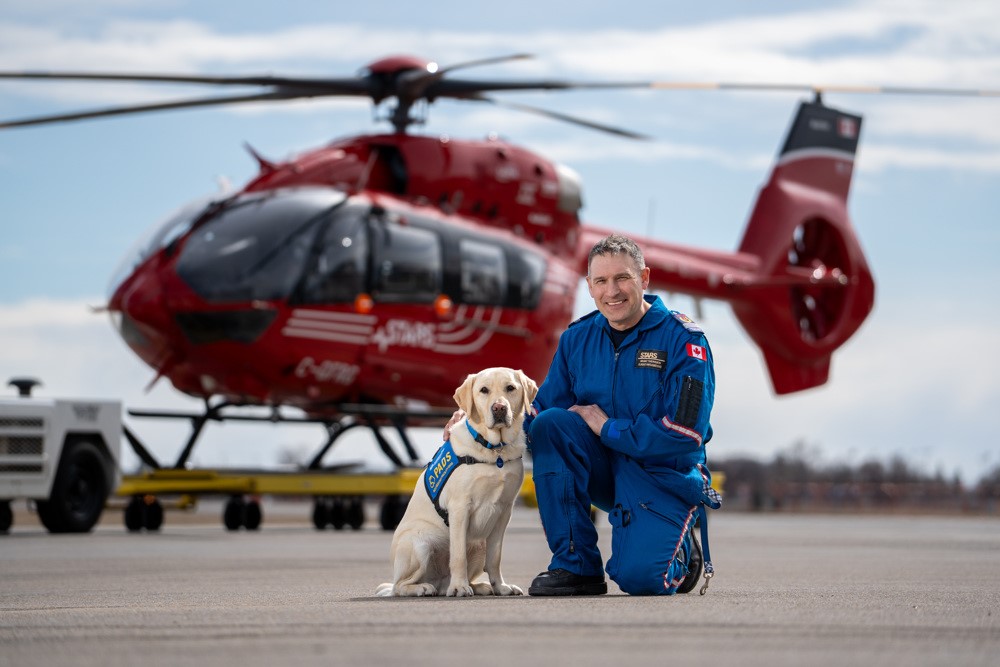
That’s what makes Grant Therrien exceptional. He is Director of Provincial Operations with Manitoba's Shock Trauma Air Rescue Service (STARS), and a 30-year EMS veteran.
“I’m one of those people who genuinely wants to help others when they're in crisis,” he said. “I just had a drive to want to be that person who, when people are sick, injured or struggling, would be there to help.”
An Early Start in Helping People
Therrien jumped into helping people as soon as he could. “As an 18-year-old, I was a volunteer firefighter in my small community outside of Calgary, and going to medical calls seemed to be something that interested me most,” he said. “I decided to enroll in prehospital courses and haven't looked back. It's just been a career of looking after people and providing care as they need.”
Therrien took his initial emergency medical responder training at Calgary’s Southern Alberta Institute of Technology (SAIT) in 1993. He returned to SAIT for his EMT-ambulance training in 1994 and his advanced care paramedicine training in 1998.
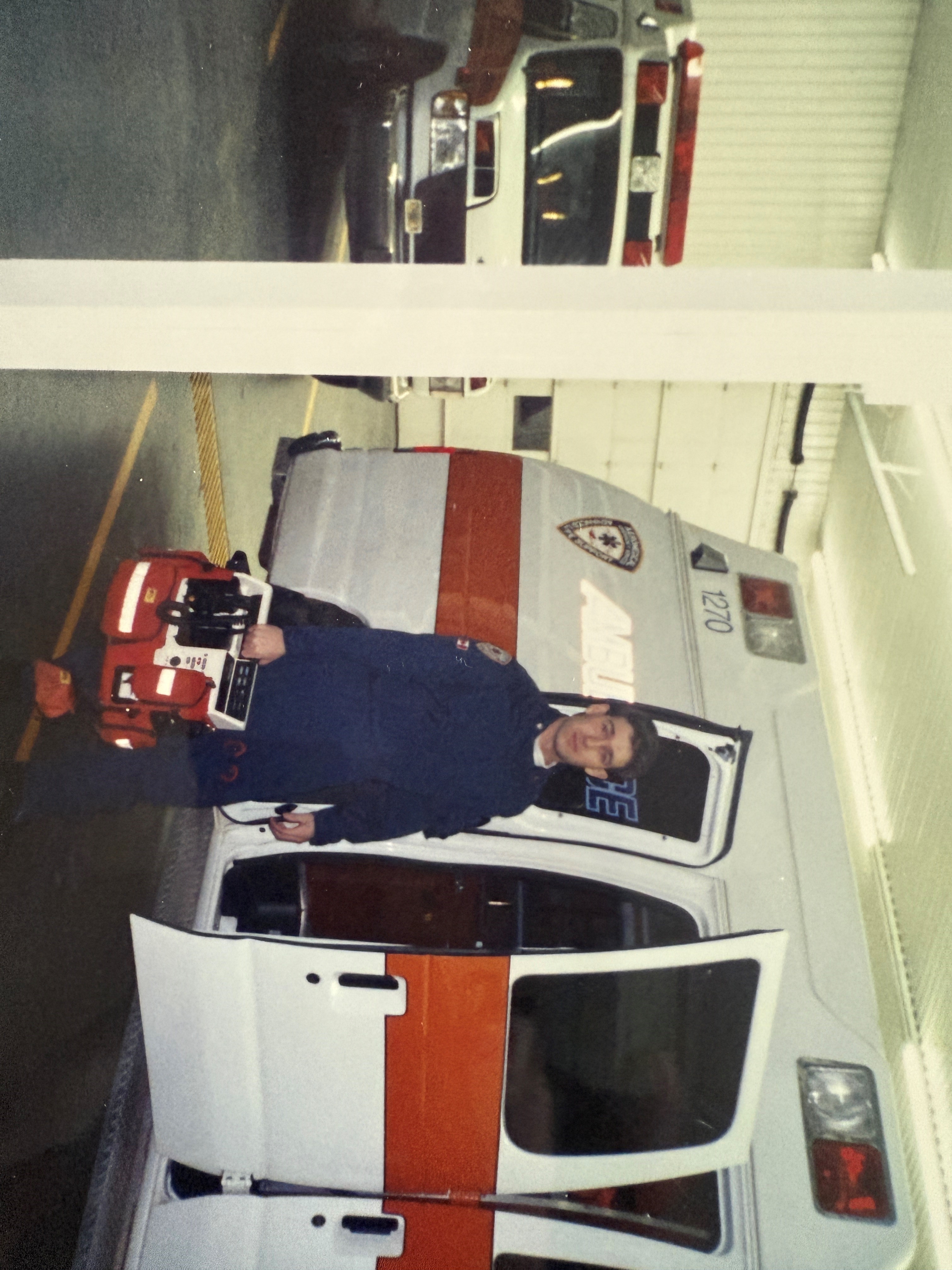
Meanwhile, Therrien got his first full-time paramedic job at Aeromedical Emergency Services in High Level, Alberta in 1995. The role involved both ground-based response and fixed-wing air medical transport.
“I was so eager to get onto the road and start my career that I worked for four years as a primary care paramedic alongside my partners who were advanced care paramedics,” he said. “Working with them showed me where I wanted to take my training next.”
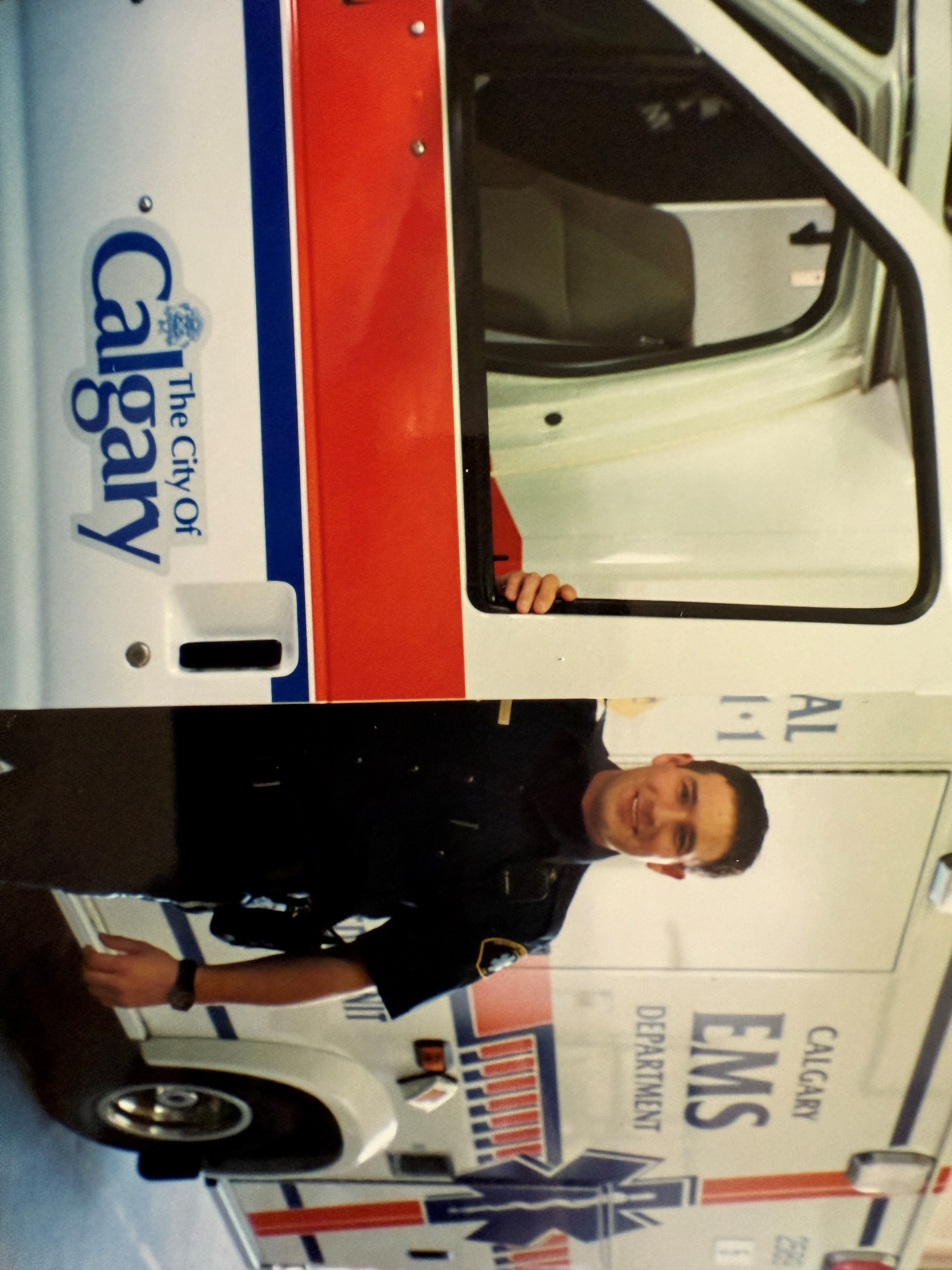
In 1997, he became a paramedic with the city of Medicine Hat, Alberta performing similar duties, and later spent a decade (1999–2009) with Calgary, rising to superintendent of EMS Operations.
“Getting my advanced care paramedic training really opened doors for me. I always wanted to work for the city of Calgary EMS,” Therrien said. “At the time, they were a really progressive EMS department within North America. They had done a lot of things for EMS. By getting my advanced training, I was able to get hired. The best part was that the city of Calgary had many specialty teams, so I was able to get involved in different aspects of EMS.”
After two years with Alberta Health Services (2009–11), Therrien joined STARS as clinical operations manager (2011–15). He became a critical care flight paramedic (2011-present), and provincial director of operations in 2015.
Moving into STARS (which covers Alberta, Manitoba, and Saskatchewan) was a big step up for Therrrien. It happened after Calgary’s EMS department was incorporated into Alberta Health Services, which is now the EMS provider for the entire province. “I worked there for the first couple of years and then moved to Manitoba to help open the STARS base there. I was given the opportunity to be the clinical manager there, and to also take training at the STARS Academy. It was five months of intensive training that took my skillset to a level I hadn’t thought possible.
What’s Changed, What Hasn’t
Given that Therrien has been in EMS for 30 years, it’s natural to ask him what has changed since his first job. “The profession has evolved to having more advanced care providers in Canada and the different professional levels that people can aspire to do,” he said. “As well, we now have access to high fidelity mannequins that allow us to do human-like simulations for our training, and then there’s how much our in-vehicle equipment and design has advanced. All this has evolved over time.”
At the same time, “principles like problem solving, caring for humanity, and crisis management, have not changed,” he said. “That's what you have to be good at as a paramedic, because you're not always going to roll up to someone’s house and have everything you need in your bag. And besides, sometimes they just need help solving a problem. That’s why I tell young paramedics: not every call is about saving a life. Sometimes, you're going to help somebody through a rough moment. That could just be talking to them or helping them through what they perceive as a crisis.”
Three decades on, Therrien hasn't lost his passion for helping people. “I'd love to be in it for another 10 years,” he said. “I had the privilege of starting pretty early. I still feel healthy and energized, so I’d love to keep doing the meaningful work STARS provides.”