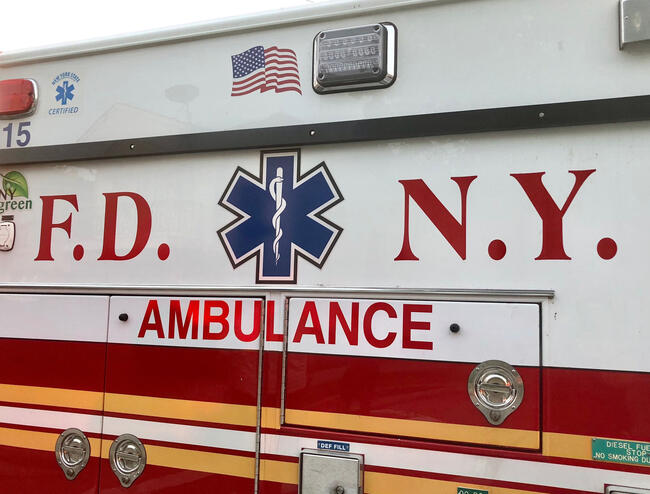
Nearly 200 Detroit Teachers Learn CPR Skills in One Day
Talk about having a heart! On Jan. 27, 2025, the Detroit Fire Department (DFD) teamed up with the Detroit Public Schools Community District (DPSCD) to train nearly 200 teachers in CPR and AED. The four-hour training session was part of Detroit’s ongoing HEARTSafe Community initiative. At present, this city is the largest HEARTSafe Community in the United States, with more than 15% of its residents trained in at least Hands-Only CPR. At a population of 633,218, that's a large segment of bystanders capable of providing first aid during a cardiac event.
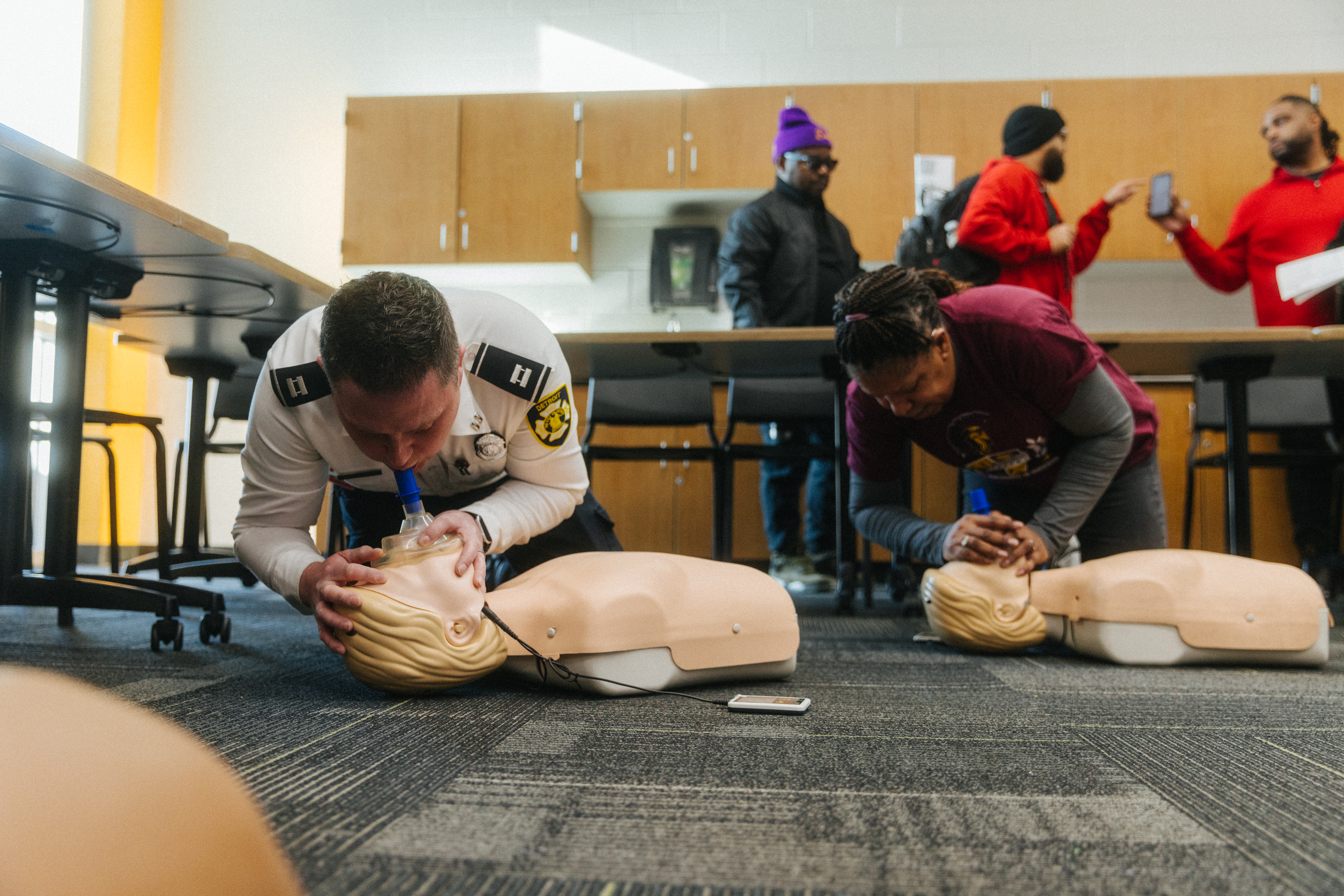
Captain Jeffrey Forbes is a DFD captain of training, and one of the people who played a key part in organizing and running this training event. He told EMS World that the impetus for this training event was a pair of new Michigan laws—House Bills 5527 and 5528—requiring athletics teachers to be trained/certified in CPR and AED techniques.
“We’re trying to get ahead of the laws before they’re completely mandated, to ensure that the DFD has access to CPR/AED-trained people in DPSCD schools,” Forbes said. “My ultimate goal is to make sure that everybody who works on Detroit Public School properties is trained in some form of CPR. Because when we look at CPR and we look at save rates, these are the people that really save lives. They are the true first responders.”
To train this many teachers on CPR and AED, the DFD and DPSCD taught about 50 people at the DPSCD police station, and the rest at East English Village High School.
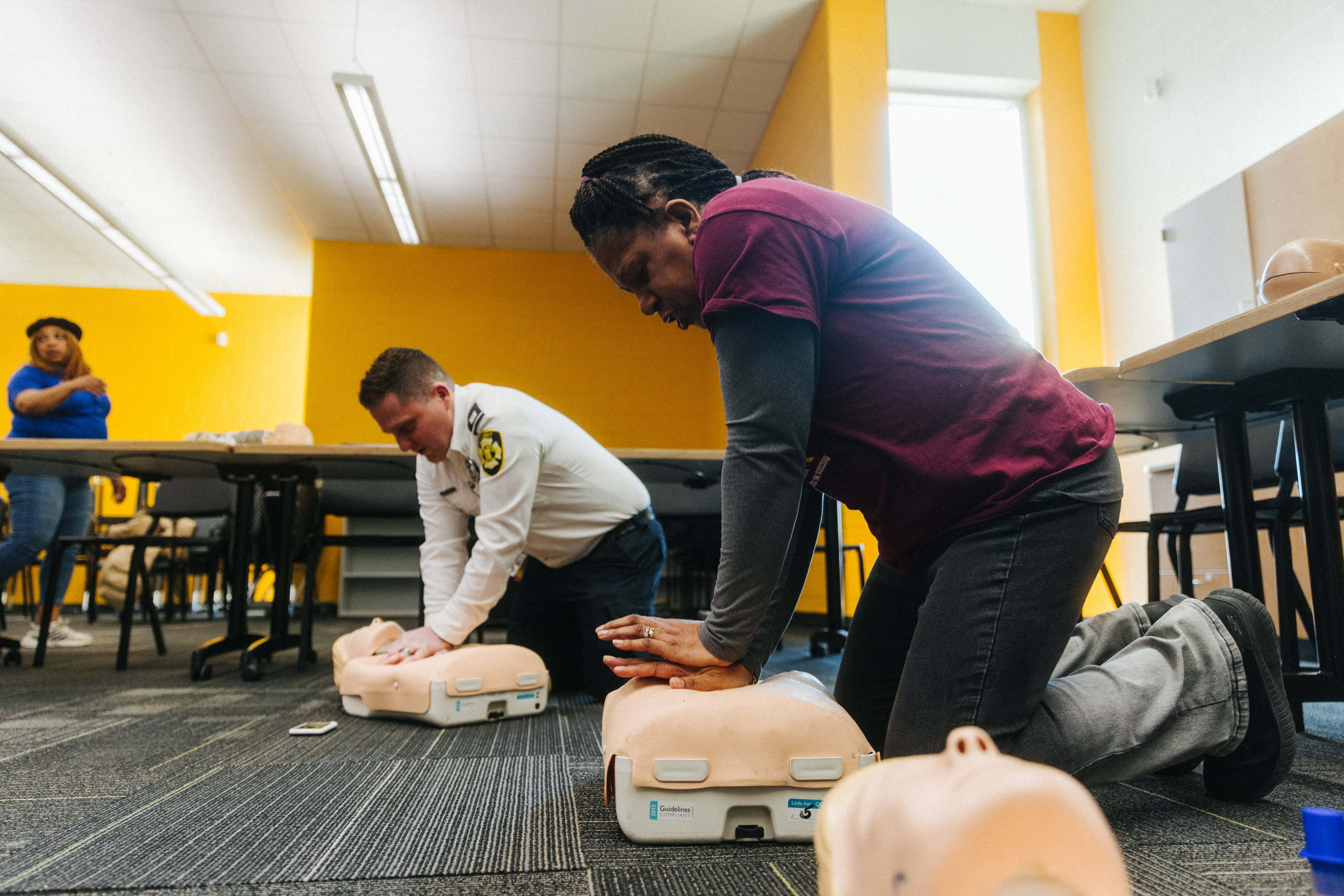
“We separated them all between a total of four classes,” Forbes said. “It was manageable, plus we had a total of 40 smart mannequins. This allowed us to rotate everybody through as we were teaching and got people working with each other, which is very useful. This allowed us to teach people to take over for each other and share the load, because doing CPR is tiring. Some days when I come home from training, my arms feel like Jello.”
As anyone who follows American history knows, Detroit has endured some pretty hard times. Things got so bad that the city declared bankruptcy in 2013 and has been in a recovery mode since.
“When we look back at cardiac arrests with the Detroit Fire Department at the time of the bankruptcy, our response times were atrocious,” Forbes said. “Even today, our response times are just less than seven minutes and 30 seconds. When we look at a cardiac arrest victim going seven minutes and 30 seconds without oxygen and blood pumping throughout the body, what's their chance of survival? It's extremely low. So by us training everybody that works in the DPSCD on CPR and AED techniques, we can save lives—whether it's a student, a teacher, a parent, a family member, or a friend at the school, their best chance of survival is early access to CPR and early defibrillation.”
Mass training exercises like these will improve the public’s response to cardiac arrest within Detroit schools, at a time when local first responders are still struggling with inadequate funding and resources. But Forbes foresees this form of mass training as delivering benefits throughout the entire community, not just in school settings. “Almost 75% of all cardiac arrests happened in the home,” he said. “When we look at that, that's your loved one. That's my loved one. That's their loved ones. So, by taking these courses, these teachers can provide assistance to friends and family, as well as students, parents, and coworkers.”
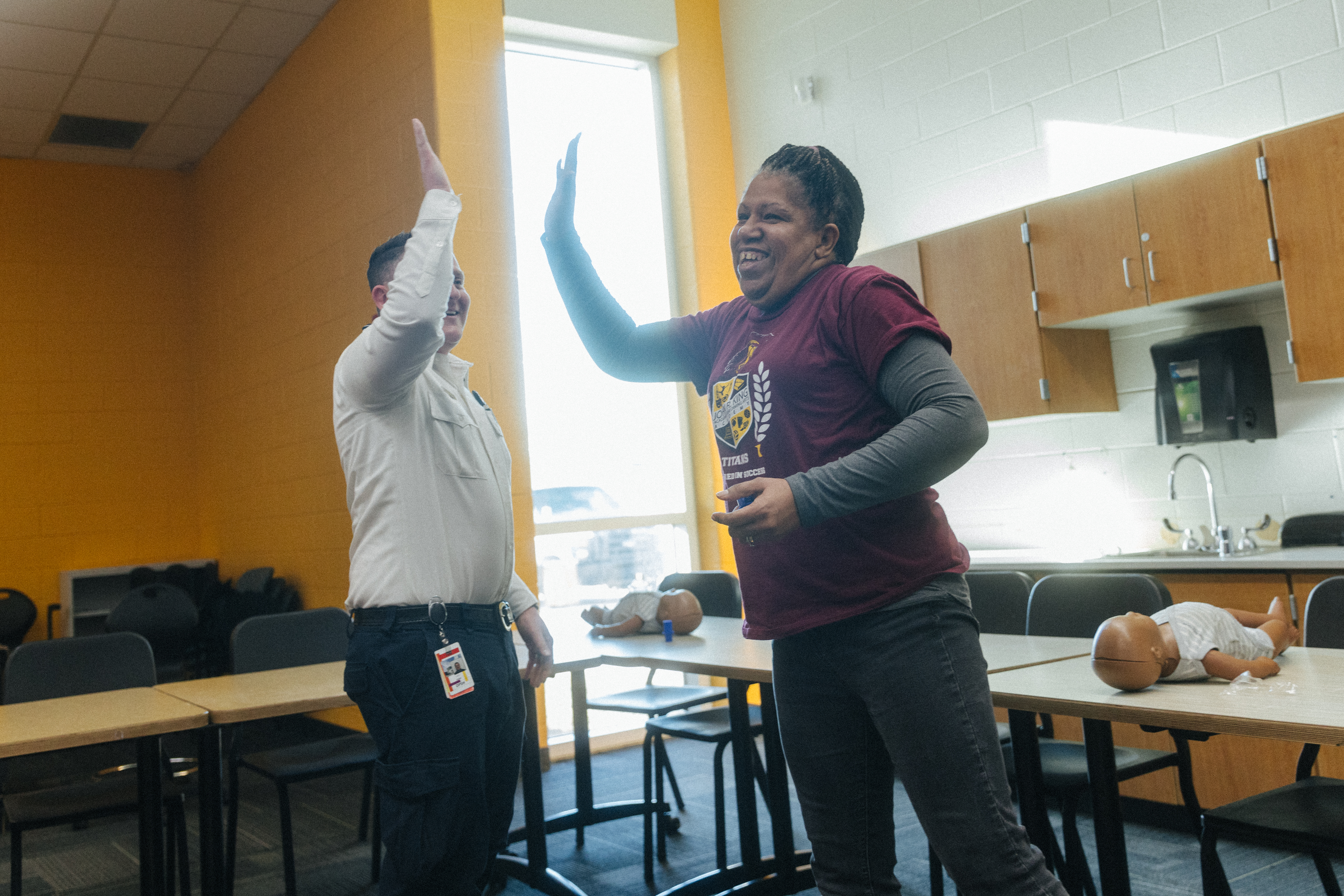
The Detroit Fire Department is planning to hold more such events going forward. “I've actually got a meeting with the Detroit Public Schools Community District this Friday, and it looks like, as of right now, that every Wednesday after school, we're going to continue training, along with selected Saturdays,” said Forbes.
“My advice for other entities wanting to get involved with this is to keep pushing, keep trying to save lives, show the data, show how it makes a difference, and all this will help you get people to care,” Forbes said. “Thanks to Good Samaritan laws, as long as you are trying to do the right thing, you're not going to be sued. At the end of the day, you're trying to save someone's life. When we look at somebody who is in cardiac arrest at that moment, they're clinically dead. Without you doing CPR on that individual, their chance of survival is zero.”