From Celebrities to Major Crashes: Handling High-Profile Events
On the morning of June 14, a neighbor of Sen. Mitch McConnell captured cellphone video of someone believed to be McConnell on a stretcher being placed into an ambulance; two District of Columbia Fire and EMS ambulances, a fire truck, and United States Capitol Police officers were blocking the street.
What ensued from the neighbor's video and eyewitness accounts reported to media outlets, such as ABC News, drove public discussions regarding the senator's hospitalization.
In similar fashion, a neighbor took video and photos of the District of Columbia Fire and EMS response to the late Sen. Lindsey Graham's Washington, D.C. home, which were distributed to news outlets.
The cases illustrate the extra vigilance EMS responders nationwide must adopt in high-profile calls for politicians, entertainers, and athletes as well as shootings and bad accidents that sometimes attract attention and interference from the public and media.
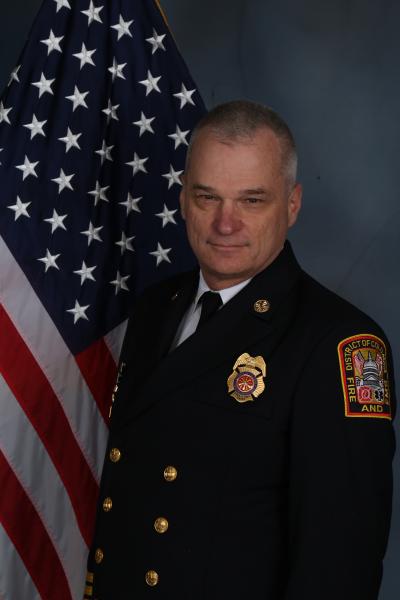
“Who the person is has absolutely no bearing on what we can do, what we should do, and whether or not we do anything different,” said John Donnelly, Washington DC Fire and EMS Department Fire and EMS Chief. “Nobody gets treated differently because of who they are.”
Amanda Farinacci, New York City Fire Department deputy commissioner of public information, concurred. “The FDNY treats patient confidentiality as one of our highest priorities, and our commitment to protecting patient privacy applies equally to every patient,” she said.
Similar challenges are inherent “if there's a shooting on a street or if the matriarch of a certain block is sick,” said Donnelly. “It flies into a different social media chamber than the national one and the more sensationalized one. But I have that same problem on 30 calls a day.”
That may entail calls attracting the media as well as bystanders aiming their phones at the scene to capture video and still images and theorizing on what they’re seeing, regardless of whether it’s factual.
“It’s never a distraction on the scene,” Donnelly noted of paramedics and EMTs responding to a high-profile call. “The problem comes after, when you're protecting patients' rights. You're not going to provide confirmation of who it was. You’re not going to give status updates. That's not our place to do that. That's where the problem comes in afterwards when people think they have facts they don't have.”
In Donnelly’s agency, the public information officer (PIO) serves as a “quarterback” as many of the agency’s responses have to go through a larger approval chain, especially cases getting significant media attention.
The Filming Public is Protected
Crews most often overstep their boundaries when bystanders are recording, noted Dr. Hezedean A. Smith, CFO, CEMSO, CPM, CHSE, NRP, FACPE, National EMS Management Association president.
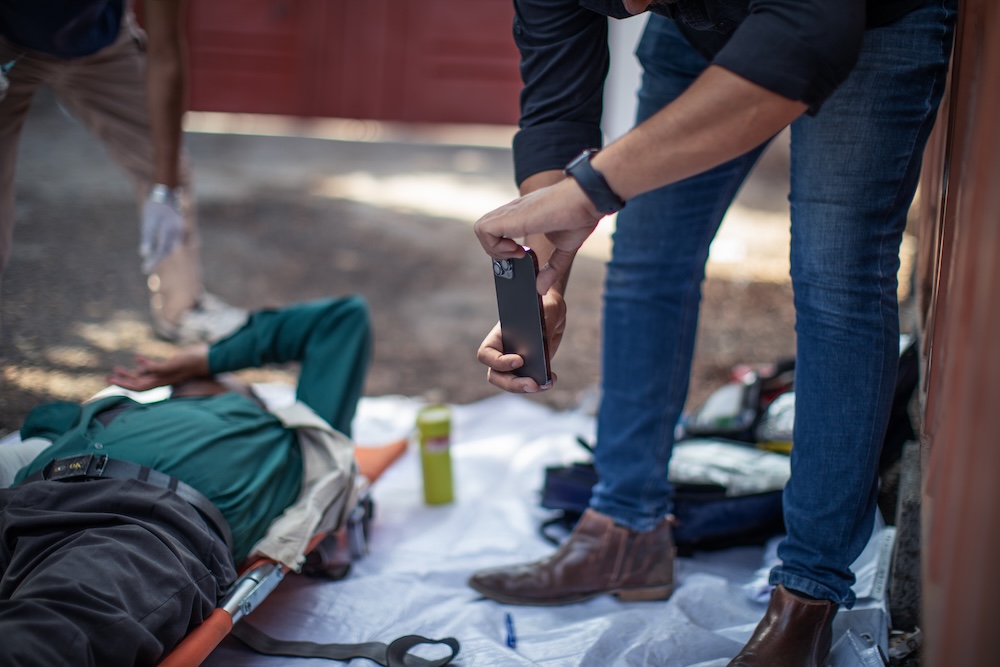
“Federal courts have recognized a First Amendment right to record government officials and public safety personnel performing their duties in public,” said Smith. “Paramedics and EMTs cannot lawfully order bystanders to stop filming, demand deletion of footage, or seize a phone. Attempting to do so creates both legal exposure and the very viral moment the agency wants to avoid.”
Smith noted that EMS agencies are HIPAA-covered entities and the privacy rule's reasonable safeguards and minimum necessary standards still apply in the field.
“HIPAA constrains the agency and its providers, not the public,” he added. “A bystander with a phone is not violating HIPAA, but a crew member who announces a name or diagnosis within earshot, or who lets a camera into the treatment space, can create a real disclosure.”
At no time should a first responder give in to wanting to talk or post on the internet about a case—high profile or not, Donnelly said, adding “when they do, they generally lose their jobs.”
Working With Bystanders
Another type of high-profile case is a school bus accident, such as the August 2023 incident in which a school bus collision claimed the life of 11-year-old Aiden Clark and left 23 others injured.
Chief Tim Holman of German Township Fire & EMS in Clark County, OH, said that among the difficulties faced by the first responders were bystanders attempting to overturn the bus. When the crew tried to stop them, they got violent, so crew members backed off and focused on the students who were hurt.
Law enforcement worked to secure the scene, “but trying to keep parents out of there was really hard,” Holman noted. “Try to stop a mother from taking her child home. That’s just going to escalate things.”
Incident Command and Best Practices
EMS personnel should treat a high-visibility incident as a planned or unplanned ICS event and stand up a command structure early, even for what is clinically a routine call, Smith said.
“The National Incident Management System and its Incident Command System give crews such tools as establishing a single incident commander—of unified command when law enforcement and event security share authority—maintaining span of control of three to seven reports per supervisor using a staging area and designating scene control zones,” he explained.
Smith suggested:
- Agencies designate one person to manage the patient care bubble and another to manage the perimeter, so the treating crew isn’t also negotiating with the crowd
- Physical separation using apparatus, stretchers, backboards, privacy screens, or the ambulance body itself as a visual barrier
- Shortened scene time so the patient is inside the unit and moving quickly.
“The goal is not to win an argument with the crowd,” Smith noted. “It’s to remove the patient from the crowd's line of sight as fast as clinically appropriate.”
Smith advises agencies to use unified command so EMS, law enforcement, and any protective or private security detail operate from one set of objectives.
NIMS command staff roles are the coordination backbone: a liaison officer to interface with outside agencies and the security detail, a single PIO, and, for larger events, a joint information system or joint information center so that one vetted voice speaks to the media and crews are freed from managing press, Smith noted.
“Federal principals may have Secret Service or other government protection,” Smith said. “Entertainers and executives typically have private security whose priorities—access control, discretion—can conflict with rapid medical access. Establish before or early in the call who the single security point of contact is, confirm that the security cordon will not delay or block clinical access or egress, and address the question of weapons and detail members in the patient compartment.”
Reinforce that medical authority over patient care remains with the crew even inside a protective envelope, and that continuity and handoff at the hospital must be preserved despite the security overlay, said Smith, adding for predictable events, all of this should be resolved in a pre-incident plan and a briefing, not improvised at the tailboard.
If law enforcement gets to a scene before EMS, they may update paramedics and EMTs with actions they’ve taken such as applying tourniquets, identifying the number of patients and their conditions, Donnelly said.
“We communicate through our communications and our fire operations center to make sure that the information about what's going on at the scene is being shared before we get there,” Donnelly said. “You can’t have a written protocol for everything. We have our core values, and what they are is how we get to make a right decision when we don't have clear specific direction and that’s compassion for the person that's coming to the scene.”
At a school bus crash, for example, that entails communicating with parents about what's going on, where their child's going, and what needs to happen, he said. “Many times, people on the scene are hysterical. This happens also at scenes of violence. They don't have the right information. They may be hysterical, and their person isn’t involved. They may be hysterical, and their person is deceased. We have the whole range.”
Donnelly credits the DC Metropolitan Police Department for helping to secure a scene so EMS can do its job.
“They’re good at talking to people and helping them get to the right information,” he said. “We have a protocol about death notifications. MPD does that, but we don't confirm until MPD talks to the family. They don't confirm until they have a positive ID, which may involve the coroner.”
Each situation is unique, Donnelly noted. “With compassion, if you understand the rules, then you're going to be able to do the right thing. Not everybody's ever going to be satisfied. And anger is a part of the grief process. You’ve just got to understand that's not really directed at you.”
For those new to the profession, Donnelly noted “As part of our curriculum, it'd be nice if they actually spent some time with the hospital chaplains that deal with bad news.”
That communication requires clarity, he said.
“If you don't say that the person has passed away or is dead, people are going to infer all the other reasons that they're still alive,” Donnelly said. “In terms of the scrutiny of calls afterwards, we tell our people you work in the city with the most media in the world. Every call is going to be scrutinized. Don't take it personally. We’re not looking to place blame or question what anybody did. Just give me what happened so we can be aware of it. The way management approaches it cues the way the people below approach it.”
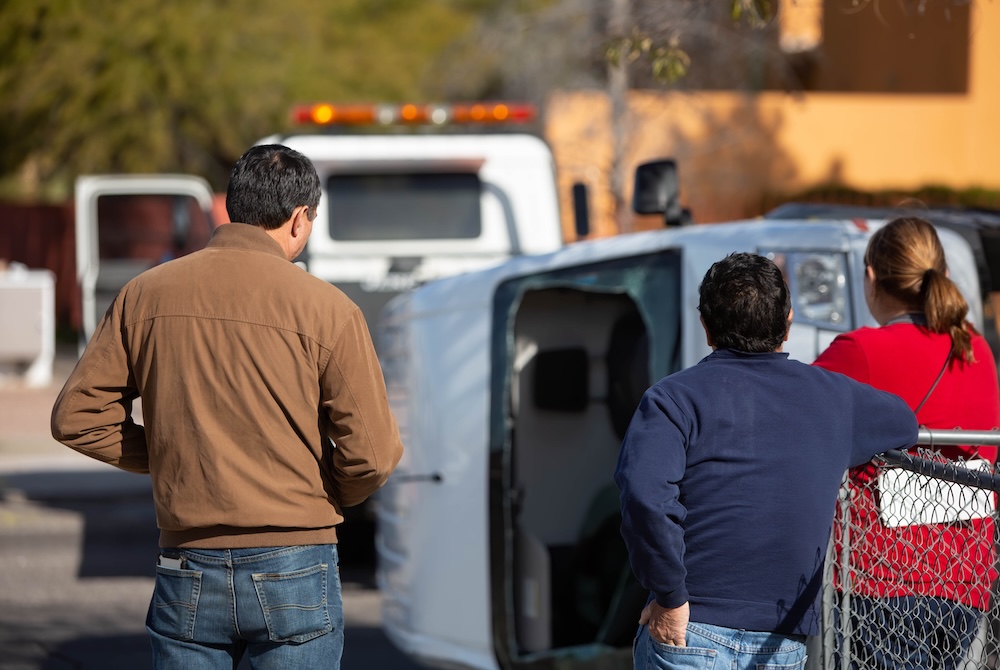
As fire-rescue personnel conduct personal business in the community, they may get inquiries about incidents. Donnelly said he may get them while grocery shopping, from council members or others who inquire about seeing ambulances somewhere.
“If you're not giving away personally identifying information or things protected by HIPAA, you can give a generic answer if you know it,” he said. “It’s disingenuous to say, ‘Oh, I don't know anything about that’ and walk away. That's not building trust and respect in your community, especially when we're probably blasting it out on social media ourselves as an official policy.”
Donnelly noted people also source information from apps such as PulsePoint.
“We live at a place where information is available,” he noted. “Be friendly, talk to people, share what you can, but you don't have to.”
Many calls that subsequently became big media calls are not big media calls when first responders are on the scene, Donnelly noted.
Even so, “there’s less press out today than there's been at any point in time in my career,” he added, presumably due to layoffs or some media outlets folding.
“But every citizen has a camera,” he pointed out. “Our people are aware of that because those cameras don't always help them.”
Addressing protocols or adjustments when treating high-profile individuals, Smith advised to establish pre-event medical planning for known gatherings such as rallies, concerts, and sporting events using mass-gathering principles and a written ICS plan.
Planning should encompass:
- A pre-identified, appropriate receiving facility and early hospital notification with the caution that the destination decision must still be driven by clinical need and protocol, not by the patient's or a handler's preference for a particular hospital
- A defined egress route
- A single point of contact for any detail
- Heightened attention to documentation discipline: the same thorough report every patient gets, with no separate or ‘VIP’ record and awareness that the record may later face subpoena or media scrutiny, which is an argument for rigor, not for omission
“The adjustments we must be mindful of are the clinical ones: bypassing triage, letting an entourage dictate care, treating in a non-standard location to avoid attention, or accepting a patient's refusal of indicated care because staff is reluctant to insist,” Smith said.
Further Reading