Daughter’s Bystander CPR Saves Mother on Thanksgiving Day
This Thanksgiving, a Saratoga Springs, Utah family will gather with an amplified sense of gratitude.
It was early Thanksgiving morning 2024 when Maggie Soward experienced a cardiac issue, leading to her being clinically dead with no pulse or breathing for 26 minutes, while also experiencing what is known as a near-death experience.
Her collapse to resuscitation was recorded by the security camera mounted in the family’s kitchen and was posted on the website butdidyoudie.life under the first responders tab.
Scott Soward, a FamilySearch group engineer, returned early Thanksgiving morning from Israel Canyon, Utah, where he and his son Isaac were practicing with Isaac’s new .22 rifle. He began preparations for an upcoming weekend campout at Goblin Valley State Park with sons Isaac, Noah, Declan, and Ian. He called out to his wife Maggie Soward, asking her how many potatoes he should take for a recipe.
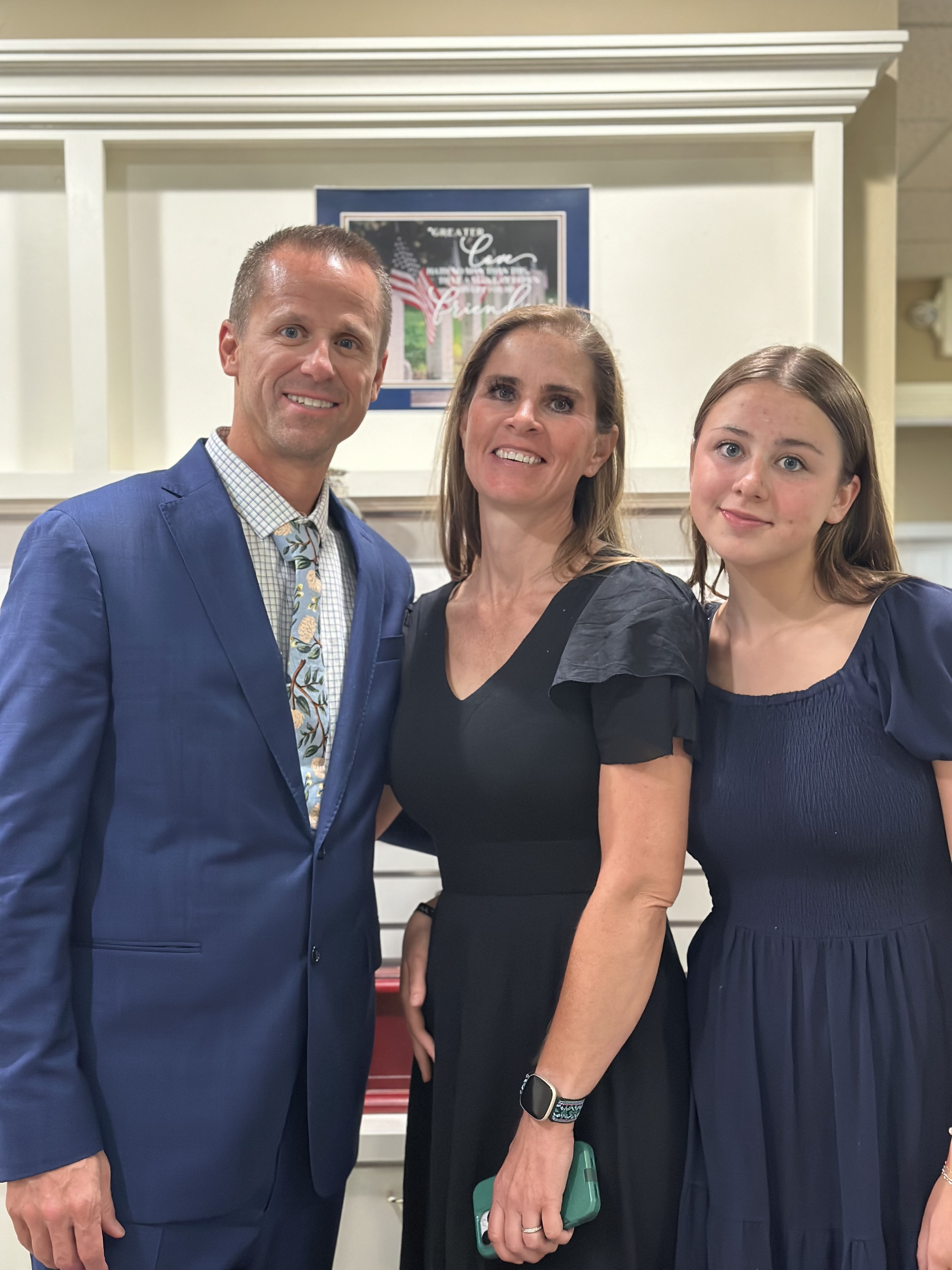
She rose from bed, walking into the pantry. Meanwhile, her Fitbit watch was indicating an elevated heart rate. She knelt in the pantry, selecting three large potatoes. At 12:30 p.m., as she handed Scott the third potato, she told him she felt as if she was going to pass out, then collapsed onto his left shoe.
Scott repeatedly instructed her to breathe as her fingers and toes began twisting in a seizure. As he rolled her over, he noted her eyes were shut and her face was gray.
“Dread and panic shot through me as I desperately tried to wake her up and began to shout her name,” Scott recounted.
At 12:21 p.m., realizing his wife was not breathing, Scott attempted CPR and administered mouth-to-mouth resuscitation, which he later learned was unnecessary. Isaac asked his father multiple times if he should call 9-1-1. Not realizing the situation’s severity, Scott had said no. Eventually, Isaac called 9-1-1 anyway.
Scott instructed Isaac to summon his daughter Eliza, 17, who six days earlier had been recertified in CPR for the third time. Her brother Noah ran upstairs, screaming “Mom needs help,” while she rushed out of the shower, wrapped in a towel.
At 12:22 p.m., Eliza entered the pantry, tapped her father’s shoulder, saying “move, move, move."
“She calmly went to work checking for a pulse—there was none—and began chest compressions for nearly five minutes,” Scott said.
The 9-1-1 dispatcher helped guide the resuscitation efforts over the phone until first responders arrived.
“Maggie moaned—a sound that was horrifying,” Scott noted. “We watched Maggie for any sign of life and Eliza continued. The dispatcher instructed us to unlock the door and secure pets.”
By 12:25 p.m. within five to six minutes of the 9-1-1 call, nine Saratoga Springs first responders—including EMTs, firefighters, and police—arrived. Isaac guided them to Maggie and they took over lifesaving efforts from 12:26 p.m. to 12:50 p.m. while Eliza got dressed. Responders slid Maggie from the pantry to the kitchen, moved the dining room table, each taking turns administering CPR, and delivered three electrode defibrillator shocks. An officer escorted Scott and Eliza to the front room to deliver periodic updates.
“Maggie occasionally would moan—a long deep moan that scared us even more. After 26 minutes of persistent and amazing coordination, training, and lifesaving efforts, they detected a weak pulse, loaded her onto a gurney, gave her an IV through the femoral artery, and rushed her to the ER,” Scott said.
At CommonSpirit Holy Cross Hospital-Mountain Point, Maggie was put on a ventilator, and her pulse was monitored before she was moved to the ICU for cardiology care. “At that point, our biggest fear was brain damage from lack of blood to the brain during Maggie's time in the pantry,” Scott recalled.
On Friday, Maggie was fed through a tube, while hospital staff weaned her off drugs to reduce sedation, after which she communicated to excited family members with raised eyebrows, squeezing their hands and wiggling her toes. She managed to remove her breathing tube, resulting in a damaged windpipe, causing her to whisper for weeks.
That evening, Maggie told her sister Ingrid she spoke with her deceased mother Becky and also saw her deceased brother Lars in the room with her and was told to “go back.”
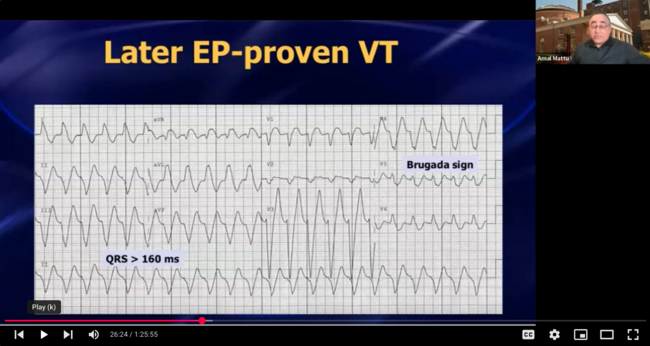
On Saturday, Maggie’s short-term memory began returning. Doctors noted she had ventricular tachycardia, causing arrhythmia.
On Sunday, though still loopy, Maggie’s short-term memory improved. The cardiologist confirmed the apex of her heart wasn't working, causing atrial fibrillation. She was transferred to St. Mark's Hospital ICU.
On Monday, Maggie had most of her memory back. She was extremely sore; her ribs were cracked. Her arm was damaged during CPR.
On Tuesday, another echocardiogram showed the akinetic region was now small. Maggie underwent successful implantable cardioverter defibrillator surgery on Wednesday and was discharged on Thursday with her arm in a sling.
Maggie said she has no recollection of her daughter or first responders working on her after she fell, adding she had a vague memory of seeing a paramedic in the ambulance. She noted tests ruled out pre-existing conditions or genetics.
Scott said the cardiologist indicated that “under similar circumstances, someone having a tachycardia at home and the EMTs coming five to 15 minutes later, 95% of the time the individual dies or has significant brain damage from lack of blood to the brain.”
After the incident, Maggie—a member of the Church of Jesus Christ of Latter-day Saints—addressed members of the Utah Draper Temple, to which her family belongs.
“I feel a great sense of peace and trust in God. I have struggled in the past with my faith,” she said, adding she regards the incident as a miracle. She also no longer fears death.
Scott said he initially tried to watch the video following the incident, but became overwhelmed by remembering the dread and panic he felt as he gradually realized how dire Maggie’s situation, and turned it off.
“I can hear Maggie collapse, then me telling her to wake up,” he said. “I remember the transition in my mind of ‘Maggie, get up, we’ve got stuff to do’ to ‘honey, please don’t die.’ Even thinking of it now makes me pause with a surge of emotion. Eventually I did watch it entirely, with tears and gratitude. It is heartbreaking and miraculous.”
“It took me a little while to be brave enough to watch it,” Maggie said. “I cried through the whole thing. I felt very proud of each of my family members, and was filled with gratitude that I was allowed to stay. Being able to see the whole incident really hit home how dire my situation was. I don’t know if you can fully understand the miracle until you see the video.”
Eliza said she viewed what she remembered but found it “unreal and put into a third perspective I could watch,” adding the first responders were “quick and worked very well together as a team.”
“Anytime we have that type of video to where we can see the event that occurred, it’s definitely something for us to add to our after-action review so we can see any improvement in where we started certain medical procedures, where equipment was staged, and how the crew moved around the patient,” said Kenny Johnson, Saratoga Springs Fire & Rescue deputy fire chief.
Johnson said the video reinforced the importance of assigned roles on a full code, leading to efficient delivery of care.
Scott said Saratoga Springs Mayor Jim Miller and the Saratoga Springs Fire Department honored Eliza, with one honor being a Life Saving Award plaque, reading "In recognition for your outstanding contribution in demonstrating exceptional bravery and skill in saving the life of a family member within our community."
“It was really [more] them than me that did the work, but I really appreciated the recognition,” Eliza said.
The family’s website includes heart health resources linking to the American Heart Association, CPR training resources, and Red Cross CPR classes.
“My fumbling CPR increased my panic in the moment because I knew my CPR was not right and I felt more and more helplessness and panic,” Scott said, adding it’s important for people to learn CPR and stay current with certification as it could be the difference between life and death for someone.
“Spending time and money on learning it is not something you would ever regret. It's not learning it that will cause regret,” Maggie said. “I am here today with my brain fully functioning because I was given immediate CPR by Eliza.”
Eliza—who aspires to become an emergency room physician—had learned CPR during her senior year in high school as part of the medical assistant curriculum at Mountainland Technical College. She noted CPR is an important skill to learn “and when you learn it, you never think that you will need to use it. Even with my mom—she is so young. I never would have thought I would need to use it on her. Having to use the skill was not as scary as it would seem. If you know how to do it correctly, you’ll know how to use it confidently.”
“One of the things that the crew attributes to the successful outcome here is the early bystander CPR that was conducted by Maggie's daughter,” said Johnson. “We’re super supportive of them sharing that experience and encouraging others to learn CPR and intervene when appropriate.”
Scott, calling first responders “angels in uniform,” noted “their arrival within five to six minutes was miraculous timing. On Thanksgiving Day when many would be with family, these dedicated first responders were positioned and ready to answer the call.
“We are grateful for the emergency workers, EMTs, firefighters, and police for their training and decision to have an occupation that literally saves and changes lives,” he said. “We're so grateful to the hospital staff, nurses, doctors, [and] cardiologists that have elected to work and serve their fellow human beings and save lives.”
“I will love and care for the first responders for the rest of my life. I think about them every single day,” Maggie said. “The things they have to witness and the heartache they have to deal with on a regular basis and still choosing to serve others in this way is so heroic. I feel almost a kinship with them now and want to hug all first responders and thank them for their service.”
Speaking to how it felt to help save the life of the woman who gave her life, Eliza said, “it’s such a different experience and sometimes doesn't feel real. I have a special bond with her now. The experience has put into perspective for me how delicate life is. Having it be my Mom shows me that life can change in seconds and it does not matter who it is—death can happen to anybody."