From First Responder to Inventor: How an Embarrassing Moment Led to Innovation
Sponsored By

The products mentioned in the article can be purchased at https://xshear.com/
What do you do when you are a volunteer firefighter and there’s no product on the market to meet a need you have? If you’re Nathan Larew, the answer is simple: you design and make it yourself! Larew is the creator of the MicClip and the MicroHolster, now manufactured by Xshear. His story is one of a rookie firefighter’s embarrassing moment that led to innovation.
Education and Early Businesses
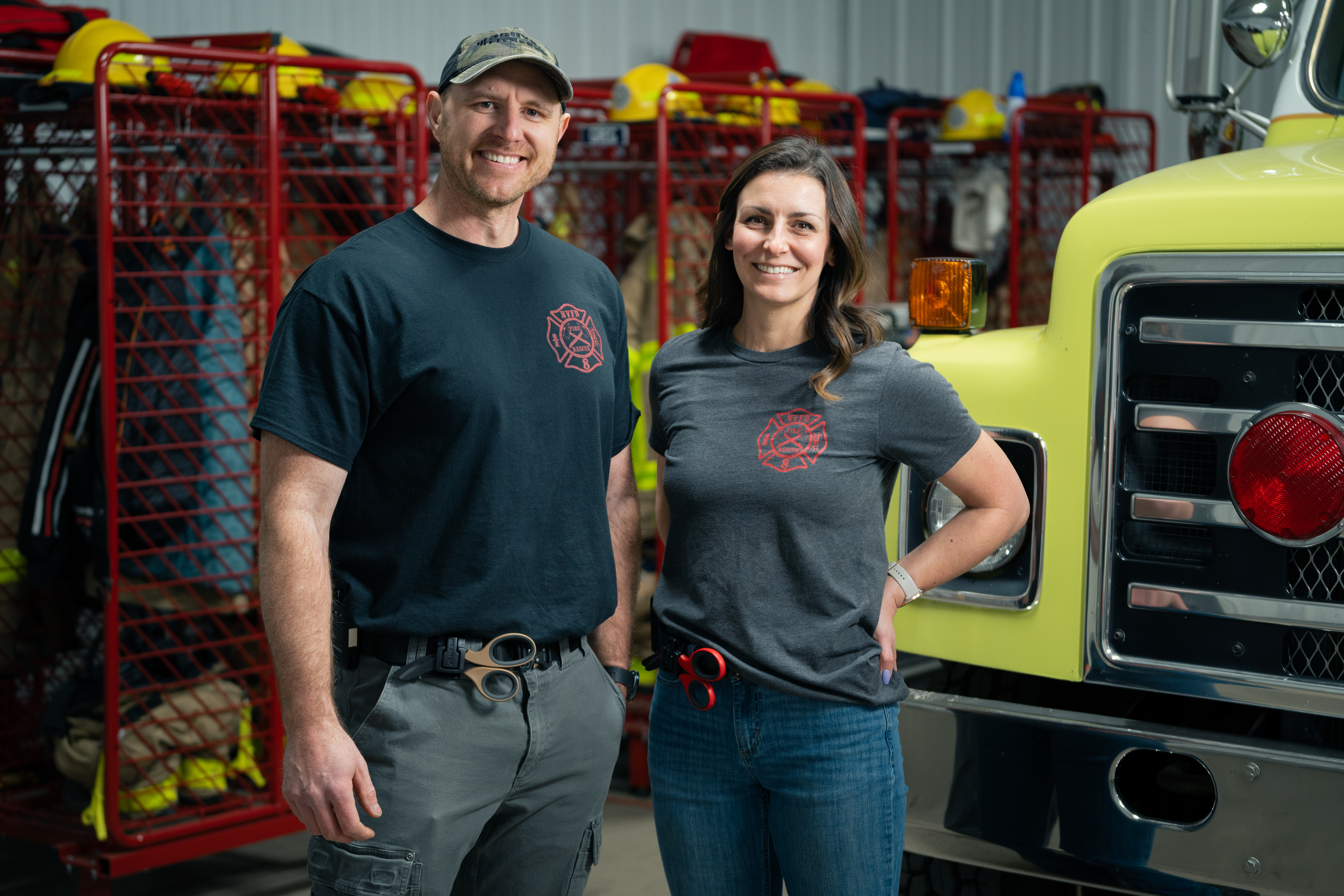
Larew attended West Virginia University and simultaneously earned two degrees: a Bachelor of Science in Computer Engineering and a Bachelor of Science in Electrical Engineering. After graduating, he worked in various industries, including underground in coal mines, as an electrical engineer, field operations supervisor for Shaft Drillers International, and as a project engineer for R&E Electric. He also built and opened a 24-hour fitness gym, which he now operates.
Becoming a Firefighter and Medical First Responder
While driving one day, Larew passed a car fire and stopped to offer help. The fire extinguisher he had was useless, so he drove down the road to the local volunteer fire station to see if he could find more help. A single fireman arrived and said he should jump on the engine to assist.
While Larew admits he knew nothing, he helped pull hoses as the firefighters put out the car fire. By the time it was extinguished, the car was an empty husk of metal, but Larew was hooked. After the fire, Larew reflected that he had no training and wasn’t prepared to help anyone. Worse, what if the person who needed help was his family? The next day, he joined the Newburg Volunteer Fire Department and got trained as a firefighter and emergency first responder.
Forged in a Cold Stream
As a probationary firefighter, Larew lived near the fire station, separated only by a 10-foot-wide, three-foot-deep creek. To get to alarms, rather than driving, on most days, he’d hop across the creek.
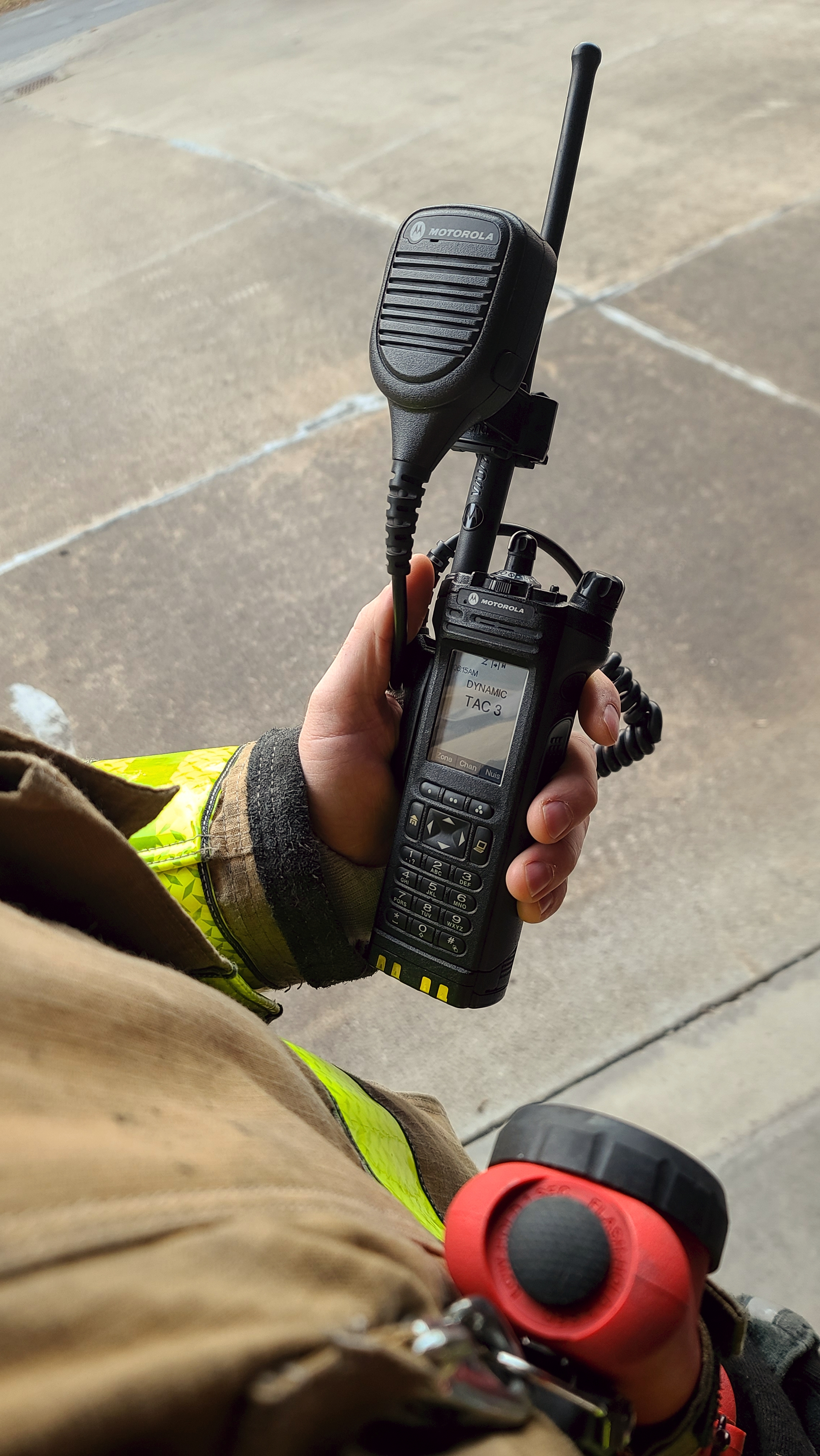 On a cold December night, after just receiving his new radio from the chief, his pager woke him with a structure fire dispatch.
“I got dressed and grabbed my radio that was charging on the stand, with the mic clipped on the antenna,” Larew said. “I kissed my wife and bolted out the door. As I approached the creek bank, I saw that there was only one rock in the middle of the creek that allowed me to get across. As I leapt for the rock, the microphone clipped to my antenna popped loose and wrapped completely around my legs, foiling my trajectory, and I plunged into the icy creek, holding the radio above the water. I ran to the station and stripped down to my boxers before suiting up.”
In addition to the good laugh his crew had at his expense, Larew realized that the speaker microphone hanging loose was an issue and thought how a simple device that could ensure the radio and mic could be stored as a unit could have avoided his impromptu creek plunge. Over the next few weeks, Larew designed a working prototype on a 3D printer and, with his chief’s permission, began testing it on the company radios.
It worked, and the “Mic Clip” was born!
The Next Idea: The Shear Holster
About two years later, Larew’s wife Melonie and brother Devon joined him as volunteer firefighters. One day, while working a cardiac arrest, they had trouble finding their shears in the jump bag. They realized that they not only needed better shears, they needed a better way to gain quick access to them in an emergency.
Larew’s research led him to the XShear as a premium cutting tool, and his department purchased several for their medical bags. Larew then prototyped a holster to better suit his and the department’s needs, where it could easily fit on a belt or a radio strap.
“My goal was minimalism without the loss of versatility,” Larew said. “I produced a functional prototype on the 3D printer again and gave it to Melonie and Devon to test. As the weeks progressed, more times than not, we carried our shears or had them quickly accessible when we needed them.”
Pitching to XShear
After using the prototypes, Larew reached out to Wesley “Wes” Brubaker the owner of XShear to see if he was interested in his invention.
After working out the legal paperwork, Larew worked with XShear’s product design team to produce more prototypes of the holster on a high-quality resin printer. After creating more than 30 prototypes for testing, the final product was brought to market. He then pitched the MicClip to his new team.
“This marked the start of another product development journey as we set out to bring a new solution to market and meet an important need” he said. “The time and revisions that went into the MicClip far surpassed the previous product because we were trying to address variables presented across all portable radios. I wanted the MicClip to be highly adaptable as radios have varying antenna diameters and different mic clip depths and widths. We had over 60 revisions before we headed to manufacturing.”
Both products are now sold by XShear.
Advice to Other Would-Be Responder Inventors
When asked what advice he would give to first responders who have an idea, Larew spoke from experience.
“Make sure your product is unique and fills a noticeable need; be open-minded to input; and, above all else, be ready to work, potentially for years. The idea is just the beginning. Your next phase is working through the pitfalls and adapting your product or idea into something that’s presentable and/or producible.”
Larew said that once your idea has been validated and you have a working prototype, you have to do your research about the next steps. Do you have the finances to do it yourself, or should you contact a company?
“Do your research,” Larew advised. “These entities or companies may be interested in onboarding your idea. You will next need to create a nondisclosure, noncompete agreement to protect your intellectual property before sharing your ideas or prototypes. Then make it happen!”
Larew has a few more ideas up his sleeve, but for now, he is enjoying the ride as an innovator and salesman.
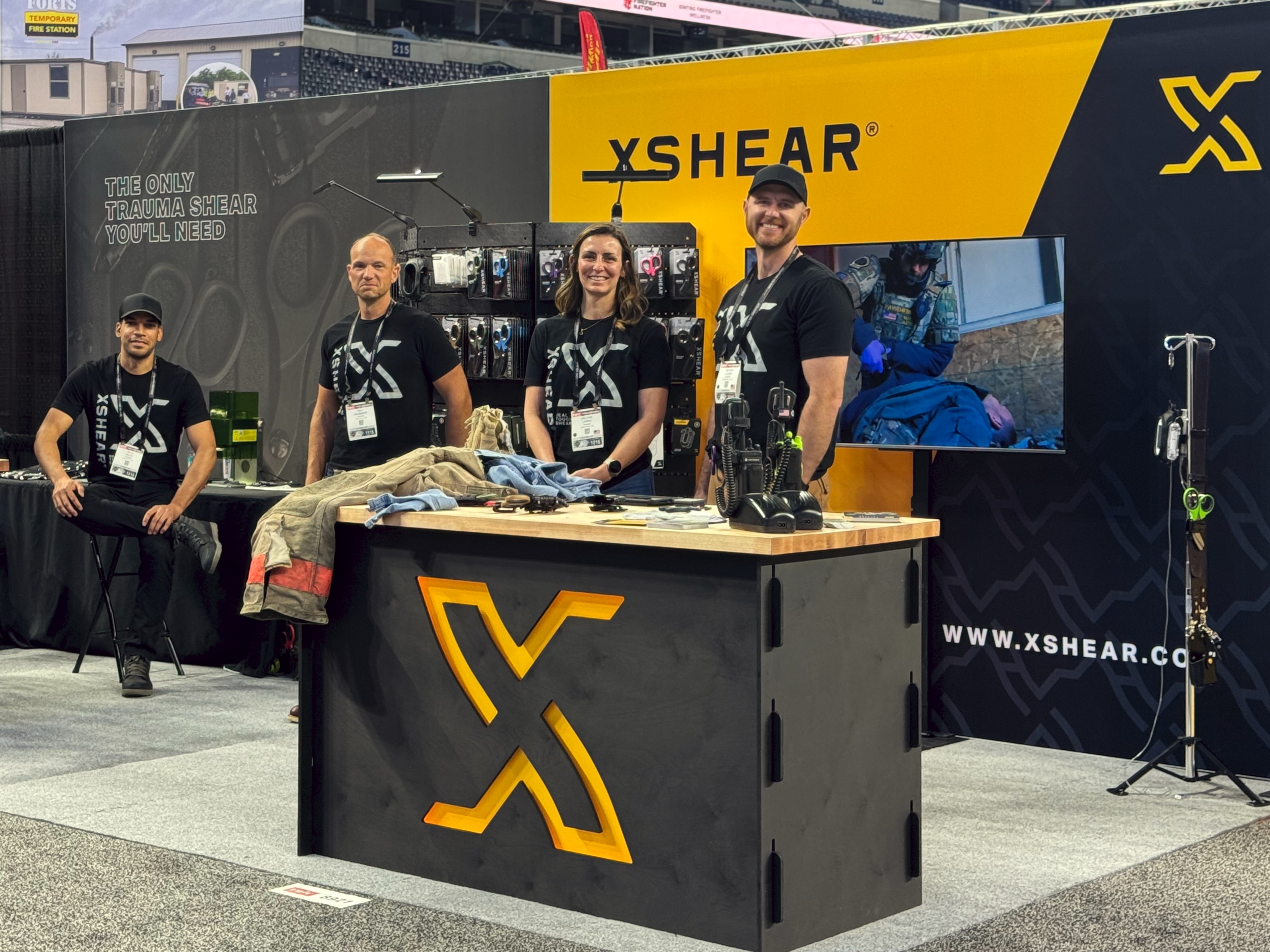
“Interacting with people and experiencing their excitement about our products motivates me to keep solving problems. It’s encouraging to see people coming back to our booth every year! We had a great time at the EMS World Expo in Indianapolis in October!”
About the Author
Barry Bachenheimer, EdD, NREMT/FF is a frequent contributor to EMS World and is an active field provider and consultant in New Jersey.