Florida’s Amendment 3 Could Lead to Major Public Safety Cuts
A constitutional amendment set to appear on Florida’s Nov. 3 ballot, if passed, may impact funding for EMS and other municipal services. According to the Florida League of Cities, if approved, Amendment 3 would:
- Raise the homestead property tax exemption from $50,000 to $150,000 for non-school levies, beginning Jan. 1, 2027
- Raise it again to $250,000 beginning Jan. 1, 2028, with inflation indexing beginning in 2029
- Constitutionally mandate the legislature to create a schedule for full elimination of homestead property taxes, with no deadline specified and no replacement revenue identified
Constitutional amendments in Florida require 60% voter approval to pass.
While the idea of paying less taxes may be appealing to some, the result could be devastating to emergency services, according to officials.
“Let’s say this $250,000 exemption passes and it's implemented,” noted Charles Chapman, Florida League of Cities legislative advocate. “That $250,000 is applied to every qualifying homestead and it reduces the amount of money coming in from property taxes to be used to fund services like public safety.
“If you have fewer people paying on the homestead side, that means the city leaders and elected officials have some tough decisions to make in terms of what they are going to do with the millage rate or the tax rate that is applied to properties to be able to generate that revenue.”
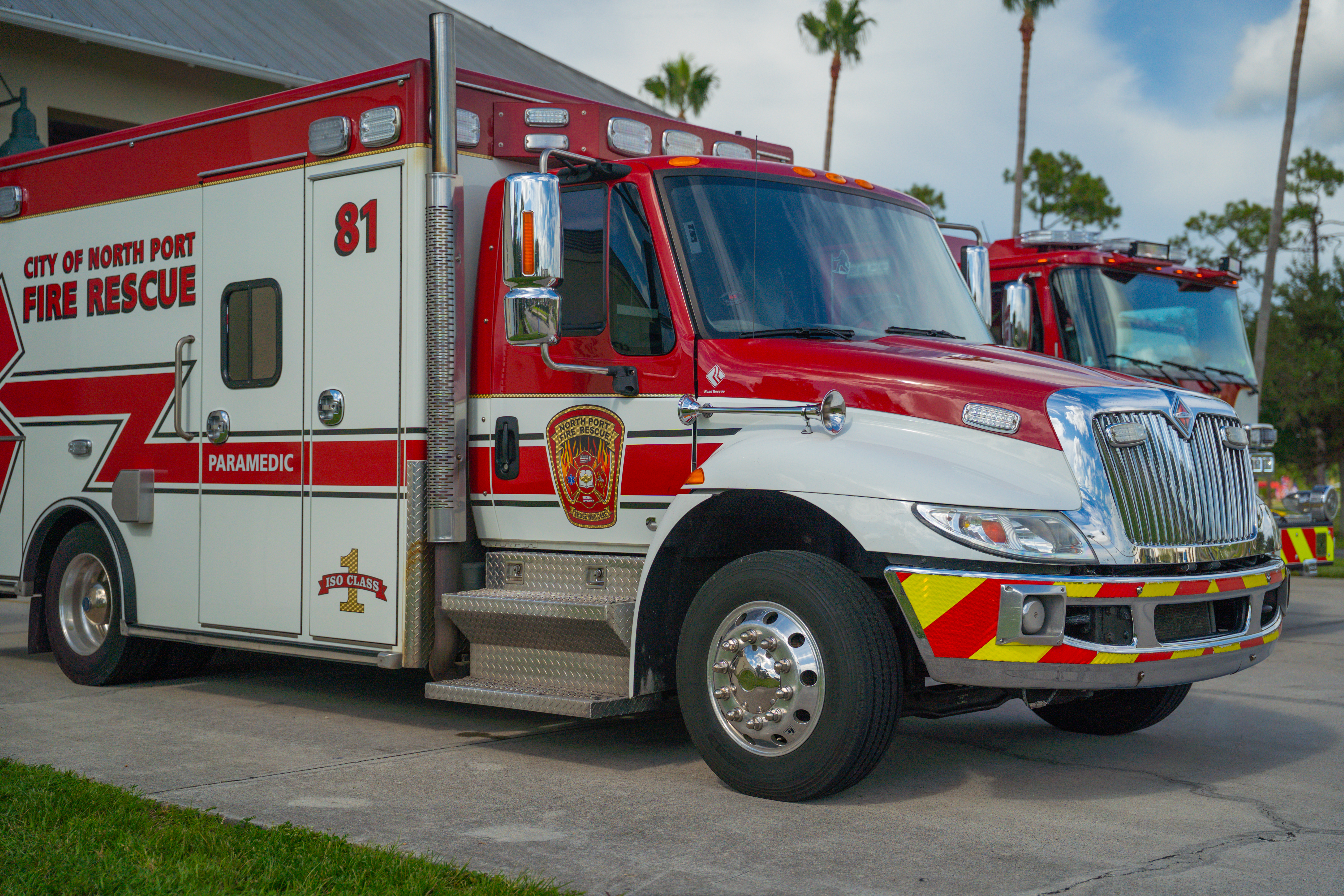
One of those concerned about the outcome is North Port, Florida Fire Chief Scott Titus, who on June 4 addressed the state’s appropriations committee, comprised of bipartisan elected officials convening to vote on whether the proposed bill was going to be passed to the Florida House and Senate for a vote.
Titus said he believed the amendment as proposed had significant potential to cause public safety service funding issues “which would negatively affect our community without other revenue sources, especially in year two.”
Titus represents one of the top fire-rescue districts in the state. The city of North Port’s ISO rating is a 1/1Y; only five agencies out of Florida’s 780 fire departments have achieved this rating. Nationally, North Port Fire Rescue District ranks in the top 1%.
Much of the bill’s original language protecting public safety services has been removed.
“I was speaking to those members because there had been no fiscal or impact analysis of the consequences of this legislation and was in strong opposition of the proposed bill being sent for consideration to the House and Senate without any guardrails,” Titus said. “The impact of the proposed legislation is negligible in some communities and devastating in others. The impact is partially dependent upon how they fund public safety services and how the governmental entities manage the reduction. Where will cuts be applied?”
The North Port fire department is part of the city but is also a dependent special purpose district.
“Our fire service is funded through non-ad valorem assessments, but they can’t be used to fund emergency medical services [like] ALS response, treatment, and transport services,” Titus said. “Everything for our ALS EMS system is funded through ad valorem taxes—property tax revenues from the city general fund. Approximately 80% of our calls are for EMS but our budget is split mostly 50/50 between assessment revenues and tax revenues.”
Titus told the committee North Port’s population has increased by 35% since 2021 to 100,901 and while incomes and property values have increased, the passage of the amendment would be “devastating.”
“We are also unique,” he said. “There are only five dependent fire districts in the entire state, so a lot of times when legislation is done, it speaks to independent districts, but it does not speak to dependent districts. We cannot fund our EMS services with an assessment. It has to be through ad valorem taxes. When we talk about increasing user fees, user fees are capped to a certain amount because of what Medicare, Medicaid, and insurance will pay. Whatever’s not paid by them, we write off. We lose when insurance doesn't cover it—then it ends up self-pay.”
Titus noted new fire stations and apparatus can be funded with impact fees, but those revenues are insufficient to cover the complete cost.
“Staffing has to be paid from revenues from the district and the general fund; staffing costs comprise the largest portion of our annual budget,” he said.
County budgets are funded differently, Titus said, adding some independent fire control districts are funded entirely through non-ad valorem assessments, some have a partial millage, some are funded 100% through ad valorem.
“It depends on their enabling legislation, creation documents at the time of inception,” Titus said.
Other influencing funding factors include the community’s composition, affluence, and population density. Titus said three out of about a dozen fire chiefs in attendance the day he addressed the appropriations committee spoke, with two in opposition.
The Florida Fire Chiefs Association (FFCA) president was in attendance and articulated concerns but didn’t oppose the bill at that time, Titus said.
On July 9, the FFCA announced its opposition to the referendum:
“The Florida Fire Chiefs’ Association believes Florida taxpayers deserve thoughtful tax policy and dependable public safety. Tax relief and reliable emergency services are not mutually exclusive, but both require responsible long-term planning.
As currently proposed, Constitutional Amendment No. 3 creates substantial uncertainty regarding the future funding of fire protection, emergency medical services, and disaster response without identifying a sustainable replacement revenue source.
Until a comprehensive funding plan is established that preserves local governments’ ability to provide these essential services, the Florida Fire Chiefs’ Association cannot support the amendment in its current form. We remain committed to working with state leaders to develop solutions that protect both Florida taxpayers and the emergency services that safeguard every community.”
On July 13, the FFCA hosted a panel discussion, “Understanding Fire & EMS Funding: Property Tax Reform” that included legislative and funding experts such as an attorney, lobbyists, a consultant, a communications expert and a fire chiefs’ panel.
One panelist, Joseph A. Hightower, CFO, Fire Chief, Mount Dora Fire Department, told EMS World his city is evaluating the potential financial impact of the proposed property tax amendment.
“Like many Florida municipalities, Mount Dora relies on ad valorem revenue to support core general fund services, including public safety,” he said. “Based on preliminary estimates, the proposed increase in the homestead exemption could result in a significant reduction in the city’s available general fund revenue if approved by voters.”
City staff is working to provide factual information, evaluate the potential impacts responsibly, and keep the city council and residents informed as additional information becomes available, Hightower said.
If voters pass the amendment, North Port city leadership must decide the next course of action following what would be an estimated $8.5 million decrease in the first year, Titus said.
Titus advised other agencies “we need to educate now—early and often—so voters are informed on their decisions. Governments have already been accused of fearmongering. The truth is that if the voters aren’t educated and don’t get involved, the impacts could be scary if they vote but don’t participate in the budget formulation to be heard on what services they deem essential.”
While the law prohibits municipal employees from spending public funds on any education campaign that tells the public how to vote on the amendment, there are other avenues of communicating the message, noted Chapman.
The Florida League of Cities’ website at www.flcities.com features a host of resources for the state’s 4-1-1 cities in understanding the issue and conveying it to the public and can be found at
https://www.flcities.com/propertytaxes/#resources
The Florida League of Cities stated Amendment 3 “is not a tax cut, it’s a tax shift. When property tax revenue drops, public safety, stormwater systems, and road repairs don’t disappear from the budget. They get shifted onto renters, businesses, and the neighbors who didn’t get the break.”
The idea that taxes are "bad" goes back to 1776, noted Chapman.
“Taxes are not a great thing, but taxes are what we use to communally fund and equip services that folks are looking to receive, whether that be public safety, road paving or infrastructure,” he said. “Taxes are a reality that we all need to be aware of because we need to pull those resources together in order to be able to provide these services that the communities need. We start with that understanding of what taxes are, and then how property taxes play into it. The next question that needs to be asked is, What does property tax pay for?”
Florida League of Cities studies show 43% of property taxes are the majority of revenue that comes into cities in Florida, and more than 50% of that statewide goes directly to public safety departments.
With emergency management, many fire-rescue employees also serve as incident command whenever a hurricane's coming, Chapman noted. Chapman said the Florida Office of Economic and Demographic Research released an in-depth county by county, city by city, and special district impact report on the ballot initiative, showing the revenue loss impact over a five-year period.
Other impacts could come to public pensions as well as the vulnerability to bonds in the bond market, Chapman said, adding other impacts could include cutting services, hiring freezes, and renegotiating collective bargaining agreements. Chapman says if the amendment is passed, cities may have to move to a fire rescue service fee, which religious institutions pay even though they don’t pay property taxes.
“That would cut into the savings a taxpayer may see from property taxes, but they're still having to pay for the services on the other side, so they may not see any savings whatsoever,” Chapman added.