Flying Four‑Legged Officers: Inside Tennessee’s First K‑9 Air‑Medical Transport Program
When a police K‑9 is injured in the line of duty, minutes matter. Hemorrhage, heat injury, and ballistic trauma can progress rapidly, and definitive veterinary trauma care may be miles from the scene. For years, Tennessee agencies relied on patrol vehicles to rush injured K‑9s to care—an approach shaped by distance, traffic, terrain, and luck.
A New Era for Tennessee’s Working Dogs
LIFE FORCE Air Medical, operated by Erlanger Health System in Chattanooga, has launched Tennessee’s first K‑9 Transport Pilot Program, a formal system that allows flight crews to stabilize and transport injured working dogs under medical direction. According to Stacy Prater, LIFE FORCE’s regional EMS liaison/outreach education coordinator and K‑9 Transport Program coordinator, the program is limited to “working dogs”—including bomb, drug, police, cadaver, and search‑and‑rescue dogs—not pets or general animal transport. It places LIFE FORCE among a small but growing group of air‑medical services developing structured, protocol‑driven K‑9 transport capabilities.
Legal Clarity for K‑9 EMS
The timing is significant. Tennessee’s K‑9 Emergency Medical Care and Transport Act, which took effect April 16, 2026, explicitly authorizes EMS and air‑medical agencies to treat and transport injured police dogs when no human patient requires care. The law gives EMS personnel long‑needed clarity in an area that previously sat between veterinary practice rules and EMS scope of practice.
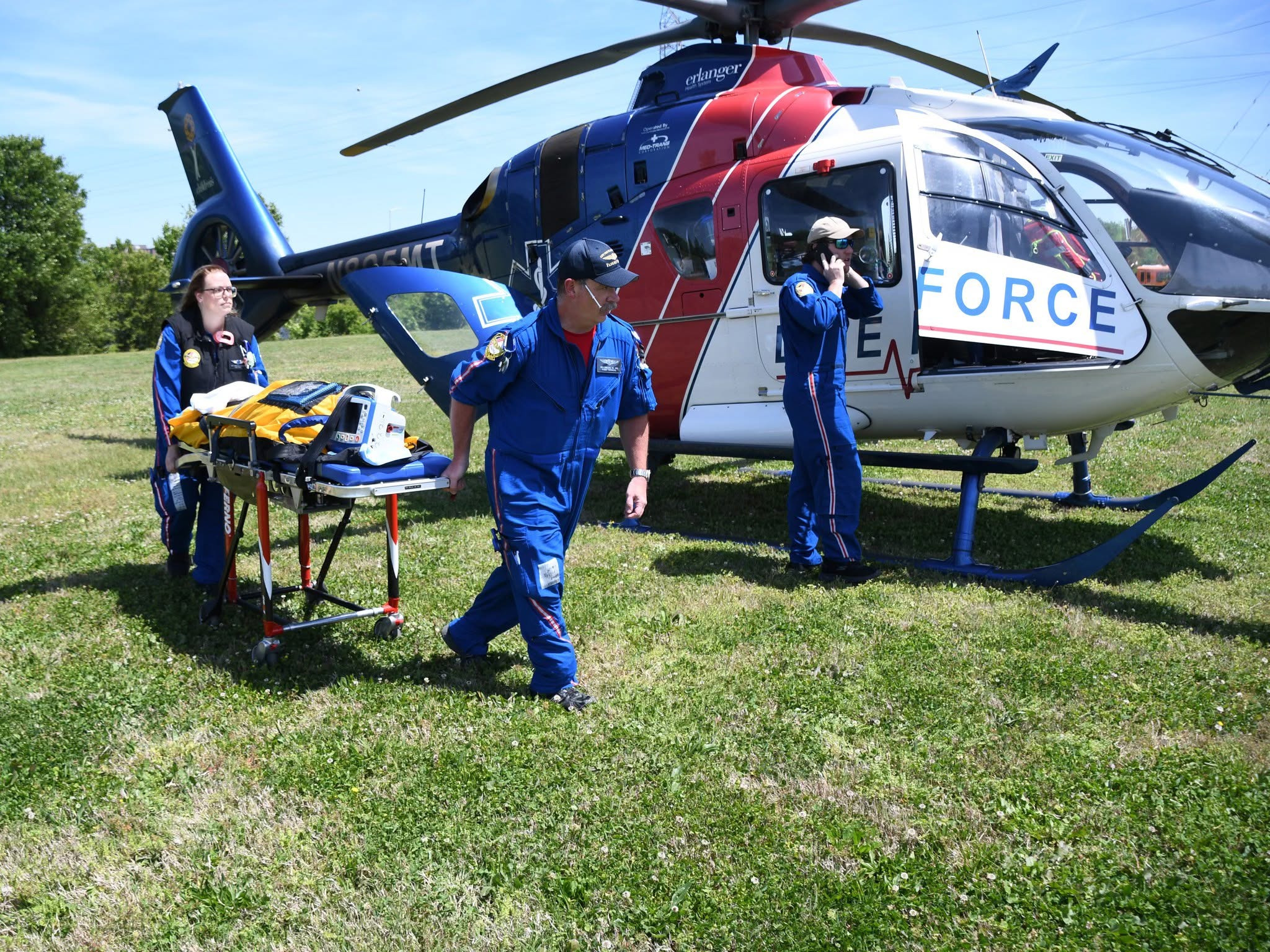
Sponsored by Sen. Bo Watson and Rep. Michele Reneau, the act was shaped by years of inconsistent practice and several high‑profile K‑9 deaths in which transport delays were a concern. Before the law passed, EMS personnel often hesitated to treat or transport injured K‑9s because of uncertainty about liability and veterinary practice restrictions.
The statute authorizes emergency stabilization of injured police K‑9s, permits ground or air transport when no human patient requires care, provides good‑faith immunity for EMS personnel, defines eligible dogs as “canine first responders,” and directs the Tennessee EMS Board and Veterinary Board to develop statewide training and oversight rules.
Legislators cited real‑world cases—including the 2017 death of Crossville K‑9 Cain—as catalysts for reform. The law’s passage also followed Tennessee’s first K‑9 air‑medical dry run, completed in 2025 by the University of Tennessee College of Veterinary Medicine and LIFE FORCE.
Why a Formal Program Was Needed
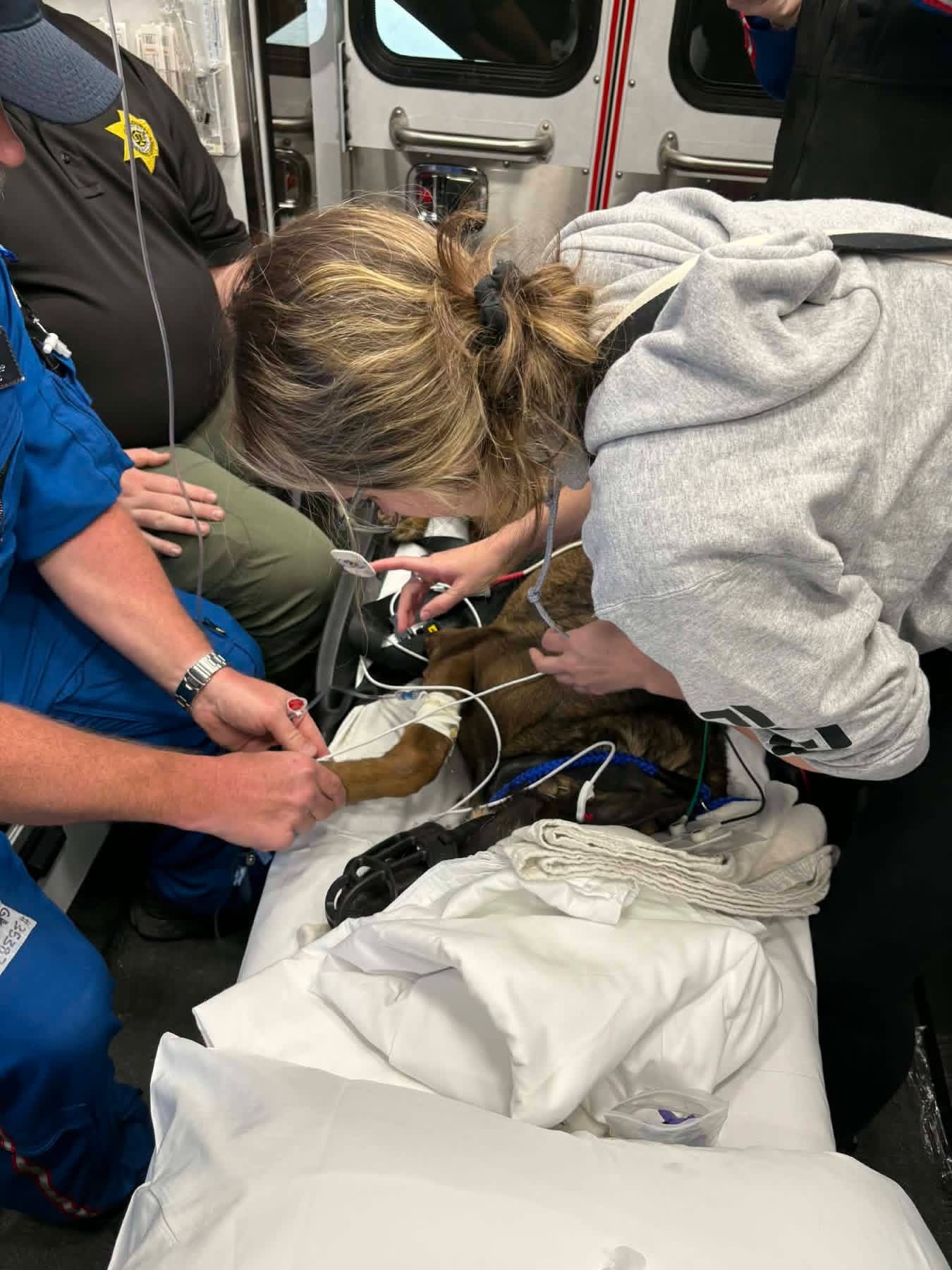
Across the country, EMS agencies have faced the same operational dilemma: A police dog is gravely injured, but the nearest veterinary trauma center may be 45 minutes away by ground. Air‑medical crews may want to help, but without protocols, training, aircraft guidance, or infection‑control procedures, many programs default to saying no.
LIFE FORCE leadership recognized that ad hoc decisions were not enough. If the service was going to transport working dogs, it had to do so with the same planning and discipline applied to human trauma care.
Program development included veterinary medical direction, crew training in K‑9 behavior and emergency care, aircraft configuration rules, infection‑control procedures, and activation criteria aligned with the new state law. LIFE FORCE made the training mandatory for all personnel, helping standardize expectations before the first operational transport. The result is a capability designed as part of the system rather than an exception to it.
Inside the LIFE FORCE Program
Flight crews were trained in K‑9 stress behavior, safe approach, muzzle application, restraint, hemorrhage control, airway management, heat‑injury recognition, cooling techniques, and safe loading and unloading procedures.
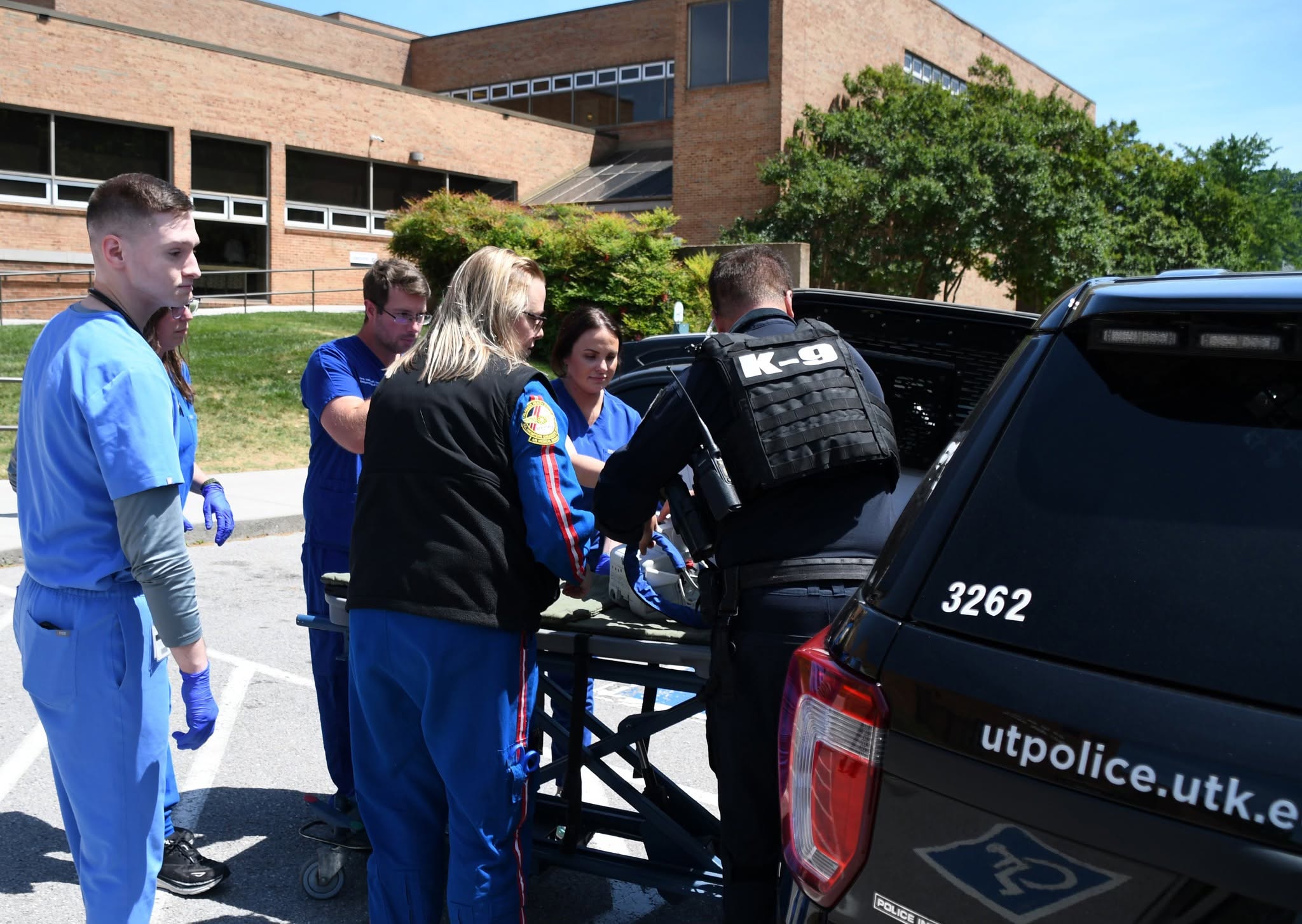
Prater said the veterinary community has been receptive rather than hesitant. Veterinarians and veterinary technicians have been eager to help EMS providers understand how to assess, handle, treat, and calm injured dogs, and they have been instrumental in both initial and recurrent training.
The goal is to help crews manage a painful, stressed, or combative dog in a confined aircraft cabin without compromising crew safety or human‑patient readiness. Prater said only one staff member reported a dog allergy during implementation, and that person has not experienced problems with the program to date.
LIFE FORCE also evaluated aircraft cabin design, including safe K‑9 positioning, tie‑down points for restraint systems, protection of monitors and drug boxes, and space for a handler when appropriate. The program limits K‑9 transports to its EC135 and EC145 aircraft and does not use its Bell 407s for this mission because those aircraft lack the same pilot-compartment isolation.
Transporting an animal in a medical aircraft also raises legitimate infection‑control concerns. LIFE FORCE addressed those concerns through a dedicated decontamination workflow, blankets and barriers, PPE guidance for crews, and post‑transport inspection checklists.
These measures are intended to return the aircraft to service without compromising patient safety.
Veterinary partners worked within LIFE FORCE’s existing medication list whenever possible, avoiding the need to add new drugs to the aircraft inventory. The program instead focused on identifying specialty equipment needed for canine stabilization and transport.
The pilot program also defines when a K‑9 transport is appropriate, including traumatic injury, heat stroke, penetrating trauma, blunt‑force injury, and medical emergencies during deployment. Consistent with state law, human patients always take priority.
Why Air Transport Matters for Working Dogs
Working dogs face many of the same operational risks as their human partners—gunfire, vehicle strikes, falls, heat exposure—and their injuries can progress quickly. Veterinary trauma centers are often located in urban areas, far from the rural or suburban environments where many K‑9 deployments occur.
Air transport can dramatically reduce time to definitive care. In trauma medicine—human or canine—time to treatment matters.
For agencies in mountainous or rural regions of Tennessee, the difference between a 50‑minute ground transport and a 12‑minute flight can be clinically meaningful.
A National Trend With Uneven Implementation
Although more states are authorizing K‑9 EMS transport, implementation remains uneven. Massachusetts’ Nero’s Law, Illinois’ EMS K‑9 protocols, and Colorado’s working‑dog EMS initiatives have all moved the field forward, but approaches vary by state and by agency.
Tennessee’s new law and the LIFE FORCE pilot program represent one of the more structured approaches to date—and one of the first publicly described programs to include a dedicated air‑medical component.
That makes the program not only a state milestone, but also a potential model for EMS systems considering similar capabilities.
What Comes Next
As the program matures, LIFE FORCE plans to track activation frequency, transport outcomes, crew feedback, training needs, and interagency coordination patterns. Prater reported to the Tennessee EMS Board that LIFE FORCE conducts quality assurance review on 100% of K‑9 transports, an important safeguard as the pilot program develops and as state regulators consider broader guidance.
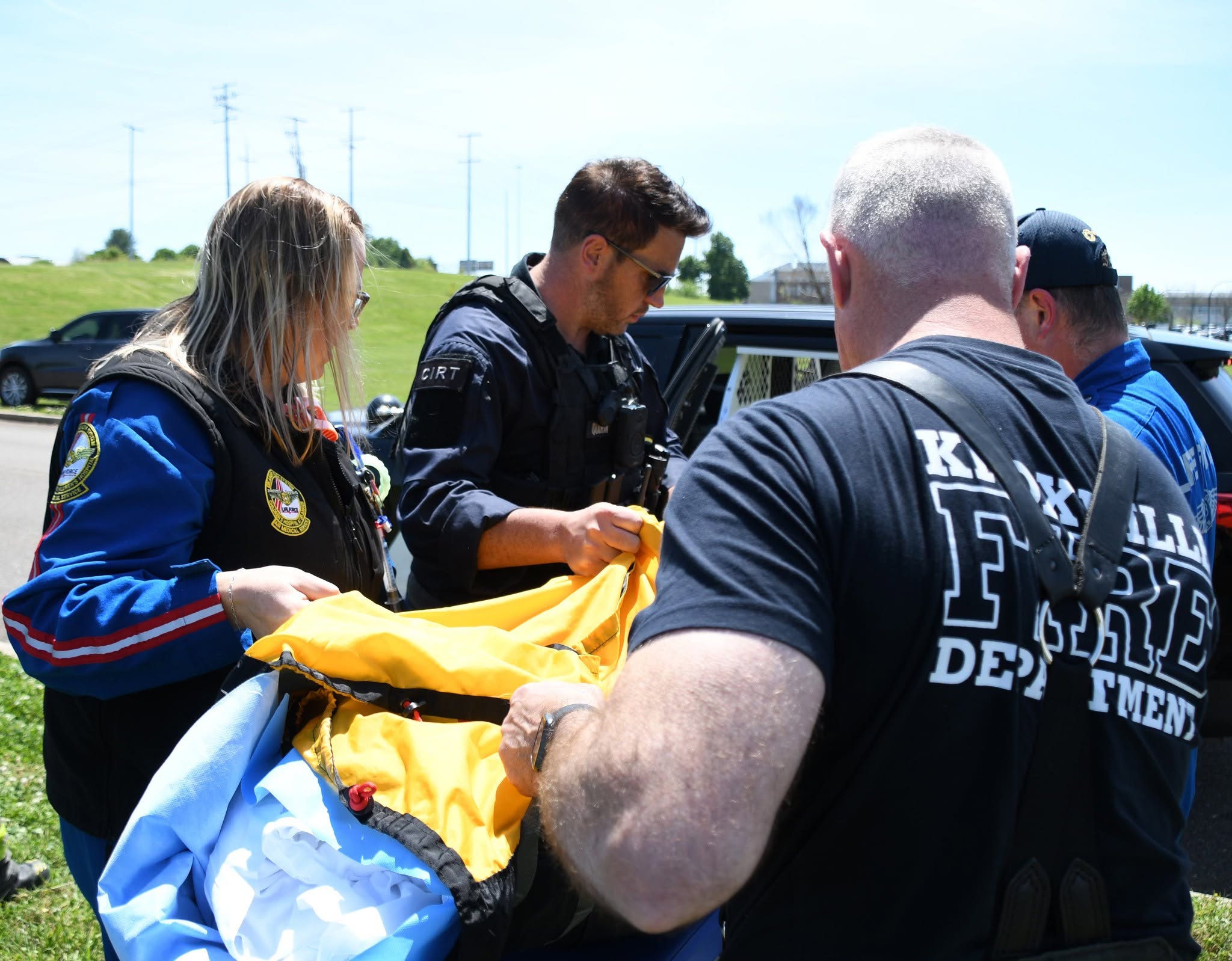
Those data points may help refine the program and inform statewide EMS guidance as the Tennessee EMS Board develops rules under the statute. One of the largest early hurdles, Prater said, was logistical: identifying veterinary hospitals, locating nearby landing zones, determining whether aircraft could land close enough to the hospital, and securing ground transport for the final leg when needed. LIFE FORCE was fortunate to have three 24‑hour animal hospitals in the Chattanooga area available to work with, in addition to the University of Tennessee Veterinary Medical Center in Knoxville, part of the University of Tennessee College of Veterinary Medicine. The program continues to coordinate with additional facilities in Franklin, Tennessee, and Huntsville, Alabama, to support responses in those areas.
The pilot program may also serve as a template for other air‑medical services in the region. Prater said other Tennessee agencies have already expressed interest, suggesting that LIFE FORCE’s experience could help shape a broader statewide approach. With Tennessee’s legal framework now in place, agencies have a clearer path to building their own K‑9 transport capabilities.
Conclusion
Tennessee’s first K‑9 air‑medical transport program shows that caring for injured working dogs requires more than permission to fly. It requires legal authority, medical oversight, crew training, aircraft-specific planning, receiving-hospital coordination, and a quality-assurance process that can turn each transport into a learning opportunity.
That is the larger lesson for EMS systems watching Tennessee’s experience. LIFE FORCE has not simply added a new transport option; it has built a framework for deciding when, how, and under what safeguards an injured K‑9 can become an air‑medical patient.
Sources
LIFE FORCE Air Medical. “K‑9 Transport.” June 3, 2025. https://www.lifeforceairmed.com/k-9-transport
University of Tennessee College of Veterinary Medicine. “UT College of Veterinary Medicine and Erlanger LIFE FORCE Air Medical Make History with First K‑9 Officer Air Transport Training.” Aug. 26, 2025. https://vetmed.tennessee.edu/ut-college-of-veterinary-medicine-and-erlanger-life-force-air-medical-make-history-with-first-k-9-officer-air-transport-training/
Tennessee General Assembly. “K‑9 Emergency Medical Care and Transport Act.” Public Chapter 713, 114th General Assembly, SB2069. https://wapp.capitol.tn.gov/apps/BillInfo/Default?BillNumber=SB2069&ga=114