New Report Shows Gaps, Opportunities in Responder Suicide Prevention
Editor’s Note: If you or someone you know is experiencing suicidal thoughts or emotional distress, call or text 9-8-8 to reach the Suicide & Crisis Lifeline. The service is free, confidential, and available 24 hours a day. In an immediate life-threatening emergency, call 9-1-1.
A new report from UCF RESTORES produced in partnership with the Florida Department of Health, Bureau of Emergency Medical Oversight, and the Florida Division of State Fire Marshal identified 307 deaths by suicide among Florida fire-rescue service members between January 1999 and March 2026 with an upward trend over time.
The findings indicate nearly 60% of the deaths were among responders holding both fire and EMS credentials.
Suicide deaths were identified using ICD-10 codes with the report drawing on linked vital statistics, EMS licensure, and firefighter certification records. Kellie O’Dare, PhD, UCF RESTORES deputy executive director and the report’s lead author said the study is the first of its kind to link statewide vital-statistics records with licensure data over an extended period.
“Behind every one of these 307 deaths is a [responder], a family, a department, and a community carrying a great loss,” O’Dare said. “The data let us see when, where, and among whom these deaths are occurring so prevention can reach members earlier and stay with them across an entire career.”
Key findings and indications in the report include:
- Deaths were most concentrated among ages 35 to 54, yet nearly one-third occurred among those 55 and older, signaling risk extends into late-career, retirement, and post-service years.
- More than a third of members with known licensure status were inactive at the time of death, indicating risk can persist after a member separates from active service and loses access to department-based support.
- Veterans represented 30.5% of cases, pointing to the value of prevention shaped by both fire service and military experience.
- Firearm discharge accounted for 66.4% of deaths, compared with roughly half in the general population, making lethal means safety a central prevention priority. Veterans were more likely than nonveterans to die by firearm—75% compared with 62.4%.
- Deaths occurred every month of the year. Annual counts since 2014 have been consistently higher than years prior, supporting sustained prevention infrastructure rather than periodic campaigns.
- Most deaths, 96.1%, were among males, and 86.3% identified as white.
- Urban departments made up 94.1% of deaths, though rural deaths remain important to monitor.
Hard to Ignore Gaps in Prevention
“The data made several gaps much harder to ignore,” O’Dare said, such as the nearly 60% of the identified deaths involving members with both fire and EMS credentials. “Their experiences can’t be separated neatly into ‘fire stress’ and ‘EMS stress.’ Prevention needs to reflect the full reality of that combined work.
“The number of people with both fire and EMS credentials doesn’t prove emergency medical calls or dual certification caused these deaths. It tells us prevention needs to be relevant to the combined realities of fire and emergency medical work.”
The study found deaths were most common among responders ages 35 to 54, but nearly one-third involved responders age 55 or older. It doesn’t prove cumulative occupational exposure caused these deaths, but shows prevention shouldn’t stop after recruit school or the early years of a career, O’Dare said.
“Support needs to evolve as members move through promotions, injuries, family changes, later-career responsibilities, retirement, and post-service life,” she added.
“The early-career period gives us an opportunity to build healthy recovery practices, trusted support networks, strong leadership expectations, and familiarity with confidential resources from the beginning,” O’Dare said.
That more than a third of those with known certification status were no longer active at the time of death stood out to O’Dare. Department-based resources are often strongest while someone is employed and closely connected to the organization. While it doesn’t establish that inactive members have a higher rate of suicide, it shows a clear need for connection and support beyond active service, she said.
The two-thirds of identified deaths involving a firearm “was not entirely unexpected, given broader patterns in suicide mortality, but the proportion reinforces the importance of including practical, respectful lethal-means safety in prevention efforts,” O’Dare said.
Complex Realities Behind the Data
Given the analysis was based on linked administrative records and didn’t include a systematic review of suicide notes, investigative narratives, medical histories, or personal circumstances surrounding each death, “it can’t tell us why any individual died by suicide, and we should be very cautious about assigning one explanation to something as complex as suicide,” O’Dare said, adding death by suicide is complex and rarely attributable to a single cause. Cases may also be under-identified because of misclassification or coding limitations.
The report noted suicide among fire-rescue service members is both an occupational and public health concern shaped by a complex interplay of factors.
Realities may include repeated exposure to difficult calls, high-acuity patient care, interrupted sleep, organizational strain, and the cumulative demands of responding across disciplines, said O’Dare, adding future research is needed to examine those possible relationships more directly.
The study can’t precisely identify what is driving the upward trend in suicide numbers, O’Dare said, noting what increased was the annual number of identified deaths. Contributing factors may include changes in workforce size and makeup, credentialing records, conditions affecting members, and identification and data linkage improvements, she said.
“We don’t have complete workforce denominators over time that would allow us to determine whether the underlying rate or relative risk also increased,” she added. “Occupational and organizational pressures, cumulative exposure, sleep disruption, injury, family and financial strain, and concerns about confidentiality or job consequences may all be relevant, but this study wasn’t designed to measure how much any one factor contributed,” she said.
The data points to prevention priorities, including early identification, sub-population informed strategies, lethal means safety, career and post-career transition support, access to occupationally competent care, leadership and organizational support, and continuous quality improvement.
Most importantly, the findings reinforce the need to move beyond a framework focused only on preventing and counting deaths toward a fire service culture that builds connection, strengthens resilience, supports help-seeking, and creates systems where members and families are supported throughout their career and into retirement.
Florida’s Zero Suicide Goals
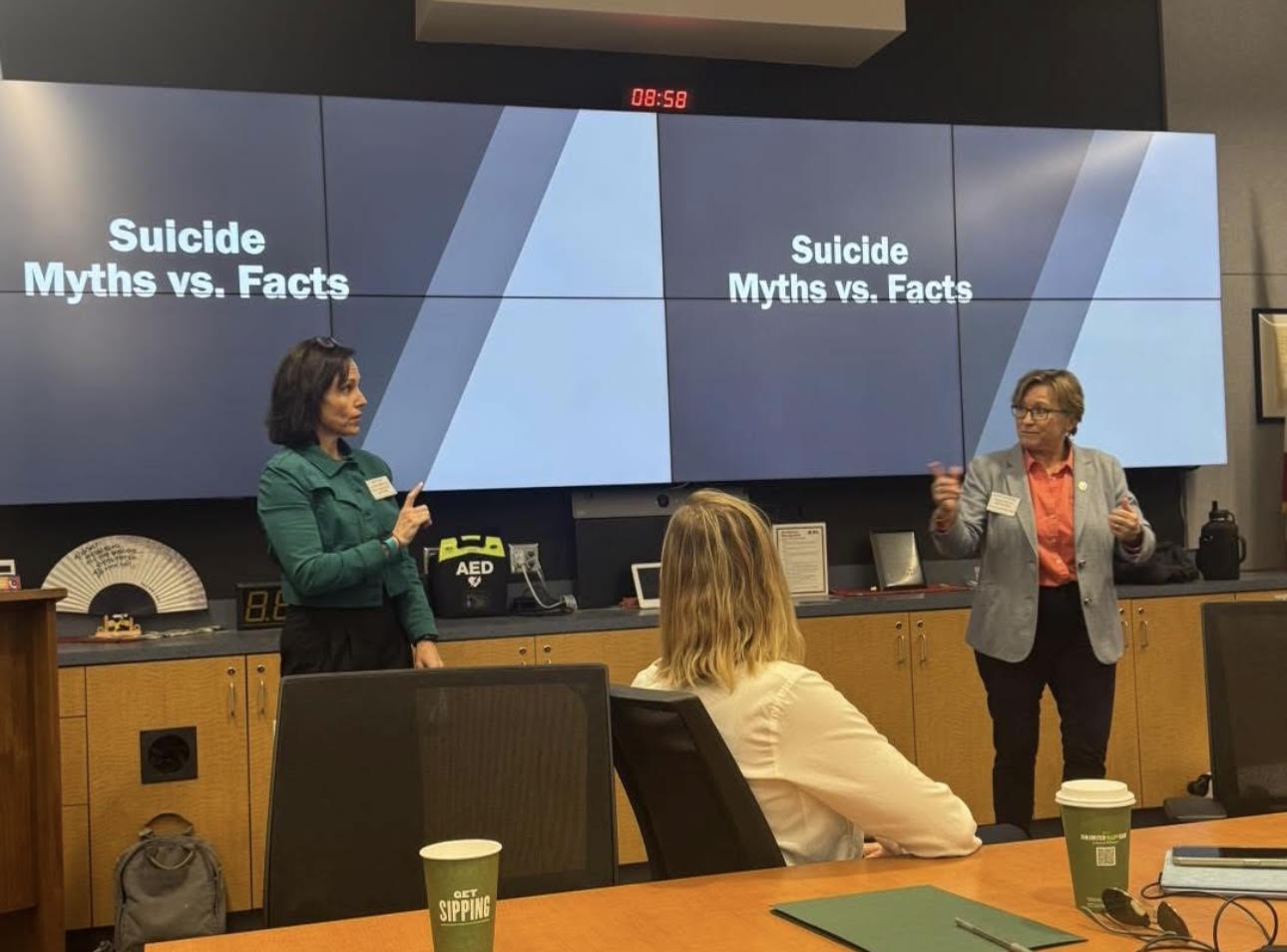
The report’s findings align with the rollout of the Florida State Fire Marshal’s Zero Suicide Prevention Framework fire service leaders, clinicians, and behavioral health specialists adapted in August 2025. The framework’s seven connected elements—lead, train, identify, engage, treat, transition, and improve—are priorities for department-level change.
“Planned resources include leadership policies and messaging, training, officer-development materials, stress-continuum and early-identification tools, family education, current peer and crisis contacts, vetted clinician directories, warm-handoff procedures, lethal-means safety education, retirement and transition resources, and postvention Studies and Observations Group,” O’Dare said.
Further Study Planned
UCF RESTORES is conducting related research to move from descriptive findings toward more advanced analyses of relative risk, geographic distribution, protective factors, firearm-related suicide risk, and prevention opportunities.
“That work will include more advanced geographic analyses, closer examination of trends over time, and comparisons with general-population patterns,” O’Dare said. “We also need reliable workforce denominators so we can calculate rates and make appropriate comparisons rather than relying only on counts.”
The long-term goal is a continuous learning and quality-improvement system to help state agencies, fire service leaders, peer teams, clinicians, and prevention partners adjust efforts to changing information, O’Dare said.
“One of the clearest takeaways is that there is no single program or training that will solve this,” O’Dare said. “We need a coordinated system that supports members before, during, and after a crisis. That includes leadership that visibly supports behavioral health, practical training across the career continuum, early recognition of changes in behavior or functioning, confidential and accessible peer and clinical pathways, and streamlined access to clinicians who understand fire and EMS culture and are trained to provide suicide-specific care.”
It also means including families, staying connected with retirees and inactive members, supporting career and life transitions, and having safe postvention procedures in place before a department experiences a suicide death, she added.
O’Dare noted that those considering a career in fire-rescue should know the occupations are “meaningful careers built around service, teamwork, skill, connection, and purpose. At the same time, respecting the profession means being honest about its demands and preparing people well.
“We don’t respond to the physical hazards of these jobs by pretending they don’t exist. We train for them, issue protective equipment, establish procedures, monitor exposures, and continually improve. Behavioral health should be approached with that same level of preparation and professionalism. Acknowledging the demands of the job is not a sign that the profession is broken; it’s a sign that the fire service is committed to preparing and protecting its people.”
Handling Stress and Noticing Change
Decompressing at the end of a shift or after a traumatic call carries the goal of helping the nervous system and the person gradually transition out of response mode, not to force everyone to talk or react in the same way, O’Dare said.
A brief operational check-in or "hot wash" can be helpful, especially when it’s structured to give members an opportunity to ask questions, identify immediate needs, and look out for one another without requiring personal disclosure, she added.
“After the shift, basic things matter: eating, hydrating, protecting sleep, moving the body, reconnecting with family or trusted friends, spending time outside, returning to normal routines, and making room for activities that provide enjoyment or meaning,” she said.
It’s also important to notice when someone is not recovering in the way they normally would. Persistent sleep problems, withdrawal, increased alcohol or other substance use, irritability, intrusive memories, or difficulty functioning are signs that additional peer or professional support may be helpful, she advised.
Family members and close friends often notice changes before anyone at work does, O’Dare noted. “Pay attention when someone is no longer acting like themselves, particularly when changes are new, becoming more intense, or connected to a difficult event or transition,” she said.
Other signs include recklessness, hopelessness, extreme mood changes, or statements suggesting someone feels trapped, has no reason to live, or believes they are a burden.
“You don’t have to diagnose the person or find the perfect words,” she said. “Start with what you’ve observed: ‘You haven’t seemed like yourself lately, and I’m concerned about you.’ Then listen without minimizing, debating, lecturing, or immediately trying to fix everything.”
O’Dare said it’s appropriate to ask directly if you’re concerned about suicidal ideation. “‘Are you thinking about suicide?’ Be calm and matter of fact,” she said. “Asking directly doesn’t require you to have all the answers. Your role is to listen, stay connected, help the person stay safe, connect them with support, and follow up. Don’t agree to keep a suicide plan secret. The 9-8-8 Lifeline recommends five basic steps: ask, be there, help keep the person safe, help them connect, and follow up.”
UCF RESTORES provides no-cost, evidence-based trauma care, and its RescueLine peer support network app offers confidential, 24/7 access to peers who understand the realities of the job. To date, UCF RESTORES has treated more than 2,150 individuals. It recently launched a mobile mental health center to support first responders during disasters.
Peer support doesn’t replace clinical care, O’Dare said. The strongest programs are multifaceted and connect peer support with occupationally competent clinicians, leadership support, training, and clear referral pathways.