Prehospital Blood: Answers to 4 Questions EMS Leaders are Asking
Prehospital blood administration is increasingly common in the United States and a series of burning questions were answered by an EMS World Expo panel.
'From a Vein to a Vein:' Blood Stewardship Matters
Waste of blood, meaning it is not administered to a human, is an important performance metric for a blood administration program. Every EMS agency should take the responsibility to receive, transport, prepare, administer, and return unused blood seriously, following the blood center adage of "from a vein to a vein." The panel shared the serious responsibility of receiving blood and how they minimize wastage, and challenged the audience to have and follow a process.
By a show of hands, most people in the room work in an EMS system that administers blood. A majority of people in the room also indicated that they had clinical and operational questions about blood administration for Matthew Levy, Eric Bank, and CJ Winckler.
Four Burning Questions on Prehospital Blood
Holly O'Byrne, the session moderator, started with answers to four questions the panelists solicited on LinkedIn before EMS World Expo. Keep reading for the panel's responses to questions from EMS leaders and medical directors.
1. Is it safe to transfuse women with uncrossmatched blood?
Levy, an EMS physician and educator, briefly reviewed the concern around Rh factor, which is at the heart of this question, before bluntly stating, "Safe yes, but you must have a program in place to follow these patients." The other panelists continued the discussion about how they've come to understand this concern, deliver topical provider and community training, and make sure that treatment of the problem, hemorrhagic shock, is the immediate concern.
2. I want to rotate blood back, but I don’t know how or where?
To answer this question Levy described the blood supply models for EMS — hospital partnership, blood center, and designated pick-up.
"We should all be finding ways to rotate blood through our systems," Levy said. "The details matter of how we do it."
Bank, Assistant Chief of EMS, Harris County ESD 48 Fire Department, described how his services receive units of blood weekly and return unused units of blood. They've never had a unit of blood go unused.
"From the very beginning we had a process to not waste blood," said Winckler, Deputy Medical Director, San Antonio Fire Department.
Winckler's process came through frequent initial face-to-face and ongoing meetings with blood bank officials to build relationships and trust.
"We've been truly blessed in our system that we have a less than 1% wastage rate," Winckler said.
3. If whole blood isn't available, what are the alternatives? Is it acceptable to build a prehospital blood program without whole blood?
Bank discussed alternatives to whole blood, such as platelets and plasma, but encouraged attendees to not give up on building a whole blood program. And if you can't get whole blood, use plasma.
"Low titer whole blood is fantastic, but if you can't get it, it is going to be OK," Bank said.
The panel held an in-depth discussion about plasma administration, its effect on the patient, and the future of plasma administration.
"Don't fret if you can't get whole blood," Levy said at the conclusion of his plasma discussion.
4. How young is too young? What should a prehospital blood program consider before transfusing pediatric patients?
According to the panel, there are no reasons to withhold pediatric blood in a pediatric patient experiencing hemorrhagic shock.
"I don't think any age is too young, but let's first make sure they are in hemorrhagic shock," Winckler said.
Bank shared that some systems start their blood program as an adult-only intervention, but pediatric patients have been included in their program since it started. Most of the pediatric patients who've received blood in their system are older teens who are victims of knife and gun violence.
"Absolutely, kids should get blood too," Levy said. "Hemorrhagic shock looks different in kids. This starts with being able to recognize hemorrhagic shock and be thoughtful (about the volume infused)."
From Expo to the Street: What About Short Transport Times?
"Our agency has short transport times," an attendee asked while explaining that she's encountered resistance from department chiefs and administrators to implementing a whole blood program.
The panelists were quick to remind that other time-critical interventions, such as AEDs and 12-lead ECG, are used in EMS systems regardless of short transport times. Bank also pointed to the findings from Duchesne et al.
"For every minute that a prehospital blood transfusion is delayed in a patient in hemorrhagic shock, they have an 11% increase in mortality," Bank said.
To justify a prehospital blood program, the panel recommends answering the concerns of decisionmakers with data and contextualizing the total time from the 9-1-1 call to the actual administration of blood because arrival time at the hospital to blood administration time are not the same. Also, share facts about the actual transport time for hemorrhagic trauma patients, not just all patients, and how frequently entrapment and other complicating factors increase scene time in urban areas, even when transport time is short.
Blood is Only One Part of Hemorrhage Care
Blood administration is a high acuity, low occurrence skill. Every EMS chief needs to ensure that blood administration exists within a culture of continuous training to stop the bleed, quality assurance to monitor protocol adherence and a commitment to preserving the blood entrusted to the agency by their partners.
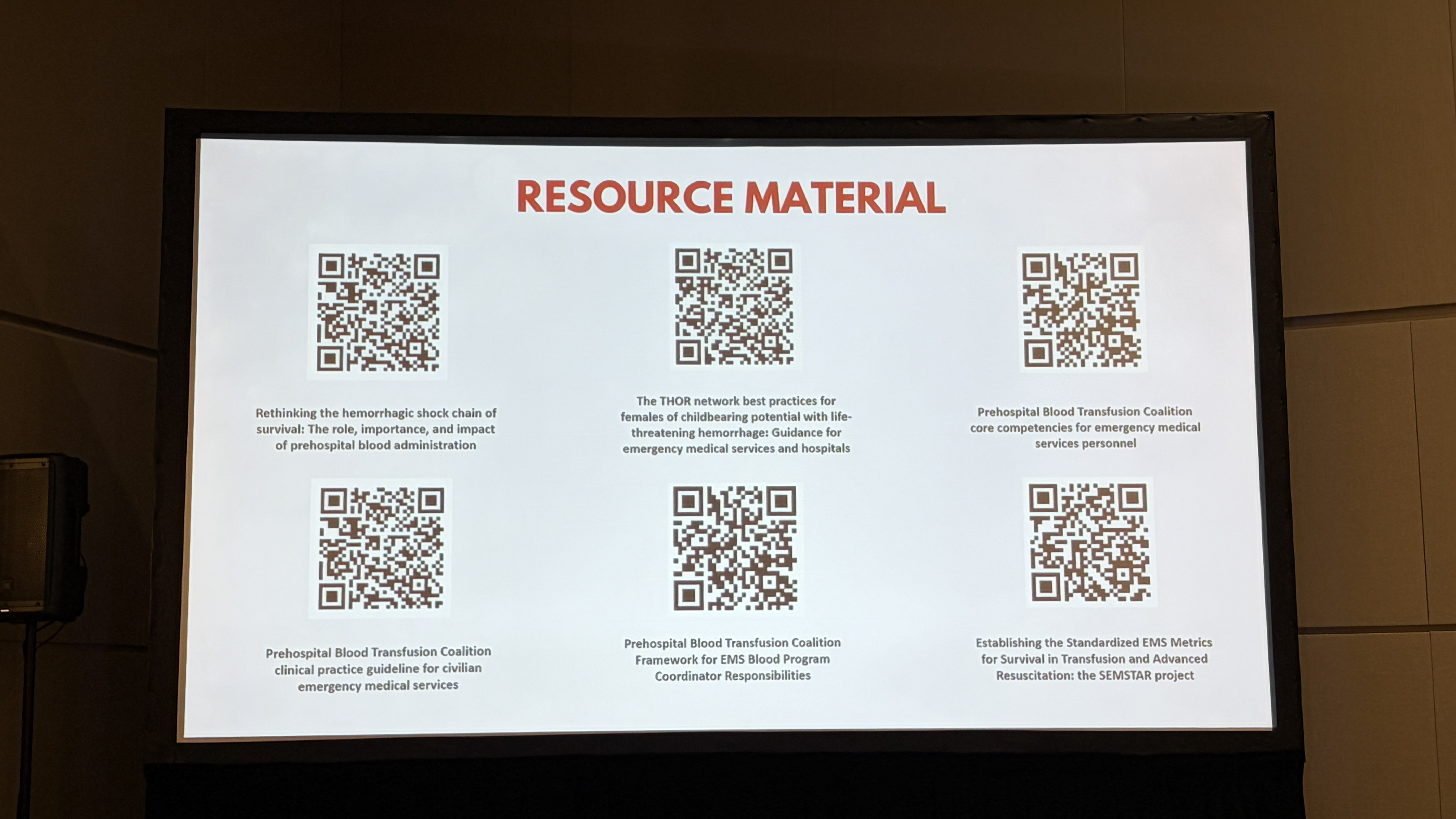
"We are all learning," Winckler said, which was a point also made by Bank and Levy. To keep learning and improving your service's whole blood administration program, check out these resources recommended by the panel.
- The THOR Network Best Practices for Females of Childbearing Potential with Life-Threatening Hemorrhage: Guidance for Emergency Medical Services and Hospitals
- Bridging the gap: Whole blood and plasma in prehospital hemorrhagic shock administration
- Prehospital Blood for Bleeding Children: Expert Consensus Guidelines
- System Report: The San Antonio Fire Department Blood Delivery Program
Finally, scan these QR codes for additional resource materials shared by the panel.
About the Author
Greg Friese, MS, NRP, is an EMS clinician, educator, and content strategist with more than two decades of experience in emergency services, continuing education, and public safety media. A Wisconsin-licensed paramedic, Friese has designed and delivered hundreds of accredited courses, training resources, webinars, and conference presentations for EMTs, paramedics, firefighters, and public safety leaders. His work bridges field experience, adult learning, leadership development, and clear communication. Friese is known for translating complex operational and clinical topics into practical tools EMS professionals can use to improve decision-making, team performance, and patient care.