Impact of Pre-Operative Phone Calls on Post-Operative Patient-Initiated Inquiry Following Electrophysiology Procedures
Abstract 2312017, presented at Western Atrial Fibrillation Symposium 2026
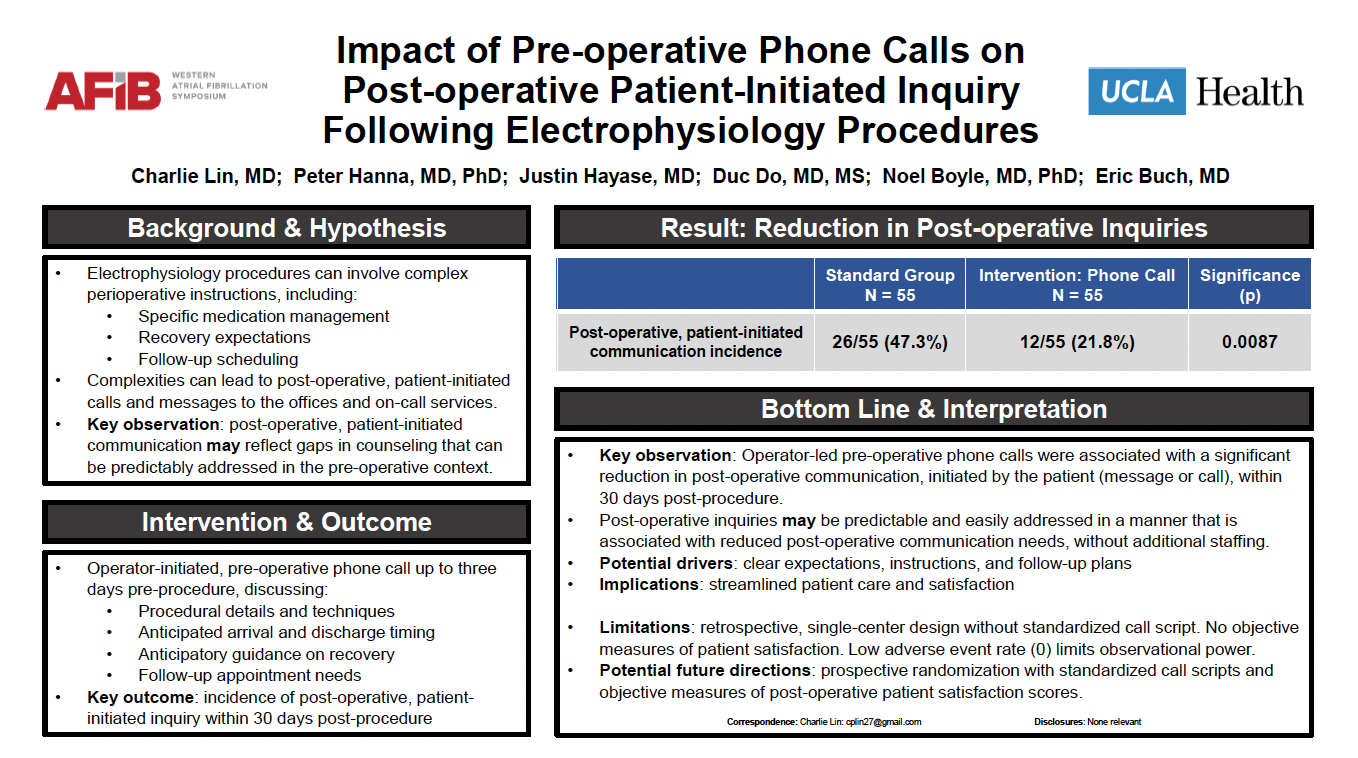
Elective Cardiac Electrophysiology (EP) procedures are frequently accompanied by details and specific follow-up needs in the peri-operative period. This can result in post-operative patient-initiated communication to the clinic or on-call services. We evaluated whether a brief pre-operative phone call on the day prior to the procedure may reduce redundant post-operative patient-initiated communication for peri-operative inquiries.We conducted a retrospective cohort study of patients undergoing elective EP procedures at a single center. All patients received a standard pre-operative call or electronic message from the care team, either with a nurse or medical assistant, in order to clarify the date and time of the procedure, as well as general instructions regarding pre-operative oral intake and arrangement of discharge transportation. Procedural details, pre-procedural medication management, post-operative recovery, and follow-up appointments were mentioned in standardized electronic documentation, but not verbally addressed during these encounters. Patients were divided into two cohorts: those who received a brief, physician-initiated pre-operative phone call the day before their scheduled procedure, and those who did not. Post-operatively, all patient-initiated communications related to the procedure, including phone calls and electronic messages, within 30 days post-procedure, were recorded. The primary outcome was the incidence of post-operative patient-initiated communication. Fisher's exact test was used to determine the significance level of differential outcomes and baseline characteristics.Patients who received a physician-led pre-operative phone call demonstrated a significantly lower rate of post-operative communication compared with those who did not (12/55 [21.8%] versus 26/55 [47.3%], p= 0.0087). Cohorts did not differ in their proportion of ablation, as opposed to device-related, procedures (39/55 [70.9%] versus 38/55 [69.1%], p = 1), nor in their frequency of native English fluency (51/55 [92.7%] versus 54/55 [98.2%], p = 0.3634).Proactive communication in the pre-operative setting may reduce redundancies in post-operative inquiries relevant to post-procedural recovery, medications, or follow-up appointment scheduling. This may result in streamlined post-operative care and patient satisfaction.