Eagles Docs Share Benefits of Tiered Response

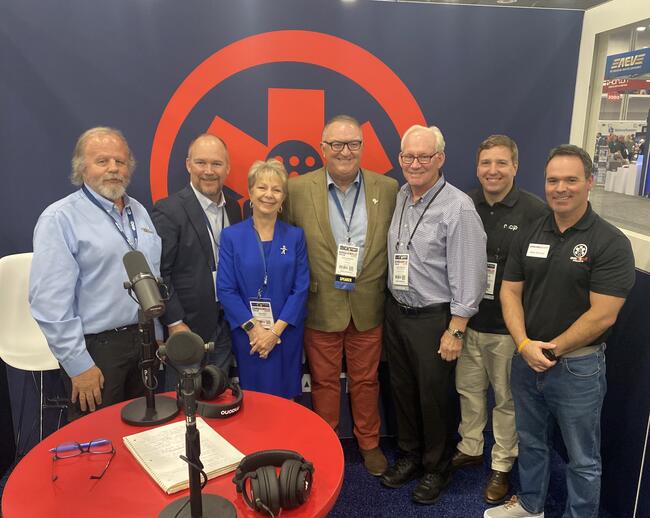
“Don’t fear the tier” was the focal point of a panel discussion regarding tiered ALS/BLS deployment during the Gathering of Eagles 2022 conference in Hollywood, Florida.
Tiered programs have demonstrated successful outcomes, noted Jeffrey Goodloe, MD, NRP, chief medical officer for Oklahoma’s Emergency Medical Services Authority (EMSA), which serves metropolitan Oklahoma City and Tulsa.
Goodloe pointed to the work being done in Houston, Texas under the direction of David E. Persse, MD, physician director for the city of Houston’s EMS and public health authority, as a role model. And Brian Miller, MD, noted the success of the tiered approach in Fort Worth, Texas.
Instituting tiered approaches entails “very careful thinking” when “tinkering” with years of established practice, said Goodloe. But when based upon data-validated strategic utilization of ambulances, it often gets buy-in from local decision-makers.
Case in point: The Oklahoma City Council in late November 2021 unanimously voted to approve EMSA’s plan to initiate BLS tiered 9-1-1 ambulance service, 2 weeks after Tulsa’s city council did so.
Adding 9-1-1 BLS ambulances staffed by 2 EMTs to EMSA clears the way for ALS ambulances staffed by 1 paramedic and 1 EMT to be more readily available for life-threatening emergencies.
In Colorado Springs, Colorado, data analysis is proving the success of a tiered system, notes E. Stein Bronsky, MD, medical director for the Colorado Springs Fire Department and American Medical Response in El Paso County and Colorado Springs.
“Our first foray into a tiered response was 7 years ago when we started our mobile integrated behavioral health unit consisting of a firefighter, paramedic, police officer and licensed medical psychiatric social worker who circulate as a team in a SUV. They skim off the 9-1-1 calls and self-dispatch,” Bronsky said.
The COVID-19 pandemic in the US created staffing issues, a driving factor to instituting a tiered response to medical issues, Bronsky noted.
“We were able to analyze our data and see there were really no bad outcomes from the tiering we did. Our main goal was the right care for the right patient in the right timeframe,” he said. “We wanted to protect the fastest responses for true emergencies and help with staff shortages.”
Atlanta’s tiered approach includes stationing a paramedic in the 9-1-1 call center, said Lekshmi Kumar, MD, medical director for the city’s Grady Health System EMS and an associate professor in the Emory University School of Medicine’s Department of Emergency Medicine.
“If a call is holding, usually it’s a dispatcher that calls back in a few minutes,” she said. A paramedic can do so in an effort to prioritize calls.
Carol Brzozowski is a freelance journalist and former daily newspaper reporter in South Florida. Her work has been published in more than 200 media outlets.