After 52-Year Career, Paramedic Retires — Almost
After a 52-year career in EMS, 72 year-old Walter Marsh has retired. His last shift as Paramedic Superintendent of the Cochrane District Paramedic Services (CDPS) finished on June 8, 2025, at 3 p.m., when Marsh signed out for the last time. During his career, Marsh also worked as a part-time air medic for the Bandage 4 air ambulance for 25 years part time, and then 12 years with Commercial Aviation as a flight charter medic.
CDPS is headquartered in the Ontario mining/forestry city of Timmins (population 44,819), about 342 miles northeast of Toronto.
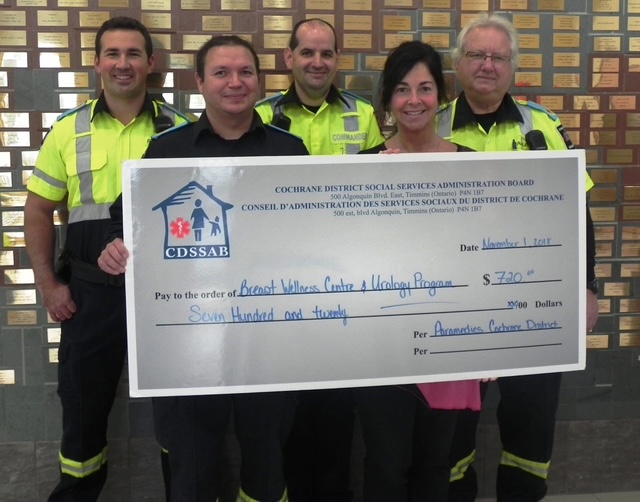
“Over the years, I've done every kind of call you could think of,” Marsh said. “I’ve treated gunshots, stabbings, overdoses, heart attacks, and strokes.” The CDPS territory covers about 30 miles around Timmins to cover smaller communities such as Cochrane, Hearst, Iroquois Falls, Kapuskasing, Matheson, and Smooth Rock Falls with the CDPS’ main HQ and six satellite stations.
An Unintentional Career
Despite his half-century in EMS, Marsh never intended to join this profession. “Actually, I went to school to be an electrician,” he said. “When I came out of school, the market was flooded with electricians, and I could not get a job anywhere. Then a friend told me that the ambulance service in Timmins was looking for people, and would I be interested? So I went, applied, and I got the job.”
Compared to today, EMS standards in 1973 Ontario were basic. “All I needed was standard first aid training,” Marsh said. “Summer 1973 was the time that the Ontario Ministry of Health took over EMS in our area. Before then, there were two private ambulance services. One of them had a Chevy Suburban SUV and the other had a Pontiac Bonneville station wagon. They both competed for ambulance calls. Whoever got there first got paid.”
Marsh started his EMS career when the Ministry of Health took over EMS service in Timmins. They improved the vehicle situation by using Ford Econoline vans as ambulances; however, the equipment available inside these new vans was minimal. Besides stretchers and oxygen equipment, there were bandages and splinting supplies, plus a land mobile radio for taking calls from dispatch. “We still had the formerly private two ambulance services in different locations that we were working out of, so dispatch would divide the calls based on who was closer,” Marsh said.
Changes Over Time
It didn’t take long for Marsh to begin enhancing his EMS skills on the job. “In 1975, the Ministry put on a month-long course called Fundamentals of Casualty Care,” he said. “I trained on that for a month at Canadian Forces Base Borden. Then in 1978 they came out with the Advanced Emergency Medical Care Assistant (A-EMCA) college course for paramedics. Since I was already working, I was grandfathered in. This meant that I did a part-time course one day a week on the theory of EMS—because we were already doing the practical part—and then had to pass an exam, which I did. Then, as new drugs and treatments arose, we had to be certified on them as well.”
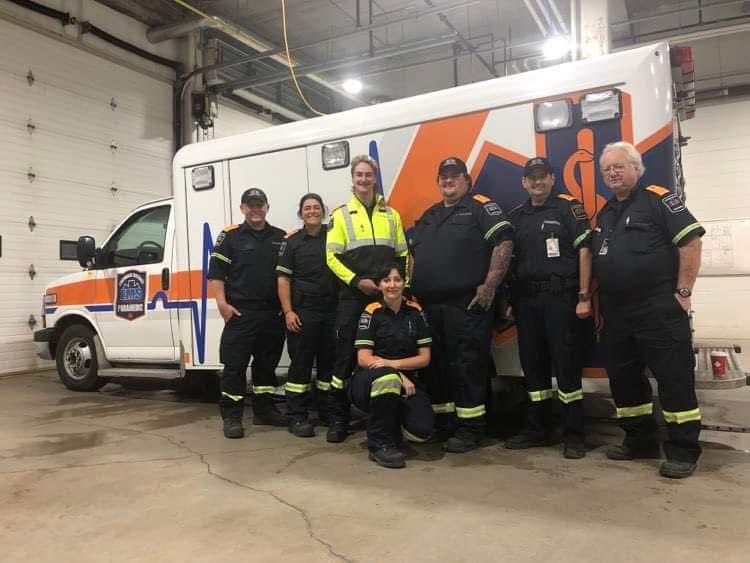
Over the years, the EMS equipment that Marsh used improved as well. “We got better splints,” he said. “We got better drugs and equipment in the ambulance. The ambulances also evolved into the modular cubes that you see on trucks today. We now have a lot more space to work with.”
The biggest improvement Marsh witnessed during his EMS career occurred after AEDs were added to CDPS’ ambulances.
“We got a call about a seizure, and we went up to this apartment where there were two or three drunks,” he said. “One of them was acting strange and he arrested in front of our eyes. So, we threw the AED pads on and shocked him. He woke right up: We checked his pulse and blood pressure, and he had a really low pulse, but he had a BP and he was talking to us. So, we loaded him on the stretcher. Then he coded again. So, we shocked him again. We got him right back and he's talking to us. We got him on into the ambulance and got him to the hospital. He coded again in the back in the ambulance garage! We shocked him a third time and got him back yet again.”
Another call Marsh recalls involved a hydraulic fitting piercing a man’s leg, causing massive blood loss.
“He had no pulse or palpable BP, but he was still conscious,” he said. “I think he survived because he believed his mother was a healer and he'd talked to her over the phone during the run. We got him into the hospital, they rehydrated him and everything and he lived. Eventually this patient lost his leg, but it was just amazing to see the power of the mind over the body. He should have been unconscious with no pulse and no BP, but he wasn’t.”
Not Quite Retired
Marsh is no longer on the road doing calls 52 years after launching his EMS career. But that doesn’t mean that he is fully retired from CDPS. “I started doing repairs on their electrical equipment about 10 years ago, and I’m still doing it,” he said. “That was part of my retirement deal: Every three months I do preventive maintenance, plus repairs in between as needed. So, it's not a big deal, it's just something to do. I'm one of these guys that can't sit around and do nothing.”
“I've had a good career,” said Marsh. “I wouldn’t want to change anything. I’ve worked with a lot of good people, and I don't think I'd change anything looking back, or ask myself to do anything different.”