After EMS: Once They Were Children
This article is part of an ongoing series from Mike Rubin. In this series, he’ll reflect on his career and share practical retirement advice for emergency medical personnel. Catch up on articles you missed.
On the worst day of her life, EMT Helen DeMeo awaited word from her son and fellow-EMT, Rob. He’d been staged at the base of the World Trade Center’s south tower when it collapsed—a cascading hulk of whatever used to be a building, flattening floor by floor and pulverizing everything in its way. It was a little after 11 a.m. on September 11th, 2001.
“I was about to get on an ambulance to the city when I was told to go home,” Helen, then an EMS volunteer, says. “The chief told me my son was missing. I was scared to death. All I could do was wait by the phone. It was a terrible time.”
Three hours later, Rob was found at a downtown ER covered in a gray-white compost of concrete, drywall, insulation, fiberglass, and Lord knows what else. He’d been treated for burns. a broken leg, and a head injury. Then Rob’s agency arranged transport for him back to Long Island, where he continued his recovery at a closer hospital.
“I realized pretty quickly I was lucky compared to some parents,” Helen recalls. “Their kids never came home.”
An Aug, 31, 2026, New York Times article by Sabrina Tavernise points out that 9/11 put thousands of sons and daughters in harm’s way during the decades that followed. For parents who watched their kids deploy as soldiers, sailors, airmen, and marines, no apologies or justifications for combat casualties will ever be enough.
“I just didn’t know why he had to sacrifice his life,” said Joanne Fuller, mother of Travis, an Army first lieutenant who died in a 2005 helicopter crash in Iraq. “What was it for? What were we, as a people, gaining?”
Helen, now retired, doesn’t blame EMS for danger Rob faces on the job. “This is the life my son has chosen,” she says. “I don’t know what I would have done if he hadn’t made it through 9/11, but I’m still proud of the work he does every day.
“He and his coworkers, they’re heroes. They risk their lives for the rest of us. It’s not always easy knowing that, but all we can do is stay close and hope for no more 9/11s.”
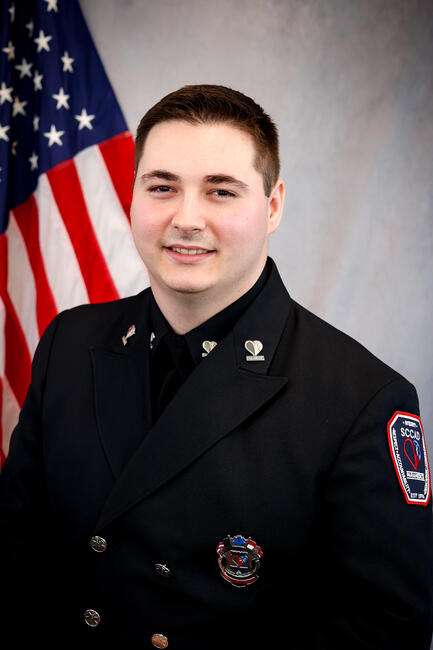
Helen DeMeo is now Helen Rubin. Rob is still Rob, except he’s a critical-care paramedic, with scars mostly outside that remind the three of us how lucky we were that he came home. We try to imagine the horrors of those families not as fortunate and honor their sacrifices every September 11.
Mike’s Exit Poll #22: What do you remember most about 9/11?
There was a sense of everything changing forever: planes, trains, safe places, rules, enemies, wars—anything that was vulnerable to bad guys.
At the local level, I was part of a command-and-control group that had much less to do than we’d figured. Most victims of the attack were either dead or walking wounded (Rob was an exception). I was supposed to track everyone who was admitted to a metropolitan New York hospital, but I still had lots of blank pages by the time our work was done.
A week later, I relieved one of the city crews for a day. There were no patients…yet.
Mike Rubin is a retired paramedic and the author of Life Support, a collection of EMS stories. Contact Mike at mgr22@prodigy.net.