A Conversation With Author Kevin Hazzard
While working as an EMT and paramedic at Atlanta’s Grady EMS from 2004–13, Kevin Hazzard needed to process his experiences. These experiences became A Thousand Naked Strangers: A Paramedic's Wild Ride to the Edge, a well-received book in and out of EMS circles about what life is like working on an ambulance. Hazzard shares that he runs into many EMS providers who say that they give the book to spouses, family, and friends if they want to know what their job is like.
 For his next project, Hazzard thought about how EMS is very protective of its culture and its relatively young history. Early pioneer programs like Miami Fire Department, Seattle’s Medic One, New York City EMS, and of course, the Los Angeles County Fire Department (made famous by the TV show “Emergency”) were long thought of as the “founders” of modern EMS and paramedic services. Based on his research, he found that another group had been doing it half a decade prior—the men of Freedom House Ambulance. Black men trained as paramedics by Dr. Peter Safir and Dr. Nancy Caroline in the 1960s were the first paramedics in the United States, responding in mostly underserved areas of Pittsburgh, Pennsylvania.
The book, American Sirens: The Incredible Story of the Black Men Who Became America’s First Paramedics, was released to great acclaim and now, three years later, is still very popular. The HBO Series “The Pitt,” starring and produced by Noah Wyle, included a segment on Freedom House in Season 1, Episode 8. Hazzard shared that the technical advisors on the show had copies of his book and it was worked into the script, “pulling back the curtain on the history of Freedom House.” Wyle and John Moon, former Freedom House paramedic and a major subject in the book, got to meet and present together. Further, all medical students at Pittsburgh’s medical school get a copy of the book. Many other EMS agencies have started this practice, including the Montclair (NJ) Ambulance Unit.
“All new employees get a copy of American Sirens so they fully understand EMS’s complicated history and the challenges we all face,” said Montclair Chief James Mazza.
While the acclaim and interest in American Sirens and Freedom House hasn’t ebbed for Hazzard, he started planning his next project almost immediately.
“I like medicine, and as a former medic, I know what it is like to have a patient literally in your hands and to be in ‘up against the clock’ moments, when you have more tasks than arms. I wanted to tell another story like that,” he explained.
He found out about Dent and Mark Thompson, two brothers who are the founders and operating officers of Phoenix Air, based in Cartersville, Georgia. The company was known for doing things other aviation companies wouldn’t do, including transporting explosives, nuclear materials, infectious patients, and even a whale; all in specially modified Gulfstream jets. Staffed by fearless pilots, aviation medical “cowboys,” and innovative maintenance crews, this company carved out a niche for flying people and cargo to and from challenging areas, from wind-blown Himalayan Mountains to foreign airfields under enemy fire.
“Their story includes all the things I wanted to write about: medicine, adventure, and humor,” Hazzard said. “I had to do it.”
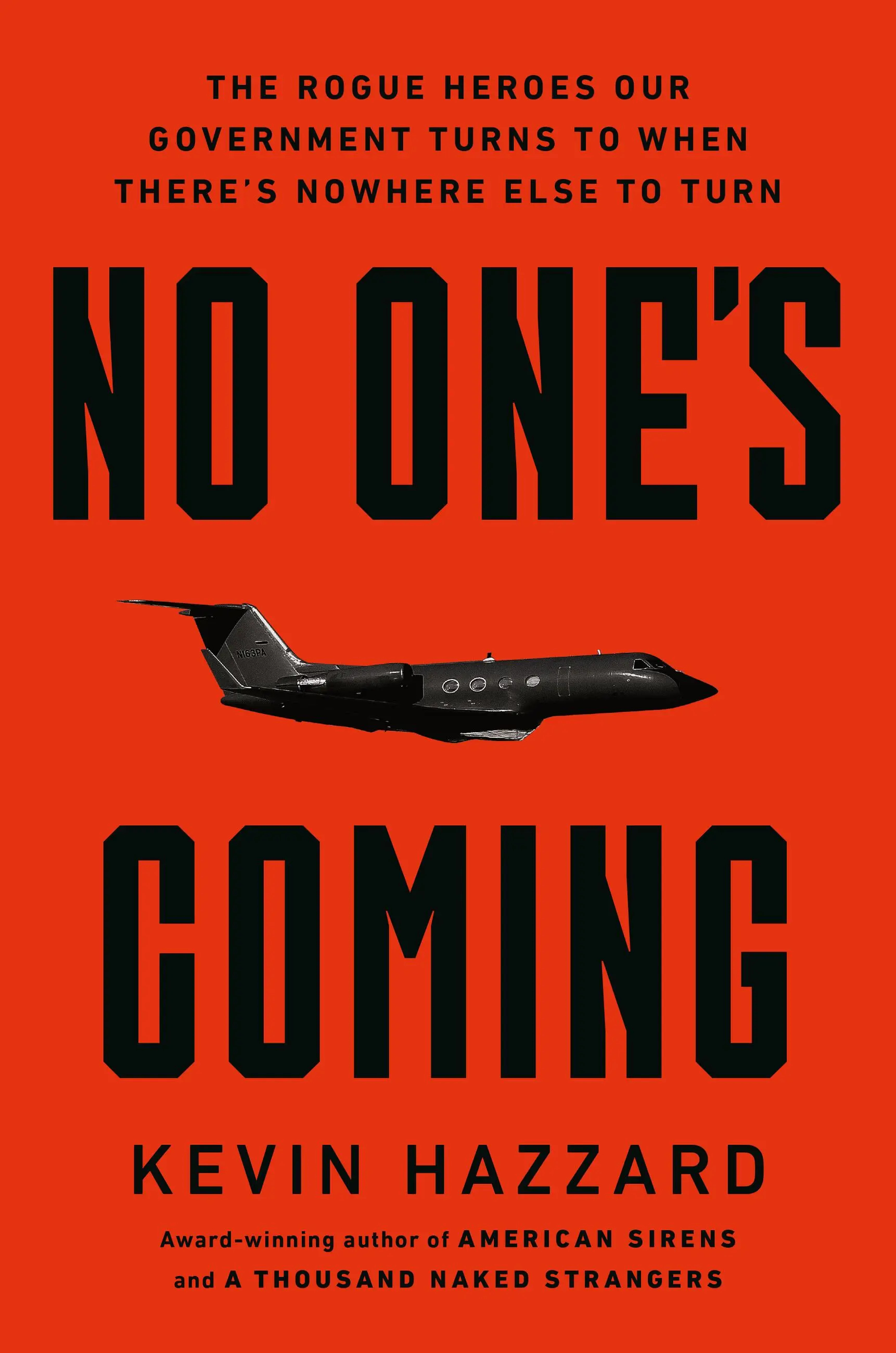
This became the basis for Kevin Hazzard’s March 2026 release, No One’s Coming: The Rogue Heroes Our Government Turns to When There’s Nowhere Else to Turn, published by Grand Central Publishing.
The story of No One’s Coming centers on the highly infectious Ebola outbreak in Liberia and other Western African countries from 2013–15. American physicians and workers were voluntarily staffing hospitals in the outbreak zone and two providers, Dr. Kent Brantly and clinical nurse associate and missionary Nancy Writebol, were infected with Ebola and became deathly ill. The State Department was looking for a way to evacuate these American citizens and get them home safely for treatment. The problem was that no one had the resources or the equipment to do it.
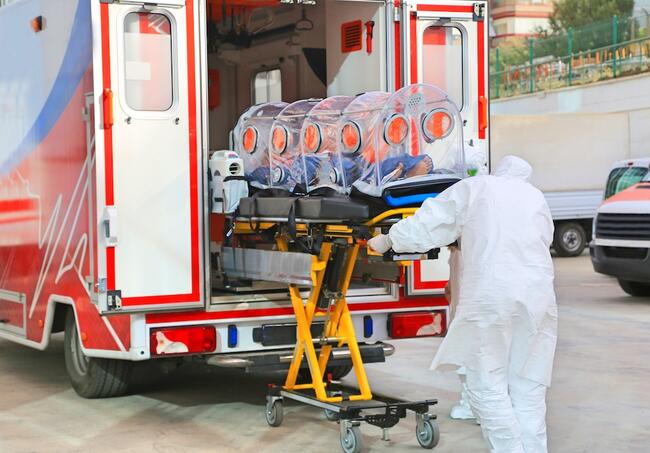
Hazzard describes in detail the process Phoenix Air went through to create a pressurized isolation chamber that could be used to hold the highly infectious patients, allow for treatment with complicated PPE, and keep the crew safe while flying thousands of miles from Africa to the U.S. He also shares the complicated story of getting the patients to Emory Hospital—one of the few hospitals that had labs and rooms set up for treating highly infectious diseases and the specially trained EMS team to transport Ebola patients by ambulance. There is also all the backstory that includes the fear and hysteria in the media and government about bringing patients with Ebola to the U.S. as well as our country’s woefully underprepared transport and healthcare system when it came to Ebola and other infectious diseases.
“I hope that whatever your politics are, you realize that we are all in this together, a communal creature,” Hazzard said of readers. “As humans, we are not meant to be isolated and we are happiest when we are in a community, and we should come together for one another. This is a story about a group of people who put their lives on the line for strangers because it was the right thing to do. In 2026, we could ask ourselves, who and where are our heroes? Would I be willing to step into a small aircraft and fly for many long hours, inches away from the most contagious virus on Earth, to save someone? I sure hope so. I think lots of ordinary people are capable of extraordinary heroism and acts.”
The level of preparedness is a big component of the book. Hazzard was asked whether, based on his research, the government, hospitals, EMS, and our healthcare system in the United States are ready for the next superbug, compared to Ebola readiness. Hazzard shared that he has talked to infectious disease physicians, medical directors, nurses, and EMS directors. In short, “We are not.”
Hazzard said that Ebola raged from 2013 until it died out in 2015, yet it didn’t prevent the crisis that was the COVID-19 pandemic in 2020.
“At Grady in 2014, the two paramedics who picked up the Ebola patients were the only two remaining trained providers from a disbanded unit,” he said. “As a system, we learn lessons, but then get a short memory and undo our prep.”
In the later chapters of the book, there is a great amount of fear and vitriol expressed toward Phoenix Air, the EMS providers who picked them up, the doctors at Emory, and even the infected healthcare providers themselves for “bringing Ebola” to the U.S. Hazzard was asked what he thinks it is about germs and sickness that brings out the worst in folks sometimes.
“As animals, we are biologically selfish to survive,” he said. “At the same time, we lionize the ‘Greatest Generation’ of the Dust Bowl and World War II because they sacrificed for the greater good, where they may not have been personally affected, but they still worked as part of the solution. In this era, we want a cure or a solution and don’t want to be inconvenienced; people think that they don’t want to be at risk because of someone else. Additionally, where there is confusion, there is fear. When things are going wrong and there is chaos and misinformation, it’s hard for people to think about making sacrifices for a stranger. I hope this book shows people that we are in this thing together.”
While he has moved from being an active street paramedic to a writer, TV consultant, and sought-after speaker, Hazzard was asked whether he misses EMS and seeing "naked strangers."
“I don’t necessarily miss the naked strangers,” he said. “What I do miss is 6 p.m. on a Friday night, when you are rolling with your favorite partner and the city is electric. You know you’re going to get called on all night long to do all kinds of stuff, in chaos. I miss that feeling, and there’s no replacement for that. What other job does someone hand you their sick child or parent and say, ‘Help them,’ and you know that you can handle it? I miss eating apples and peanut butter as a snack on the rig and I definitely respected the power of the 'Q' word.”
Hazzard was asked what movie or TV show best shows EMS and he shared that he is a big fan of the recent movie “Code 3.”
“When there is chaos, there are people who enjoy chaos, humor, weirdness. I’m one of them, and my books are about people like that.”
The below is excerpted from No One’s Coming by Kevin Hazzard. ©2026 by Kevin Hazzard. Used with permission by Kevin Hazzard. Available for purchase at Hachette Book Group and Amazon.
Chapter 61, Pages 280-286
Whatever Ebola had done for Darrin Benton's love life it had the opposite effect on Gail Stalling's. Online dating had helped bridge the gap between the opportunity to meet someone new and all the time she spent at work. She'd created a profile, started meeting guys, and going on dates. Things in that regard were looking up. Until the day she became famous. The day Kent landed, the day news helicopters and some random weirdo on the highway aimed cameras at her as she made the twenty-five-mile drive from Dobbins to Emory with the most famous patient on Earth in the back of her ambulance. She was filmed and photographed, and those images, along with her name, were all over the television and by morning all over the front pages of newspapers around the country. One of the bonuses to online dating is when you match with someone you can immediately look them up, see beyond the profile to who it is you're talking to, and that afternoon if you googled Gail Stallings, about the only thing that'd pop up is the word Ebola. Guys must've been looking her up, because her profile went instantly silent. Matches ceased, messages went unread or unresponded to, and dates were cancelled. She was the Ebola woman.
Which, whatever. John Arevalo, her partner, laughed at her. And in a way it was good, because it gave them something to talk about while waiting for the second plane to arrive and suiting up to once again transport an Ebola patient. They were aware this time would be different. The media was less ravenous this go-round, but their patient was also less stable. In Liberia, it'd been Kent teetering on the edge, but now, two days later, the ground beneath Nancy Writebol had begun to shift. They knew she couldn't walk, and what little had been transmitted to them suggested her potassium was dangerously low. Gail knew that Nancy's heart rhythm was going to be a problem—one of those wildly concerning arrhythmias that scared even Ribner—and with it everything else would be skittering toward the edge of trouble. A patient like that, with critical lab levels and scary symptoms to match, was liable to go into cardiac arrest at any time.
Cardiac arrest is a funny term, too often misused, that represents a simple but horrifying truth. Your heart has recently stopped beating and now you're mostly dead. Mostly because cardiac arrest is a medical term, which means for it to apply to you someone with medical experience was probably there to name what happened, and in turn that means there's a chance, dimming by the second, that it can be reversed with medical intervention. You're dead but with a chance for a do-over.
This is where CPR comes in. CPR is a brutal process. It's also gross. Liquids normally on the inside like vomit and blood and bile have a funny way of shooting out when you're pumping air down someone's throat and pounding on their chest. It's why the protocols Gail and John usually operated under stated, unequivocally, that if someone with a disease like Ebola goes into cardiac arrest, you don't even try to save them. It's the opposite of everything a medic is trained, equipped, and deployed to do. Then again, rule number one in EMS is get home safe, and stirring up the viral insides of a patient teeming with Ebola is a great way to ensure that rule number one won't happen.
But normal protocols for treating cardiac arrest with infectious patients went out the window with Kent and Nancy. The entire world was watching. How would it look if, after all that had gone into getting them here, the transport agency had simply let one of them die? No amount of explaining would do; no one would understand or even care to hear their reasons. Forget the dangers; forget that their ambulance didn't carry the amount of IV potassium needed to undo the thing that had killed them in the first place. Forget the risk; forget everything—all the world would see is that they had sat and watched as someone died. So they were told the protocol had changed, that if Kent or Nancy went into arrest, they were to work it, same as any other patient. And that fountain of contaminate liable to come shooting out? Try not to get it on you.
If Nancy were to crash while Gail was alone with her in the back, hampered by the suit, visibility all but zero in the hood, it'd be impossible for her to work the arrest. She needed a second pair of hands. She asked Arevalo to ride in the back with her. AJ, their team leader, agreed to drive them to Emory. Gail and Arevalo were standing by when the aircraft landed and they climbed inside. Her first impression of Nancy was that she was incredibly sick. They got her out of the jet by strapping her to a stair chair—picture a kitchen chair with wheels—then lifted her onto the stretcher. Into the ambulance, the doors closed, and then they were moving. Mainly their job was to sit there, hoping nothing went wrong but waiting for it to happen. To be present. Nancy was exhausted and Gail Stallings just sat on the bench seat and talked to her. Held her hand. Carried her home.