Earn Their Attention: 4 Lessons for EMS Educators
“We are going to have to earn their attention," Tyler Yost, EMT-P, CCEMTP, NRP, an EMS director and paramedic program lead instructor, said in the opening of his Education Track session on shifting from teaching to mentoring at EMS World Expo 2026 in Orlando. As attendees nodded their affirmation, Yost described student attention as more divided than ever, making the challenge of instructing them more challenging than ever. From his years of experience, Yost believes students want educators to care about them, be invested in them, and to compete for their interests.
Teaching Has Changed. Have You Changed as an Educator?
The way success is measured in public safety education has changed. According to Yost, education success used to be measured by:
- Time
- Endurance
- Compliance
- Availability
That's a model that only worked for the students who survived it and survival doesn't equal competence. This is what Yost now focuses on as an educator:
- Results
- Efficiency
- Purpose
- Boundaries
Are Generational Labels Helping You Teach?
At the beginning of his presentation, Yost asked, "Are we teaching the students in front of us? Or the students we remember being?"
Ask yourself whether labeling students and ascribing traits to them due to their age and generation is useful to achieving your goals and objectives as an educator.
"A generation label explains less than we think and hides more than we think," Yost said.
Four Recalibrations for Today's EMS Instructor
Because students and classrooms have changed, educators also need to change.
"Knowing EMS and knowing how to teach are not the same thing," Yost said.
He shared four recalibrations for educators based on his experience as an EMS educator and analysis of education research on how to lead a successful classroom that gets students to competence, develops their professional skills, and holds them accountable for their learning and performance.
Recalibration #1: We are teaching people, not just EMS.
Instructors need to learn about the people we are teaching, which goes beyond knowing their name and should include why they are in class, what is getting in the way of them learning, and what skills and experiences, such as leadership, we can build on.
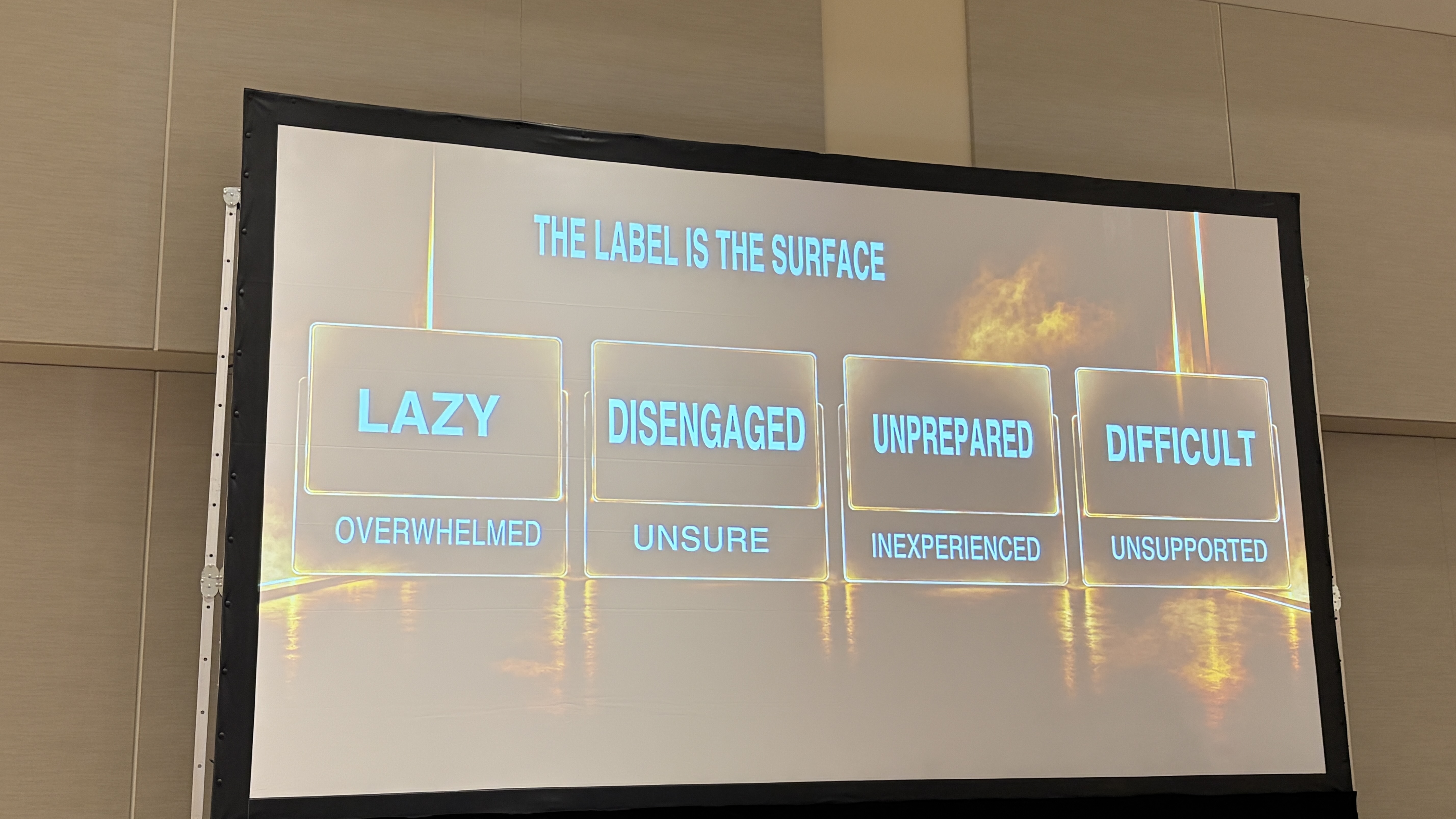
Yost also described how applying a label to a student is the surface of who the student actually is and doesn't account for their life experience or lack of it. For example, a label of “lazy” might be misapplied to a student who is overwhelmed. A student who might appear “unprepared” is actually a novice, not just with EMS, but also inexperienced with job or interpersonal relationship skills.
"'Unprepared' is an odd complaint if no one taught them how to prepare," Yost said.
Recalibration #2: Lead with trust, not just authority.
Yost was trained in a listen-twice-as-much-as-you-talk environment and that a quiet classroom is a good classroom. Now as an experienced instructor, he challenges this because in a quiet classroom questions stop, doubt goes unverbailized, mistakes get hidden, and everyone looks compliant.
"Authority creates quiet without creating trust," Yost said. "Because a quiet classroom can still be full of questions—they're just not asking you."
In a trust-first classroom, the door is open for questions, discussions, and shared exploration. To build trust, Yost recommended these things for educators and supervisors:
- Be predictable. Students who know what to expect, know how to prepare.
- Explain why. Connect the instruction to its relevance, giving students a reason to care.
- Correct privately: Public humiliation blocks learning because it puts the instructor’s feelings above the students.
- Follow through: Students watch for and expect consistency. Doing what you said you will do builds trust.
Recalibration #3: Choose growth, not just tradition.
"'That's how I learned' is typically spoken by the person who survived the experience, not the people who failed," Yost said.
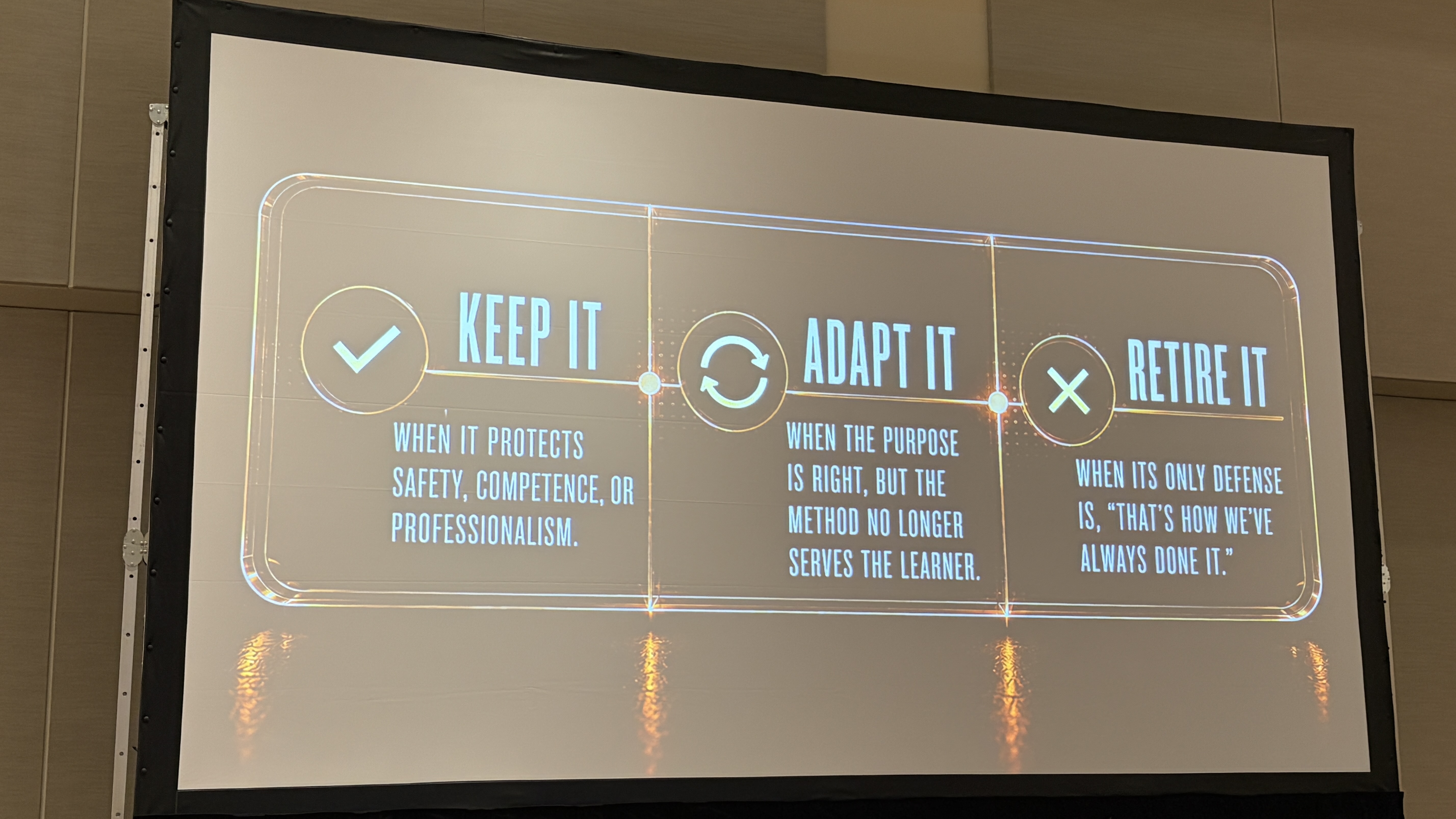
Yost described a memorable experience from his career, admonishing a student who came to class unshaven, only to learn the student didn't have a father in his life to teach him how to shave. Rules or traditions based on assumptions can humiliate students and compromise their journey toward competency. Yost gave attendees three approaches to examining education traditions:
- Keep a tradition when it protects safety, competency, or professionalism.
- Adapt a tradition when the purpose is right, but the method no longer serves the learner.
- Retire a tradition when the only defense is, "That's how we've always done it."
Recalibration #4: Grade the work, develop the person
A grade is a starting point or snapshot for instruction.
"A grade measures performance today, identifies what is currently missing, and doesn't define the person," Yost said.
Simply telling a student to “work harder” or “do things differently” isn't enough to get students to the standard. Instead, identify what’s missing from the student's performance, describe what they need to do next, and reassess to see whether what you did as an instructor worked.
“‘Do better next time’ can't be a remediation plan," Yost said. "They have to know what to do better next time. They need to know how to do it better next time. That's our job."
From EMS World Expo to the Classroom
Look at your own instructional practices and go beyond teaching students the way you were taught. Just because you survived your education doesn't mean it was effective for you, and it definitely wasn't effective for the students who failed.
Yost's four recalibrations are a starting point for continuing to progress as an educator because our students are not the same as the students we were.