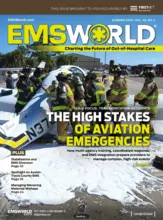
The High-Stakes Nature of Aviation Emergencies
Aviation emergencies are rarely routine and never simple, said Nicholas Dumas, MPA-EM, A.A.E., ACE, Venice (Florida) Municipal Airport director.
“For EMS providers, these incidents bring together some of the most challenging
prehospital care elements: multiple patients, limited access, hazardous conditions, and the need for seamless interagency coordination,” he said.
In November 2025, the airport conducted a three-day multi-agency full-scale aviation emergency exercise designed to meet those challenges.
Building the Response: Training, NIMS, and ICS
Emergency exercises involving fire, EMS, law enforcement, airport operations, and aviation partners operating as a unified structure are critical to airport readiness before a real emergency occurs, Dumas said.
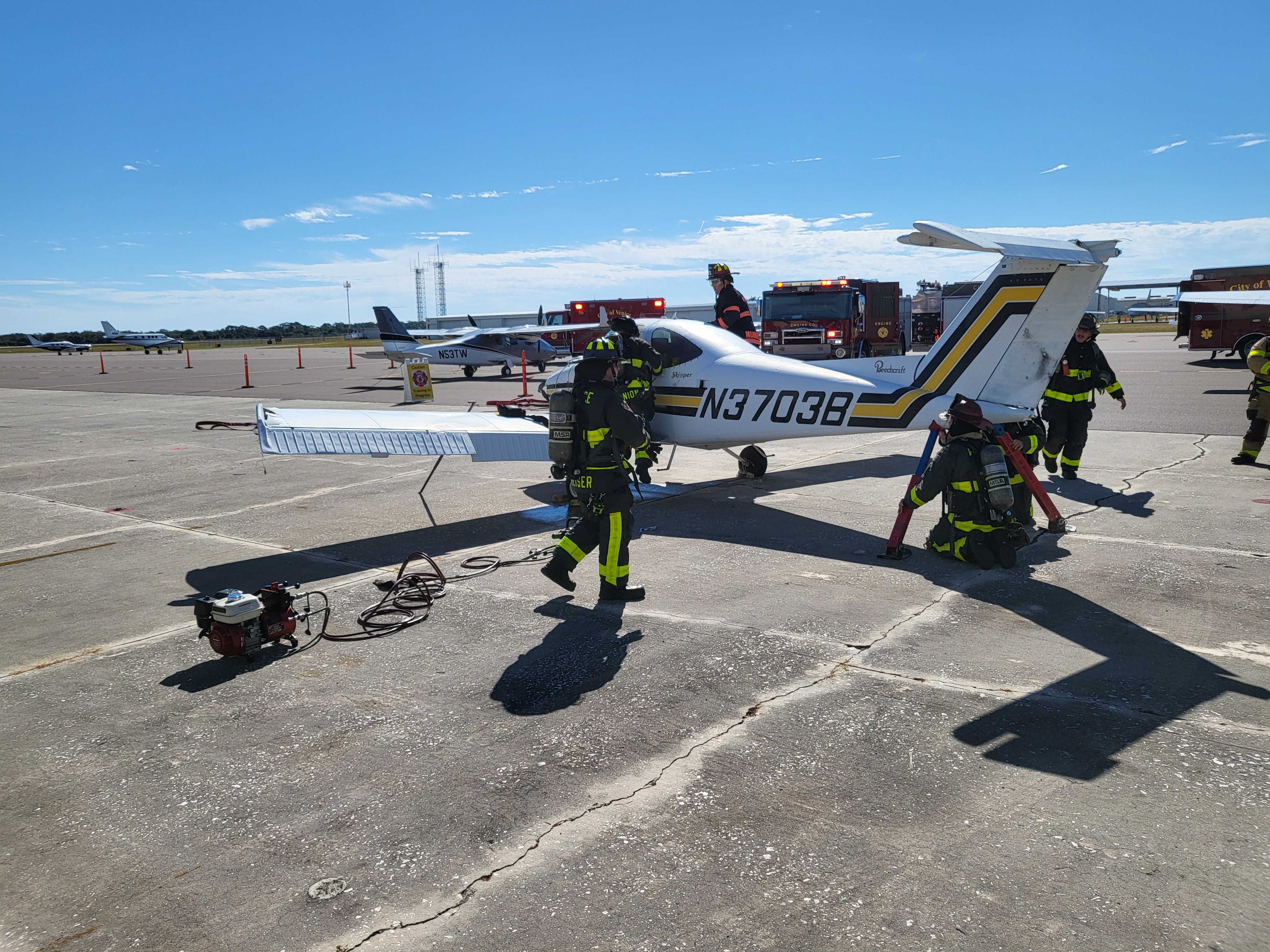
Steven Lambright, Venice Fire & Rescue assistant fire chief, EMS, noted Venice Municipal Airport emergencies are one of the worst-case scenarios for fire and EMS providers.
“Historically, they are a rare occurrence, but we have seen an uptick lately in aircraft incidents,” Lambright said, which emphasizes the importance for such training.
Dumas said most aviation incidents occur outside the commercial sector, with general aviation accounting for approximately 70% to 80% of all aviation accidents annually.
“Municipal airports often see a wide range of aircraft and pilot experience levels, from student pilots to professional charter operations, further increasing the complexity of potential responses,” he added.
Proactive risk management was the driving force behind the exercise. With more than 116,000 annual flights, Venice Municipal Airport operates in a dynamic general aviation environment with ever-present low-frequency, high-impact event potential, Dumas noted.
“While the airport hasn’t experienced a recent large-scale incident requiring this level of response, that absence doesn’t reduce risk,” he said. “In aviation, preparedness is built on anticipating the worst-case scenario, not reacting to it.”
The first few minutes of all aircraft emergencies dictates the direction the incident takes, Lambright said, adding emergency responders are trained to follow the National Incident Management System (NIMS) to efficiently communicate on large-scale scene.
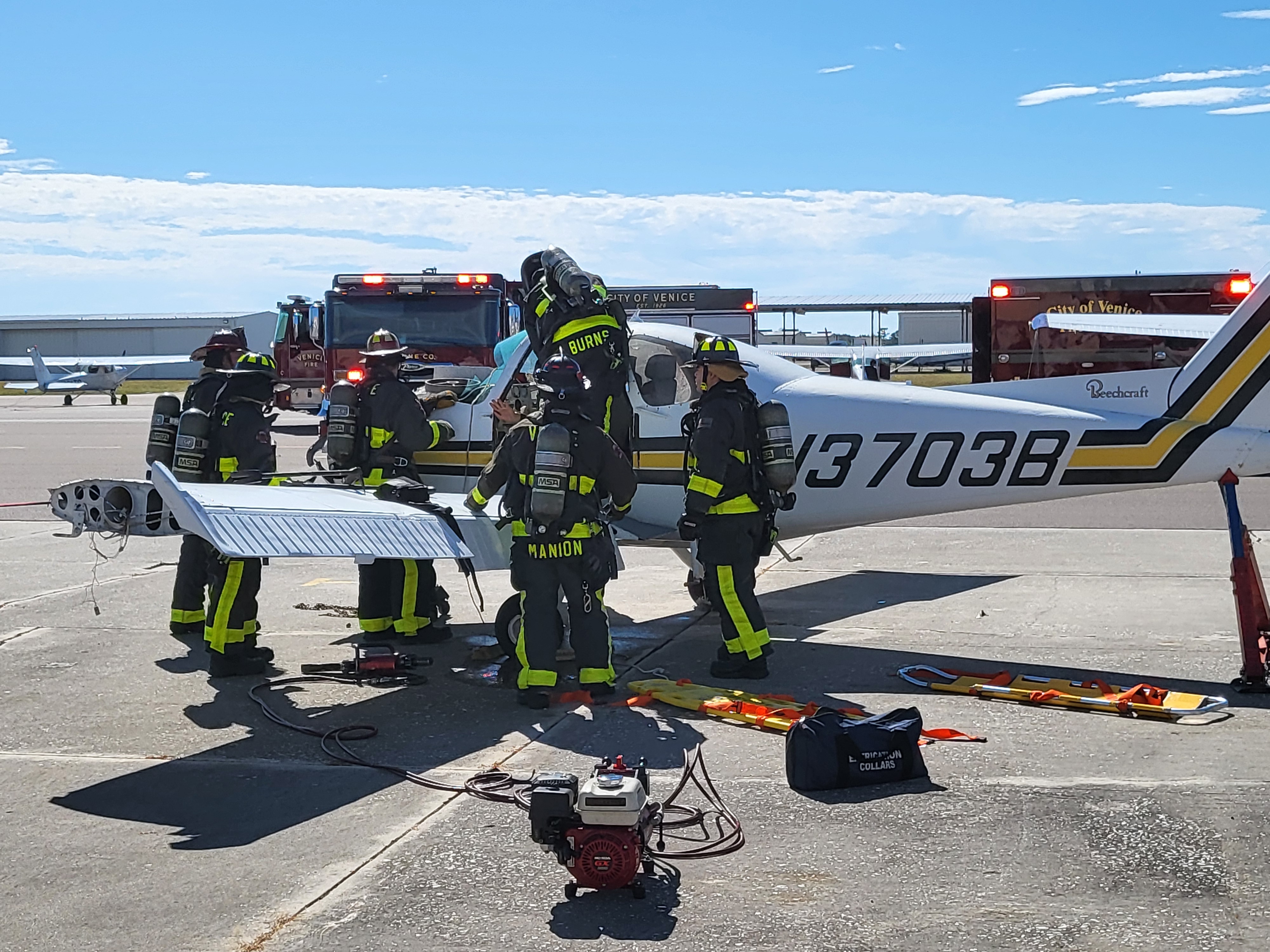
Lambright likened it to a foundation for a house.
“Typically, this foundation is established by the first arriving units on scene,” he said. “If they set the foundation correctly, time and resources can be utilized more efficiently to handle the emergency and not have to reset the foundation.”
Very few, if any, departments can handle these emergencies alone, Lambright said. Multiple responding agencies carry different equipment, tactics, and abilities; trainings expose personnel to these differences, reducing the unfamiliarity not covered by the NIMS.
Frank Giddens, Venice Fire & Rescue fire chief, said, “Airports are among the most complex and high-risk environments we respond to. Unlike typical emergency scenes, they involve active runways, taxiways, moving aircraft, ground support equipment, and coordination with air traffic control and airport operations. Maintaining constant situational awareness is not optional—it’s essential.”
“A collaborative, ‘all eyes on’ approach between fire/EMS and airport personnel ensures no single point of failure
compromises safety,” he added. “Every responder from command staff to apparatus operators must remain aware not only of the emergency itself but also of the dynamic environment around them.”
That includes aircraft movement, changing runway statuses, and airport control instructions tied together through clear, disciplined communication.
“In aviation, the absence of past incidents is not an indicator of future risk,” Dumas said, adding training exercises ensure when a real incident occurs, responders aren’t meeting for the first time on scene but functioning as a coordinated, practiced team in an inherently complex and time-sensitive situation.
“Coordinated exercises strengthen interoperability, reinforce the use of the incident command system (ICS), and expose gaps in communication, access, and procedures before they impact real-world outcomes,” he added.
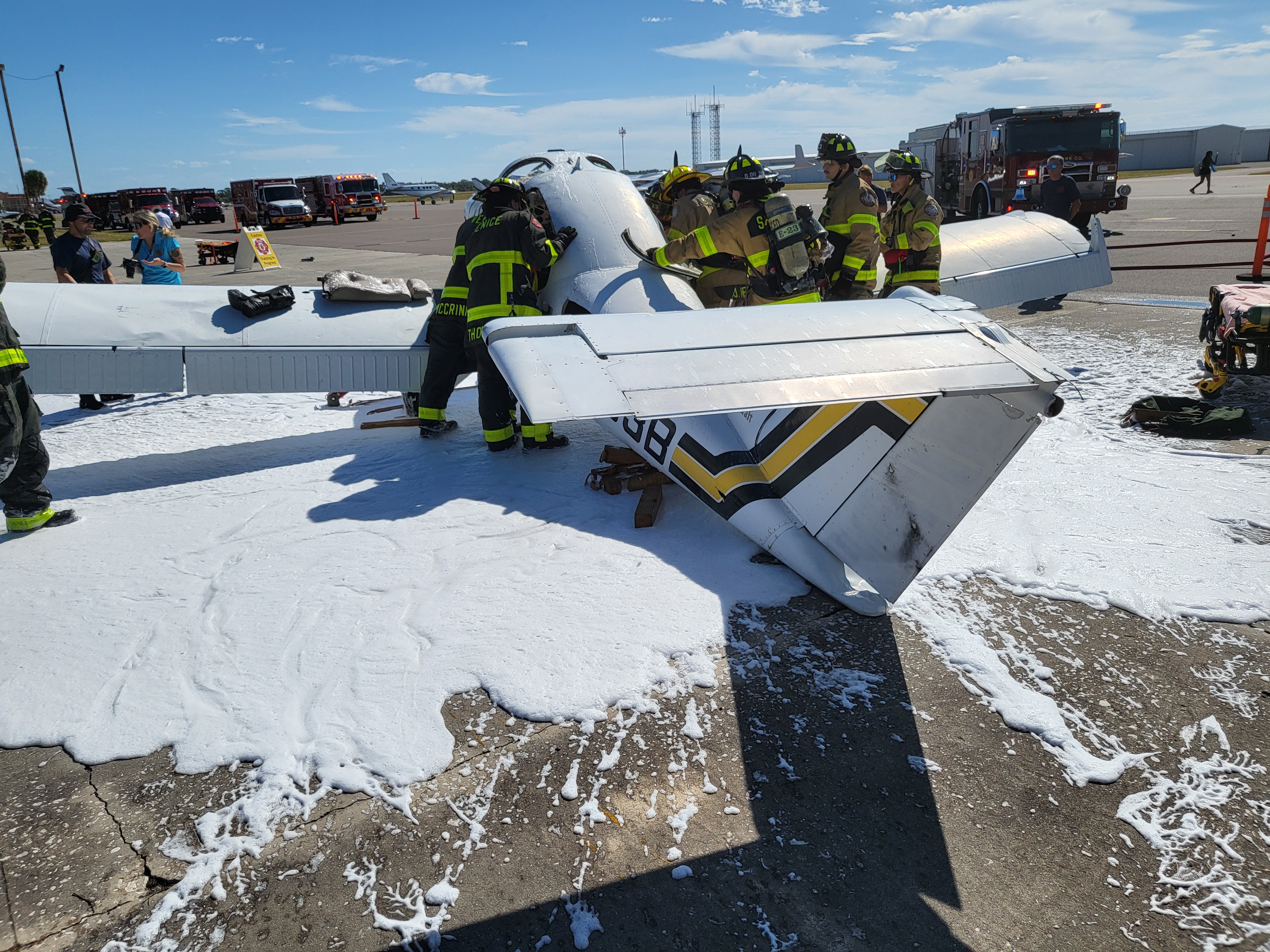
They also build muscle memory and trust, allowing responders to make faster, more confident decisions under pressure, Dumas said. When a real incident occurs, responders act as a cohesive team rather than independent units, translating into more timely care and improved survivability for patients.
Emily Santana, general manager of Skyport Aviation—a Fixed Base Operator (FBO)—noted from an operational standpoint, airports are controlled, fast-paced environments with restricted areas and active air traffic, adding a layer of complexity to any emergency response.
Such training allows responders to become familiar with airport layout, procedures, and coordination required to operate safely and efficiently on the airfield while identifying knowledge gaps, she said.
“Airports operate very differently from environments EMS crews typically respond in and without prior exposure it can be challenging to navigate access points, understand aircraft hazards, and integrate smoothly with airport operations,” she said.
The training created an opportunity for EMS, fire, and airport personnel to better understand each other’s roles and build working relationships ahead of time, Santana said. The airport already hosts the Sarasota County Sheriff’s Office and Bayflite (air ambulance service).
Matt Hoskins, chief operating officer for Florida Flight Training Center, which helped facilitate and host the training with the Venice Airport Authority, led the classroom portion focusing on general airport operations and likely aviation accident scenarios specific to the area.
“As the largest operator on the field, we felt a strong responsibility to ensure that in the event of an emergency first responders are as prepared as possible to operate safely and effectively around our customers, aircraft, and facilities and the general public,” Hoskins said.
William E. Sturgeon, Sarasota County Fire Department assistant chief of training, noted emergencies, especially those involving aircraft, can quickly exceed a single agency’s resources.
Shared terminology, familiar faces, and jointly practiced procedures reduce confusion and strengthen the overall response.
“Mutual aid partnerships are built long before a real incident occurs. Exercises like this airport drill reinforce those relationships,”Sturgeon explained. “By training side by side, agencies develop trust, identify gaps, and refine their approach to complex, multi‑agency operations.”
EMS Challenges: Triage, Access, and Patient Care
Managing multiple patients within an aircraft’s confined space is a significant challenge for EMS providers in an aviation incident, Dumas said.
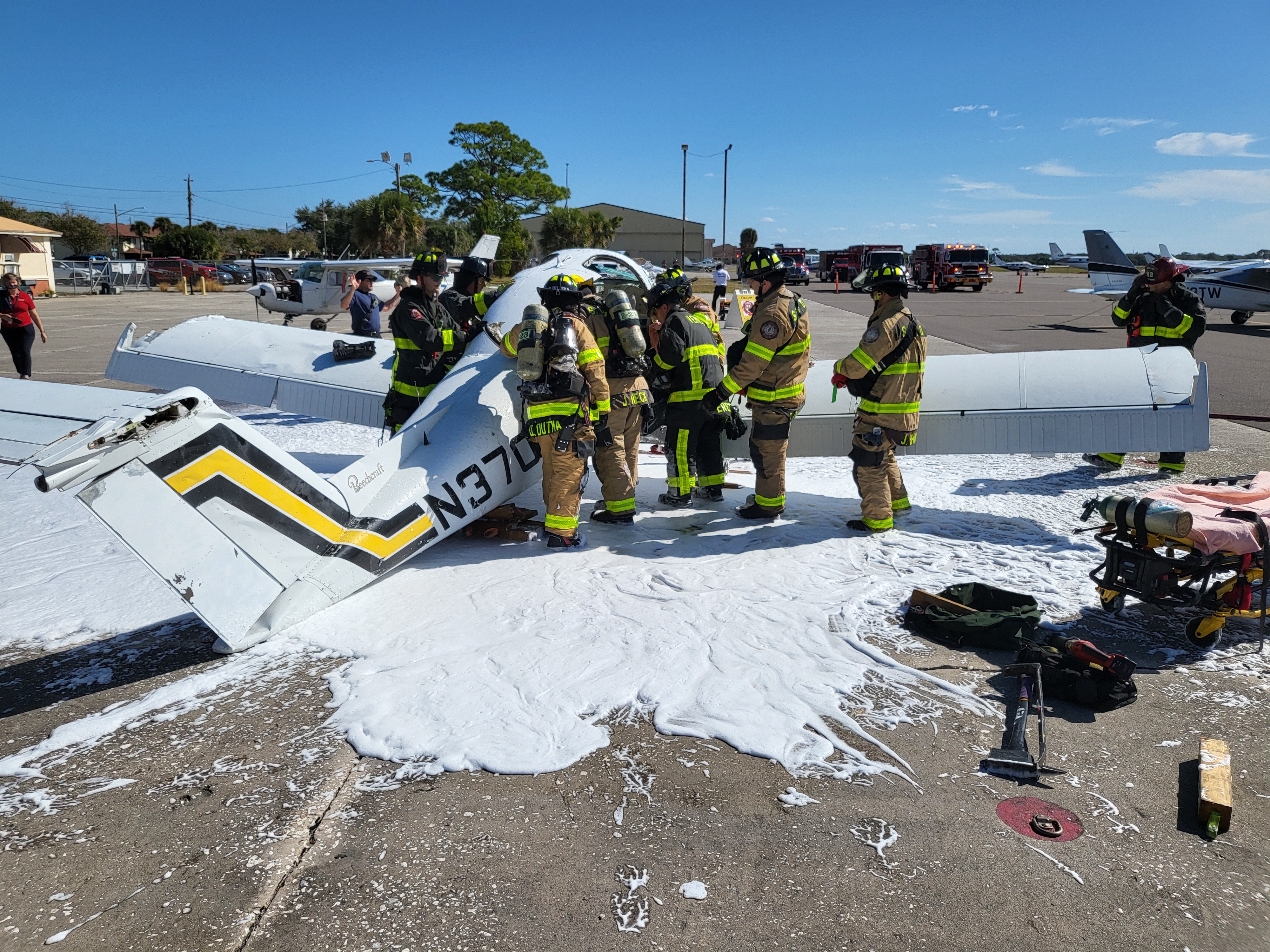
“Cabins are restrictive by design, with limited entry points and little room to maneuver,” he noted. “Patients may be tightly clustered, requiring providers to perform triage, initiate care, and support extrication simultaneously. All of this occurs in an environment that may include fuel hazards, fire risk, and high noise levels that complicate communication.”
Kyle Hartley, BSFA, CFO, Venice Fire & Rescue assistant fire chief, said, “While fire suppression, hazard control, and extrication are essential components of the response, patient outcomes are ultimately driven by how early and effectively EMS is incorporated into the operation. These incidents are time-sensitive and resource-intensive. One of the most important priorities is establishing a medical group leader early within the incident command structure.”
This allows EMS operations to begin immediately with triage, designation of treatment areas, and coordination of transport, he added.
“In high-stress environments with multiple patients, there’s a natural tendency to begin treatment right away,” Hartley said. “However, establishing that framework early ensures the greatest good for the greatest number of patients.”
Dumas noted best practices in training exercises include adhering to structured key mass casualty triage systems such as Simple Triage And Rapid Treatment and Sort-Assess-Lifesaving Interventions-Treatment/Transport to prioritize patients.
Pre-Scenario Coordination and Prep
Aviation incidents require close coordination between fire suppression and EMS teams—all while operating in a physically constrained and hazardous environment.
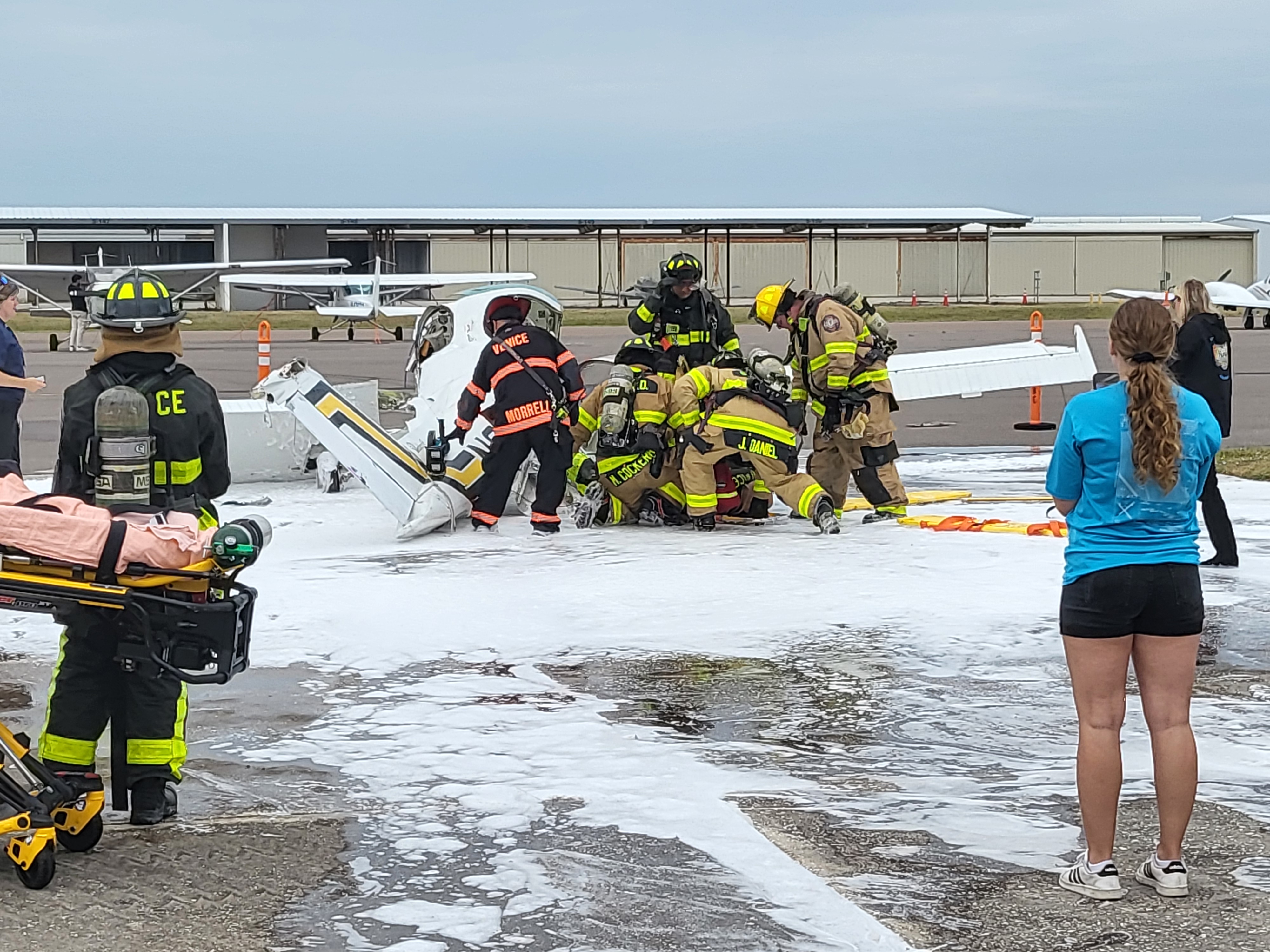
“Care often begins in place before full extrication is possible, requiring close coordination with fire personnel working to stabilize the aircraft and create access,” Dumas said. “Their ability to operate efficiently in chaotic, high-risk environments directly impacts survivability.”
Hartley said identifying challenges related to access points, particularly for assisting agencies, as well as the coordinated movement of apparatus on airport property and communication difficulties including radio traffic congestion “are not issues we want to solve during an actual emergency, which is why exercises like this are so valuable.”
“Familiarity with aircraft layouts, access points, and rescue pathways allows EMS crews to operate more efficiently,” Dumas explained. “A strong ICS structure ensures roles are clearly defined, while redundant communication systems help prevent coordination breakdowns. Joint fire and EMS training is particularly important as suppression, rescue, and patient care must occur simultaneously, not sequentially.”
Fire Suppression Around Fuel
The fire suppression exercise highlighted how rapidly conditions can escalate when fuel is involved, Santana said.
Hartley explained crews worked through a simulated fuel leak, deploying firefighting foam to suppress jet fuel vapors and reduce the risk of ignition while suppression crews focused on stabilizing the aircraft to create a safer operating environment for rescue personnel.
Once conditions were controlled, crews moved into coordinated extrication,
requiring close communication to ensure patients were removed efficiently while minimizing further injury.
EMS personnel were positioned to receive entrapped patients immediately upon removal, initiate triage, and
begin treatment without delay while simultaneously being distracted by ‘walking wounded’ patients, Hartley said.
Operating in a Complex and Dynamic Airport Environment
An after-action teview highlighted several strengths of the exercise, including strong interagency coordination and communication supported by the use of a dedicated training radio channel, Dumas said.
“Triage, patient care, and extrication operations were conducted effectively, and the integration of a simulated fuel leak added a valuable hazardous materials component that was handled safely,” he said.
Areas for improvement included refining communication flow between agencies, enhancing patient tracking and accountability, and making minor adjustments to scene access and staging, Dumas said.
“These findings will be incorporated into updates to the Airport Emergency Plan, reinforcing it as a strong framework while improving communication protocols, clarifying roles, and refining operational sequencing,” he added.
One key factor overlooked with such trainings and events is the involvement of hospital personnel, Lambright said.
“Ultimately, all the patients we encounter will make their way to area hospitals,” he explained. “Like us, they’re not equipped to handle such an event with their day-to-day staffing configuration. Events like this greatly strain their available resources. We frequently conduct drills like this to allow the hospital to practice and prepare in the event of an aircraft emergency.”
Hoskins noted prior to this training, there was no formal aviation-specific instruction for many of the responding agencies.
“Critical information such as hydrant locations, airfield access points, and general airport navigation wasn’t widely known,” he said. “The training helped bridge that gap by giving responders both the knowledge and physical exposure needed to operate confidently in what can otherwise be an unfamiliar and high-risk environment.”
The scenario used a hurricane-damage aircraft, which allowed the first responders to work through realistic crash condistions.
Additional scenarios included a multi-aircraft incident using active training aircraft with simulated victims onboard.
“During the exercise, it became clear there were some gaps in understanding regarding the capacity of our jets and how much fuel they can carry,” Santana said. “From an FBO standpoint, that’s critical information we can and should be sharing more proactively because it directly impacts fire suppression strategy, scene safety, and overall response planning.”
Lessons Learned and Strengthening Future Response
Giddens saidthe joint exercise is a reminder to those in public safety that response effectiveness is not just about how quickly they arrive or what tactics they deploy—it’s about how well they view and
communicate within the entire picture.
“Situational awareness supported by strong interagency collaboration is what ultimately protects both responders and the public,” he said.
“Ultimately, these exercises are about building a system that works seamlessly under stress,” Hartley said. “For EMS providers, that means being prepared not only to deliver patient care, but also help lead and coordinate the medical response in a complex, multi-agency environment.”
Lambright noted the airport incident training involves seldom-utilized triage tactics, provides familiarization coordination of surrounding departments, and can be extended to other incidents, such as a bus crash.
One valuable outcome of this training was turning an unfamiliar and potentially intimidating environment into one responders can approach with confidence, Hoskins said.
“By building familiarity ahead of time, we significantly improve the effectiveness and safety of any real-world response,” he explained.
About the Author
Carol Brzozowski is a Florida-based freelance writer and frequent contributor to EMS World.