Patchwork EMS System Affects Care in Rural Tompkins County, New York
When it comes to EMS and saving lives, every second counts. Yet in Tompkins County, New York, their overall EMS average response time was 10 minutes and 34 seconds in 2021. This is markedly higher than the national average of four minutes. Coupled with rising costs, a severe drop in volunteer personnel, and an over-reliance on just four transport-capable ambulance agencies to cover 475 square miles, the county’s EMS capabilities are under unprecedented strain.
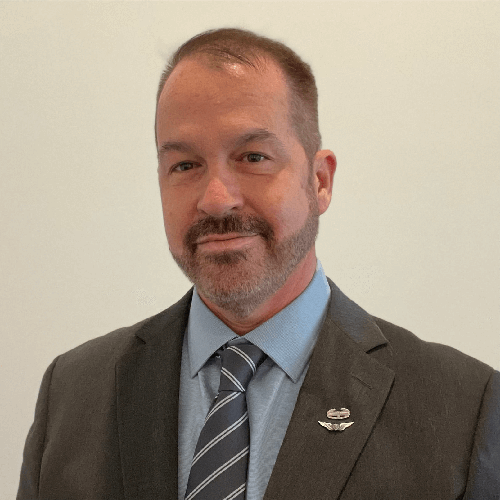
Recent research into the problem, including a 2025 CGR Tompkins County EMS Evaluation, reveals a disjointed system where a patient's zip code affects the speed and quality of their care. To learn more about the root causes of this crisis and the push for a centralized, county-run EMS model, EMS World spoke with Dan Lamb, deputy supervisor for the town of Dryden, New York, and professor at the Brooks School of Public Policy at Cornell University.
EMS WORLD: Please tell us about the current EMS situation in Tompkins County. Just how patchwork is this system?
 DAN LAMB: It’s to the point where some communities have never had an ambulance-level service with the ability to treat and transport patients, while others have developed them over the last 20 to 40 years. We have one city in our county, which relies on a private ambulance service that charges for its services and operates in the urbanized area.
The rural communities really vary in terms of what they have. The town where I work has a nonprofit ambulance service that contracts with the town on an annual basis, and there are two other similar nonprofit providers. They all vary in terms of their scope, their taxing authority, and their ability to provide mutual aid.
It’s a patchwork system, and we’ve seen call volumes go up while response times slow down in terms of speed. Concurrently, costs are rising. It’s not something that should be addressed on a purely local basis anymore; it needs a regional solution.
EMS WORLD: How does this reliance on mutual aid and a decentralized structure create EMS issues for Tompkins County towns like Dryden?
LAMB: In New York, you must have a certificate of need to establish where you can provide medical services. We have one for the town of Dryden, held by Dryden Ambulance, which contracts with the town. But in any given month, up to 40% of their calls are going outside of the taxing boundaries of Dryden.
My taxpayers are paying for a lot of service that goes outside of my town to cover gaps elsewhere. As an elected official, you can imagine why I'd want to address that. We currently have an unsustainable, inequitable provision of services. The taxpayers of rural municipalities shouldn't be single-handedly subsidizing emergency care for the broader region.
EMS WORLD: We know volunteer agencies were once the backbone of rural EMS. What do the numbers look like regarding the loss of these volunteers?
LAMB: The statewide trends are very much experienced here in terms of the loss of professional and volunteer emergency services providers. The state comptroller put out a report showing a nearly 20% decline in volunteer EMS staffing statewide between 2019 and 2022.
Seeing that huge decrease in personnel made it clear that this is a statewide problem, not just an acute local issue. The system is currently being held together by staples and paperclips. If the broader public had a better idea of how fragile the support they take for granted really is, they would demand change.
EMS WORLD: A recent CGR evaluation outlined a roadmap for EMS reform. What are the practical solutions to deal with this problem?
LAMB: I think it comes down to setting expectations for the ambulance providers. Contracting is necessary, and you must have performance metrics in a contract with your service providers. Data needs to be shared on response times, call volume, out-of-area transports, and how much equipment is being used to take patients to regional hospitals—because that removes vehicles from our community.
We can't operate as separate entities anymore. We must have a centralized hub—in this case, the county—to do an assessment of what's needed and to make sure there aren't parts of this county that wait 10 or 15 minutes for an ambulance to arrive. We all need to put our cards on the table to ensure unmet needs are addressed.
EMS WORLD: Is there a need for the government to step up and designate ambulances as an essential service?
LAMB: I’m in support of that. We have passed resolutions calling on the state of New York to classify ambulance services as essential. Right now, fire is essential, but ambulance service is not, meaning each municipality approaches it differently.
It takes a lot of time for our state legislature to coalesce around significant change because interest groups are powerful, and anything that redistributes power and money can get held back in Albany. But we must have a clear understanding of who is doing what on a county level. We must reinforce the system so it can meet the need, ensuring my taxpayers aren't unfairly compensating for other parts of the county that are under-resourced.