When Systems Fail: Why EMS Must Keep Legacy Tools Alive
The landline rang at 05:45. I had just returned home the night before from a trip to Europe and was still shaking off the fatigue when I picked up. It was dispatch. Reports were already coming in of flooding in the mountains, and the main highway across the state line had been cut off. Evacuations were expected to begin soon. I told them I would be on my way shortly.
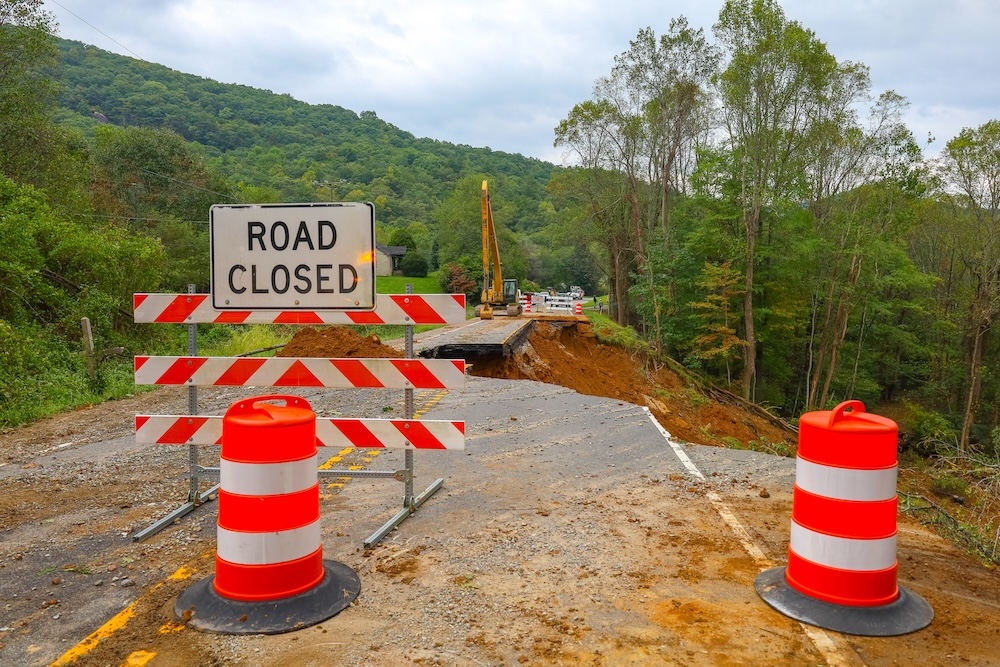
I moved quickly, showering and getting dressed before heading out the door. I hadn’t made it far when I was stopped in my tracks by a large tree down across the road, completely blocking my path to the main highway. I reached for the radio and tried to hit the repeater, but there was nothing — no response, no tone. I picked up my cellphone next, only to find there was no signal there either. With no way forward, I turned around, drove back to the house, and called dispatch from the landline, asking if they could get public works en route to clear the road so I could respond.
As I waited for them to connect me, it started to come together. It wasn’t just my location. The repeaters were down. The cell towers were down. Communication across the region was failing at the same time we were beginning to mobilize for what was quickly becoming a major incident. Hurricane Helene was pushing across the mountains, and its impact was already being felt.
As the morning unfolded, the situation escalated rapidly. Entire areas lost power. Sections of the interstate were washed away. Hospitals began evacuating, and in some cases, patients and staff were moved from rooftops by helicopter as floodwaters rose around them. It was a stark reminder that even the most capable systems can be overwhelmed. Technology is invaluable in modern EMS — but only as long as the infrastructure supporting it remains intact. Thankfully, we had a fallback plan.
New Tools Rely on Vulnerable Infrastructure
In today’s EMS environment, we rely heavily on systems that are fast, efficient, and deeply connected. Mobile Data Terminals (MDTs), now standard in most ambulances, allow crews to receive call information, communicate with dispatch, and access mapping tools directly from the vehicle. Integrated GPS navigation can guide providers turn-by-turn to an address, adjust routes in real time, and suggest alternate paths based on traffic or road closures. Protocols, drug references, and resources such as the Emergency Response Guidebook (ERG) are readily available on laptops, tablets, and smartphones, placing a tremendous amount of information at our fingertips.
These tools have transformed how we operate. They have improved response times, enhanced situational awareness, and made it easier to access critical information quickly. But they have also gradually replaced the independent tools that once served as our backups. Map books, printed maps, and even the occasional road atlas have largely disappeared from the cab of the ambulance. Protocol binders and printed ERGs have given way to digital applications. Paper trip tickets—patient care reports completed by hand—have been replaced by electronic patient care reporting (ePCR) systems that depend on devices, software, and connectivity.
This evolution has been overwhelmingly positive. But it has also created a shared vulnerability. Most of these systems depend on infrastructure—cellular networks, data connectivity, system servers, and electrical power. When those systems fail, they often fail together.
Most EMS agencies haven’t eliminated redundancy. In many cases, they already have it built into their operations. The challenge is that those capabilities are often underutilized, poorly understood, or simply overshadowed by more modern systems.
Do Personnel Know How to Find the Backup?
Communications provide a clear example. Many ambulances are equipped with advanced, multi-band radios capable of operating on large trunked systems while also maintaining access to conventional channels. In Tennessee, as in many other states, agencies still maintain VHF simplex channels for direct unit-to-unit communication, along with additional channels intended for coordination and hospital communication. These channels don’t rely on network infrastructure. They aren’t dependent on system controllers or wide-area coverage. When everything else fails, they continue to work.
The issue isn’t whether those channels exist — it’s whether crews know how to find them and use them effectively. Even in systems designed for interoperability, challenges can still arise. Across many regions, agencies operate on a mix of platforms, some fully integrated into statewide networks, others using different systems or configurations. In some cases, encryption or system design can limit who can communicate directly on primary channels. The solution is often to move to designated interoperability channels, but that assumes both sides recognize the need to switch and know how to do it. If initial communication can’t be established, coordinating that transition becomes difficult. Interoperability, in practice, still depends on awareness, training, and the ability to adapt in real time.
During the Gatlinburg wildfires, ambulance strike teams responding to the area were assigned interoperability channels through the communications unit operating within the incident command system. Some units reported that they didn’t have those channels available in their radios. Radio technicians on site began reprogramming radios so crews could communicate, only for it to be discovered later that the channels had been present all along — they were simply located in a different zone within the radio.
A simple printed radio fleet map — a guide showing channel names, functions, and where to find them within the radio — could have prevented that confusion entirely. It’s a small, low-cost solution, but in a high-stress environment, it can make a significant difference. The same pattern appears in how we access information and complete documentation.
Disasters Highlight Vulnerabilities
When Hurricane Irma impacted Florida, many responding EMS units found themselves unable to connect to their electronic reporting systems. Without network access, ePCR platforms became unusable in the field. Crews had to revert to paper patient care reports, often with limited ability to print additional copies unless they were coordinated through strike team leadership. The systems designed to streamline documentation simply couldn’t function without connectivity.
More recently, in Tennessee during the response to Hurricane Helene, widespread cellular outages affected multiple counties. Even with supplemental connectivity solutions, including multi-carrier systems provided by the state, reliable communication in the field remained inconsistent. In many areas, there simply wasn’t enough signal from any carrier to support those systems.
Even emergency operations centers, which have grown accustomed to constant internet access, found themselves adapting. In some locations, communication had to be passed using amateur radio until satellite-based systems could be brought online. Some amateur repeaters remained operational, and many stand-alone VHF systems on ambulances and facilities continued to function even as larger, networked systems struggled.
The equipment we use every day also reflects this shift. Cardiac monitors still can print ECGs and rhythm strips, but many crews rely primarily on digital transmission or electronic storage. When connectivity is lost, those built-in printing capabilities become important again — and only if providers remember how to use them. These experiences aren’t failures of technology — they’re reminders of its limits. It’s a reminder that we must remember the basics in all our operations, not just medical care. We must be able to communicate, navigate, and document, even when our primary methods aren’t available.
Modern, networked systems — including statewide trunked radio systems — have significantly improved day-to-day public safety operations. They provide wide-area coverage, interoperability, and capabilities that were difficult to achieve in the past. But they also introduce complexity and dependence on infrastructure that is not always visible to the end user. When those systems are degraded, restoring communication is not always as simple as switching channels.
For those who have been in the field for several years, this isn’t new. Many remember operating on conventional VHF and UHF systems where communication was more direct and less dependent on networked infrastructure. EMS, in particular, has long benefited from having common channels available across agencies, even before the development of formal national interoperability channels following events such as 9/11 and Hurricane Katrina. Those pathways still exist in many systems today, but they aren’t always emphasized, and in some cases may not be regularly exercised.
Training Gaps for Legacy Systems
Another challenge is that the skill set required to work through these issues is becoming less common. In the past, there were often individuals — both within public safety and in the amateur radio community — who were comfortable adapting systems on the fly, finding alternate pathways, and improvising when needed. Today, with increasing reliance on vendor-supported and highly integrated systems, those skills are not always as prevalent. When large-scale events occur and systems fail across a region, those same vendors may be overwhelmed, and local adaptability becomes critical.
Resources such as the National Interoperability Field Operations Guide (NIFOG) still provide a framework for identifying and using available communication channels, but only if personnel are familiar with them and know how to apply them in the field.
The same concept extends beyond communications. As we have moved toward fully digital systems, many of the tools that once provided independence have quietly faded from daily use. Map books, printed maps, and road atlases have been replaced by GPS-based navigation. For most providers, this is a welcome change — until signal is lost or systems fail. At that point, navigation becomes a challenge not because the information is unavailable, but because the skill to access it in a different format may no longer be familiar.
This is where experience and mentorship still matter. Providers who have worked through earlier systems understand how to navigate without GPS, how to communicate without network support, and how to operate when technology is limited. Bringing those perspectives forward — through training, informal mentoring, or even simple discussion — can help ensure that newer providers are not encountering these challenges for the first time during a disaster.
We Don’t Have to go Back, Just Have a Backup
Building redundancy into EMS operations doesn’t require a return to outdated practices, nor does it require significant new investment. In most cases, it involves recognizing what is already available and ensuring it remains accessible, functional, and familiar.
Maintaining awareness of conventional radio channels, keeping minimal printed resources such as condensed protocols or a map, and ensuring paper documentation is available when needed are simple steps that can make a meaningful difference. Just as important is making sure that personnel are comfortable using those tools when the situation demands it.
Technology has made EMS more capable than ever before. Communication is faster, information is more accessible, and coordination across agencies is significantly improved. These advancements should be embraced and supported.
At the same time, capability without resilience creates vulnerability. Systems that depend on shared infrastructure can fail together, and when they do, the difference between effective operations and confusion often comes down to whether independent backups are in place and ready to use.
Failsafe systems aren’t outdated. They are simply independent. They don’t rely on connectivity, network access, or external support beyond what is already in hand. In the moments when modern systems are unavailable, they become the foundation of continued operations.
Most agencies already have the tools they need. The task isn’t to rebuild the past, but to ensure that those tools remain visible, accessible, and familiar. Because in EMS, it’s not a matter of if systems will fail — it’s when. And when they do, the systems that remain are the ones that still work.
It may be worth asking a simple question: If the system goes down, do your people know what to do next?