EMS Week: Recognition vs. Understanding in EMS
During EMS Week, ambulance bays across America will fill with catered lunches, challenge coins, social media tributes, and speeches thanking EMS professionals for their service. By the following week, many of those same crews will return to understaffed shifts, aging equipment, mandatory overtime, and communities that still don’t fully understand what modern EMS has become.
Recognition matters. But recognition alone isn’t enough.
National EMS Week 2026, observed May 17–23 under the theme “Improving Outcomes, Together,” arrives at a pivotal time for EMS. EMTs, paramedics, dispatchers, emergency communications personnel, and support staff absolutely deserve recognition for the difficult and often exhausting work they perform every day. Yet if EMS Week focuses only on appreciation while failing to build genuine understanding among the public and policymakers who shape funding and legislation, we risk another year of applause followed by the same staffing shortages, reimbursement struggles, recruitment problems, and operational pressures.
Recognition and understanding should not compete with one another. In fact, they work best together.
More Than a Celebration
National EMS Week was established in 1974 after President Gerald Ford authorized the first national observance recognizing emergency medical services. From the beginning, the week was never intended to be merely an internal celebration. It was also meant to increase public awareness and visibility for a profession that was still young and rapidly evolving.
More than 50 years later, that mission remains just as important.
This year’s theme, “Improving Outcomes, Together,” reflects the reality that EMS doesn’t operate alone. Modern emergency care depends upon coordination among dispatchers, field clinicians, hospitals, trauma systems, public health agencies, fire departments, law enforcement, and the communities they serve. That word “together” matters. EMS Week should not only thank providers for their service; it should help communities understand the increasingly sophisticated healthcare system arriving at their homes during moments of crisis.
Why Recognition Still Matters
Recognition remains foundational to morale and retention in a profession struggling with burnout, workforce shortages, compassion fatigue, and increasing call volumes. EMS professionals routinely work long hours under emotionally and physically demanding conditions while managing everything from cardiac arrests and traumatic injuries to behavioral emergencies and chronic healthcare needs that increasingly fall into the laps of EMS systems.
Simple gestures still matter.
A crew meal, peer-nominated award, family appreciation event, or handwritten note from leadership can remind providers their sacrifices are seen and valued. In many agencies, EMS Week helps reconnect crews with the sense of mission and camaraderie that brought them into the profession in the first place.
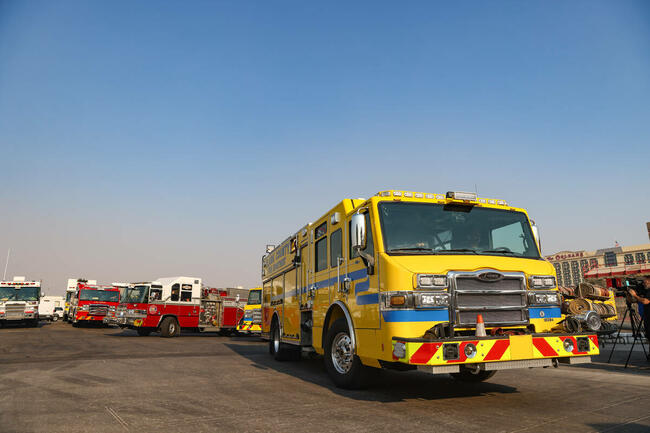
Recognition also matters because EMS is often invisible when compared to other public safety professions. Fire apparatus parked outside a station naturally draw public attention. Police activity routinely dominates headlines. EMS, however, frequently exists in the background—present during nearly every crisis, yet often overlooked once the patient disappears behind hospital doors.
That visibility gap has consequences.
The Public Still Doesn’t Fully Understand Modern EMS
One of EMS’s greatest challenges is that much of the public still views the profession through outdated lenses shaped decades ago by television and movies.
For many Americans, EMS still resembles the world of “Emergency!”—Johnny Gage and Roy DeSoto racing to scenes, performing basic lifesaving interventions, and rapidly transporting patients to the hospital. That groundbreaking television series did more to introduce paramedics to the public than perhaps any other media in history, and it deserves enormous credit for inspiring generations of providers.
But Johnny and Roy would likely be overwhelmed by today’s EMS environment.
Modern EMS is no longer transportation with first aid attached. It’s mobile healthcare practiced by highly trained clinicians operating deep into what was once hospital-only medicine.
Today’s paramedics interpret 12-lead ECGs and activate cardiac catheterization labs before hospital arrival, improving survival for STEMI patients. Critical care transport teams manage ventilators capable of precise tidal volume and PEEP adjustments while administering complex medication infusions once reserved for intensive care units. In some systems across the country, EMS crews now carry and administer blood products in the field for patients suffering life-threatening traumatic hemorrhage—bringing forms of resuscitation once seen primarily in military medicine and trauma centers directly to the roadside.
Community paramedicine programs are also expanding nationwide, sending EMS clinicians into homes to assist with chronic disease management, post-discharge follow-up, fall prevention, and reducing avoidable emergency department visits.
At the same time, the financial realities behind modern EMS have changed dramatically.
Today’s ambulances are no longer simple transport vehicles. They are mobile treatment platforms equipped with cardiac monitors, transport ventilators, infusion pumps, power-load stretcher systems, advanced communications technology, and increasingly sophisticated safety equipment. Replacing a frontline ambulance can now cost several hundred thousand dollars before staffing, medications, fuel, insurance, continuing education, and maintenance are even considered.
Yet many citizens still see EMS primarily as “the ambulance service.”
As access to primary care continues shrinking in many areas, EMS increasingly absorbs nonemergent healthcare needs alongside true emergencies. Meanwhile, the public rarely sees the operational realities behind the system: unreimbursed care, staffing shortages, equipment costs, workforce attrition, and the challenge of maintaining round-the-clock advanced life support coverage in both rural and urban communities.
Policymakers often face the same knowledge gap.
City councils, county commissions, legislators, and budget officials routinely hear from hospitals, law enforcement agencies, and fire services, but far less often from EMS professionals capable of explaining both the clinical sophistication and operational fragility of modern EMS systems. EMS Week is one of the few times each year when public attention, media interest, and political visibility align. Agencies should use that opportunity intentionally.
Invite elected officials to observe simulation training. Demonstrate modern cardiac monitoring equipment or transport ventilators. Show them what field blood administration looks like. Explain how staffing shortages affect response capacity. Walk them through the cost of replacing a frontline ambulance or maintaining a critical care transport unit.
Replace outdated stereotypes with firsthand understanding.
Recognition Without Understanding Falls Short
The strongest EMS Week programs recognize that appreciation and education reinforce one another.
Recognition events generate authentic stories that can be shared with local media, civic organizations, and elected officials. A recognition ceremony can also become an opportunity to discuss workforce shortages, reimbursement challenges, mental health resources, fleet replacement needs, or community paramedicine expansion. Ride-alongs and station tours transform abstract appreciation into direct understanding.
Agencies that successfully combine recognition with public education often see long-term benefits: stronger community support, improved relationships with elected officials, better understanding of operational needs, and greater support for funding initiatives and system improvements.
Those that limit EMS Week strictly to internal celebrations may boost morale temporarily but often find themselves fighting the same battles once the observance ends.
A Call to Action for EMS Week 2026
This EMS Week, agencies should absolutely celebrate their people. Host the cookouts. Present the awards. Share the photos. Publicly recognize the dedication and professionalism of the men and women who keep EMS systems functioning every day.
But don’t stop there.
Use the week as an opportunity to educate communities and stakeholders about what modern EMS truly is and what it requires to remain sustainable. Share data about staffing shortages, response demands, and retention challenges. Invite local leaders to training events and ride-alongs. Use Education Day to demonstrate the technology and clinical capabilities now present in modern ambulances. Use Recognition Day to remind communities that genuine support means more than appreciation—it means investment.
If EMS Week only celebrates providers, we risk repeating the same conversations next year under the same staffing shortages and budget pressures. But if recognition becomes education—and education becomes advocacy—then EMS Week can do more than boost morale for a few days. It can strengthen the future of the profession itself.
“Improving Outcomes, Together” should be more than a slogan. It should remind us that sustainable EMS systems require not only dedicated professionals, but informed communities willing to understand and support the increasingly sophisticated care being delivered long before a patient ever reaches the hospital.