Faster Procedures, Smarter Workflow: Venous Closure in the Modern EP Lab
Interview With Dhanunjaya Lakkireddy, MD, FHRS, FACC, MBA
Interview With Dhanunjaya Lakkireddy, MD, FHRS, FACC, MBA
© 2026 HMP Global. All Rights Reserved.
Any views and opinions expressed are those of the author(s) and/or participants and do not necessarily reflect the views, policy, or position of EP Lab Digest or HMP Global, their employees, and affiliates.
EP LAB DIGEST. 2026;26(9):8-9.
Interview by Jodie Elrod
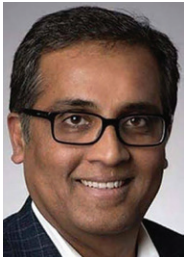
In this interview, EP Lab Digest speaks with Dr Dhanunjaya (DJ) Lakkireddy, Executive Medical Director of the Kansas City Heart Rhythm Institute and Professor of Medicine at the University of Missouri, about how venous closure is helping streamline workflow in the modern EP lab. Dr Lakkireddy shares his experience with the MYNX CONTROL® VENOUS Vascular Closure Device (VCD) (Cordis), discusses strategies to support early patient ambulation and same-day discharge, and highlights the goals of the ongoing MOVE Registry evaluating venous closure in real-world clinical practice.
You have been involved in many areas of EP innovation, including atrial fibrillation (AF) ablation, left atrial appendage closure, and broader arrhythmia care. From your perspective, what changes are having the greatest impact on how EP labs operate today?
 Creating macro- and microefficiencies really becomes important as any procedure matures. When AF ablation was first introduced, procedures were much longer and the tools were rudimentary. Advances in mapping, transseptal access, and vascular access have transformed procedural efficiency. One area people often overlook is venous closure.
When you think about the time it takes for a patient, following an ablation procedure, to be transitioned from the periprocedural area to the floor or discharged home, vascular access and closure are a key part of that process. Manual compression alone used to take several hours, and then came closure with figure-of-8 stitches. When COVID hit, we couldn’t keep all these patients in the hospital, so we increasingly adopted vascular closure devices. Some physicians use sutures, while others use closure systems such as the MYNX CONTROL VENOUS VCD. Venous closure has become one of the important components of the overall procedural workflow, reducing the amount of time patients need to remain supine and facilitating earlier ambulation.
With technologies such as pulsed field ablation (PFA) being adopted more widely, how is the operating model of the EP lab changing?
PFA has definitely been an amazing advance in technology. Before, with radiofrequency energy, linear lesions were created essentially point-by-point. Then PFA came along, and pulmonary vein isolation (PVI) could be achieved more efficiently. It reduced the ablation procedure time only modestly, but the procedure became much less cumbersome because of the safety profile it brought. We no longer had to worry as much about posterior wall injury to the esophagus, phrenic nerve injury, or PV stenosis. The improved safety profile simplified the procedure considerably. These efficiencies have improved throughput, reduced turnaround time, and decreased operator fatigue.
When you think about same-day discharge in EP, what are the practical barriers that still prevent more patients from going home the same day?
Every patient is different. We cannot really say that all patients can be sent home or need to stay. You can broadly divide the considerations into patient factors, geographic factors, and hospital-related factors. For example, relatively young, healthy patients with no major comorbidities—such as heart failure or renal failure—who undergo only a limited amount of ablation, where you’ve performed a straightforward first-line PVI without extensive additional ablation, are generally patients who can safely be discharged the same day. Frail patients, or those with significant comorbidities or extensive procedures, may still benefit from overnight observation, particularly given the possibilities of complications such as hemolysis after PFA. Geography also matters. Patients traveling long distances may not be appropriate candidates for same-day discharge.
Then there are workflow-related factors. How efficiently can your periprocedural area and staff get the patient mobilized back on their feet? In many centers, that process is still slow and cumbersome. As a result, many of these patients don’t get mobilized in a timely fashion, which can delay ambulation and discharge.
So geography and hospital workflow are important, along with the motivation to get patients up and moving. That’s one of the reasons that, in an ambulatory surgery model, patients undergoing procedures like an appendectomy are mobilized and sent home right away. There is an established pathway, with microefficiencies built into every step of care to facilitate early mobilization and, ultimately, discharge.
These are some of the things we learned during the pandemic. As a result, we now see that, on average, about 50% of patients go home the same day, while the other 50% stay overnight in the hospital. But regardless of whether they’re going to be discharged same day or not, early mobilization is an important part of the process and for patient satisfaction.
In that broader context, how has the role of venous closure evolved alongside advances in EP procedures?
For many years, we believed that simple manual compression was enough. That may have been true when patients were not on therapeutic anticoagulation. Then came ventricular tachycardia and AF ablation. In 2005, our group showed that uninterrupted anticoagulation is one of the best approaches for mitigating periprocedural and intraprocedural stroke risk in these patients.
When you have a patient on therapeutic anticoagulation and a venous sheath in place, achieving hemostasis at the groin access site with manual compression can be prolonged. With the current generation of EP catheters becoming relatively larger in size, closure of these larger venotomies has become increasingly important. That’s when figure-of-8 sutures, stopcock techniques, and suture retention devices gained popularity. People also began adapting arterial closure devices for the venous side, reasoning that if they could close an artery, they could close a vein, too.
At the same time, various vascular closure technologies, many of which had originally been developed for arterial access, gradually made their way to the venous side. Before the pandemic, many of us didn’t fully appreciate their value. Today, we recognize the important role they can play in facilitating early ambulation and improving procedural workflow.
When selecting a venous closure device, what procedural or patient characteristics impact your decision?
Is the VCD compatible with the size of the sheath that was used? This is an important consideration because some of the PFA catheters now require larger-bore sheaths. Also, in patients with an increased risk for deep vein thrombosis, I’m cautious about using procoagulant closure technologies.
With which venous closure devices do you have experience, and where does the MYNX CONTROL VENOUS VCD fit into your lab’s approach?
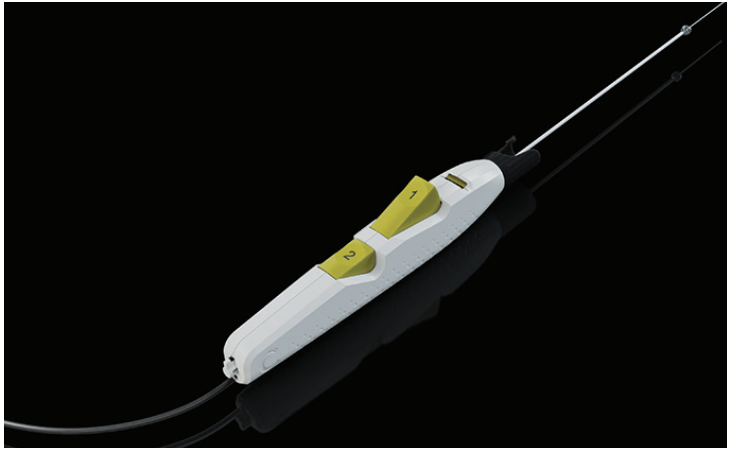
I have used them all. In fact, we have a few publications on various venous closure technologies. I think every one of these technologies has its place. For large-bore sheaths, I usually use a suture-based approach. For small-to-medium bore sheaths, the MYNX CONTROL VENOUS VCD works well. I like that it’s a straightforward, reproducible technique that integrates well into our existing workflow and supports our goal of early ambulation. It is relatively easy to deploy. It uses an intravascular balloon-based mechanism that confirms positioning at the venotomy, after which an extravascular polyethylene glycol (PEG) sealant is deployed within the tissue tract. The sealant technology provides a scaffold for clot formation and expands within the tissue tract to achieve hemostasis. The PEG sealant then resorbs naturally over approximately 30 days, leaving nothing behind in case venous access is required in the future. We’ve had very good experience with the device, and it has performed very reliably in our practice.
For those who may not be familiar with it, can you briefly walk through how the MYNX CONTROL VENOUS VCD is used in your practice?
We use it for most of our patients, whether they’re intended for same-day discharge or are staying overnight. Regardless, our goal is early ambulation. We want to get patients up and walking within 2 hours.
For many of our procedures, we use 3 to 4 sheaths across both groins. Immediately after the diagnostic and therapeutic catheters are removed, while still in the cardiac cath lab, any long sheaths are exchanged for short sheaths, and then the MYNX CONTROL VENOUS VCD is deployed to close the venotomies in each short sheath. We then observe the closed groin sites for a few minutes, then transfer the patients to the periprocedural area for recovery.
Patients are then monitored in recovery with routine vascular assessments before early ambulation, typically within about 2 to 3 hours. The vast majority are then ready for discharge or continued recovery.
You are serving as National Principal Investigator (PI) for the MOVE Registry, which is investigating the MYNX CONTROL VENOUS VCD in a real-world registry setting. How is the MOVE Registry evaluating the clinical and workflow impact of the MYNX CONTROL VENOUS VCD?
It is well established that more effective venous closure can be very important for patient comfort and for reducing delayed vascular complications, such as bleeding, hematomas, and prolonged immobilization. This in turn creates more capacity for hospitals, physicians, and the rest of the health care team to care for additional patients, which also improves operational efficiency and resource utilization. With limited resources, vascular closure tools like the MYNX CONTROL VENOUS VCD can play a significant role in optimizing these macro- and microefficiencies.
The Mobilization and Outcomes After Venous Closure (MOVE) Registry evaluates vascular closure outcomes such as time to hemostasis, time to ambulation, same-day discharge, and overall device performance. It also evaluates postprocedural complications such as hematoma. The MOVE Registry is designed to assess all of these aspects of vascular closure and determine the extent to which the MYNX CONTROL VENOUS VCD performs the way it’s intended. As one of the co-PIs of the study, I know we’ve completed enrollment in the MOVE study and will be working on presenting the results soon.
The transcripts were edited for clarity and length.
Disclosures: Dr Lakkireddy has completed and returned the ICMJE Form for Disclosure of Potential Conflicts of Interest. He has no conflicts of interest to report.
This content was published with support from Cordis.