Inova’s High-Volume Atrial Fibrillation Ablation Program: Leveraging a Novel Mapping and Ablation System to Improve Efficiency and Outcomes
Interview With Stephen Gaeta, MD, PhD
Interview With Stephen Gaeta, MD, PhD
© 2026 HMP Global. All Rights Reserved.
Any views and opinions expressed are those of the author(s) and/or participants and do not necessarily reflect the views, policy, or position of EP Lab Digest or HMP Global, their employees, and affiliates.
EP LAB DIGEST. 2026;26(8).
Interview by Jodie Elrod
In this interview, Stephen Gaeta, MD, PhD, of Inova Health System—one of the largest electrophysiology (EP) programs in the nation, discusses the impact of adopting the Affera™ mapping and ablation system (Medtronic) across a high-volume EP practice. Dr Gaeta explains how the technology improved procedural efficiency, reduced variability in case times, and enhanced lab utilization while maintaining strong procedural outcomes. He also shares insights on workflow integration, operator adoption, staffing efficiencies, and how greater procedural predictability is helping Inova expand access to atrial fibrillation (AF) care and improve the patient experience.
Can you give a brief overview of your EP program, including how many AF ablations are performed annually?
 Inova is the largest health system in Northern Virginia and serves a large portion of the Washington, DC, metropolitan area. We are an integrated health system with 5 campuses across Northern Virginia, 3 of which perform EP procedures. Across the system, we currently have 8 EP labs, including 6 labs at our main hospital and one lab each at 2 community hospitals, with several additional labs currently under construction.
We are a very high-volume EP center, with approximately 21 practicing electrophysiologists across 4 groups. Eight of those physicians are employed directly by the health system. We also partner closely with a large community group that includes 7 electrophysiologists, along with several other community-based groups. As a result, a significant amount of EP work is taking place across Inova every day. In 2025, we are performing more than 2000 AF ablations annually, and that volume continues to grow steadily.
Prior to using the Affera system, what were the biggest challenges in your AF ablation workflow? Where did you see the most variability or inefficiency during cases (mapping, ablation, confirmation, turnover, etc.)?
Before adopting the Affera system, EP lab throughput was the biggest bottleneck in caring for our AF patient population. It was difficult to fully utilize the available EP lab time because of operator variability, unpredictable case durations, and related workflow challenges. That is one of the areas where we saw the greatest benefit after adopting Affera.
We have a complex but effective system for flipping labs throughout the day. We intentionally schedule one fewer operator than the number of available EP labs so operators can move between labs in-between cases and continually “flip” rooms to minimize operator idle time. We have been using that model for several years, and it has been very effective. However, with the adoption of the Affera system, this model has become even more effective than it was previously.
What initially motivated you to evaluate or adopt the Affera system?
Like many EP programs, we were eager to incorporate pulsed field ablation (PFA) into our workflow, and we wanted to be deliberate about which systems we adopted. Before selecting a primary PFA platform, we conducted an institutional evaluation of the available solutions at the time, including the PulseSelect™ PFA system (Medtronic) and the FARAPULSE system (Boston Scientific), and compared them with the radiofrequency (RF) technologies we had been using previously.
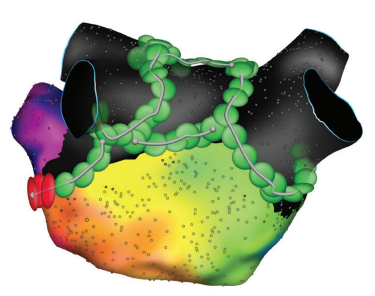
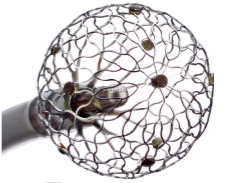
We evaluated these different systems in terms of efficacy, safety, efficiency, and the financial impact specific to our institution. It is notable that, before adopting PFA and the Affera system, the majority of our operators primarily used point-to-point RF ablation workflows. Because of that background, many of us were especially interested in the anticipated Affera system, which was not yet commercially available at the time. We believed there would be significant value in the versatility and patient-specific flexibility offered by the Sphere-9 catheter, the Affera system’s dual-energy wide area focal ablation catheter.
As a result, we focused early on the Medtronic portfolio and initially adopted the PulseSelect PFA system, with the expectation that we would transition quickly to the Affera system once it became available, which is ultimately what occurred.
How did you integrate the Affera system into your existing EP lab workflow?
It was very straightforward and rapid to integrate the Affera system into our workflow. As soon as physicians began using the system, there was a rapid transition away from other single-shot PFA platforms and RF ablation systems. Early on, the only real limitation was the availability of Affera mapping and ablation system units, but that issue quickly resolved in our region.
Even among our large and diverse EP faculty, there were essentially no late adopters of the Affera system. Everyone transitioned very quickly.
How steep was the learning curve for you and your team?
There was a very minimal learning curve with the Affera system. We studied this across our faculty to evaluate how procedure times and efficiency changed as operators gained more experience with Affera cases. What we found was that the learning curve was minimal, with less than a 5% improvement in procedure times over the first 20 cases for each operator. In other words, physicians became significantly more efficient almost immediately after adopting Affera.
One of the biggest contributors to our early procedural efficiency gains with the Affera system actually came from adjustments to our anticoagulation practices. The higher activated clotting time (ACT) requirements for the Affera system initially created some workflow challenges because we found ourselves waiting longer for therapeutic ACT levels than we had in the past. To address that, we conducted a small institutional research project to determine whether ACTs could be checked safely earlier after heparin administration. We found that early ACT checks could, in fact, be performed safely and effectively.
Based on those findings, we implemented an institution-wide protocol for heparin administration and ACT monitoring, which significantly improved both procedural speed and consistency across operators.
Since adopting the Affera system, have you seen changes in overall procedure time?
Absolutely. The median procedure time for operators decreased by approximately 31 minutes with the Affera system compared with RF ablation, and procedures were also significantly faster with the Affera system than with the other PFA systems we had previously evaluated. This represented a substantial reduction in procedure times for AF ablations, including pulmonary vein isolation (PVI)-plus cases where additional ablation was required.
Interestingly, the operators who had previously been the slowest actually experienced the greatest gains in efficiency after adopting the Affera system. In many ways, it helped level the playing field by reducing variability not only between operators, but also between cases for an individual operator. Overall, procedure times are now much more consistent, predictable, and significantly faster.
Are there specific steps in the case where the Affera system has helped streamline the workflow?
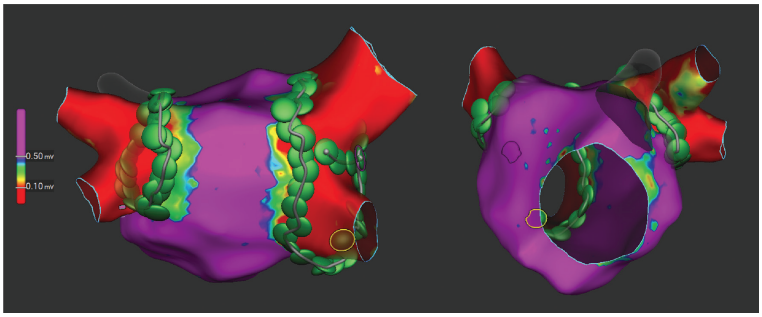
Compared with prior RF workflows in particular, using a single catheter for both mapping and ablation means fewer catheter exchanges, which improves efficiency and is likely safer as well. In many cases, fewer vascular access sites are also needed, which helps speed up procedures and may provide an additional safety benefit. In general, the larger-footprint catheter also means that fewer lesions are required compared with traditional point-to-point RF ablation.
However, the most important factor in streamlining the workflow has been the consistently high first-pass success rates we are seeing with ablation, both for PVI and for any additional ablation required during the case. Since adopting the Affera system, we have essentially eliminated the need for touchup ablation, which has significantly streamlined our overall workflow.
Has the Affera system impacted lab utilization or scheduling flexibility?
The Affera system has had a very significant positive impact on our lab utilization. With much more predictable case times between operators and across cases, we are able to fit more cases into a given day with far less concern about overruns, unexpectedly prolonged procedures, or staff overtime requirements. As a result, we are utilizing our EP lab time much more effectively.
Ultimately, we have significantly decreased operator idle time by further improving our ability to flip labs efficiently between cases. Operators are now scheduling more cases while still finishing earlier in the day than they did previously. It has also created more flexibility for urgent add-on cases during daytime hours, which can improve the safety and overall care of our patient population.
Have you noticed changes in staff efficiency or coordination during cases?
There has also been a positive impact on staff efficiency because the case supplies have become much more standardized between operators and across cases. The versatility of the catheter means you generally know ahead of time which supplies will be needed, since the system can effectively manage essentially any rhythm encountered during the procedure.
The setup for the Affera system has been straightforward, with fewer supplies to open and fewer issues requiring troubleshooting during cases. Overall, it has been a very efficient approach to these procedures.
How has the Affera system influenced the predictability of your AF ablation procedures?
The Affera system has greatly reduced the range of procedure durations for each procedure type. Cases are now much more predictable across operators, which allows physicians to schedule fuller days with less concern about running overtime. Again, the operators who had previously been the slowest with RF ablation experienced some of the greatest efficiency gains after adopting the Affera system. As a result, variability between operators has decreased significantly across the program.
Are your lesion delivery and procedural endpoints more consistent now?
As with most PFA systems, the Affera system has delivered nearly 100% first-pass success for PVI, as well as for any additional ablation performed during the procedure. We are consistently achieving those endpoints on the first attempt, which has made our procedures both shorter and far more predictable.
Do you feel more confident setting expectations for staff or patients?
Our patients have really benefited from this transition as well. As with other PFA technologies, the early postoperative period has become much more predictable and smooth. We are seeing far fewer early arrhythmia recurrences after ablation, as well as less pericarditis. Overall, the postoperative recovery period has been very gentle for our patients, which has been encouraging to see.
So far, our medium-term institutional data is also consistent with the published literature, suggesting that the strong acute procedural success we are seeing is translating into improved long-term freedom from arrhythmia. Ultimately, this has been a meaningful benefit for our patients.
Looking back, what has been the biggest benefit of the Affera system for your program?
It has really been the predictability and efficiency of the Affera system that has enabled us to perform more cases and deliver more—and ultimately better—arrhythmia care to our patient population.
What advice would you give to another EP physician considering the Affera system?
From an operator standpoint, adopting the Affera system is a very easy sell. The dual-energy focal catheter provides a versatile tool that can effectively treat patients regardless of the specific rhythms encountered during the procedure. The predictable first-pass success also removes a major source of frustration that many of us have experienced over the years and really makes ablation procedures more enjoyable to perform.
In terms of advice for others considering adoption of the Affera system, it is very helpful to be able to share published institutional data demonstrating that the increased efficiency of the Affera system—relative to RF ablation and even other single-shot technologies—has enabled us to perform more cases in a given day. That increased procedural capacity has more than offset the additional costs associated with the system. Overall, it has been a clear operational and financial benefit for our program.
How do you see your AF ablation program evolving over the next few years?
The AF population continues to grow, and we look forward to using this technology, along with other emerging tools, to further improve access to arrhythmia care within our community. As safety and procedural efficiency continue to improve, I hope we will see patients referred for ablation even earlier in the disease process, leading to more durable outcomes and fewer repeat procedures.
The transcripts were edited for clarity and length.
Disclosures: Dr Gaeta has completed and returned the ICMJE Form for Disclosure of Potential Conflicts of Interest. He reports consulting fees and honoraria from Medtronic.
This content was published with support from Medtronic.