Building and Scaling a Successful LAAC Program: Insights From a 1000-Procedure Milestone
Interview With Ali Al-Mudamgha, MD
Interview With Ali Al-Mudamgha, MD
© 2026 HMP Global. All Rights Reserved.
Any views and opinions expressed are those of the author(s) and/or participants and do not necessarily reflect the views, policy, or position of EP Lab Digest or HMP Global, their employees, and affiliates.
EP LAB DIGEST. 2026;26(9).
Interview by Jodie Elrod
In this interview, EP Lab Digest speaks with Ali Al-Mudamgha, MD, about the successful completion of 1000 Watchman device (Boston Scientific) procedures earlier this year at St. Joseph's Health Cardiovascular Institute—an important milestone in the growth of its left atrial appendage closure (LAAC) program. Dr Al-Mudamgha shares lessons learned from building a high-volume program, including the operational changes that safely increased procedural volume, best practices for program development, and practical advice for physicians looking to build or scale their own LAAC programs.
Can you start with a brief introduction?
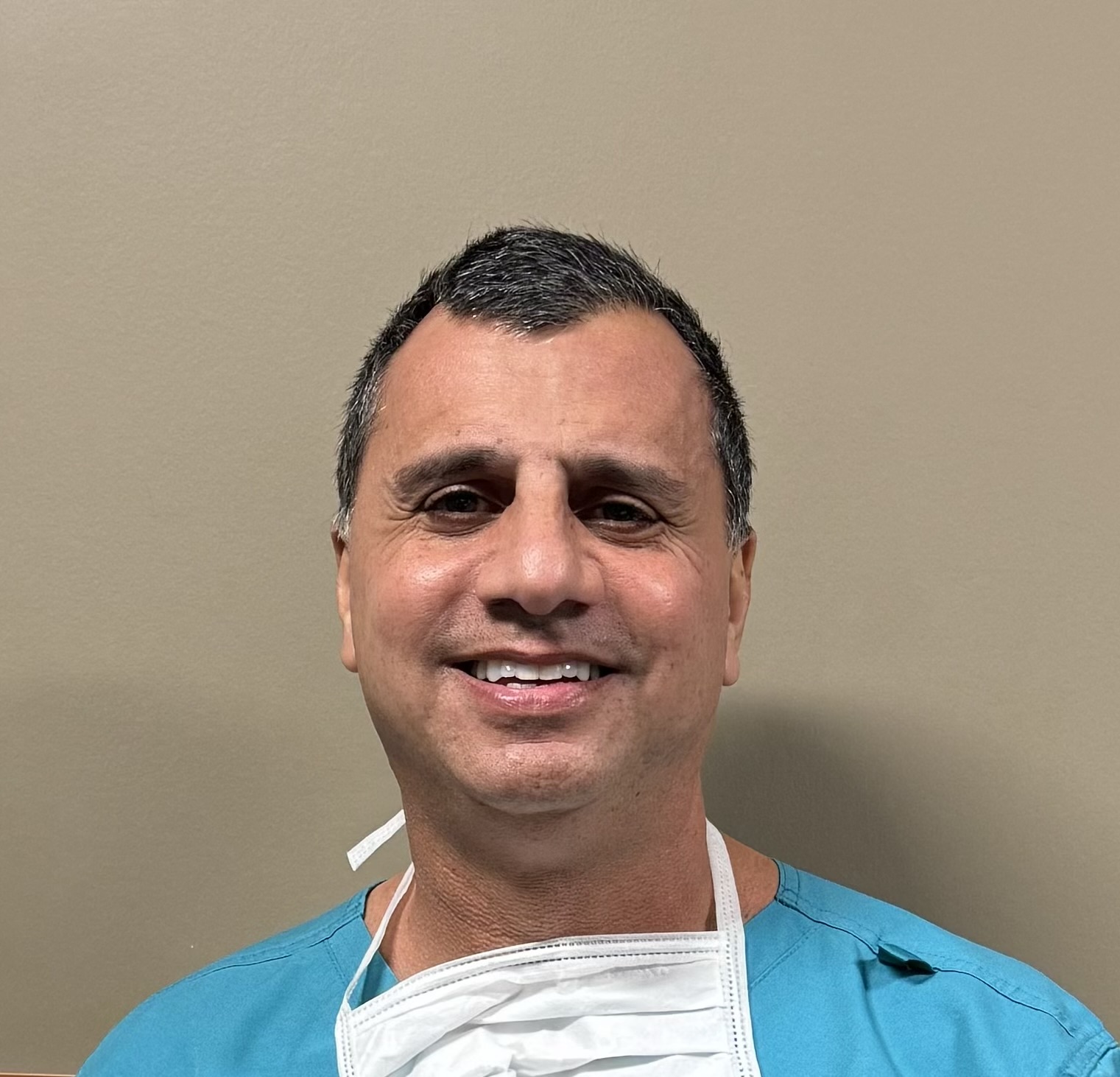 I am the director of cardiac electrophysiology (EP) at St Joseph's Hospital in Syracuse. I've been in practice for 29 years. I'm originally from Syracuse, completed most of my training here, and then completed my cardiac EP fellowship at Stanford University.
Your team recently reached a significant LAAC milestone. Looking back at the evolution of your LAAC program, what changes in patient selection, procedural workflow, or team coordination have had the greatest impact on efficiency and patient outcomes? Were there any lessons that fundamentally changed how you practice today?
We actually made a number of changes in the fall of 2024. The first change was moving away from transesophageal echocardiography (TEE) for imaging. I began performing my cases using intracardiac echocardiography (ICE), initially with a 2D ICE catheter, which was a little challenging. The hospital then secured a 3D ICE catheter for us, which made imaging easier. More importantly, by moving away from TEE, we no longer needed anesthesia. Anesthesia services are very valuable, and everyone is competing for them. By converting these to moderate sedation cases, we opened up many more opportunities to schedule patients. That had a major impact.
The other change we made involved how our Watchman and LAAC cases were scheduled. Historically, at our institution, those cases were coordinated by the structural heart team because that's how the program was originally set up. It was a very inefficient process because the structural heart team was responsible not only for LAAC, but also for transcatheter aortic valve replacement and other structural heart procedures. As a result, LAAC cases were scheduled like the other structural heart cases—on certain days of the week and only a limited number of days each month—because the team had difficulty coordinating all of those patients.
The other change we made, in January 2025, was that I pulled all of my patients out of the structural heart workflow and had my own office staff handle the insurance authorizations and scheduling, just as we do for ablations, pacemakers, defibrillators, and other EP procedures. In the first quarter of 2025, our LAAC volume increased by probably 15% to 20%, and by the end of 2025, we had tripled our previous number of LAAC cases.
What processes or best practices has your team intentionally developed to maintain quality, safety, and efficiency as the program has grown?
I think everything we do in the EP or procedural world starts with patient selection. We want to make sure we're selecting the right patient—that the procedure is the appropriate fit, that the patient is able to undergo it, and that they're well informed and want to proceed. I think it all starts there.
Once we've identified the appropriate patient, the process is pretty standard. As in most places, we require a second physician who is not an implanter to agree that the procedure is appropriate. For our moderate sedation cases involving the LA, we have a standard set of orders that includes obtaining the appropriate blood work beforehand. Everyone is also typed and screened for blood. We still do that, so we have backup available in the event of a perforation.
We also have an individual in the hospital who helps coordinate with these patients to make sure they have transportation home, since they typically go home the same day, and that someone will be with them in case they need assistance. If that individual feels the patient would not be entirely safe at home, then we keep them overnight.
So it's kind of routine stuff for us, and I think that's really the take-home point. We've made LAAC a routine procedure. When you make it routine, your volume goes up, and when your volume goes up, you get better at it. When you treat it as a very unique procedure that can only be done on a certain day at a certain time, you never do enough of these cases, in my opinion. By simply treating it as a routine moderate sedation case, we might do a couple of pacemakers, then a couple of Watchman procedures, then an ablation, all in the same day. It just becomes another case, and the efficiency goes way up.
As more hospitals establish or expand LAAC programs, what advice would you offer physicians and multidisciplinary teams hoping to build a durable, high-quality program? Looking back, is there anything you wish you had implemented earlier or approached differently?
I would say that, in the beginning, start with what you're comfortable with. If your comfort level is TEE, then start by doing your cases with TEE and make arrangements the way you normally would. When I started, our TEE was performed by the cardiac anesthesiology team. Since they were already providing the anesthesia, that made the process a little more efficient. Other physicians at our hospital had a clinical cardiologist perform the TEE instead. So if TEE is what you're comfortable with, and you prefer having your anesthesiologist perform it, then schedule your cases that way. If you're more comfortable with TEE performed by a clinical cardiologist, I wouldn't change that pattern in the beginning. If your comfort level is ICE, and you're very comfortable with the ICE catheter, then that's where you should start.
I think you first tailor the approach to the implanter's comfort level and the institution's capabilities. Then, once you've done a handful of cases—and everyone's number is different depending on their experience and how long they've been in practice—you can step back and evaluate things. For some people, that comfort level may come after only 10 or 15 cases; for others, it may take 25 or 30. Once you reach whatever that number is for you, you can ask yourself, "Things are going well—what can I do to grow the program and make it more efficient?"
Growing the program may involve more community outreach and education. On the efficiency side, you may realize, as we did, that relying on TEE and anesthesia is limiting your growth because there aren't enough anesthesia slots available. Or you may find that using the ICE catheter takes longer because the necessary skill set is still developing, so you decide to stick with TEE. I think the key is to make the process work for you.
What does this achievement mean for your team, and what does it say about the evolution of your LAAC program?
I think it says it all. It's a milestone—and, in general, the more cases you do, the better you become at them. I think we demonstrated that through the efficiency changes we made. We already had a good program, but our volume wasn't enough for the community and patient population we serve. Those changes really allowed us to expand the program, and they were meaningful.
So I would say, in that sense, it's a number. But when you reach that level of experience, you start to see what works and what doesn't. You see both the successes and the challenges. We don't have a lot of complications, but complications do occur, and as your volume increases, you inevitably encounter a broader range of them. That experience ultimately makes you stronger as you continue to move the program forward and grow it.