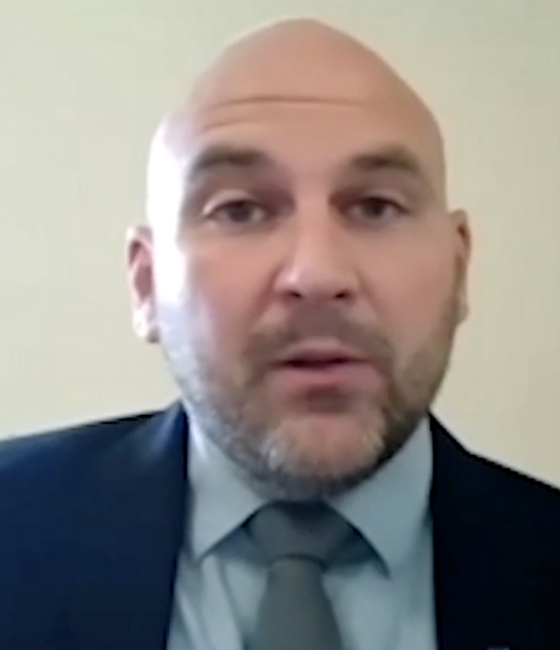
Alexis Ogdie, MD, on Obesity in Psoriatic Arthritis and GLP-1s: Part 2
In part 2 of her video on psoriatic arthritis and obesity, Dr Ogdie reviews recent studies showing how combination therapy with GLP-1 RAs may not only boost weight loss but also help patients achieve minimal disease activity.
Alexis Ogdie, MD, is associate professor of medicine and epidemiology in the Perelman School of Medicine and director of the Center for Clinical Epidemiology and Biostatistics and director of the Penn Psoriatic Arthritis and Spondyloarthritis Program at the University of Pennsylvania in Philadelphia, Pennsylvania.
CLINICAL PRACTICE SUMMARY
Addition of Tirzepatide to Biologic Improves ACR50 and Patient-Reported Outcomes in Obese, Difficult-to-Treat Population
- In a 36-week open-label trial of patients with psoriatic arthritis initiating ixekizumab (IXE), combination therapy with tirzepatide (GLP-1 RA) vs IXE alone improved ACR50 response rates (33.5% vs ~20%) in a difficult-to-treat population with prior biologic exposure, obesity, and multiple risk factors, with additional gains in fatigue, HAQ-DI, and metabolic measures.
- Clinical separation emerged by 4 weeks with IXE + tirzepatide despite minimal early weight loss, suggesting effects beyond weight reduction; over time, a substantial proportion of patients achieved ~15% body weight loss, exceeding typical dietary outcomes.
- Obesity is a key modifier of PsA outcomes (reduced likelihood of minimal disease activity [MDA]; ~40% achieve MDA overall), and adjunct GLP-1 therapy represents a potential new pharmacologic strategy for the ~60% with persistent disease; implementation barriers include prior authorization, access, and care coordination, with emerging oral options and team-based care (NP/PA support) as potential facilitators.
TRANSCRIPT
So finally, we recently published, just this past couple weeks, a trial using the GLP-1 RA or agonist tirzepatide. So this was a study in which patients who were initiating ixekizumab or patients coming into the study were randomized to either start an ixekizumab alone or ixekizumab plus tirzepatide, and both were at the doses that were approved. And what we found there was that over the 36-week trial— so it was slightly longer just to mimic more of one of the GLP-1 studies— we found that patients who initiated ixekizumab plus tirzepatide did significantly better than those who initiated ixekizumab alone. They all did okay in terms of ACR50 responses, but the difference was 33.5% achieved ACR50 in the IXE plus tirzepatide arm and was about 20% in the ixekizumab alone arm.
And this was a very difficult to treat population. As you look across these patients, many of them had been on biologic therapies before they were obese. They had multiple other risk factors for being complex to manage or having difficult to treat disease. So we did still see the significant improvement, not only in ACR50, but in fatigue, in HAQ-DI, and other metabolic measures.
And it wasn't just that they improved at 36 weeks. They actually started improving even at 4 weeks. So there was an early difference that started to show the breakaway, which is pretty interesting because you don't really lose weight for several weeks. Maybe you can lose a little bit of weight, but it's still several weeks until you start to see much weight loss on tirzepatide. So even right at the beginning, patients were starting to see some difference there. It was an open label trial, and of course there's all the usual caveats with an open label trial, especially for people coming into a trial knowing that they could get a weight loss drug.
But this has implications for the future and how we treat our patients. About 40% of our patients with psoriatic arthritis will achieve MDA on therapy. That is just not enough. That means 60% of our patients still have active disease. So among those 60%, we don't have a lot of tools. We can switch biologics or switch therapies again, but we actually kind of hit a ceiling. So each one of our therapies is not that much better than all the other therapies at a population level. Sometimes one therapy will work better for one individual patient. But this is our first kind of pharmacotherapy that we can utilize as an adjunct therapy, especially in those obese patients, maybe in the overweight patient with risk factors as well. They would typically have to be eligible for one of these therapies. So these therapies also, if you think about the Di Minno study that I mentioned, when you talk about 10% or more body weight loss, that's really hard to achieve with diet alone. In this study, and I have to go back and remember exactly what the percentage of weight loss was, but a significant number of patients in the trial lost 15% of their body weight. So this really is getting to a deeper level of weight loss than we can see with some of our dietary studies alone.
Now, what's coming in the future? I think we have to learn better ways, first of all, to manage these different comorbidities, including obesity, in our daily clinical practice. These therapies still require prior authorization. And let me tell you, our specialty pharmacies are not super excited about doing one more prior authorization, especially for medicines that they don't really deal with all the time. On the other hand, there may be opportunities for them to learn from their colleagues in metabolic medicine so that we can streamline this in some way or another.
There's also challenges in the access to these therapies broadly. There is a new oral therapy coming, so we'll see if that changes the game or makes it easier to get these drugs approved or even increase the types of patients who are eligible for these medications. Some people don't really like the injections. Most biologic patients are okay with that, of course, because they've been used to it, but a new oral therapy option will be nice in this area as well.
And then finally, this may be an area where we utilize our nurse practitioners and physician's assistants. We recently conducted a study called SoWell in which a nurse practitioner will sit with a patient for a period of time and go through some of these off-target symptoms to better understand how we can treat the whole patient.
And this is really a part of treating the whole patient. So if the nurse practitioners and PAs or physician extenders are skilled in those treating the off-target symptoms, this is something where they can be really helpful partners to us in the care of these patients. So these are some new things coming down the road. We'll have to see about how we can change the care paradigms to make this easier, but I think it's really exciting that there is a new way to get patients to lower disease activity through use of these therapies.
So with that, I'll just summarize by saying obesity is a risk factor for development of PsA and psoriasis. It is associated with poorer outcomes in psoriatic disease, including more body surface area in psoriasis, higher levels of disease activity in PsA, and prevents patients from getting to MDA if they're initiating biologic therapies. But weight loss works, so dietary interventions can help. Probably no one diet is that much better than another as long as they're achieving weight loss, which is kind of the ultimate goal in this case. There's the GLP-1s, which are now therapies that we can use to get to the weight loss and even deeper levels of weight loss. And then finally, it's really hard to talk about this with patients sometimes, so ease into a gently offered is another option for attacking the disease, and it's one that patients can have more control over, so that can be helpful framing as well, and utilize our metabolic medicine colleagues as well to help with prescribing their therapies if you're not comfortable or you don't have a pharmacist who's comfortable doing the prior authorizations. With that, thank you so much for joining me today.