Joseph F. Merola, MD, MMSc; Alice Bendix Gottlieb, MD, PhD
Dr Andrew Alexis (Weill Cornell Medicine) joins hosts Dr Alice Gottlieb and Dr Joseph Merola to break down a practical, stage-by-stage approach to hyperpigmentation in skin of color.
Dr Andrew Alexis (Weill Cornell Medicine) joins hosts Dr Alice Gottlieb and Dr Joseph Merola to break down a practical, stage-by-stage approach to hyperpigmentation in skin of color.
Joseph F. Merola, MD, MMSc; Alice Bendix Gottlieb, MD, PhD
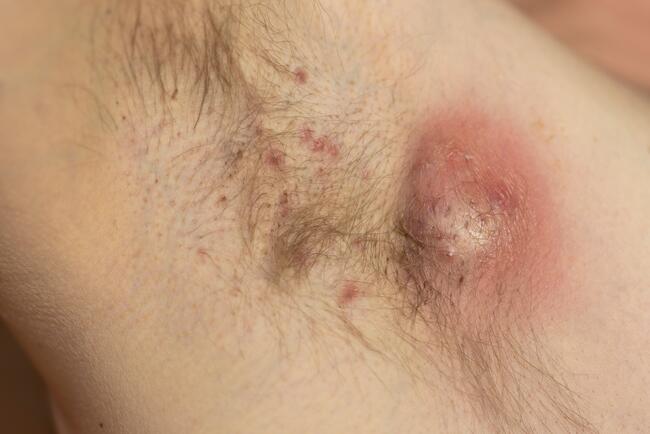
Dr Joseph Merola sits down with Dr Alice Gottlieb—dermatologist, rheumatologist, and one of the field's foremost experts in HS—for a focused clinical conversation on where HS treatment is headed.
Dr Joseph Merola sits down with Dr Alice Gottlieb—dermatologist, rheumatologist, and one of the field's foremost experts in HS—for a focused clinical conversation on where HS treatment is headed.
Joseph F. Merola, MD, MMSc; Alice Bendix Gottlieb, MD, PhD
Dr Shawn Kwatra joins hosts Dr Joseph Merola and Dr Alice Gottlieb to break down the neuroimmune biology of chronic itch, why pruritus persists even after skin clears, and what to do about it in your next clinic.
Dr Shawn Kwatra joins hosts Dr Joseph Merola and Dr Alice Gottlieb to break down the neuroimmune biology of chronic itch, why pruritus persists even after skin clears, and what to do about it in your next clinic.
Joseph F. Merola, MD, MMSc; Alice Bendix Gottlieb, MD, PhD
Dr Joseph Merola and Dr Alice Gottlieb are joined by Dr Brittany Weber, one of the first cardiodermatologists in the United States, to lay out the clinical case for owning cardiovascular risk assessment in inflammatory skin disease.
Dr Joseph Merola and Dr Alice Gottlieb are joined by Dr Brittany Weber, one of the first cardiodermatologists in the United States, to lay out the clinical case for owning cardiovascular risk assessment in inflammatory skin disease.
Joseph F. Merola, MD, MMSc; Alice Bendix Gottlieb, MD, PhD
The bar for treating psoriasis has moved dramatically—from PASI 50 to PASI 75 to complete clearance—and the field is now seriously asking whether remission is an achievable clinical goal, not just an aspirational one.
The bar for treating psoriasis has moved dramatically—from PASI 50 to PASI 75 to complete clearance—and the field is now seriously asking whether remission is an achievable clinical goal, not just an aspirational one.
Joseph F. Merola, MD, MMSc; Alice Bendix Gottlieb, MD, PhD
Dermatologists can significantly improve patient outcomes through early recognition, risk factor screening, targeted therapy, and strategic collaboration with cardiologists.
Dermatologists can significantly improve patient outcomes through early recognition, risk factor screening, targeted therapy, and strategic collaboration with cardiologists.
In a comparison of the mental health of patients with acne treated with isotretinoin vs oral antibiotics, which treatment group was found to experience more depressive symptoms and psychological distress?
In a comparison of the mental health of patients with acne treated with isotretinoin vs oral antibiotics, which treatment group was found to experience more depressive symptoms and psychological distress?
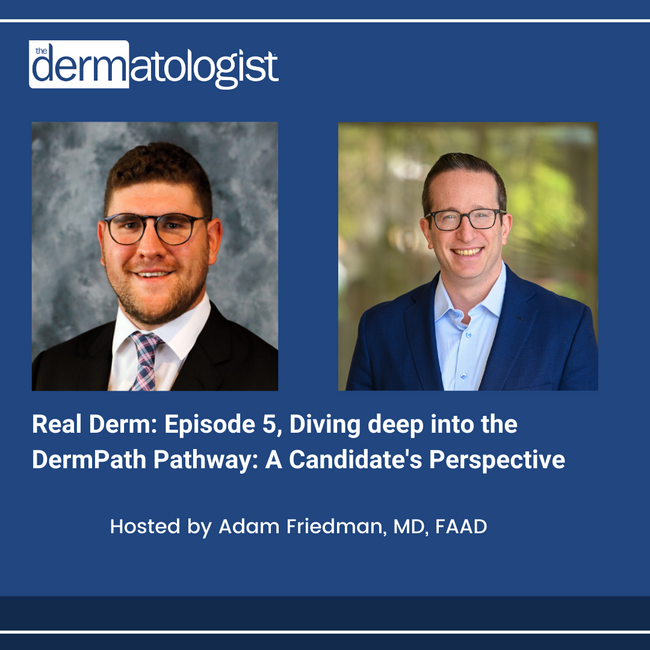
Climbing the mountain to get to dermatology residency is bone breaking enough, but what about the next apex, even more specialized training such as a Dermatopathology Fellowship?
Climbing the mountain to get to dermatology residency is bone breaking enough, but what about the next apex, even more specialized training such as a Dermatopathology Fellowship?
What proportion of children aged 6 to 11 years with severe atopic dermatitis receiving dupilumab achieved a height increase of at least 5 percentile points after 4 months of treatment?
What proportion of children aged 6 to 11 years with severe atopic dermatitis receiving dupilumab achieved a height increase of at least 5 percentile points after 4 months of treatment?
Evaluate advanced clinical reasoning in targeted treatment selection, unexpected therapeutic responses, and the challenges of precision medicine in inflammatory dermatology.
Evaluate advanced clinical reasoning in targeted treatment selection, unexpected therapeutic responses, and the challenges of precision medicine in inflammatory dermatology.
Challenge your understanding of inflammatory feedback mechanisms, neuronal sensitization, and the complex cellular interactions involved in chronic dermatologic disease.
Challenge your understanding of inflammatory feedback mechanisms, neuronal sensitization, and the complex cellular interactions involved in chronic dermatologic disease.
Test your clinical understanding of inflammatory disease classification, overlapping immune pathways, and the evolving role of type 2 inflammation in dermatology.
Test your clinical understanding of inflammatory disease classification, overlapping immune pathways, and the evolving role of type 2 inflammation in dermatology.
Challenge your understanding of treatment sequencing, biologic failure, JAK inhibitor escalation, and future biomarker-driven approaches in inflammatory dermatology.
Challenge your understanding of treatment sequencing, biologic failure, JAK inhibitor escalation, and future biomarker-driven approaches in inflammatory dermatology.
Evaluate your clinical approach to selecting targeted therapies across multiple type 2 inflammatory skin diseases by integrating disease biology, symptom burden, and treatment sequencing.
Evaluate your clinical approach to selecting targeted therapies across multiple type 2 inflammatory skin diseases by integrating disease biology, symptom burden, and treatment sequencing.
Which of the following best describes the week 12 efficacy findings for povorcitinib in the phase 3 STOP-HS1 and STOP-HS2 trials in patients with moderate-to-severe hidradenitis suppurativa?
Which of the following best describes the week 12 efficacy findings for povorcitinib in the phase 3 STOP-HS1 and STOP-HS2 trials in patients with moderate-to-severe hidradenitis suppurativa?
Evaluate your understanding of disease fluctuation, neuroimmune signaling, cytokine biology, and targeted therapeutic strategies in chronic spontaneous urticaria.
Evaluate your understanding of disease fluctuation, neuroimmune signaling, cytokine biology, and targeted therapeutic strategies in chronic spontaneous urticaria.
Test your understanding of cytokine signaling, mast cell biology, neuroimmune interactions, and the mechanisms that drive chronic spontaneous urticaria.
Test your understanding of cytokine signaling, mast cell biology, neuroimmune interactions, and the mechanisms that drive chronic spontaneous urticaria.
Assess your understanding of biologic therapy in pediatric atopic dermatitis with this expert quiz. Explore practical barriers to treatment, considerations for young children and caregivers, and real-world factors that influence successful...
Assess your understanding of biologic therapy in pediatric atopic dermatitis with this expert quiz. Explore practical barriers to treatment, considerations for young children and caregivers, and real-world factors that influence successful...